

If you’ve been scrolling through barndominium ideas interiors looking for something that actually works with your four-legged chaos agents, you’re in the right place. Barndominiums have exploded in popularity for good reason — they blend rustic charm with industrial durability in a way that traditional homes just can’t touch. But here’s what most design blogs won’t tell you: barndominium interior ideas are secretly some of the most pet-friendly design concepts out there. The materials, the layouts, the wide-open bones of these buildings — it’s like someone designed them with a golden retriever in one hand and a cat toy in the other.
Think about it. Polished concrete instead of carpet that traps every hair your tabby has ever shed. Open rafters begging to be turned into catwalks. Metal accents that laugh in the face of scratching claws. When you start exploring barndominium ideas for pets specifically, you realize these spaces aren’t just trendy — they’re practically engineered for people who share their homes with animals. The rugged, low-maintenance DNA of a barndo means you spend less time worrying about your floors and more time actually enjoying your pets.
Below, we’re breaking down 15 barndominium interior ideas that pull double duty as seriously stylish design choices AND functional solutions for pet owners. Each idea includes a practical DIY breakdown so you can adapt it to your own space, whether you’re building from scratch or retrofitting an existing barndo. Let’s get into it.
1. Polished Concrete Floors That Laugh at Hairballs
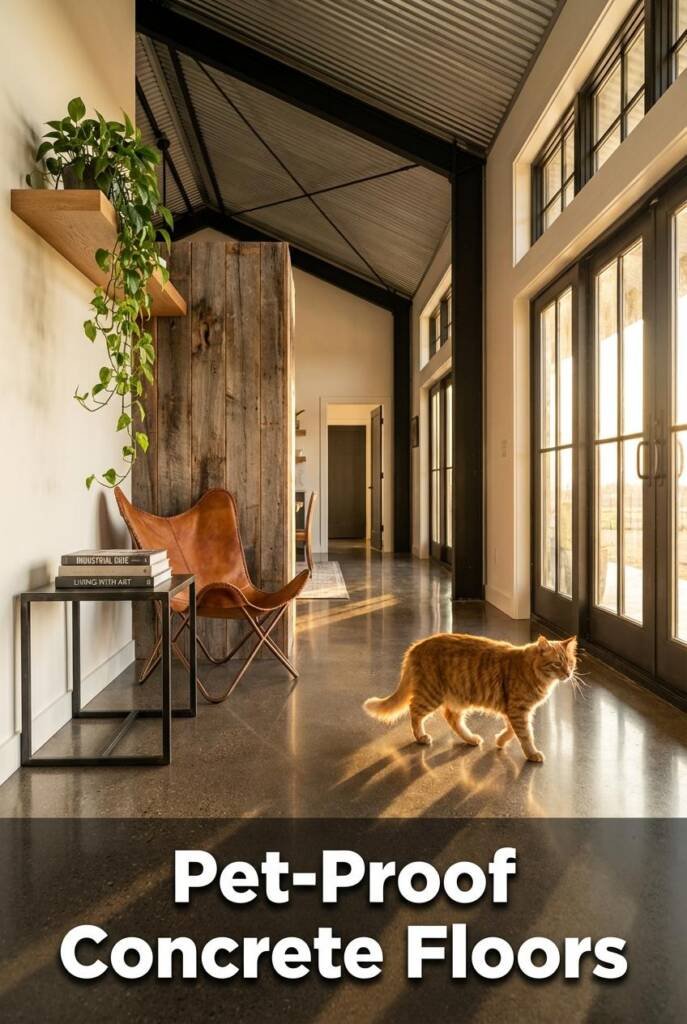
Your cat will destroy carpet, scratch hardwood, and stain tile grout — but polished concrete just sits there looking flawless.
Polished concrete floors are the reason barndominiums look like industrial-chic lofts instead of, well, barns. The high-gloss finish catches light like stone tile, and you can tint it in warm grays, creamy whites, or even rich espresso tones that make your open floor plan feel intentional and expensive. Paired with steel beams and big windows — classic barndominium ideas interiors — polished concrete becomes the anchor of the whole aesthetic.
Now here’s where cat owners win big. Hairballs, tracked litter, the occasional protest pee — polished concrete doesn’t absorb any of it. One wipe and it’s gone. No grout lines trapping odor, no carpet fibers holding dander hostage. For litter tracking specifically, a textured mat like the Gorilla Grip Original Premium Durable Cat Litter Mat ($25–$40 on Amazon) catches 90% of granules before they hit the floor. What little escapes just slides into a dust mop. As a barndominium flooring idea, nothing else comes close to this combination of beauty and bulletproof practicality.
Bonus for multi-cat households: polished concrete stays cooler in summer, and cats will absolutely claim every sunbeam that hits it. You’ll find them sprawled out like they own the place — which, honestly, they do.
How to Get the Perfect Polished Concrete Floor for a Pet-Friendly Barndominium
- Start with the right slab: Your barndominium’s concrete slab needs a minimum 2,000 PSI compressive strength for a quality polish. Most new pours hit 3,000–4,000 PSI, so you’re likely already set.
- Hire a pro for diamond grinding: Professional polishing runs $3–$12 per square foot depending on gloss level. Request a 1600-grit or higher finish for that mirror-like sheen that also resists staining.
- Apply a penetrating sealer: Use a lithium silicate densifier like Prosoco Consolideck LS to harden the surface and make it virtually impervious to pet accidents. One application lasts years.
- Add area rugs at nap zones: Lay washable rugs like Ruggable ($149+) in spots where your cats lounge to add warmth underfoot without sacrificing cleanability.
- Budget move: DIY-rent a concrete grinder from Home Depot for about $260/day and handle a 500-square-foot space yourself, saving up to $4,000 compared to hiring a crew.
2. Open-Rafter Catwalks Your Cat Will Claim Immediately
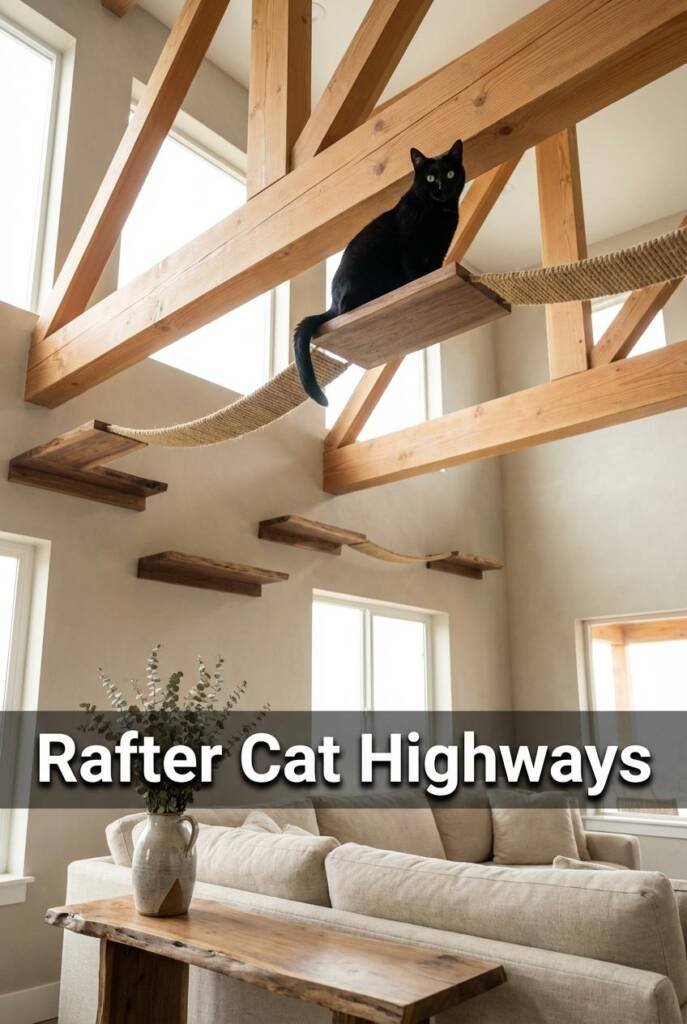
Your barndo’s exposed trusses are already a cat superhighway — they just don’t have the on-ramps yet.
Barndominiums practically beg for this. Those exposed ceiling trusses and soaring open rafters aren’t just architectural eye candy — they’re a ready-made framework for an elevated cat highway that looks intentional and design-forward, not like an afterthought from the pet aisle. Stained wood climbing shelves mounted between trusses create a floating walkway system that doubles as sculptural wall art, and guests will compliment it before they even realize it’s for the cats.
Cats crave vertical territory, it reduces stress, curbs furniture scratching, and gives multi-cat households the layered space they need to coexist peacefully. The key is connecting your shelves with purpose so your cat has a continuous loop, not dead ends. Catastrophic Creations (now Onyx & Gold) makes wall-mounted bridge and shelf kits starting around $90 that bolt directly into wood framing, which barndominiums have in abundance. Pair a few of those with some DIY shelves and your cats get a complete aerial circuit 8-12 feet off the ground.
The barndo advantage here is real: standard drywall homes require stud finders and prayers, but exposed timber trusses give you rock-solid, visible anchor points everywhere. You’re working with the structure, not against it.
How to Turn Exposed Barndominium Rafters into a Cat Climbing System
- Map the route: Sketch a continuous loop connecting at least 3-4 trusses, keeping shelves 12-16 inches apart vertically so cats can hop comfortably between levels.
- Install anchor shelves on trusses: Use 3/8-inch lag bolts to mount 10-inch-deep solid wood shelves directly into the timber — no drywall anchors needed in a barndo.
- Add bridges between gaps: Connect shelves more than 24 inches apart with rope bridges or walkway planks; Onyx & Gold’s Fabric Raceway bridge ($95) handles spans up to 44 inches.
- Wrap one truss with sisal: Pick the truss closest to the entry shelf and wrap it with 3/8-inch sisal rope ($18 for 100 ft on Amazon) to give cats a natural on-ramp from the floor.
- Budget move: Skip the designer kits and cut shelves from reclaimed barn wood — you can build a full 6-shelf climbing system for under $75 in materials.
3. Sliding Barn Doors That Double as Pet Gates
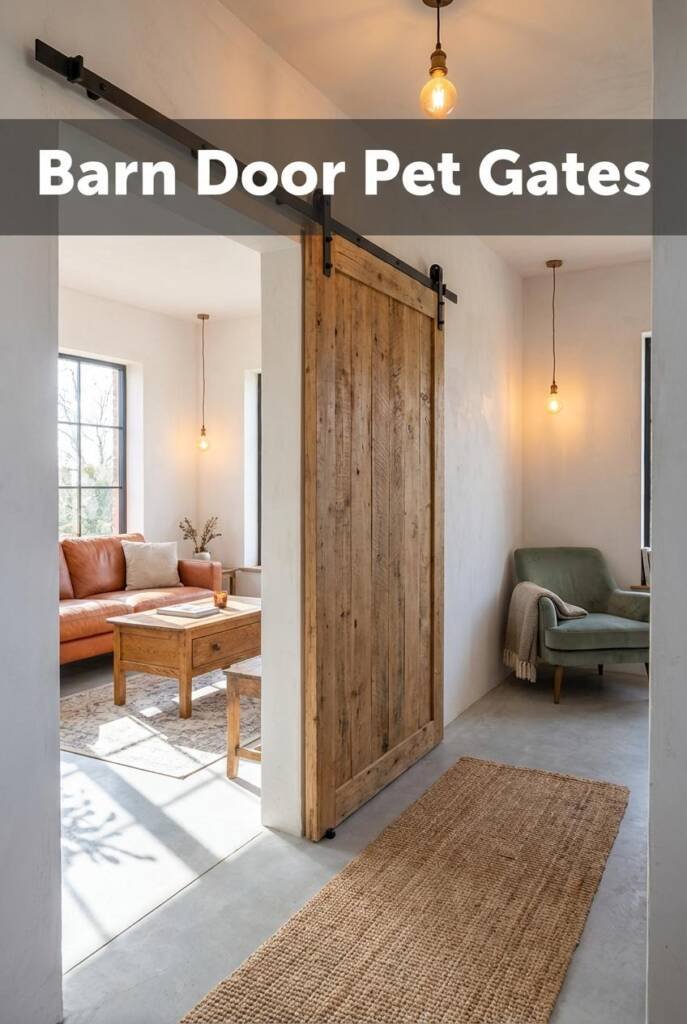
That barn door you pinned for the master bedroom? It moonlights as the most aesthetic pet gate you’ll ever own.
Sliding barn doors on flat track hardware are already a signature barndominium interior idea — so why not put them to work as pet barriers? A floor-to-ceiling barn door on a 6-foot or 8-foot track can seal off your kitchen during dinner prep, block stairs, or create a dedicated cat room, all while looking like an intentional design choice rather than an afterthought. Unlike pressure-mounted baby gates that scream “we have animals,” a barn door keeps your barndominium interiors cohesive.
For cat owners specifically, the move is adding a small pass-through cut into the bottom of the door — roughly 7″ wide by 8″ tall — so your cat can slip between zones while dogs stay put. Companies like Rustica Hardware sell customizable barn doors starting around $400 where you can request modifications like this during the build. If you want a ready-made option, the PetSafe Interior Pet Door ($35) installs cleanly into hollow or solid core doors and handles cats up to 15 pounds.
One thing people overlook: barn doors don’t seal flush against the wall unless you add a privacy strip or edge guide. For pet-gating purposes, grab a floor guide (about $8 at Home Depot) and a flat-mount edge strip to eliminate the gap pets love to exploit.
How to Use Sliding Barn Doors as Stylish Pet Barriers in Your Barndo
- Choose your track length: Measure your doorway width and add 4-6 inches on each side for full coverage. A standard 6.6-foot flat track kit from Smartstandard runs about $45 on Amazon.
- Select or customize the door: Order a barn door with a built-in cat pass-through, or cut a 7″×8″ opening in a solid-core slab and frame it with trim to keep it clean.
- Install gap-blocking hardware: Mount a floor guide ($8) centered in the doorway and add a privacy edge strip on the wall side to eliminate the 1-inch gap barn doors typically leave.
- Test the barrier with your pets: Slide the door closed and observe for 30 minutes — cats should navigate the pass-through easily while dogs stay contained on their side.
- Budget move: Skip the boutique barn door brands and grab a pre-made pine slab from Lowe’s for around $120, then stain it yourself to match your barndo’s interior palette.
4. Metal Siding Accent Walls That Are Basically Scratch-Proof
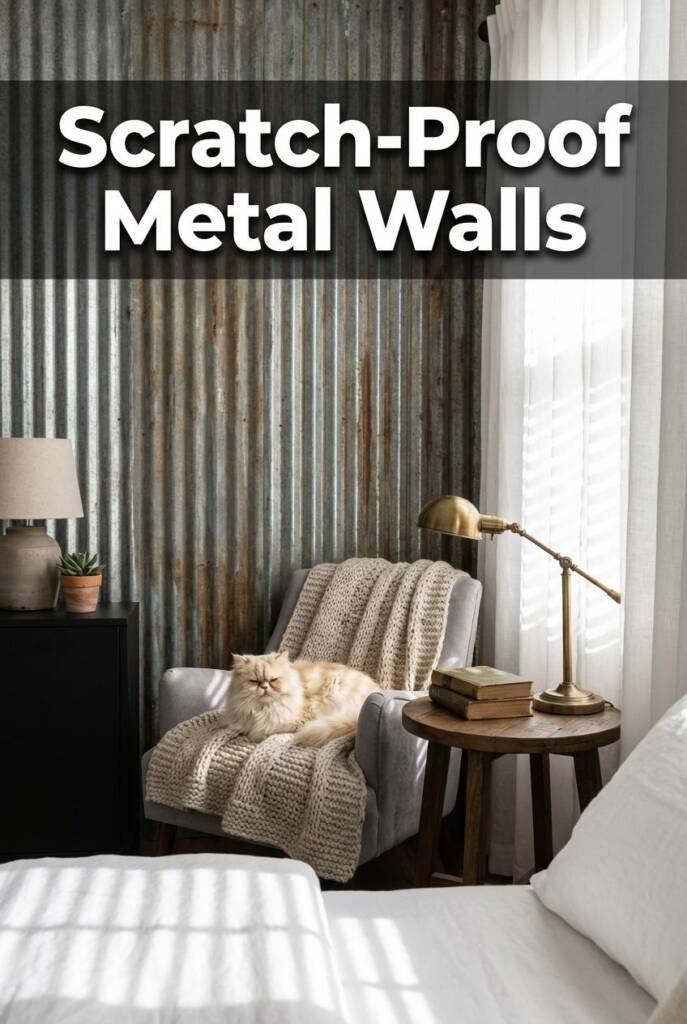
Your cat’s claws vs. corrugated steel: spoiler, the steel wins every single time.
Corrugated metal accent walls are a barndominium signature move — that raw, agricultural texture paired with warm wood floors or open shelving creates the kind of contrast interior designers obsess over. Whether you go galvanized silver, matte black, or weathered patina, a single accent wall instantly anchors a room with industrial character. And here’s the bonus most design blogs won’t mention: your cat literally cannot damage it.
While drywall shows every scratch, snag, and claw mark within weeks, corrugated steel laughs it off. Cats that love vertical scratching will try once, get zero traction, and move on. A 3×8-foot sheet of 26-gauge corrugated galvanized steel from a supplier like Metal Sales Manufacturing runs about $25-$35 per sheet, making a full accent wall surprisingly affordable. The ridged surface also hides minor dings from dog toys, furniture bumps, and general chaos — it actually looks better with a little wear.
For multi-cat households, consider running the metal from floor to about 4 feet up as wainscoting, then painting or planking above. You get the pet-proof zone where it matters most while keeping the upper wall open for art, shelving, or mounted cat walkways.
How to Install a Pet-Proof Corrugated Metal Accent Wall
- Prep Your Wall: Remove baseboards and mark stud locations every 16 or 24 inches. Install 1×3 furring strips horizontally at the top, middle, and bottom to create a flat mounting surface.
- Cut and Fit Panels: Measure your wall height and cut 26-gauge corrugated sheets to size using aviation snips or a nibbler tool — never a grinder, which creates dangerous sparks and rough edges.
- Mount the Panels: Secure each sheet to the furring strips using 1-inch self-tapping metal screws every 12 inches. Overlap panels by one ridge to keep the look seamless.
- Finish the Edges: Cap exposed edges with J-channel trim or simple 1×2 stained wood trim to prevent cuts and give the wall a polished, intentional frame — trim runs about $1-$2 per linear foot.
- Budget move: Check local farm supply stores like Tractor Supply for cosmetically imperfect corrugated panels at 40-50% off — a full accent wall can come in under $80.
5. A Mud Room That Actually Handles Muddy Paws
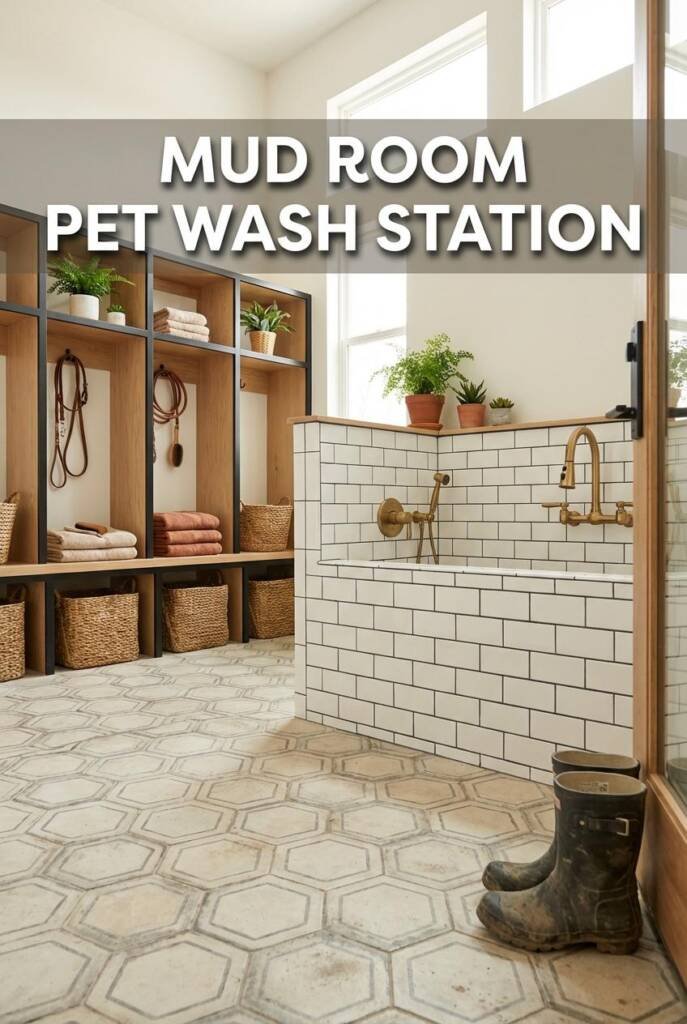
Every pet owner’s heard the skittering of muddy paws on clean floors — a proper barndo mud room makes that a non-issue.
Here’s the barndominium interior idea that’ll change your daily routine: a dedicated mud room with a built-in pet wash station right off your main entrance. Barndos give you the square footage to make this happen without eating into your living space — we’re talking a 6×8-foot zone with a raised wash basin, waterproof walls, and enough room to wrangle even a 90-pound Lab. Finished with large-format porcelain tile and an industrial-style faucet, it looks like a high-end laundry room, not a kennel.
Cat owners, don’t skip this one. A mud room keeps litter-tracked paws off your main floors, and it’s the perfect spot for a self-cleaning litter box like the Litter-Robot 4 ($699) — tucked away, ventilated, and out of your living area. Add a small cat-washing sink for those rare but necessary bath days, and you’ve got a contained zone for every messy reality of pet ownership.
The real flex? Plumb in a handheld sprayer with warm water. Most builders can rough in the plumbing during your barndo shell phase for a fraction of what it’d cost to retrofit a traditional home, making this one of the smartest barndominium ideas for pets you can plan from day one.
How to Design a Barndominium Mud Room with a Pet Wash Station
- Plan the footprint: Allocate a minimum of 6×8 feet directly off your main entry or garage door — close enough to catch pets before they hit the house.
- Install a raised pet wash basin: A stainless steel dog wash station like the Flying Pig 50″ Grooming Tub ($280-$350) keeps water contained and saves your back.
- Waterproof everything: Use luxury vinyl plank or porcelain tile on floors and apply Kerdi waterproof membrane on walls up to at least 48 inches high.
- Add a handheld warm-water sprayer: Have your plumber rough in a hot/cold mixing valve during the build phase — retrofit later costs 3-4x more.
- Budget move: Skip the stainless tub and build a tiled walk-in wash platform with a curb and floor drain for around $150-$200 in materials.
6. The Open Floor Plan That Lets You See Your Pets From Everywhere
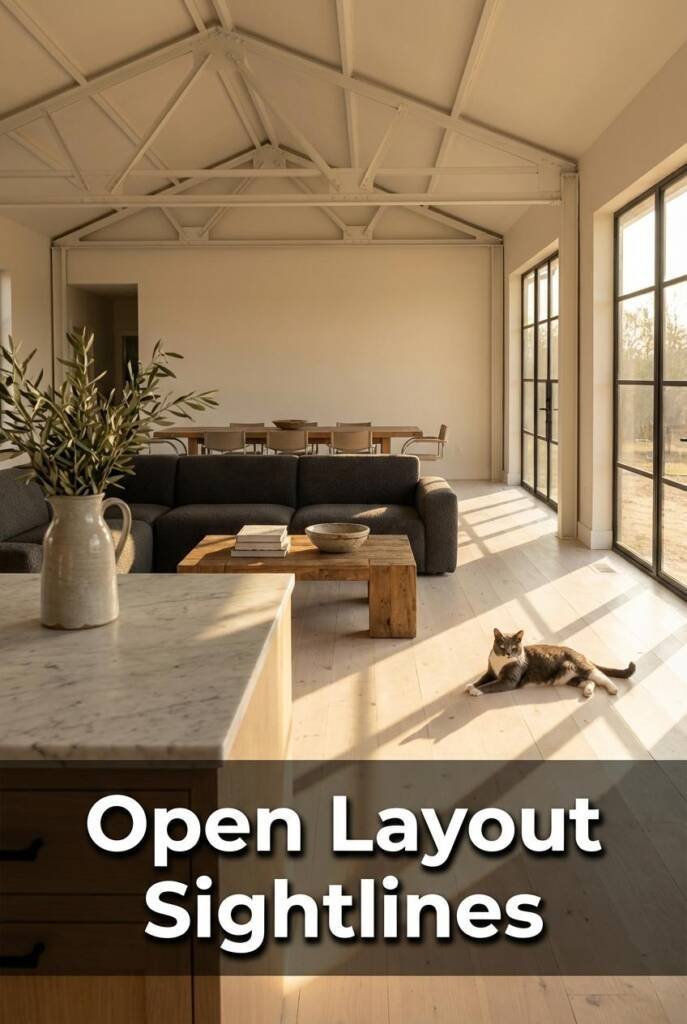
No load-bearing walls means nowhere for your cat to disappear — and that’s exactly the point.
Barndominiums are built around wide-open steel-frame spans — we’re talking 40 to 60 feet of uninterrupted space with zero load-bearing walls cluttering your view. The result is a kitchen-to-living-to-play-area sightline that feels like a modern loft, with soaring ceilings and that industrial-chic barndominium interior vibe that performs as well as it looks.
For cat owners, this layout is a genuine safety feature. You can spot your cat darting behind furniture, monitor a new kitten’s exploration, or keep tabs on a post-surgery cat during recovery — all without craning around walls or doorways. Pair that open floor plan with elevated cat shelves running along the perimeter walls (the Catastrophic Creations Deluxe Playplace wall-mounted system runs about $200) and your cats get vertical territory while you maintain clear sightlines from any seat in the house.
The one thing to plan for: sound carries in open layouts. If your cat’s midnight zoomies echo off concrete floors and metal walls, add a few strategically placed area rugs and soft furnishings to absorb noise without breaking up your views.
How to Maximize Open Floor Plan Sightlines for Pet Safety
- Design around a central kitchen island: Position your island as the visual hub so you have 360-degree sightlines into living, dining, and pet play zones — keep it under 42 inches tall to avoid blocking views.
- Skip upper cabinets on dividing walls: Use open shelving or floating shelves instead, which keeps the eye moving across the full space and eliminates cat-hiding spots you can’t monitor.
- Mount cat furniture at eye level: Install wall-mounted perches and walkways at 5-6 feet high along perimeter walls so cats stay visible and entertained — the Fukumaru cat wall shelves start around $30 per piece.
- Use glass or half-walls for any partitions: If you need to section off a mudroom or laundry area, use glass panels or 36-inch pony walls so you never fully lose sight of your pets.
- Budget move: Swapping planned interior partition walls for open space actually saves you $1,500-$3,000 in framing and drywall costs during the build — better sightlines for less money.
7. Built-In Window Seats Your Cat Will Absolutely Monopolize
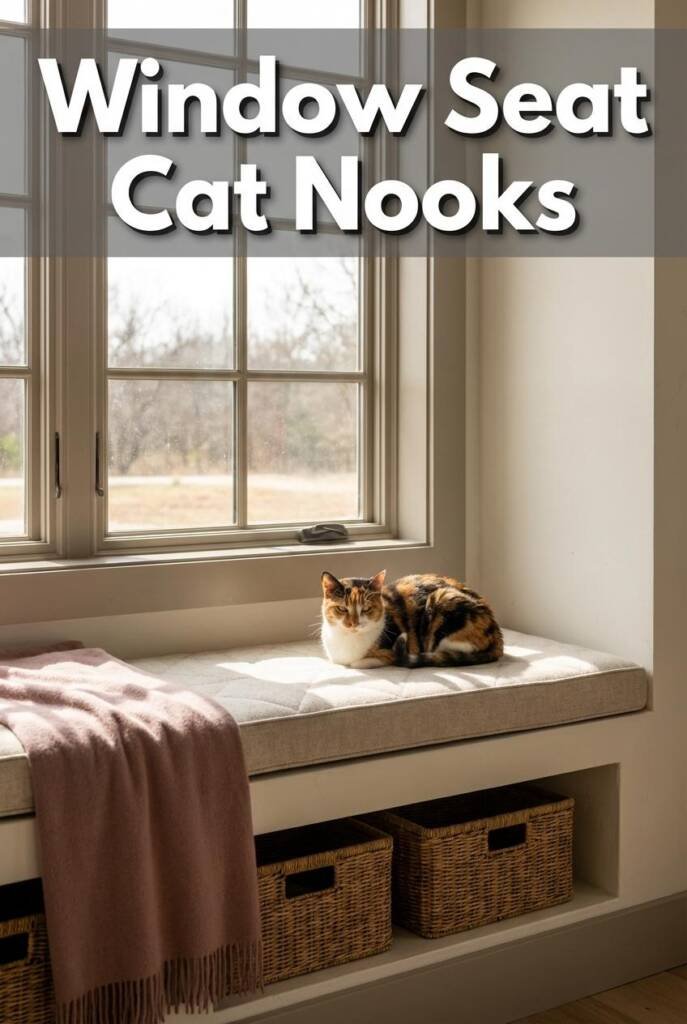
You’re not building this for yourself — you’re building it for the cat who will immediately annex it.
Barndominiums typically have deep-set windows with wide metal-framed sills — the kind of structural detail that practically demands a built-in bench seat. Add a cushioned ledge 18–24 inches deep and you’ve got a reading nook that doubles as the most photogenic spot in your home. Pair it with shiplap paneling underneath or open cubbies for blanket storage, and it becomes a genuine design feature, not an afterthought.
Your cat will claim this seat within approximately four seconds of installation. Deep window seats hit every item on the feline wishlist: elevation, sunlight, a wide view of outdoor prey (birds, squirrels, that one leaf), and a warm surface to melt into. Line it with a washable Snoozer Pet Products window seat cushion ($35–$60) for a cover you can unzip and toss in the laundry when it inevitably becomes a fur magnet. If your barndo faces south, congratulations — you’ve just built a solar-powered cat happiness station.
How to Build a Cat-Friendly Window Seat in a Barndominium
- Frame the Seat: Build a 2×4 frame between the wall studs beneath your window, 16–18 inches off the floor. Anchor it with lag bolts into the steel framing or concrete for barndominium-grade stability.
- Add a Solid Top: Cap the frame with ¾-inch birch plywood and round the front edge to prevent snags on fabric or skin.
- Install Storage Below: Add a piano hinge so the top lifts for hidden storage, or leave the front open with cubbies — IKEA Kallax inserts ($20 each) fit perfectly in a 13-inch-deep frame.
- Cushion and Cover: Top with a 3-inch high-density foam pad wrapped in a machine-washable, pet-hair-resistant fabric like Crypton Home ($30–$45/yard).
- Budget move: Skip custom upholstery and use a $25 indoor bench cushion from Target with a removable, washable cover — your cat won’t judge the price tag.
8. Industrial Shelving That Moonlights as a Cat Jungle Gym
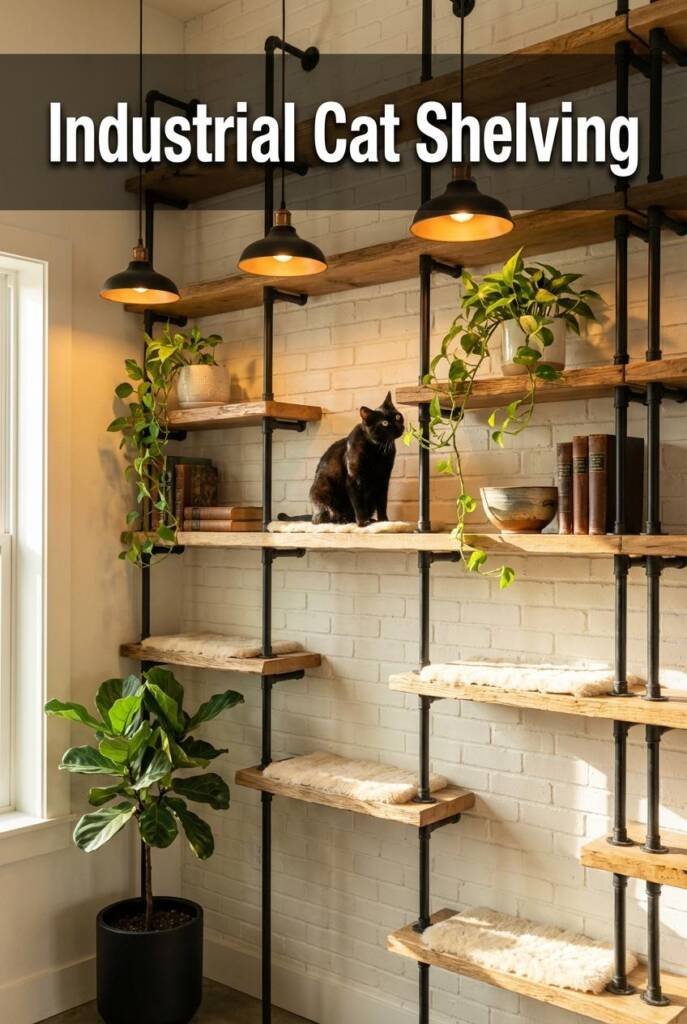
Your industrial shelving is one strategic rearrangement away from being the fanciest cat tree on the block.
Industrial pipe-and-wood shelving is already a barndominium staple — the raw steel and reclaimed lumber play perfectly off metal siding and exposed beams. But here’s the move: instead of clustering shelves in one tight bookcase formation, stagger them at varying heights across a wall with 14–18 inch vertical gaps between platforms. Suddenly your décor doubles as a vertical cat highway, and it looks completely intentional because, well, it is.
Cats are hardwired to climb and claim high ground, and a staggered shelf layout gives them exactly that without a single piece of carpeted cat furniture in sight. The key is choosing shelves deep enough for lounging — 10 inches minimum. Pipe Decor’s DIY industrial shelf kits (around $35–$60 per bracket set on Amazon) use real iron pipe fittings that can support 50+ pounds per shelf, so even your chonkiest cat isn’t a concern. Add a few sisal-wrapped pipe sections at strategic points for grip and scratch satisfaction.
The best part? Guests see a gorgeous industrial wall display. Your cats see an obstacle course. Everybody wins.
How to Arrange Industrial Shelving for Cat Climbing
- Map your layout: Sketch shelf positions on the wall with 14–18 inches of vertical spacing and slight horizontal offsets so cats can hop naturally between levels. Plan for at least 4–5 shelves to create a real route.
- Install with heavy-duty anchors: Use 3-inch lag bolts into studs (or toggle bolts rated for 50+ lbs in metal-sheathed barndo walls) and Pipe Decor iron bracket kits ($35–$60 each) for rock-solid support.
- Size your platforms for comfort: Cut reclaimed wood planks at least 10 inches deep and 24 inches long — wide enough for a cat to nap on without feeling precarious.
- Add grip and scratch points: Wrap 1–2 vertical pipe sections with 3/8-inch sisal rope (a 100-ft roll is about $12 at Home Depot) to give cats traction and a built-in scratching post.
- Budget move: Skip pre-made kits and source black iron pipe fittings from your local plumbing supply — you can bracket an entire 5-shelf wall for under $120 versus $250+ retail.
9. Stained Concrete Countertops That Survive Everything
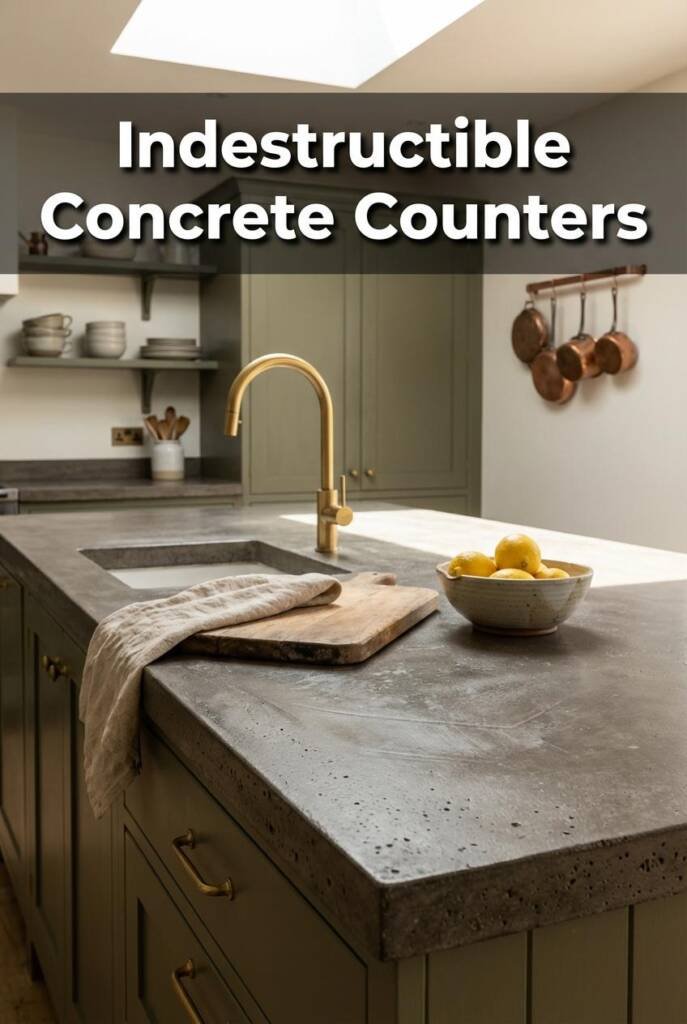
Your cat has already claimed the kitchen counter — might as well make it indestructible.
Poured concrete countertops are one of those barndominium interior ideas that look like they belong in an architecture magazine but actually perform like industrial workhorses. The acid-stained finish creates rich, marbled color variations — deep charcoal, warm terra cotta, even ocean blue — that give your barndo kitchen a custom, high-end look you genuinely can’t replicate with prefab materials.
Here’s why cat owners should care: concrete is completely impervious to claw scratches, won’t chip when your cat knocks a cast iron pan off the counter, and cleans up from raw chicken juice with a simple wipe. Once properly sealed with a food-safe penetrating sealer like Ghostshield Lithi-Tek 4500 ($45/quart, covers about 200 sq ft), the surface resists stains, bacteria, and moisture. Cats can parade across it all day — no damage, no drama. Concrete countertops typically run $65–$135 per square foot installed, which lands right between quartz and high-end granite, but with durability that outlasts both in a pet-heavy household.
The one thing to know: concrete needs resealing every 1–3 years depending on use. It takes about 20 minutes and costs under $50 in materials. That’s the entire maintenance commitment for countertops that will literally outlive your barndominium’s mortgage.
How to Choose Pet-Proof Countertops for a Barndominium Kitchen
- Pick your finish and color: Choose between acid stain for organic color variation or integral pigment for uniform tone. Bring samples home and test them under your kitchen lighting before committing.
- Hire a concrete countertop specialist: Look for fabricators experienced in poured-in-place installation rather than precast slabs — expect $65–$135 per square foot including labor and materials.
- Seal with a food-safe penetrating sealer: Apply Ghostshield Lithi-Tek 4500 or SureCrete DK 400 within 28 days of curing. Two coats minimum, allowing 4 hours of dry time between coats.
- Plan your resealing schedule: Set a calendar reminder to reseal every 1–3 years depending on kitchen traffic. The whole process takes 20 minutes and one $45 quart of sealer.
- Budget move: DIY poured concrete countertops using a Quikrete Countertop Mix kit ($55 per bag, one bag covers about 8 square feet) can drop your total cost to $20–$30 per square foot.
10. Loft Bedrooms with a Cat’s Dream Staircase
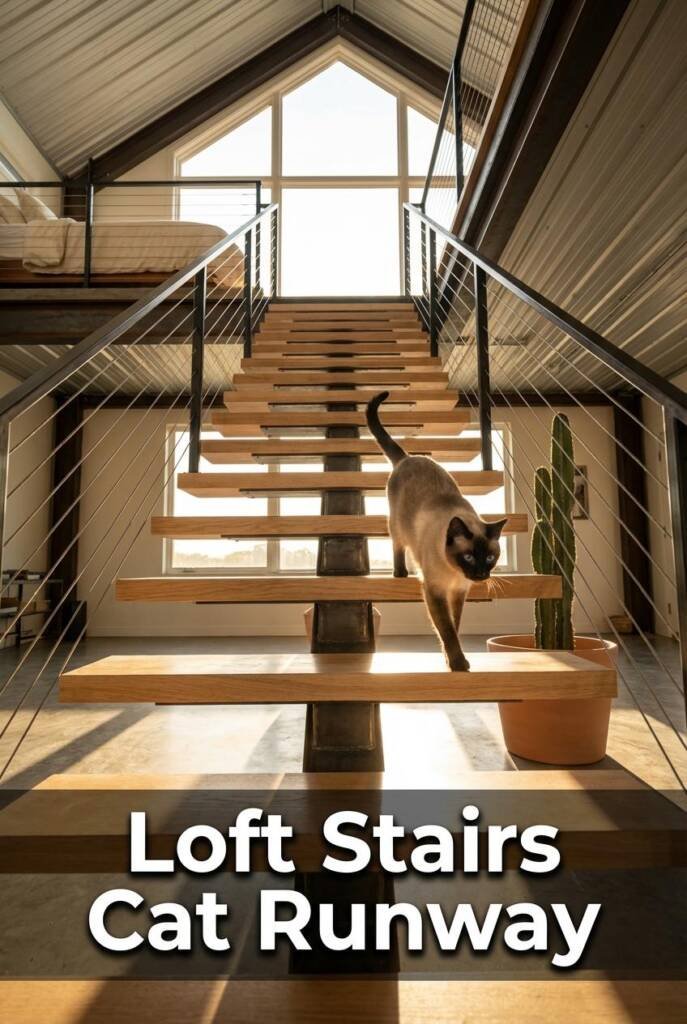
Your loft staircase is already a cat tree — it just doesn’t know it yet.
Loft bedrooms are one of the most popular barndominium ideas interiors-wise, and that soaring open staircase connecting the main floor to the sleeping area? It’s architectural drama that practically begs to be used as a cat highway. Wide-tread stairs with clean metal or cable railings look incredible in a steel-frame build — and they double as the kind of elevated runway cats are hardwired to love.
The key to making a loft bedroom barndominium work for cats is upgrading from standard 10-inch treads to 12–14-inch deep treads, which give cats confident footing whether they’re sprinting or lounging mid-stair to survey their kingdom. Add a few wall-mounted perching shelves along the staircase wall — the Catastrophic Creations Fabric Raceway ($95) integrates seamlessly into modern interiors and turns dead wall space into a parallel cat path beside the stairs. Solid half-walls or vertical cable railings spaced no more than 3 inches apart keep adventurous cats from squeezing through while preserving that open loft sightline everyone wants in barndominium ideas for pets.
How to Make Barndominium Loft Stairs Safe and Fun for Cats
- Size your treads for paws: Spec stair treads at 12–14 inches deep and 36 inches wide minimum — this gives cats room to pass each other and perch without blocking foot traffic.
- Choose the right railing style: Use vertical cable or baluster spacing of 3 inches or less to prevent cats from slipping through; horizontal cables act as ladders and encourage climbing.
- Add parallel wall shelves: Mount 3–4 shelves (8–10 inches deep) along the staircase wall at staggered heights using Catastrophic Creations brackets or similar, creating an alternate cat route.
- Finish treads with grip: Apply non-slip stair tread strips like the Houseables anti-slip tape ($12 for a 15-foot roll) to keep cats and humans steady on open-riser designs.
- Budget move: Skip custom-built cat shelves and use IKEA LACK wall shelves ($10.99 each) with added carpet pads for a full staircase cat run under $50.
11. Performance Fabric Sofas That Look Way Too Expensive to Be Pet-Proof
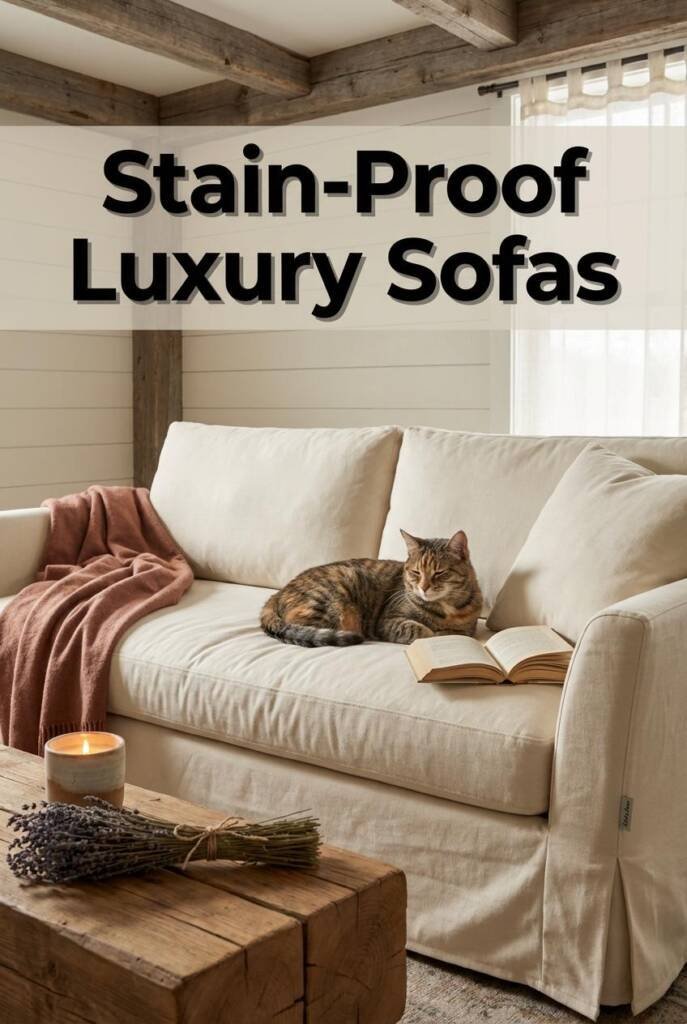
Your cat’s claws versus a $2,000 sofa — and the sofa wins every time.
Here’s the dirty secret of barndominium interior ideas: that gorgeous linen-look sofa in the Instagram photo might actually be bulletproof. Performance fabrics from brands like Crypton and Revolution have completely closed the gap between “looks expensive” and “survives everything.”
These fabrics mimic the texture and drape of high-end natural fibers while being engineered at the molecular level to repel liquids, resist odors, and release pet hair with a quick lint roll. In a barndominium’s open-concept living area, a performance fabric sofa becomes the anchor piece that ties the whole space together — without the anxiety.
For cat owners specifically, Revolution fabric is the standout. It’s woven so tightly that claws can’t snag individual threads, which means your cats can knead to their heart’s content without leaving pulls. The Article Sven sofa in a Crypton-blend fabric runs around $1,800-$2,200 and looks like something from a design magazine. If you want a dedicated pet proof sofa brand, Allform and Interior Define both offer Revolution fabric upgrades for $100-$200 more than their standard options.
The real flex for barndominium ideas for pets is choosing a sofa in a warm, lived-in color like camel or charcoal — tones that complement metal and wood finishes while camouflaging the inevitable fur deposits between cleanings.
How to Choose a Performance Fabric Sofa for a Barndominium
- Pick the right performance fabric: Choose Crypton for maximum stain resistance or Revolution for superior claw-proof durability. Both come in 50+ colorways that mimic natural linen, velvet, and tweed.
- Size it for your barndominium layout: Measure your open-concept living zone and go with a sofa at least 85 inches wide — performance fabric sectionals from Interior Define start around $2,400 with pet-safe upgrades included.
- Test the claw factor: Order free swatches (most brands ship 5-10 at no cost) and let your cat scratch-test them for a week before committing.
- Coordinate with your barndominium finishes: Match warm-toned fabrics like camel or olive to exposed wood beams, or go charcoal and slate to complement raw steel framing.
- Budget move: IKEA’s Kivik sofa ($549) accepts custom slipcovers from Comfort Works in Crypton fabric for around $350, giving you a legit performance fabric sofa for under $900 total.
12. Hidden Litter Box Cabinets That Match Your Credenza
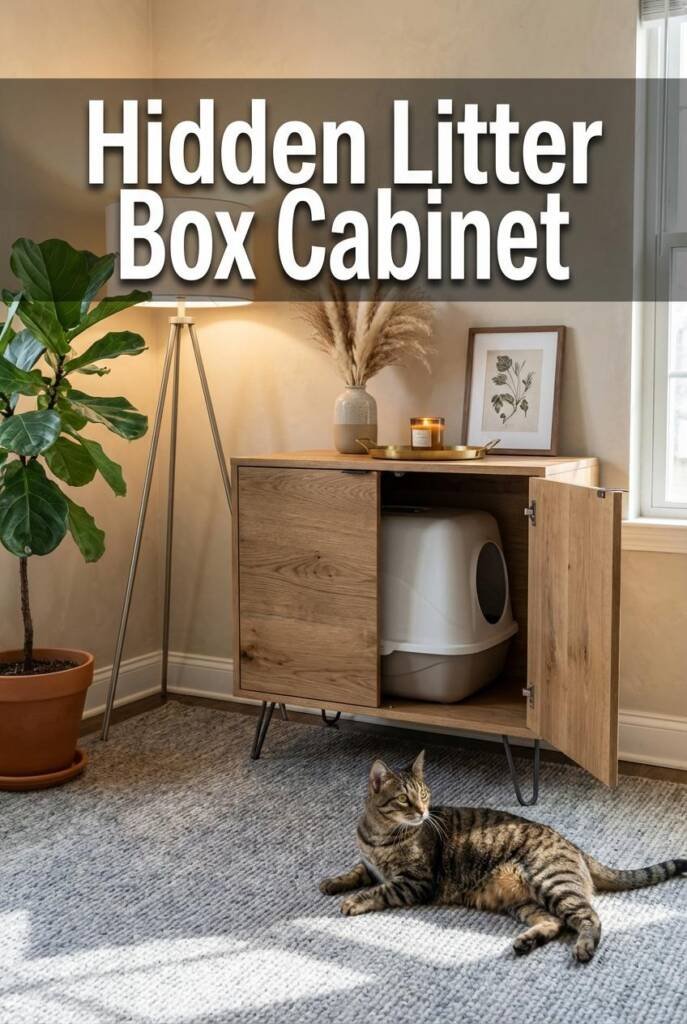
Your guests will compliment the credenza and never once suspect there’s a litter box inside it.
Nobody wants a litter box as a focal point, and in a barndominium where open floor plans put everything on display, concealment is non-negotiable. A hidden litter box cabinet styled to match your credenza or media console keeps things seamless — think shiplap paneling, matte black hardware, and a cat-sized entry hole that reads as a decorative cutout. The industrial-farmhouse aesthetic of most barndominium interiors actually makes this easier to pull off because rustic wood tones and metal accents forgive imperfections in DIY builds.
For cats, the enclosed space mimics the covered, den-like environment they naturally prefer for doing their business, which can reduce litter scatter and stress in multi-pet households. The IKEA Kallax shelf unit ($44.99 for the 2×2) is the most popular hack base — add a cat-hole cut on one side, drop in a standard litter pan, and you’ve got a stealth setup that looks intentional. Ventilation matters, though: drill a series of 1-inch holes along the back panel or install a small USB fan ($12 on Amazon) to keep odors from building up inside.
The real genius in a barndo is placement. Tuck the cabinet under a staircase, along a mudroom wall, or beside your boot bench — spots that exist naturally in these layouts and keep the box accessible for scooping without being in your living space.
How to Build a Concealed Litter Box Cabinet for a Barndominium
- Choose Your Cabinet Base: Grab an IKEA Kallax 2×2 ($44.99) or a thrifted credenza at least 24″ deep to fit a standard litter pan. Confirm your cat can comfortably turn around inside.
- Cut the Entry and Ventilation: Use a jigsaw to cut a 7-8″ wide arch on one side panel, then drill a row of 1″ ventilation holes across the back to prevent odor buildup.
- Style It to Match Your Barndo: Apply a coat of Minwax Dark Walnut stain ($9) or add shiplap-textured contact paper to the exterior. Swap the stock hardware for matte black barn-style pulls.
- Set Up the Interior: Place a waterproof liner or a plastic boot tray ($8) on the bottom shelf, set the litter box on top, and add a small litter-trapping mat just outside the entry hole.
- Budget move: The full IKEA Kallax hack — including stain, hardware swap, liner, and USB fan — runs about $85, roughly a third of what custom built-in litter cabinets cost.
13. Barn-Style Dutch Doors for Room-by-Room Pet Control
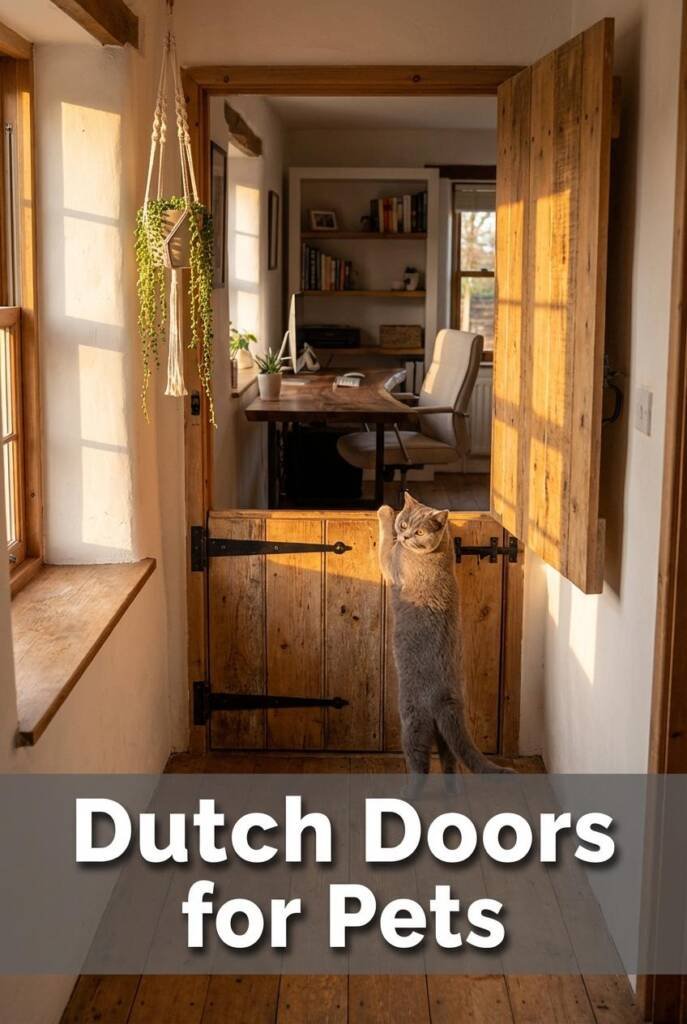
Baby gates are ugly, flimsy, and your cat hates them — Dutch doors fix all three problems at once.
Dutch doors are the unsung hero of barndominium ideas interiors — and honestly, they look incredible. That horizontal split gives every doorway a farmhouse-charming focal point while solving one of the most practical challenges pet owners face: controlling which rooms your animals can access without sealing off light and airflow. A closed solid door feels like a wall; a Dutch door with the top half swung open keeps your space feeling connected and airy while the bottom half acts as a built-in pet gate that actually matches your decor.
For cat owners specifically, the dutch door interior setup is genius. You can keep the bottom closed at roughly 42 inches high — tall enough to block most dogs but a height cats can still leap over when they want to. This gives your cat free roam while restricting larger pets or toddlers from certain zones like your studio, laundry room, or a dedicated cat feeding area. Simpson Door Company makes a solid pre-hung interior Dutch door starting around $450 that fits standard 36-inch openings. Unlike pressure-mounted baby gates that cats knock loose (and that look terrible), a Dutch door is a permanent, beautiful solution that leans hard into the barndominium aesthetic.
How to Install Dutch Doors for Pet Management in a Barndominium
- Measure and Order: Measure your existing door frame — most interior openings are 80″ x 36″. Order a pre-hung Dutch door from Simpson Door Company ($450–$650) or save by converting an existing solid-core door with a track saw and piano hinge kit.
- Remove the Existing Door: Pop the hinge pins on your current door and remove the casing trim if the new frame dimensions differ. Keep the trim if it’s in good shape — barn-style casing is expensive to replace.
- Install the Dutch Door Frame: Shim the pre-hung frame plumb and level, then secure it with 3-inch screws into the jack studs. Install the included barrel bolt or sliding latch that locks the two halves together.
- Add a Shelf Ledge: Attach a 4-inch deep pine shelf along the split point using L-brackets — it gives cats a mini landing spot and gives you a surface for setting down coffee when your hands are full.
- Budget move: Convert an existing solid-core door into a Dutch door yourself using a $35 piano hinge and a circular saw — total project cost under $60.
14. Heated Concrete Floors That Turn the Whole Barndo into a Cat Bed
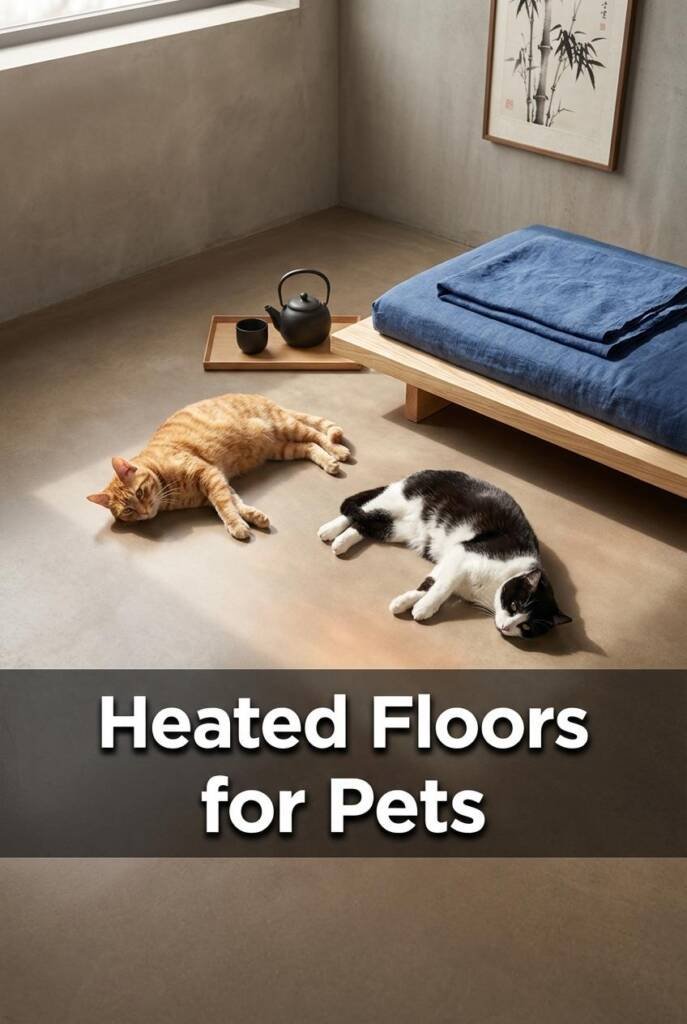
Your cat already thinks it owns the house — heated floors just make it official.
Polished concrete already gives barndominiums that sleek, industrial-modern look — but run radiant heating underneath and you’ve got a floor that’s warm to the touch year-round. The result is a surface that’s gorgeous, virtually indestructible against claws, and easy to sweep clean of fur. No rugs needed, no cold tile shock in January, just seamless warmth across every room. It’s one of those barndominium interior ideas that solves three problems at once.
Cats are heat-seeking missiles, and radiant floor heating turns your entire square footage into prime napping real estate. Instead of fighting over one sunny windowsill, your cats will sprawl anywhere — hallways, kitchen, bathroom, you name it. A system like the Warmboard-S hydronic panel runs about $5–$8 per square foot for materials and maintains a consistent 75–80°F surface temperature that cats absolutely melt into. Bonus: no forced-air vents blowing dust and dander around, which means cleaner air for everyone.
Because the heat rises evenly from the slab, you’ll also notice fewer drafts at pet level — exactly where your animals spend their lives. It’s the rare upgrade that improves your barndominium’s resale value while making your cat’s life measurably better.
How to Add Radiant Floor Heating to a Barndominium for Pets
- Plan During the Slab Pour: Radiant tubing must be embedded before concrete is poured, so spec this during the design phase. Retrofitting costs 2–3x more and limits your options.
- Choose Your System Type: Hydronic (hot water) systems like Uponor’s hePEX tubing are ideal for whole-barndo coverage and cost $6–$10 per square foot installed, including the boiler.
- Set Your Thermostat Zones: Install at least 2–3 zones so you can keep pet-heavy areas like the living room at 78°F while dialing back unused rooms to save energy.
- Finish with Polished Concrete: After curing, have the slab ground and sealed with a pet-safe densifier like Prosoco Consolideck — it resists stains, scratches, and runs about $0.50–$1.00 per square foot.
- Budget move: Electric radiant mats like QuietWarmth cost as little as $3 per square foot and work well for heating a single 200 sq ft pet zone for under $600 in materials.
15. Mezzanine Reading Nooks with Built-In Cat Perches
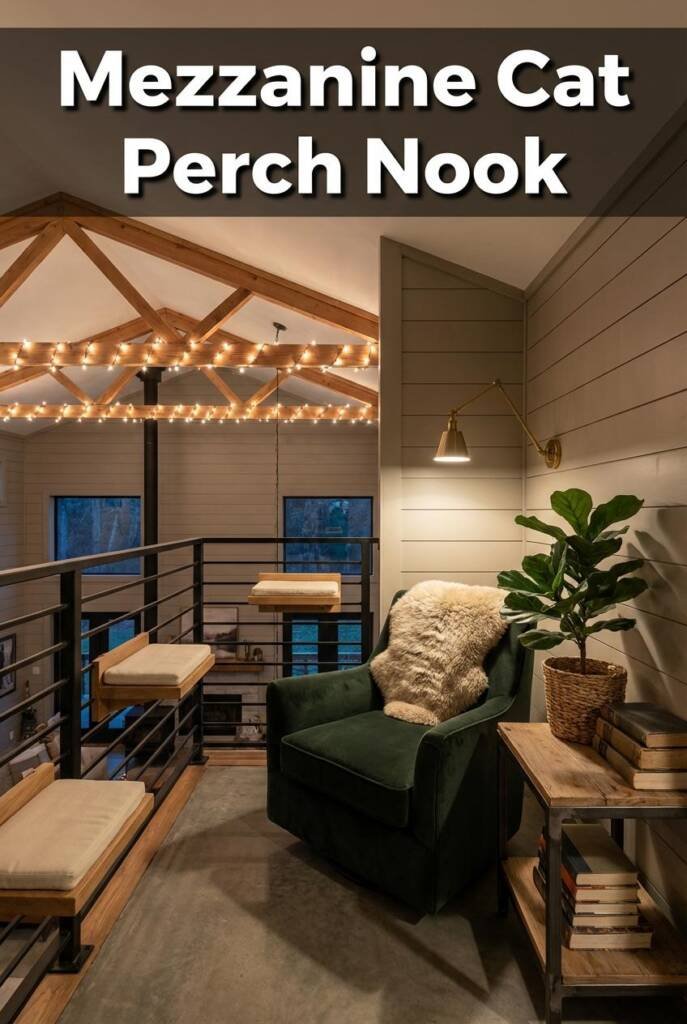
Your cat already thinks the mezzanine railing belongs to them — now make it official.
That half-level mezzanine above your barndominium’s great room is begging to become something better than storage. Frame it out with a built-in daybed against the back wall, layer in oversized cushions and a reading lamp, then run a series of staggered cat shelves along the open railing side. The result is an interior that looks like a curated loft lounge — the kind of barndominium interior ideas that make people stop scrolling — while secretly doubling as vertical cat territory with panoramic views of the living space below.
Cats are hardwired to seek elevated vantage points, and a mezzanine already delivers that. Adding railing-height perches turns passive dead space into active enrichment. The Catastrophic Creations Fabric Raceway ($89 per section) mounts cleanly to the railing posts and gives cats a walkway that looks intentional, not improvised. Pair it with a sisal-wrapped railing cap so they can scratch without destroying your finishes.
This is the barndominium idea that ties the whole list together: when your architecture already has dramatic vertical space, designing for both species isn’t a compromise — it’s the whole point.
How to Turn a Barndominium Mezzanine into a Cat-Friendly Reading Nook
- Frame your nook dimensions: Most barndo mezzanines are 8–12 feet deep; section off a 6×8-foot zone for the reading area, leaving the remaining depth as a cat runway corridor along the railing.
- Install the daybed and shelving: Build a platform daybed (36 inches wide minimum) against the back wall using 2×6 framing and 3/4-inch plywood — total materials run about $150–$200.
- Mount cat perches along the railing: Stagger 3–4 shelves at 12-inch vertical intervals using heavy-duty L-brackets rated for 50+ lbs, wrapping each in carpet remnants or faux sheepskin for grip.
- Add safety and lighting: Install a 42-inch-minimum railing with vertical balusters spaced under 4 inches apart (safe for cats and to code), then mount a swing-arm wall sconce like the Holtkoetter ($189) for reading light.
- Budget move: Skip custom carpentry and repurpose IKEA LACK shelves ($7.99 each) as cat perches — they’re the perfect 10-inch depth and hold up to 15 lbs mounted with French cleats.
Barndominium Ideas Interiors That Welcome Pets
When you step back and look at these barndominium ideas interiors through a pet owner’s lens, the pattern is clear: almost every design element that makes a barndo look incredible also happens to make life with pets dramatically easier. Polished concrete, metal accents, open layouts, built-in storage — these aren’t compromises you make because you have pets. They’re choices you make because you have taste AND pets, and you refuse to pick one over the other. That’s the beauty of barndominium ideas for pets: the style and the function aren’t fighting each other. They’re the same thing.
Whether you’re drawn to the loft staircases, the hidden litter box cabinets, or the heated floors that will turn your entire home into one giant cat nap zone, the takeaway is simple — you don’t have to sacrifice great design to live comfortably with animals. Build smart, choose durable materials, and lean into the barndo aesthetic that already does most of the heavy lifting for you.
Here at Sweet Purrfections, we create content at the intersection of cool home decor and real life with pets. Because we believe your home should look like it belongs in a design magazine AND work for the furry family members who actually run it.
Leave a Reply