
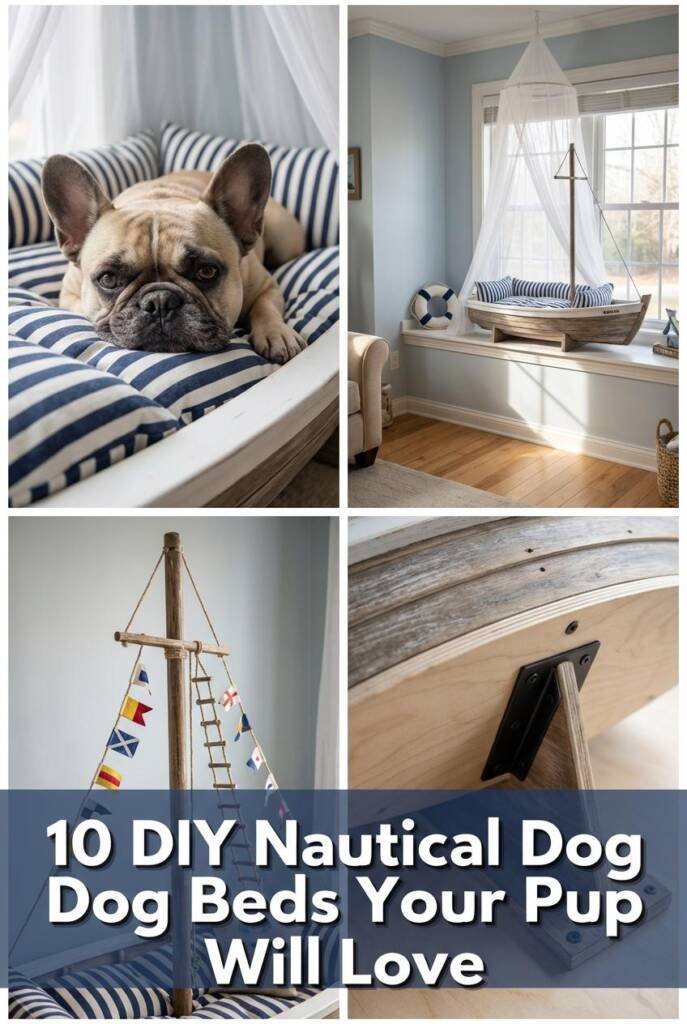
There’s something irresistibly charming about a dog curled up in a boat. The curved hull cradles them like a gentle wave, and each weathered vessel seems to hold stories of adventure and comfort. Boat dog beds aren’t just pet furniture—they’re cozy sanctuaries with character.
Ocean-inspired cat furniture like lighthouse towers and coastal-themed trees has become a favorite among pet owners, so why not bring that same seaside charm to your dog’s space?
These ten boat bed ideas will make your pup the captain of their own ship, whether your style leans rustic, coastal, or modern nautical. Sometimes the best dog bed isn’t found in a store—it’s created from imagination, reclaimed wood, or a forgotten dinghy waiting for new life.
1. The Classic Weathered Rowboat Bed
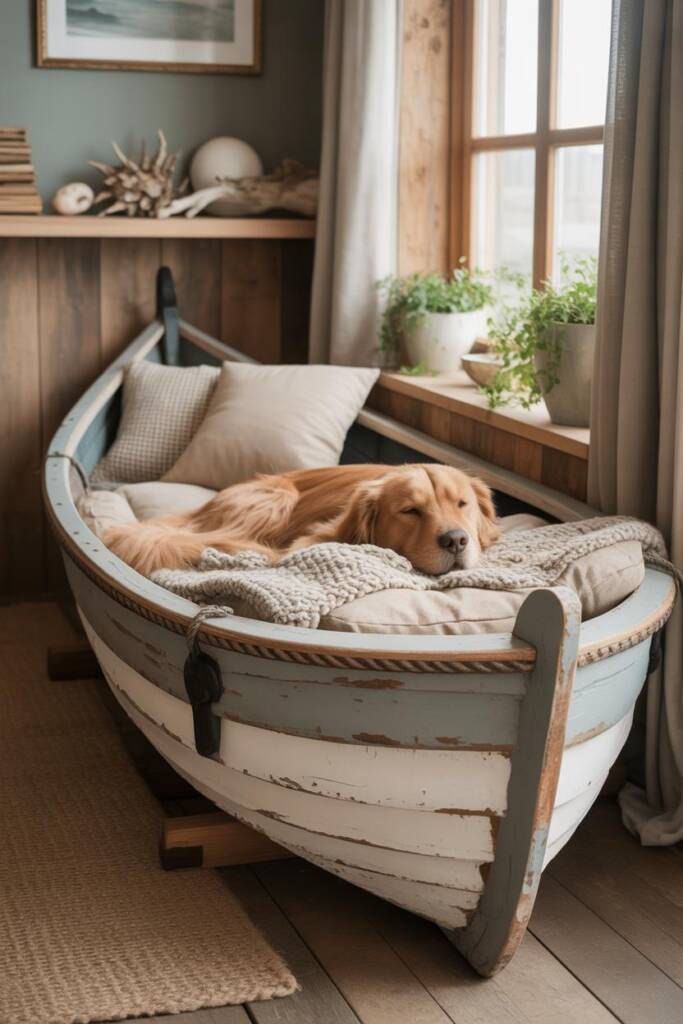
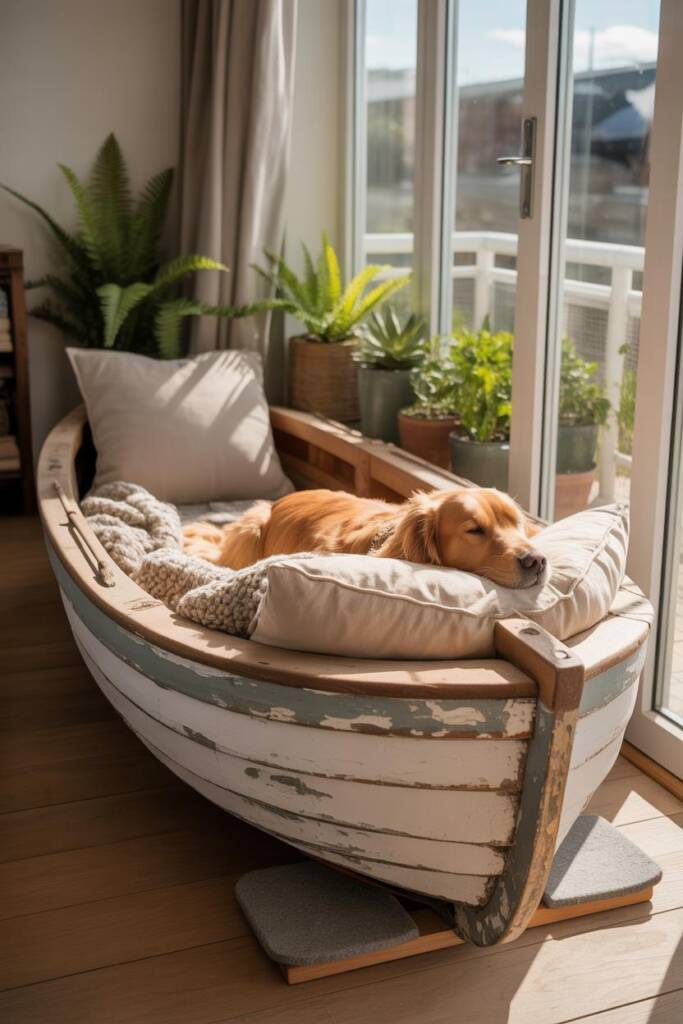
Picture this: a time-worn wooden rowboat, its paint gently peeling to reveal layers of history, filled with plush cushions and soft throws. This is the boat bed that started it all, and for good reason. The natural patina of an aged rowboat brings instant character to any space, whether you’re working with farmhouse style, coastal cottage vibes, or even industrial loft aesthetics. The beauty lies in its authenticity—every scratch, fade mark, and worn edge adds visual interest while actually serving a purpose.
The curved sides of a rowboat create a natural nest that dogs instinctively love. It’s like a den, offering security and comfort while the raised edges block drafts and create a sense of enclosure. For anxious dogs or those who love to burrow, this design is pure gold. Medium to large breeds fit beautifully in standard rowboats, with enough room to stretch out or curl up tight.
Here’s what makes this work so well: that weathered wood isn’t just pretty, it’s practical. The worn surface has already done its aging, meaning your dog’s nails and movements won’t damage a pristine finish. You’re working with a piece that was built to withstand water and weather, so a little dog hair and the occasional accident won’t phase it.
DIY Guide: Preparing Your Rowboat for Dog Bed Conversion
What You’ll Need
- Vintage rowboat (check structural integrity first)
- Medium-grit sandpaper (120-150 grit)
- Marine-grade sealant or pet-safe wood finish
- Foam padding or marine-grade cushion (cut to fit)
- Waterproof fabric liner or plastic sheeting
- Outdoor fabric or washable cushion cover
- Optional: small furniture pads for floor protection
Step-by-Step Process
- Inspect and Clean – Check for loose boards, splinters, or rot. Clean thoroughly with mild soap and water, removing any debris from the boat’s interior. Let dry completely (24-48 hours).
- Smooth Rough Edges – Lightly sand any sharp edges or splintered areas where your dog might rest their head or paws. You’re not refinishing—just removing hazards while keeping that weathered character.
- Seal the Interior – Apply a pet-safe sealant to the inside bottom and lower sides. This protects the wood from moisture (drool, accidents, wet paws) without changing the exterior aesthetic. Let cure per product instructions.
- Add Waterproof Barrier – Line the bottom with waterproof fabric or cut a plastic sheet to size. This extra layer protects your boat and makes cleanup easier.
- Create Custom Cushioning – Measure the boat’s interior and cut foam to fit (2-4 inches thick works well). Wrap in outdoor or waterproof fabric, then cover with your decorative bedding. This layering system means you can wash the top layer while keeping the boat protected.
Pro tip: Add felt pads to the bottom exterior corners to prevent floor scratching and make the bed easier to move for cleaning.
2. The Painted Dinghy Dream
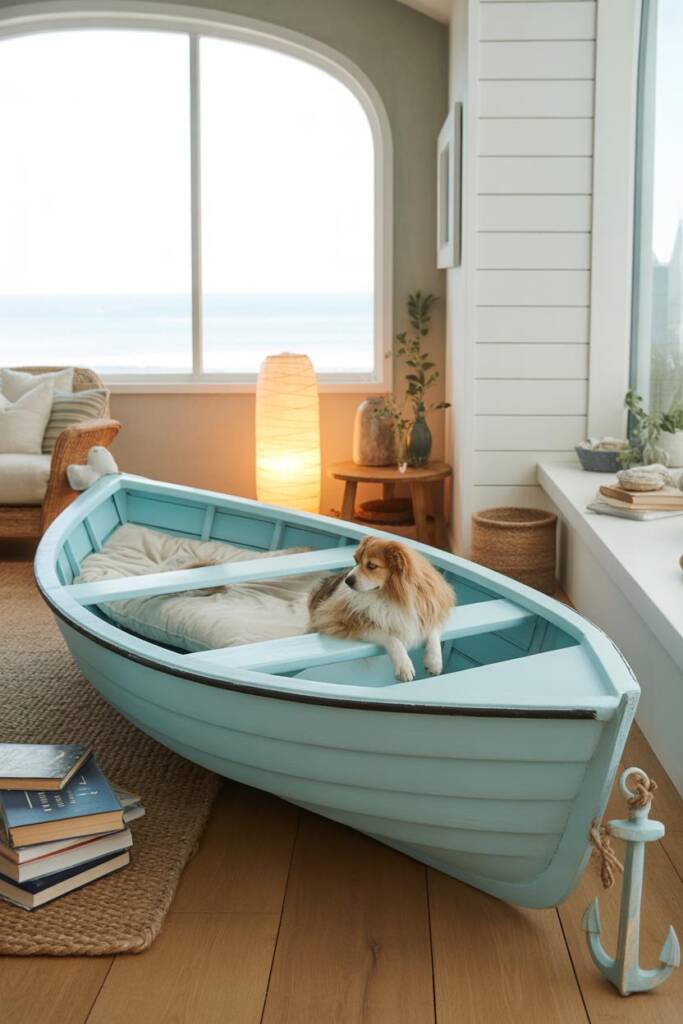
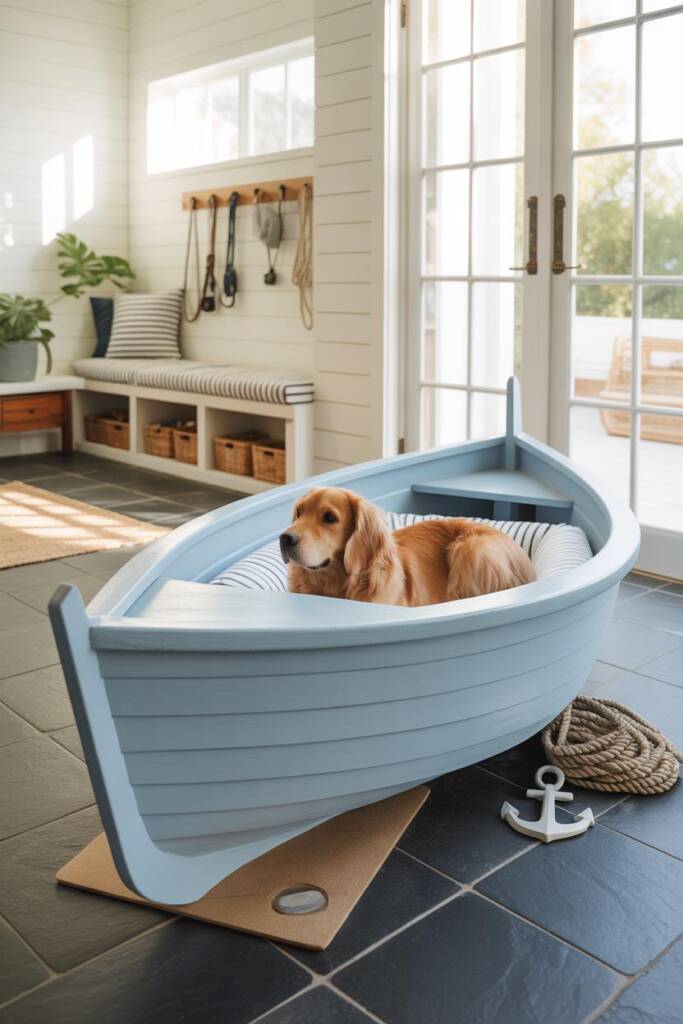
If you love the boat bed concept but want something that seamlessly blends with your existing decor, a freshly painted dinghy is your answer. Small dinghies and tender boats make perfect canvases for transformation, and a coat of paint does wonders for both aesthetics and function. Think soft coastal colors: crisp whites that brighten a space, powder blues that evoke calm seas, seafoam greens that bring the outdoors in, or even bold navy for dramatic contrast.
The magic of a painted boat bed goes beyond looks. Color psychology plays a real role in creating a calming environment for your dog. Soft blues and greens are naturally soothing, while whites reflect light and create an airy, peaceful atmosphere. When you’re choosing your paint color, consider both your home’s palette and the mood you want to create for your pup’s personal space.
A fresh coat of marine-grade paint also seals the wood completely, protecting it from moisture, odors, and wear. This makes cleanup infinitely easier and extends the life of your boat bed significantly. You’re not just beautifying—you’re preserving.
Small to medium dogs are perfectly suited for dinghy conversions. The compact size means these beds can fit in cozy corners, bedroom nooks, or even covered patios without overwhelming the space. Modern coastal interiors especially love this look, as the clean lines and fresh paint feel contemporary while maintaining that nautical soul.
DIY Guide: Transforming a Dinghy with Paint
What You’ll Need
- Small dinghy or tender boat
- 120-grit sandpaper and tack cloth
- Marine-grade wood primer
- Marine-grade paint (pet-safe, low-VOC)
- Quality paintbrushes or foam rollers
- Painter’s tape (for crisp edges)
- Custom-cut foam cushion
- Washable cushion cover
Step-by-Step Process
- Prep the Surface – Clean the boat thoroughly and let dry. Lightly sand the entire exterior and interior to create texture for paint adhesion. Wipe away all dust with a tack cloth.
- Tape and Prime – Use painter’s tape along any edges you want to keep natural wood. Apply one coat of marine-grade primer, following grain direction. Let dry 4-6 hours.
- Paint in Thin Coats – Apply your chosen color in 2-3 thin coats rather than one thick coat. This prevents drips and ensures even coverage. Wait 4-6 hours between coats.
- Cure Completely – Allow 72 hours for full curing before adding bedding. This ensures the paint hardens fully and off-gassing completes.
- Measure and Cushion – Trace the boat’s interior shape on paper, then use this template to cut foam. Add 1/4 inch extra for a snug fit. Cover with your chosen fabric.
Pro tip: Test your paint color on a hidden section first. Colors often look different on wood grain than on paint chips.
3. The Canoe Conversion
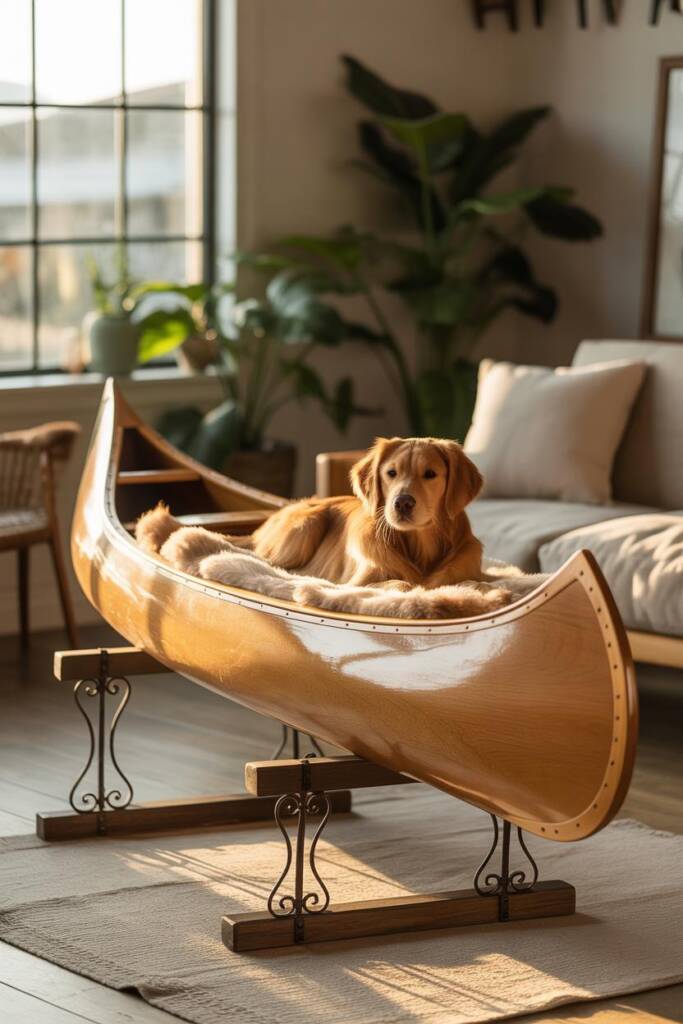
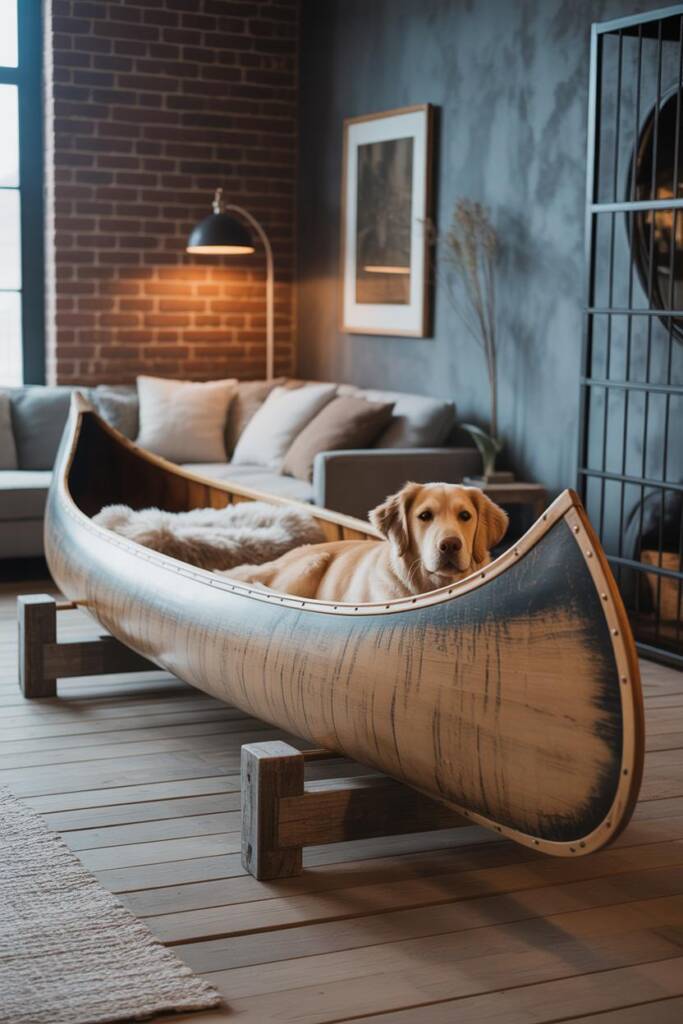
Long-bodied dogs who love to stretch out have finally met their match. A canoe conversion offers something most dog beds can’t: generous length that accommodates full-body sprawling. Golden Retrievers, Labs, German Shepherds, and other large breeds can finally stretch from nose to tail without hanging off the edges. But here’s the brilliant part—you can use a canoe whole, or cut it lengthwise for a shallower option that’s easier for older dogs to access.
The sleek, elongated shape of a canoe brings sculptural beauty to a room. Rather than looking like a pet accessory, it reads as intentional decor—a statement piece that happens to be incredibly functional. Elevated on custom wooden stands (or even repurposed sawhorses with a rustic finish), a canoe bed becomes furniture-grade gorgeous.
That curved hull? It’s doing more than looking pretty. The shape naturally blocks drafts from underneath and along the sides, creating a warmer, cozier microclimate for your dog. During colder months, this makes a real difference in comfort. Dogs naturally seek enclosed spaces for security, and a canoe’s contours provide psychological comfort along with physical warmth.
When selecting a canoe, check for structural integrity carefully. You want solid wood or fiberglass that can safely support your dog’s weight when elevated. The stands should be sturdy and wide-set for stability—the last thing you want is tipping. Sand any rough edges smooth, seal the wood if needed, and ensure it’s properly cured before introducing bedding. For an extra touch, stain the exterior in a tone that coordinates with your flooring or furniture.
DIY Guide: Converting a Canoe into a Dog Bed
What You’ll Need
- Canoe (aluminum, wood, or fiberglass)
- Wooden stands or sawhorses (sturdy enough for your dog’s weight)
- Sandpaper (various grits)
- Wood stain or marine sealant
- Measuring tape
- High-density foam (4-6 inches thick)
- Outdoor or heavy-duty upholstery fabric
- Optional: saw (if cutting canoe lengthwise)
Step-by-Step Process
- Decide on Height – Determine if you’ll use the canoe whole (elevated on stands) or cut it lengthwise for a shallower bed. Cutting works well for senior dogs but requires careful measuring and a reciprocating saw.
- Build Stable Stands – If elevating, create stands from sturdy lumber (4×4 posts work well). They should be wide-set (at least as wide as the canoe’s widest point) and the right height for your dog to step in comfortably. Sand smooth and stain to match.
- Smooth All Edges – Sand the canoe’s rim and any rough spots thoroughly. If you’ve cut it, sand the new edge extensively to remove sharp areas. Start with 80-grit, finish with 220-grit for smooth touch.
- Seal the Interior – Apply marine sealant or wood oil to protect from moisture. For aluminum canoes, simply clean thoroughly and check for sharp edges.
- Create Custom Bedding – Measure the canoe’s length and width at the bottom. Cut foam to fit snugly. Cover with durable, washable fabric. Add bolsters along the sides if desired for extra neck support.
- Secure to Stands – Use rubber padding between canoe and stands to prevent slipping. Test stability before allowing your dog to use it.
Pro tip: Add non-slip stair treads or a small ramp if your canoe bed is elevated—older dogs will appreciate the easier access.
4. The Miniature Sailboat Sanctuary
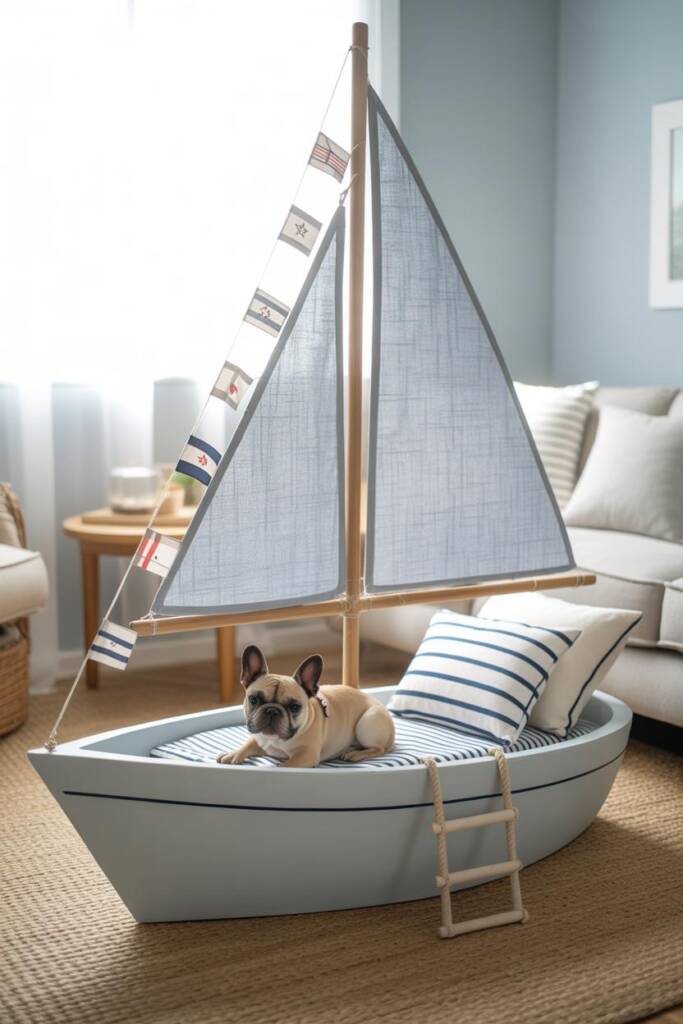
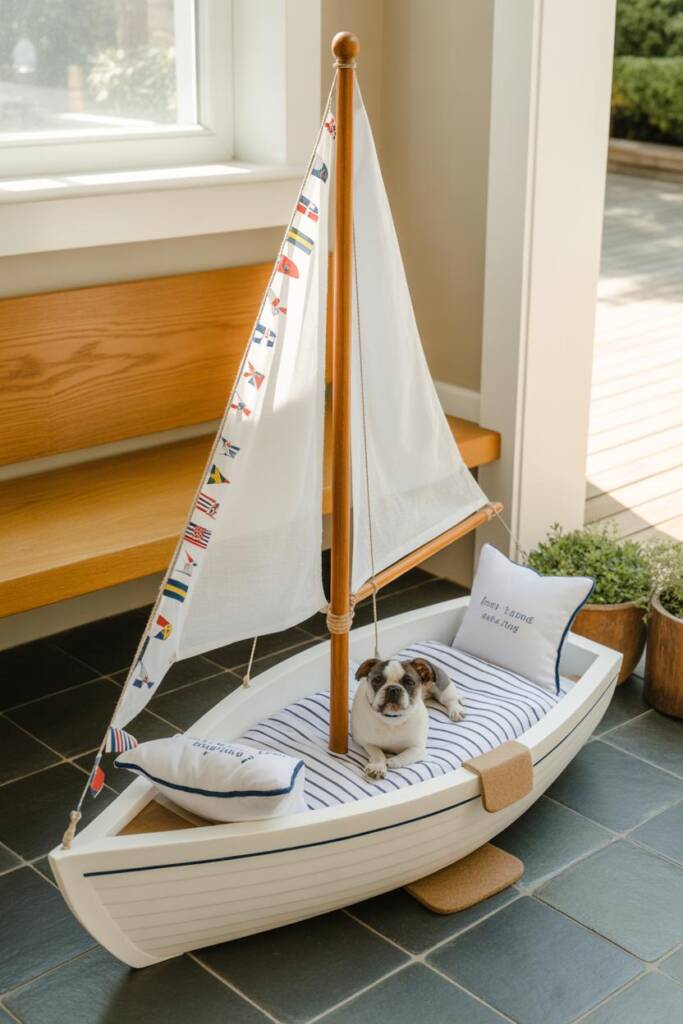
Now we’re talking showstopper. A miniature sailboat with its mast still intact transforms a dog bed into pure artistry. This is for the pet parent who doesn’t just want functional—they want unforgettable. Small decorative sailboats, whether vintage toys scaled up or authentic child-sized vessels, create an immediate focal point that guests will photograph and remember.
The visual impact is undeniable, but there’s surprising functionality here too. That vertical mast becomes an anchor point for all sorts of comfort additions. Drape sheer fabric from the top to create a gentle canopy that provides shade for outdoor use or a cozy, den-like feeling indoors. For anxious dogs who crave security, this overhead element is incredibly soothing—it mimics the covered spaces they naturally seek.
Small breeds like Chihuahuas, Yorkshire Terriers, Pugs, and French Bulldogs are perfectly proportioned for these smaller vessels. The compact size means you can place this bed almost anywhere—on a wide window sill with a view, in a sunny corner, on a covered porch, or even as a centerpiece in a nautical-themed room.
Lean into the theme with intention. Add miniature nautical flags that flutter with the breeze, incorporate rope ladder details along the side (properly secured), and choose bedding in classic maritime stripes or solid sail-cloth white. Small throw pillows in anchor prints or navy piping add polish without overwhelming the scale.
The mast offers practical possibilities beyond aesthetics. Attach a small clip to hang a favorite toy, secure a gentle LED string light for ambiance, or use it to hold a light blanket that can be pulled down for extra coziness. Just ensure everything is securely fastened and that there are no small parts your pup could chew off.
DIY Guide: Creating a Miniature Sailboat Dog Bed
What You’ll Need
- Small sailboat (toy-scale or child-sized)
- Weighted base material (sandbags, decorative stones, or wood blocks)
- Strong adhesive or wood screws
- Sandpaper and pet-safe finish
- Small foam cushion (cut to fit)
- Maritime-themed fabric
- Optional: sheer fabric for canopy, LED string lights, nautical accessories
Step-by-Step Process
- Stabilize the Base – This is critical for safety. Add weight to the bottom of the boat using sandbags tucked inside before adding bedding, or attach the boat to a wider wooden platform base. Test by gently pushing—it shouldn’t tip.
- Secure the Mast – Check that the mast is firmly attached. If loose, reinforce with wood glue and small screws from inside the hull. Let cure completely. If the mast is removable and wobbly, consider making it permanent or removing it entirely for safety.
- Smooth and Finish – Sand any rough areas, especially where your small dog will rest. Apply pet-safe wood finish if needed. Focus on splinter prevention.
- Size the Cushion – Trace the boat’s interior on paper, cut your template, then use it to cut foam (2-3 inches thick for small breeds). Create a fitted cover with elastic edges so it stays in place.
- Add Canopy (Optional) – Attach clip rings to the top of the mast. Drape lightweight, sheer fabric through the rings to create a gentle overhead covering. Ensure fabric can’t tangle around your dog.
- Accessorize Thoughtfully – Add decorative elements that are securely attached. Avoid anything small enough to chew off. LED lights should be battery-operated and placed out of reach.
Pro tip: Place the sailboat bed against a wall or in a corner for additional stability, especially if you have an energetic small dog who might jump in enthusiastically.
5. The Double-Decker Boat Bed
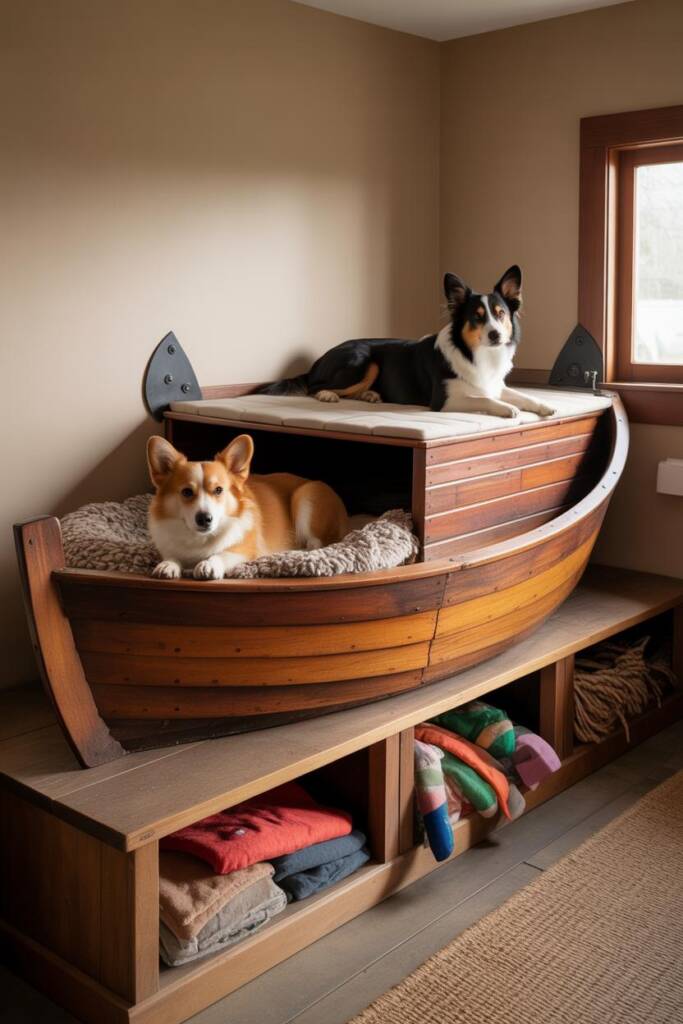
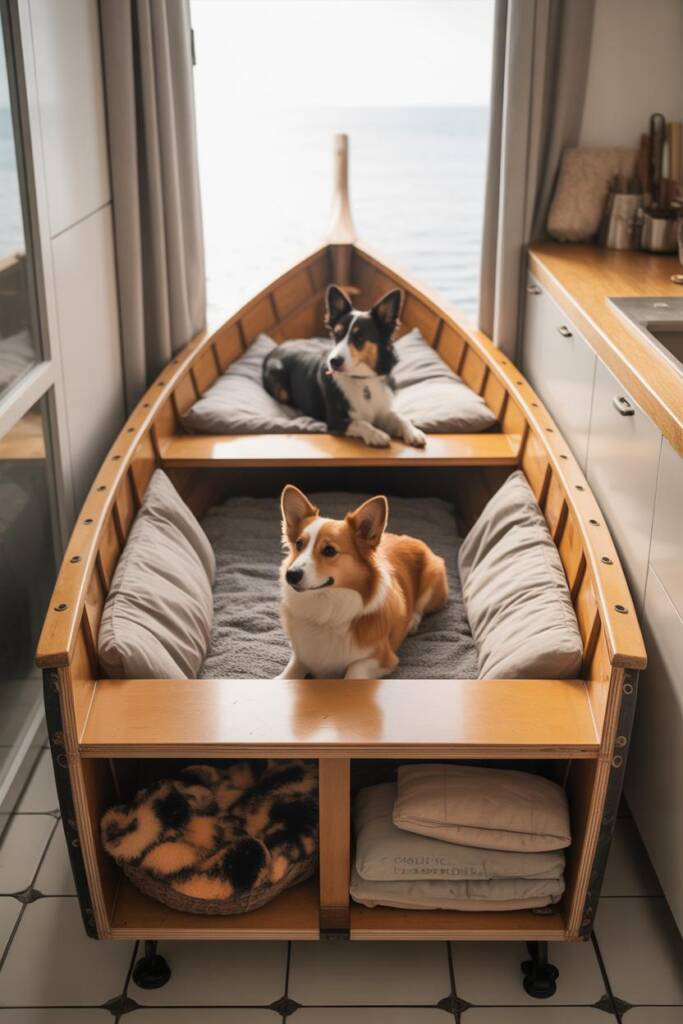
Here’s where things get really clever. Larger boats with built-in compartments, benches, or natural levels can be transformed into multi-zone sleeping areas that work brilliantly for multiple dogs—or one very particular pup who likes options. Think of old fishing boats with seating areas, vintage speedboats with split levels, or even cabin boats with distinct sections.
Multi-dog households know the challenge: dogs need their own space even when sharing a room. Territorial squabbles over the “best spot” become non-issues when each dog has their designated level or section within the same boat structure. The physical divisions create psychological ownership, and dogs settle more peacefully knowing they have their own territory. It’s brilliant problem-solving disguised as charming decor.
But even single-dog homes benefit from this design. Dogs are mood creatures just like us. Sometimes they want to curl up in a deep, enclosed space; other times they prefer to sprawl in a more open area. A double-decker boat bed offers both options. One level might feature a plush, cave-like setup with raised sides, while another provides a flatter, more exposed platform. Your dog can choose based on temperature, mood, or time of day.
The built-in storage potential is an unexpected bonus. Many vintage boats have compartments that can be repurposed to hold dog supplies—extra blankets, toys, grooming tools, or treats. You’re not just adding a bed; you’re adding functional furniture that organizes your pet essentials beautifully.
When selecting a boat for this purpose, prioritize structural stability and safe access between levels. You don’t want your dog jumping from heights that could stress joints. Consider adding a small ramp or steps if needed. Ensure all edges are smooth and that there are no pinch points or sharp hardware. The boat should sit low enough that even the upper levels are easily accessible for your breed’s size and age.
DIY Guide: Building a Double-Decker Boat Bed
What You’ll Need
- Large boat with compartments or built-in benches
- Wood filler and sandpaper
- Pet-safe wood sealant
- Multiple foam cushions (sized for each level)
- Different fabric types for varied textures
- Small ramp or pet stairs (if levels are high)
- Optional: storage baskets for compartments
Step-by-Step Process
- Assess and Divide Zones – Identify natural divisions in your boat. Mark out which areas will serve as sleeping zones. Measure each section separately for custom cushioning.
- Repair and Reinforce – Check stability between levels. Fill any gaps or cracks with wood filler. Ensure benches or compartments can safely support your dog’s weight. Sand all surfaces smooth.
- Create Safe Access – If levels are more than 8-10 inches apart, add a small ramp or carpeted steps. Secure firmly so they won’t shift. Test stability before introducing your dog.
- Seal All Surfaces – Apply pet-safe sealant to every level, paying special attention to areas where your dog will lie. This protects against moisture and makes cleaning easier.
- Customize Each Level – Cut foam for each zone. Consider different thicknesses—perhaps 4 inches for the main sleeping area, 2 inches for the observation level. Cover each with different fabric types (cooling mesh, plush fleece, durable canvas) to give your dog options.
- Repurpose Storage Areas – Line compartments with washable fabric or plastic bins. Use them to store leashes, toys, or grooming supplies. Add small labels for organization.
Pro tip: Introduce multiple dogs to their designated levels separately, rewarding them for using “their” space. This establishes territory peacefully from the start.
6. The Suspended Boat Hammock
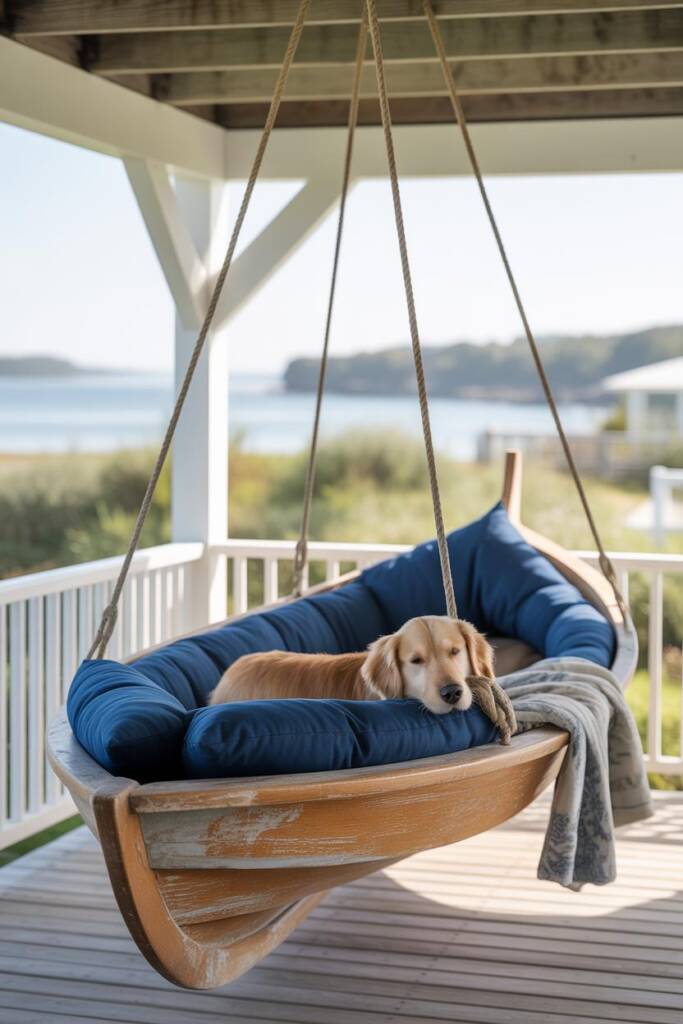
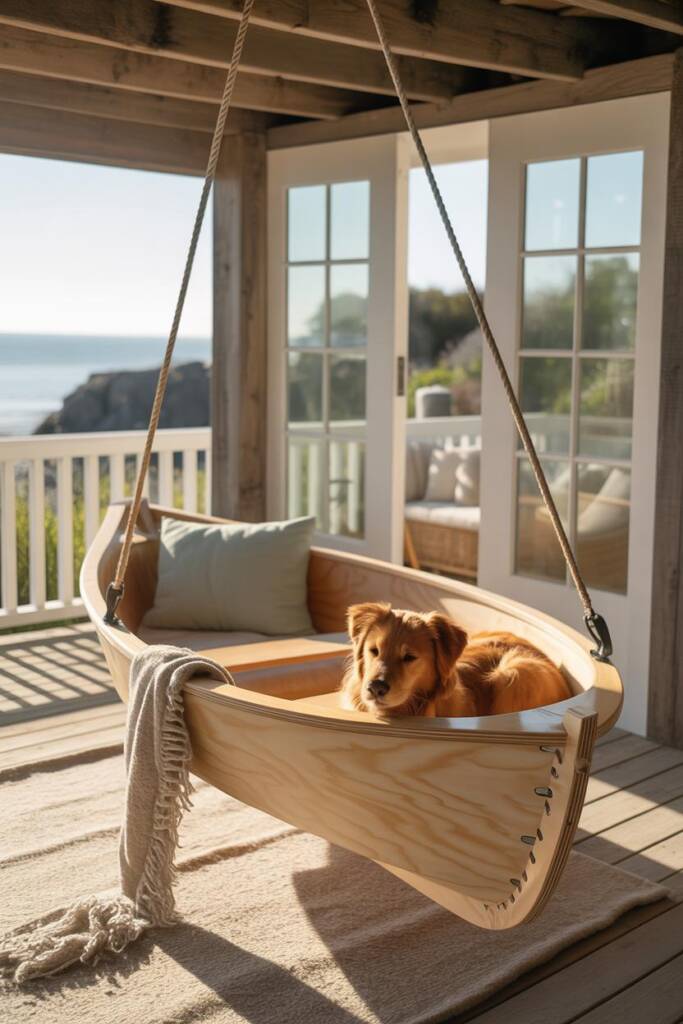
Imagine your dog gently swaying in their own floating sanctuary, cradled by the subtle motion of a suspended boat bed. This isn’t just visually stunning—it’s genuinely therapeutic. A small boat hung securely from ceiling beams or a sturdy pergola creates an experience unlike any traditional dog bed, and the gentle rocking motion taps into something primal and calming.
The science backs this up: rhythmic motion soothes the nervous system. Just as babies calm when rocked and humans find hammocks irresistible, dogs respond to gentle swaying with deeper relaxation. For anxious dogs, those with storm phobias, or pups who struggle to settle, this subtle movement can make the difference between restless pacing and peaceful sleep. The off-ground positioning also appeals to dogs who prefer elevated sleeping spots, giving them a slight vantage point while remaining cozy and enclosed.
This design shines on covered porches, in sunrooms with exposed beams, or even indoors if you have the right structural support. The visual drama is undeniable—it becomes an architectural element that elevates your entire space. Picture it on a wraparound porch with coastal views, or suspended in a corner of a living room with high ceilings and rustic beams.
The key is doing this safely. You need solid ceiling joists or beams capable of supporting your dog’s weight plus the boat itself—and then some. Marine-grade rope or heavy-duty chains work best, attached with eye bolts properly anchored into structural wood (never just drywall). The swing should be minimal—just a gentle give, not wild swaying. Add thick, cushioned bedding that stays put, using non-slip materials underneath to prevent shifting.
Choose calm, confident dogs for this style. Excitable or jumpy dogs might turn it into a hazard, but laid-back pups will treat it like their personal retreat. Start by introducing the boat at ground level, let your dog get comfortable with it, then gradually raise it while supervising their adjustment. Most dogs adapt quickly and soon seek it out as their preferred napping spot.
DIY Guide: Creating a Suspended Boat Hammock
What You’ll Need
- Small, lightweight boat (under 50 lbs)
- Stud finder and drill
- Heavy-duty eye bolts (rated for 3x your dog’s weight minimum)
- Marine-grade rope or chains (4 points of suspension)
- Carabiners or quick-links (marine-grade)
- Non-slip cushion padding
- Level and measuring tape
Step-by-Step Process
- Find Structural Support – Use a stud finder to locate ceiling joists or exposed beams. NEVER hang from drywall alone. Mark four points that create a balanced rectangle matching your boat’s size.
- Install Eye Bolts Properly – Drill pilot holes into joists. Install heavy-duty eye bolts, screwing them completely through the beam (through-bolting is strongest). Each should support at least 3x your dog’s weight.
- Measure and Cut Suspension Lines – Measure from each eye bolt to the corresponding point on your boat. Cut four equal lengths of marine rope or chain, adding 6-12 inches extra for adjustments.
- Attach to Boat Carefully – Drill holes in the boat’s gunwales (upper edges) at reinforced points. Install eye bolts through the boat’s hull, using washers and backing plates underneath for strength. Or use marine-grade U-bolts that wrap around the gunwale.
- Hang and Level – Attach suspension lines to both ceiling and boat using carabiners for adjustability. Hang the boat low initially (just 6 inches off ground) and adjust until perfectly level. Test by pressing firmly on each corner.
- Add Safety Features – Place cushioning around the base area in case of falls during adjustment period. Use thick, non-slip padding inside the boat that won’t shift with movement.
- Gradual Introduction – Start with boat on ground, let your dog use it for days. Raise it incrementally (2 inches at a time) over a week, rewarding calm behavior. Supervise early use completely.
Pro tip: Install a quick-release carabiner system so you can easily lower the bed for cleaning or if your dog needs easier access as they age.
7. The Toy Boat Transformation
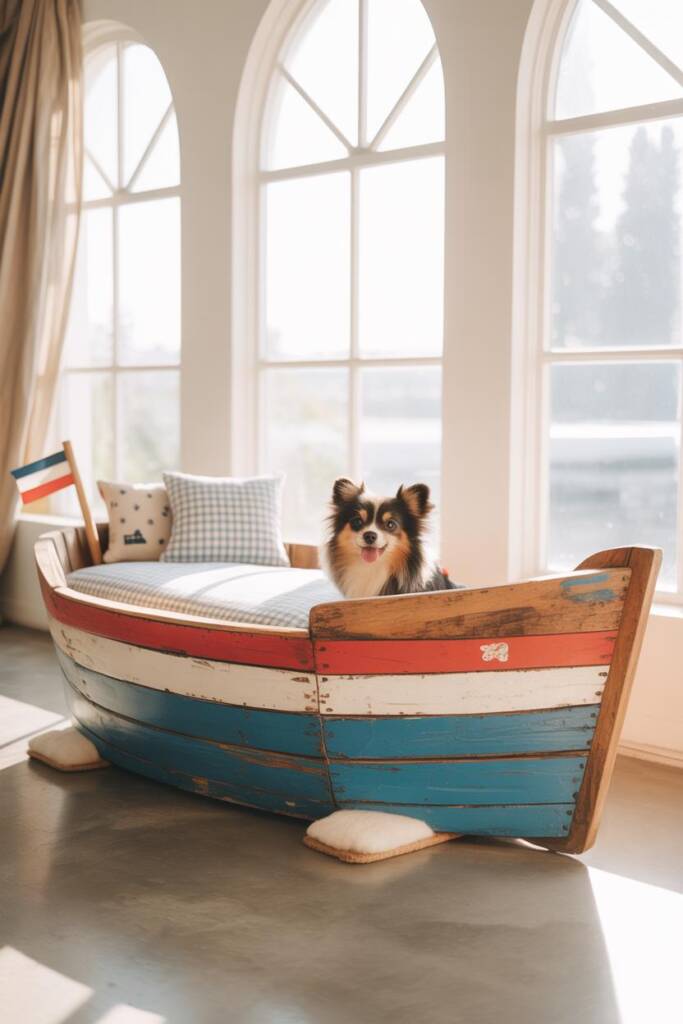
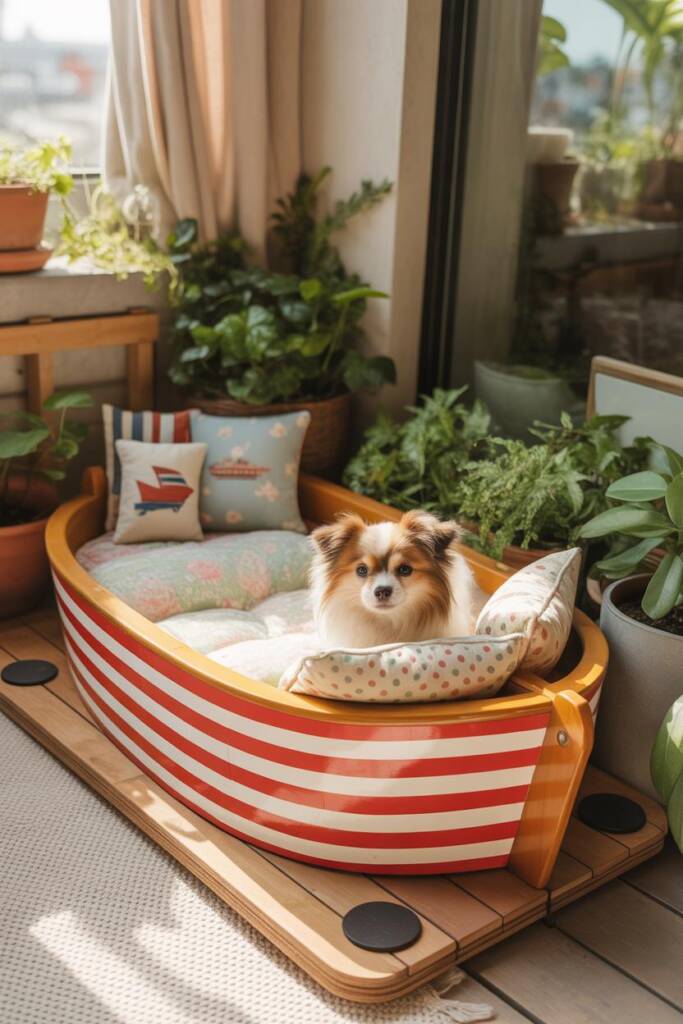
There’s something wonderfully whimsical about taking a vintage child’s toy boat—the kind that once sailed through imaginary seas—and scaling up the concept for your small dog. These miniature vessels, often found at flea markets or tucked in attic corners, bring playful charm and serious nostalgia. Their smaller footprint makes them perfect for apartments, condos, or homes where space is precious but style isn’t negotiable.
The beauty of toy boat transformations lies in their inherent cheerfulness. These boats were designed to spark joy and imagination, and that energy translates beautifully when repurposed. Bright primary colors, classic red and white striping, vintage graphics—these details create instant personality. They’re conversation starters that make people smile, and they bring lightness to any room they inhabit.
Functionally, their compact size is ideal for small breeds like Dachshunds, Pomeranians, Miniature Poodles, and Cavalier King Charles Spaniels. These dogs need cozy spaces that feel appropriately sized—not swimming in oversized beds—and a toy boat delivers that perfect proportion. The lightweight construction means you can easily move it from room to room, following sunny spots throughout the day or relocating from living room to bedroom at night.
Indoor-outdoor versatility is another winning feature. Many vintage toy boats were built with durable materials meant to withstand child’s play, which translates well to pet use. Pop it on a covered patio for afternoon naps, then bring it inside for evening cuddles. The portability means your small dog can always have their favorite bed nearby, reducing anxiety and increasing comfort.
When hunting for toy boats to transform, look for solid construction without loose parts that could become choking hazards. Check for lead paint if it’s truly vintage—test kits are inexpensive and worth the peace of mind. You may want to add a fresh coat of pet-safe paint or sealant both for aesthetics and protection. Sand any rough edges smooth and ensure there are no splinters or sharp points.
DIY Guide: Transforming a Toy Boat
What You’ll Need
- Vintage toy boat (check for lead paint)
- Lead paint test kit
- Fine-grit sandpaper (220)
- Pet-safe acrylic paint or sealant
- Small foam cushion (1-2 inches thick)
- Cheerful patterned fabric
- Hot glue gun or fabric adhesive
- Optional: small handles for portability
Step-by-Step Process
- Safety First – Test for lead paint if the boat is vintage (pre-1978). If positive, either professionally strip and repaint, or choose a different boat. Small dogs can be more vulnerable to toxins.
- Clean and Inspect – Remove any loose parts, stickers, or small detachable pieces that could be choking hazards. Check for sharp edges or points. Clean thoroughly with mild soap.
- Smooth and Prep – Lightly sand the entire boat, especially any rough areas. If repainting, sand more thoroughly to help new paint adhere.
- Paint or Seal – Apply 2-3 coats of pet-safe acrylic paint in your chosen color, or use clear sealant to preserve original graphics. Let cure completely (48-72 hours).
- Add Handles (Optional) – Attach small rope handles or fabric loops to both ends for easy carrying. Secure with screws from inside or strong adhesive. This makes relocation effortless.
- Create Mini Cushion – Trace the boat’s interior, cut foam to fit precisely. Wrap in cheerful fabric (secure with hot glue on the bottom where your dog won’t contact it). For easy washing, sew a small pillowcase-style cover that slips on and off.
- Accessorize Playfully – Add one or two lightweight decorative elements like a small fabric flag or rope detail, but keep it minimal to maintain the toy-like charm.
Pro tip: Make two cushion covers so you always have a clean one ready. Small dog beds need frequent washing, and this way there’s no downtime.
8. The Fishing Boat with Nautical Details
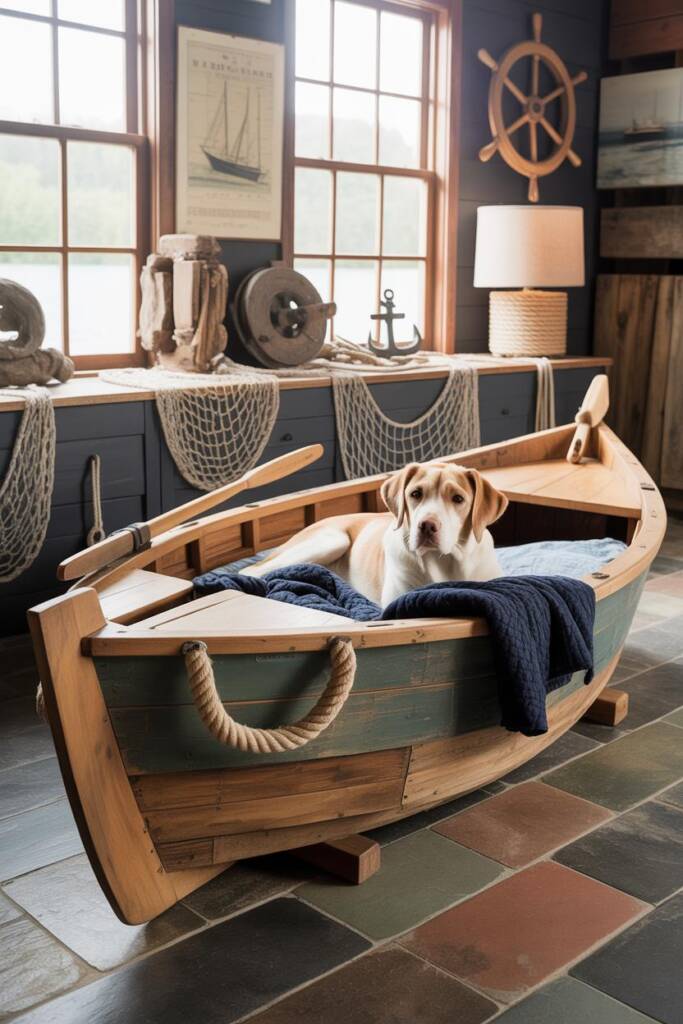
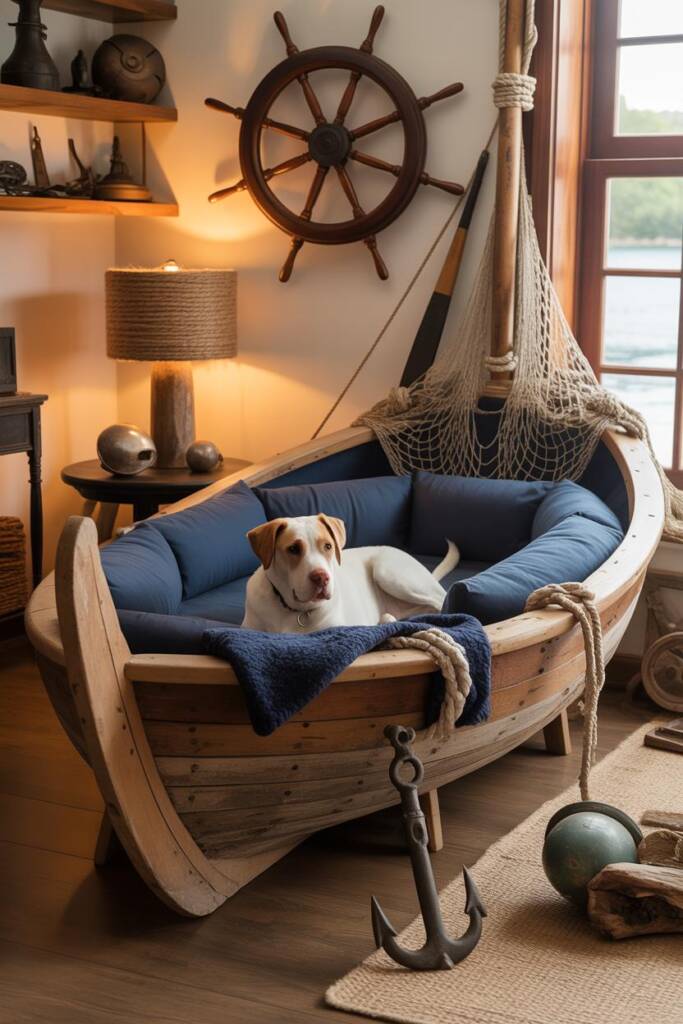
For those who want to go all-in on nautical authenticity, a traditional fishing boat complete with its original elements creates a richly layered, maximalist dog bed that doubles as genuine decor. We’re talking weathered oars mounted along the sides, fishing nets artfully draped, vintage buoys attached as accents, and maybe even a small anchor propped nearby. This is for the serious nautical enthusiast whose lake house, beach cottage, or maritime-themed home demands the real deal.
The functional aspect here is that all these authentic elements create varied textures and surfaces that dogs naturally enjoy. The rougher rope from nets provides satisfying scratching opportunities. The wooden oars offer something to lean against. The different materials—smooth painted wood, coarse rope, worn leather straps—stimulate your dog’s senses in ways uniform pet beds simply can’t. Dogs explore their world through touch and texture, and this bed becomes an enriching environment, not just a place to sleep.
This style works beautifully in homes where the nautical theme is already established—spaces with ship wheels on walls, porthole mirrors, rope-wrapped lamps, and driftwood accents. The fishing boat bed becomes a natural extension of that aesthetic, tying the theme together while serving a practical purpose. It’s particularly stunning in lake houses, beach properties, or homes with coastal architecture where the indoor-outdoor connection is strong.
Sourcing authentic nautical accessories elevates this from craft project to curated design. Visit marine salvage shops, boat yards being decommissioned, or online specialty retailers who deal in genuine maritime artifacts. Real fishing nets (properly cleaned and secured), actual oars with authentic wear, and vintage buoys with original paint create a completely different look than craft store replicas. The patina, weight, and craftsmanship of real pieces bring legitimacy and visual interest that can’t be faked.
When assembling your fishing boat bed, think about safe attachment of all decorative elements. Nets should be secured so they can’t entangle your dog. Oars need to be firmly attached, not leaning precariously. Any rope should be checked for fraying that could become a choking hazard if chewed. The goal is authentic look with complete safety.
DIY Guide: Outfitting a Fishing Boat with Nautical Details
What You’ll Need
- Fishing boat or dory with character
- Authentic nautical accessories (oars, nets, buoys)
- Heavy-duty adhesive or mounting hardware
- Wire cutters and pliers
- Marine-grade varnish
- Canvas or outdoor fabric for cushioning
- Rope (various thicknesses)
Step-by-Step Process
- Source Authentic Elements – Visit marine salvage yards, boat shows, or online maritime dealers. Look for weathered oars (check for rot), fishing nets (clean thoroughly), vintage buoys (original paint adds value), and rope with authentic patina.
- Clean and Treat Accessories – Wash fishing nets in hot water with mild detergent, rinse thoroughly, and let dry completely. Check oars for structural soundness. Apply marine varnish to wood elements to preserve them and make cleaning easier.
- Plan Your Layout – Arrange accessories around the boat before permanently attaching. Oars typically mount along exterior sides. Nets can drape over one end or edge. Buoys can hang from the bow or sit near the stern.
- Secure Safely – Attach oars with U-brackets or rope lashings that are firmly secured (screws into solid wood, not just hot glue). For nets, trim to size with wire cutters, remove any sharp metal pieces, and attach with marine rope tied in secure knots. Wire or chain-hang buoys from sturdy points.
- Eliminate Hazards – Trim any frayed rope ends and seal with hot knife or whipping twine. Ensure nets have no holes large enough to entangle a paw. Test that nothing wobbles or could fall with pressure.
- Layer Interior Bedding – Use heavy canvas or outdoor fabric as the base layer (weather-resistant and durable). Add a thick cushion, then top with a wool blanket in classic nautical colors. The layering provides comfort while maintaining the authentic aesthetic.
- Add Final Details – Place a small weathered wooden crate nearby for toy storage. Consider coiling extra rope decoratively at the bow. Hang a small brass ship’s bell (securely fastened, with clapper removed if your dog is noise-sensitive).
Pro tip: Rotate decorative elements seasonally—different nets, fresh rope coils, or swapping buoy colors keeps the look fresh while you maintain the authentic theme.
9. The Modern Boat Bed Hybrid
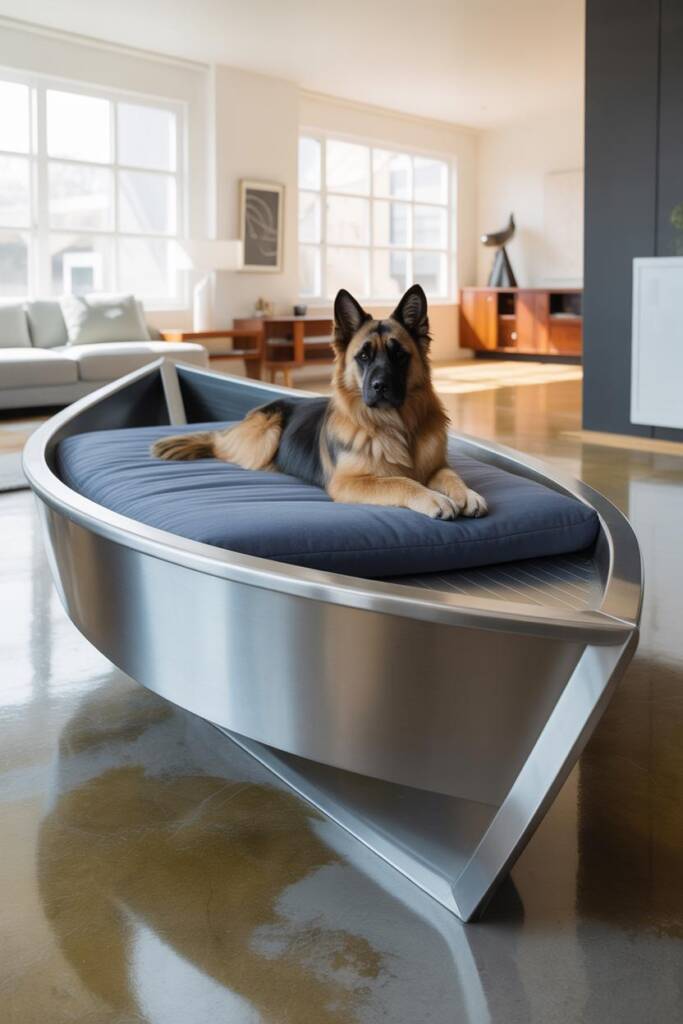
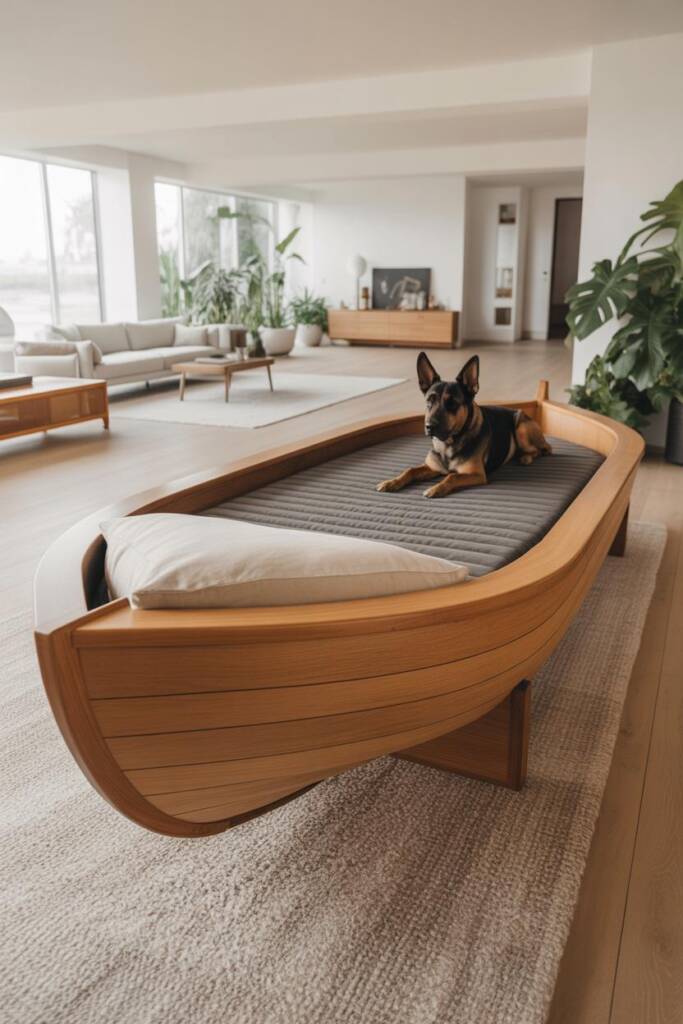
Not everyone has access to vintage boats, and not everyone wants the maintenance that comes with aging wood. Enter the modern boat bed hybrid: custom-built pieces that capture the essence of boat design using contemporary materials and construction methods. This is where form meets function with twenty-first-century innovation.
Working with a craftsperson or taking on an ambitious DIY project, you can create a boat-shaped bed built specifically for your dog’s size, your space constraints, and your design preferences. Clean lines replace rustic curves. Smooth finishes in modern stains or paints create sleek sophistication. And here’s the game-changer: you can incorporate features that vintage boats simply can’t offer, like built-in orthopedic support, elevated designs that ease joint stress, or integrated storage that slides seamlessly into the structure.
The contemporary aesthetic works beautifully in modern homes, minimalist spaces, or urban apartments where rustic charm might feel out of place. Think streamlined boat silhouettes in matte black, crisp white, or natural blonde woods with smooth finishes. The nautical reference is there, but it’s refined and architectural rather than beachy or cottage-inspired. These beds become modern sculpture that happens to comfort your dog.
Custom sizing is perhaps the biggest practical advantage. Have a Great Dane? Build it large enough. Need it to fit a specific awkward corner? Design it precisely. Want the height perfect for an elderly dog with arthritis? Make it so. This level of customization eliminates the compromise that comes with found vintage boats, where you work with whatever dimensions the original boat offered.
Built-in orthopedic support options transform this from bed to wellness furniture. Work with foam specialists to create memory foam bases cut exactly to fit. Add support bolsters that align with your dog’s spine. Incorporate temperature-regulating materials or gel cooling layers for breeds prone to overheating. These modern materials, combined with boat-inspired design, give you the best of both worlds.
DIY Guide: Building a Modern Boat Bed from Scratch
What You’ll Need
- Quality plywood or hardwood boards
- Boat bed design plans or template
- Circular saw and jigsaw
- Wood glue and clamps
- Finishing nails or screws
- Sandpaper (multiple grits)
- Modern stain or paint
- Polyurethane finish
- Custom-cut memory foam
- Minimalist fabric for cushion
Step-by-Step Process
- Design Your Template – Sketch a simplified boat silhouette based on your dog’s measurements (add 6-8 inches to their length and width). Keep lines clean and geometric. Create a paper template for the side profile.
- Cut Main Pieces – Cut two identical side panels using your template. Cut a base piece (rectangular) and two end pieces. Modern boat beds work with clean angles rather than complex curves, making cutting manageable.
- Sand Everything First – Before assembly, sand all pieces thoroughly starting with 80-grit, moving to 120, then 220-grit. Smooth edges are critical for modern aesthetics and pet safety.
- Assemble Structure – Apply wood glue to edges, then clamp pieces together. Reinforce with finishing nails or screws (countersink screws and fill holes for smooth finish). Let glue cure overnight.
- Add Functional Features – Route out a handle hole in one end for easy moving. Create a small storage cavity underneath by adding a false bottom with access panel. These modern touches increase functionality.
- Apply Finish – Stain in contemporary tones (ebony, weathered gray, natural blonde) or paint in matte modern colors. Apply 2-3 coats of water-based polyurethane for durability. Let cure fully (72 hours minimum).
- Create Custom Cushion – Have foam cut to exact interior dimensions (4-5 inches thick for orthopedic support). Cover in minimalist fabric—linen, canvas, or performance velvet in solid colors. Use hidden zipper for clean lines.
Pro tip: Add small felt pads to the underside corners to protect floors and make the bed easy to slide for cleaning behind it.
10. The Restored Antique Boat Bed
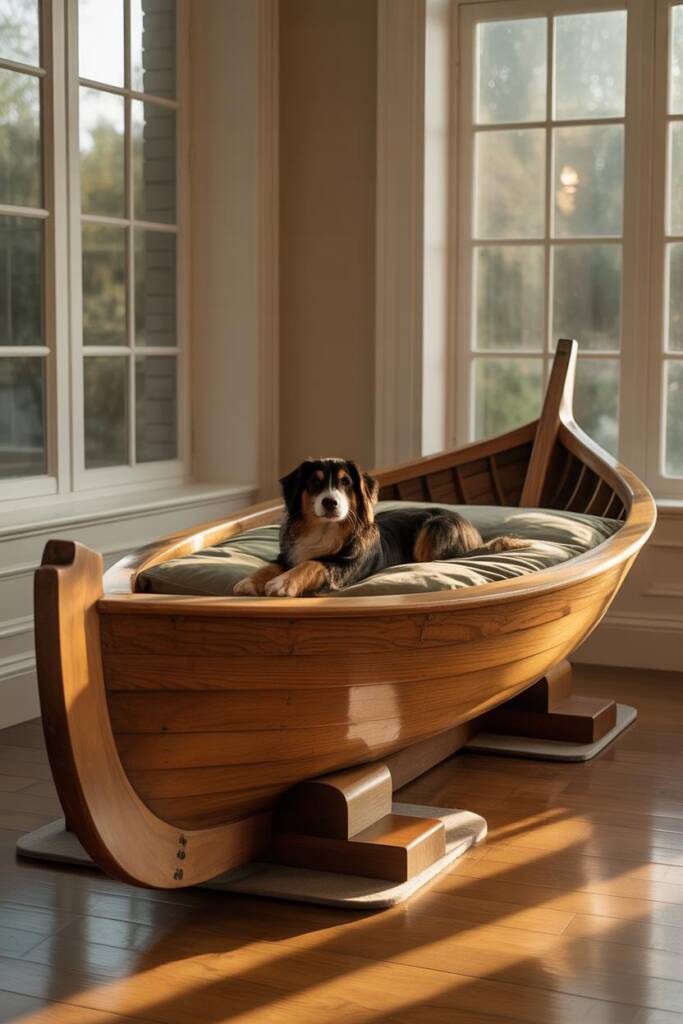
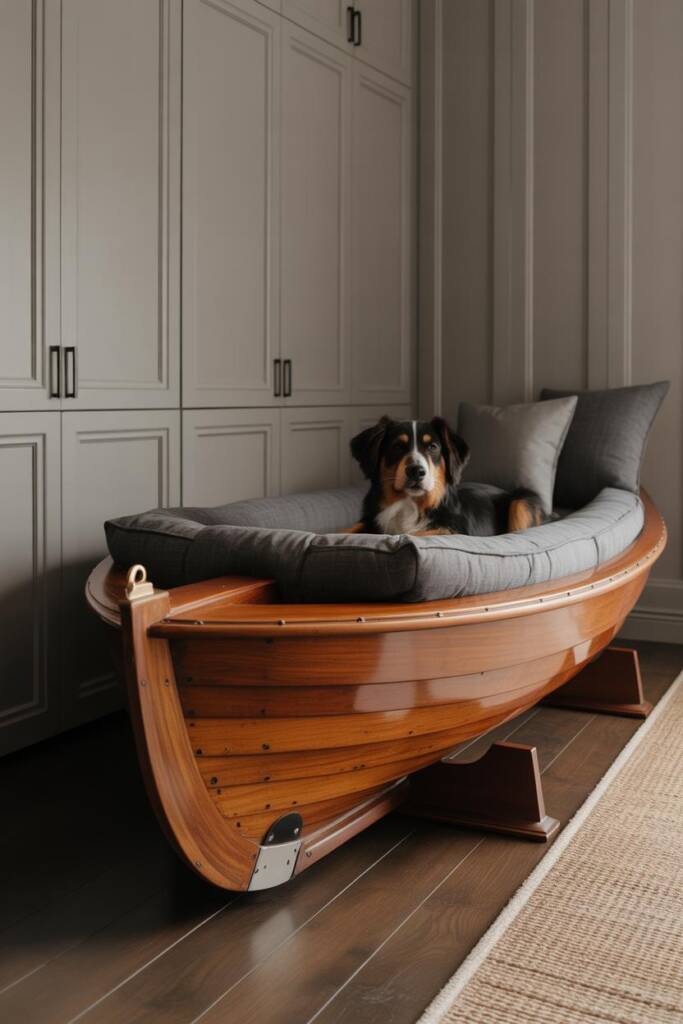
For those who view pet furniture as investment pieces and home decor as curated collection, a professionally restored antique boat represents the pinnacle of boat bed luxury. This is about preservation, history, and heirloom quality—taking a genuinely valuable vintage vessel and thoughtfully converting it into functional art that will last generations.
The distinction here is intention and expertise. Rather than casually repurposing a weathered boat, you’re working with restoration professionals who understand wood preservation, period-appropriate techniques, and how to maintain—or enhance—a boat’s value while adapting it for new use. These are boats with provenance: vintage Chris-Crafts, antique rowing shells, historical fishing dories, or classic wooden sailboats that deserve respectful treatment.
Proper restoration means this bed will outlive your dog and probably you. Professional work ensures structural integrity, protects against wood rot and pest damage, and maintains the boat’s historical character while making it safe and functional. The finish work is museum-quality—every detail considered, every material chosen for longevity and authenticity. This isn’t just a dog bed; it’s a piece of furniture your grandchildren might use for their pets.
The visual impact of a beautifully restored antique boat is profound. These pieces carry history in their lines—the craftsmanship of bygone eras when boats were built by hand with techniques passed through generations. The wood grain, the joinery, the subtle curves all speak to artisan skill that’s increasingly rare. Placed prominently in a home, they command attention and respect while serving daily function.
This investment makes sense for serious antique collectors, coastal property owners looking for statement pieces, or anyone who values furniture that tells stories. The boat becomes a focal point—imagine it in an entryway making an immediate impression, in a great room as conversation-starting furniture, or in a master suite as an elegant accent that happens to delight your dog.
When choosing between restoration and preservation of original patina, consult with experts who can assess the boat’s condition and value. Sometimes the aged, weathered look is more valuable and desirable than a fresh restoration. Other times, proper restoration prevents further deterioration and enhances both beauty and worth. Consider your dog’s habits too—a dog who chews might not be the best match for a museum-quality piece.
DIY Guide: Restoring an Antique Boat Bed (Working with Professionals)
What You’ll Need
- Antique boat with historical value
- Professional boat restorer or woodworker (consultation)
- Documentation of boat’s history (if available)
- Archival photos (for restoration reference)
- Museum-quality wood care products
- Custom cushion maker (professional)
- Premium bedding materials
Step-by-Step Process
- Professional Assessment – Hire a boat restoration expert or antique wood specialist to evaluate the boat’s condition, age, and value. They’ll advise whether full restoration or preservation is appropriate. Document everything with photos.
- Research Historical Context – If possible, research the boat’s origin, builder, and original use. This information guides restoration decisions and adds value. Contact maritime museums or boat builder associations for resources.
- Develop Restoration Plan – Work with your restorer to decide: Will you preserve original finish or restore to original condition? Which elements need structural repair? What’s the balance between historical accuracy and pet functionality?
- Professional Restoration Work – This typically includes: structural repairs using period-appropriate techniques, wood treatment to prevent future deterioration, careful cleaning or refinishing of surfaces, and preservation of original hardware and details. This process takes weeks to months.
- Protective Treatments – Once restored, apply museum-quality protective treatments that don’t alter appearance but provide defense against wear, moisture, and UV damage. Your restorer will recommend specific products.
- Commission Custom Cushioning – Work with an upholsterer who understands fine furniture. Use premium materials that complement the boat’s era—linen, wool felt, or mohair. Request removable covers for practical cleaning while maintaining elegance.
- Document Everything – Keep detailed records of restoration work, materials used, and care instructions. This maintains value and guides future preservation. Take professional photographs of the completed piece.
- Ongoing Maintenance – Establish a care routine: dust weekly with soft cloth, apply recommended wood treatment quarterly, inspect for any damage monthly, and keep away from direct sunlight and moisture.
Pro tip: Consider insuring your restored antique boat bed as valuable property. Document its appraised value and restoration costs for insurance purposes.
Setting Sail: Bringing Your Boat Bed Vision to Life
Choosing the perfect boat bed for your pup starts with honest assessment of your space, lifestyle, and dog’s needs. Consider the size and breed of your dog first—a Chihuahua’s needs differ vastly from a Mastiff’s, and matching scale appropriately ensures comfort and use. Measure your available space carefully, accounting not just for the boat’s footprint but for clearance around it so your dog can enter and exit easily.
Think about placement thoughtfully. Indoor boat beds benefit from locations with good air circulation to keep bedding fresh, proximity to family gathering spots so your dog feels included, and ideally some natural light for warmth and mood. Outdoor boat beds need shelter from direct weather—covered porches, screened rooms, or well-protected patio areas work best. Even vintage boats properly sealed shouldn’t be exposed to constant rain or harsh sun.
Your dog’s age and mobility matter significantly. Elderly dogs or those with joint issues need easy access, which might mean choosing a lower boat style or adding a small ramp. Puppies and young dogs with boundless energy might turn certain boat beds into launching pads, so consider their temperament and likely behavior. Anxious dogs often prefer deeper boats with higher sides, while confident dogs might prefer more open designs.
Maintenance varies considerably by boat type and finish. Painted boats need occasional touch-ups but clean easily with damp cloths. Weathered wood requires periodic checking for splinters and may need resealing annually. Modern builds typically need only basic cleaning and monitoring for wear. Set realistic expectations about upkeep before committing to a particular style—some patinas age beautifully with minimal intervention, while others require attentive care.
The beauty of boat beds extends far beyond trendiness. These are timeless pieces that blend maritime heritage with everyday function, creating homes within homes for our dogs. They honor both craftsmanship and creativity while solving the universal need for comfortable, appealing pet furniture. Whether you choose weathered authenticity or modern interpretation, a boat bed transforms sleeping space into something memorable—a detail guests notice, a spot your dog claims with pride, and a design choice that brings daily satisfaction.
Why Boat Dog Beds Are Worth the Voyage
Transforming a boat into your dog’s personal retreat isn’t just about following a trend—it’s about creating something meaningful that blends beauty, function, and storytelling. These ten boat bed ideas prove that the best pet furniture often comes from unexpected places, where maritime history meets modern comfort and your dog’s needs inspire creative solutions.
At Sweet Purrfections, we’re passionate about helping pet lovers and home decor enthusiasts discover ideas that make everyday life more delightful. We believe your home should celebrate the bond you share with your pets while reflecting your personal style.
Whether you’re transforming vintage finds into functional art or building custom pieces from scratch, we’re here to inspire your next creative project. Because the best homes are where love, style, and a little maritime magic come together—and your furry first mate deserves nothing less than their own captain’s quarters.