
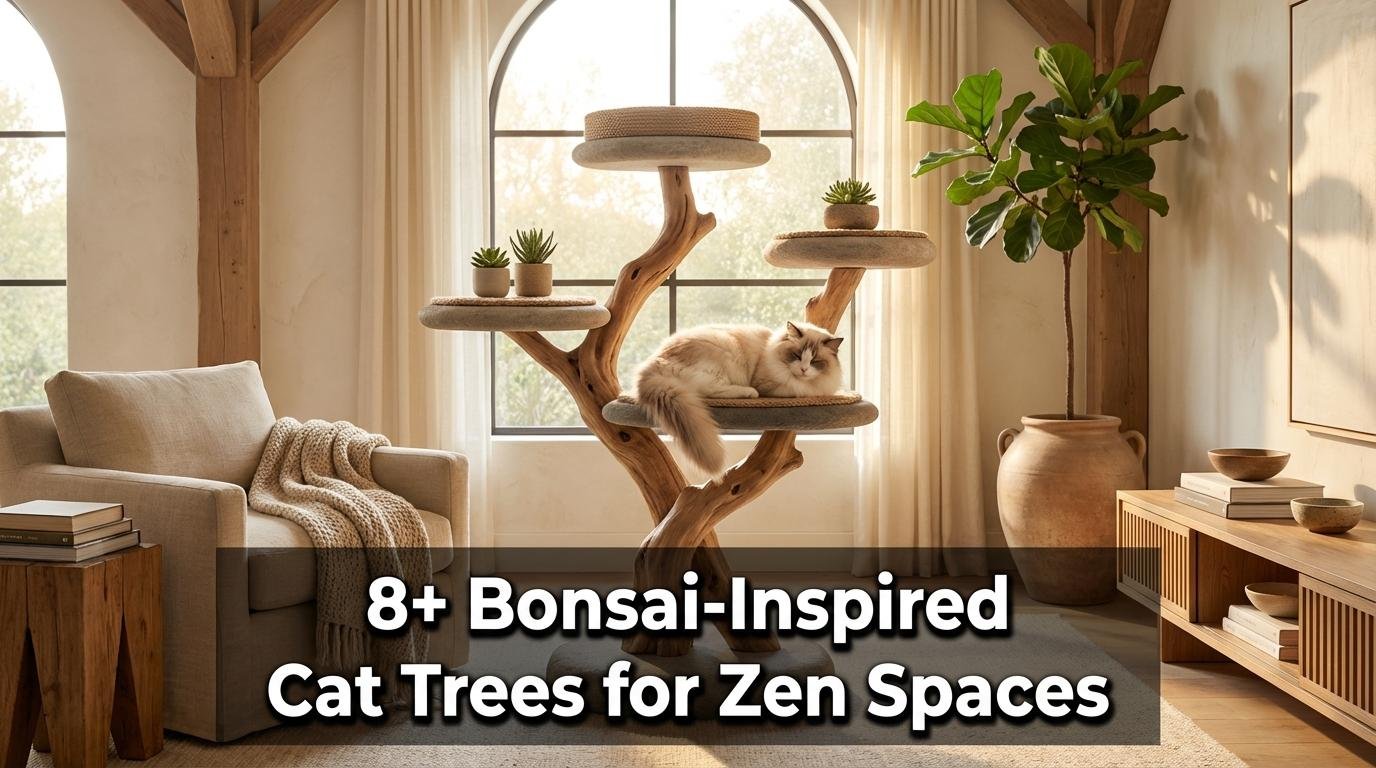
A bonsai cat tree can make a living room feel like a curated Japanese interior — not a pet owner’s compromise — especially when you choose sculptural branches, muted tones, and materials that start around $40 for a DIY build or $200 for a ready-made statement piece. These aren’t the beige carpet towers gathering dust in a corner. They’re functional cat furniture designed to double as art, and every option on this list proves you don’t have to sacrifice zen aesthetics to keep a climbing-obsessed Bengal or a nap-loving ragdoll happy.
What you’ll find below are nine specific ideas ranging from a $150 IKEA hack to a modular tree you can reconfigure with the seasons, and each one includes a step-by-step DIY breakdown so you can actually build or customize it yourself. We cover real materials — preserved moss, raw driftwood branches, wabi-sabi-finished plywood — and pair them with design choices like dark moody walls, Japanese noren curtains, and hidden litter solutions that keep the zen intact. Whether you’re working with a small apartment nook or an entire accent wall, there’s a zen cat tree concept here that fits.
Let’s get into it.
1. The Sculptural Bonsai Cat Tree That Looks Like a $3,000 Art Piece
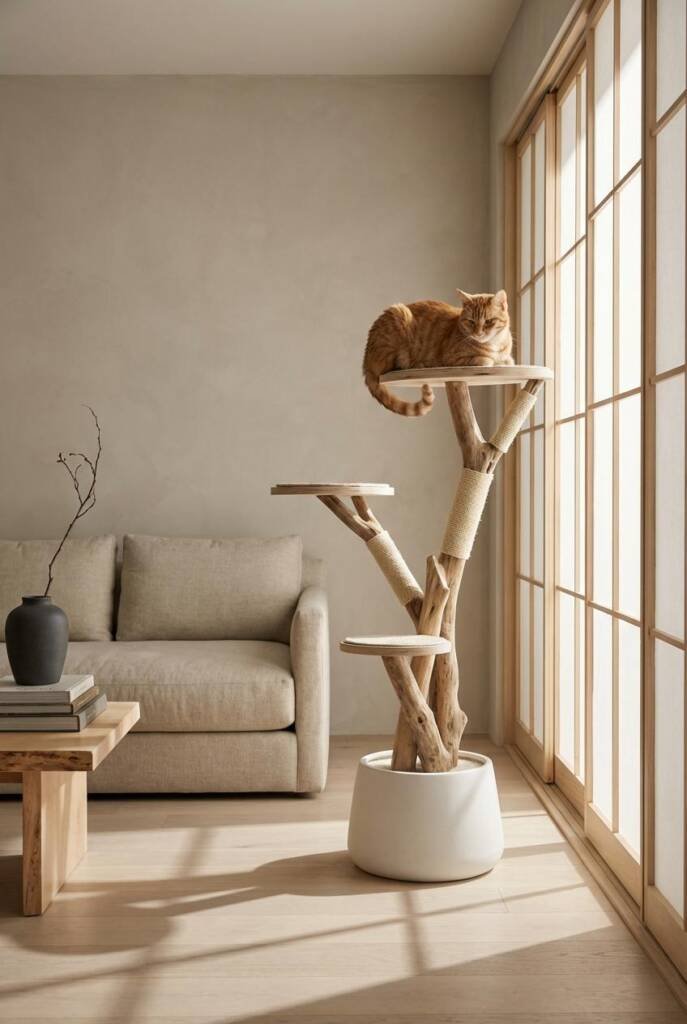
Your cat tree shouldn’t be the thing you apologize for when guests walk in.
Most cat trees look like they belong in a garage. The sculptural bonsai cat tree flips that entirely — it’s a genuine conversation piece built around real wood branches, with platforms shaped like canopy tiers and sisal rope wrapped around the limbs for scratching. Placed in a Japandi living room with clean lines and neutral tones, it reads as a curated art installation, not pet furniture.
What you’re getting is a one-of-a-kind functional sculpture that cats genuinely love — multiple elevation points, textured bark for claw maintenance, and branches spaced for climbing and lounging. Each piece is unique because no two branches are alike, so your tree literally cannot be duplicated.
How to Style a Sculptural Bonsai Cat Tree as Your Room’s Focal Point
- Choose Your Placement First: Position the tree where it gets natural light and visual breathing room — at least 18 inches from walls so the branch silhouette reads as sculpture, not clutter.
- Anchor the Color Palette Around It: Match surrounding furniture to the tree’s wood tone. Pair driftwood bases with warm whites, oatmeal linens, and matte black accents for a cohesive Japandi feel.
- Add One Zen Accent Nearby: Place a single element — a ceramic vase, a river stone, or a floor cushion under $40 from Muji — within 3 feet to create a curated vignette rather than a random cat tree in the corner.
- Light It Intentionally: A single warm-toned uplighting spot (try a floor uplight at $30) transforms the branch shadows into wall art after dark.
2. This $150 IKEA Hack Turns a LACK Shelf Into a Bonsai Cat Wall
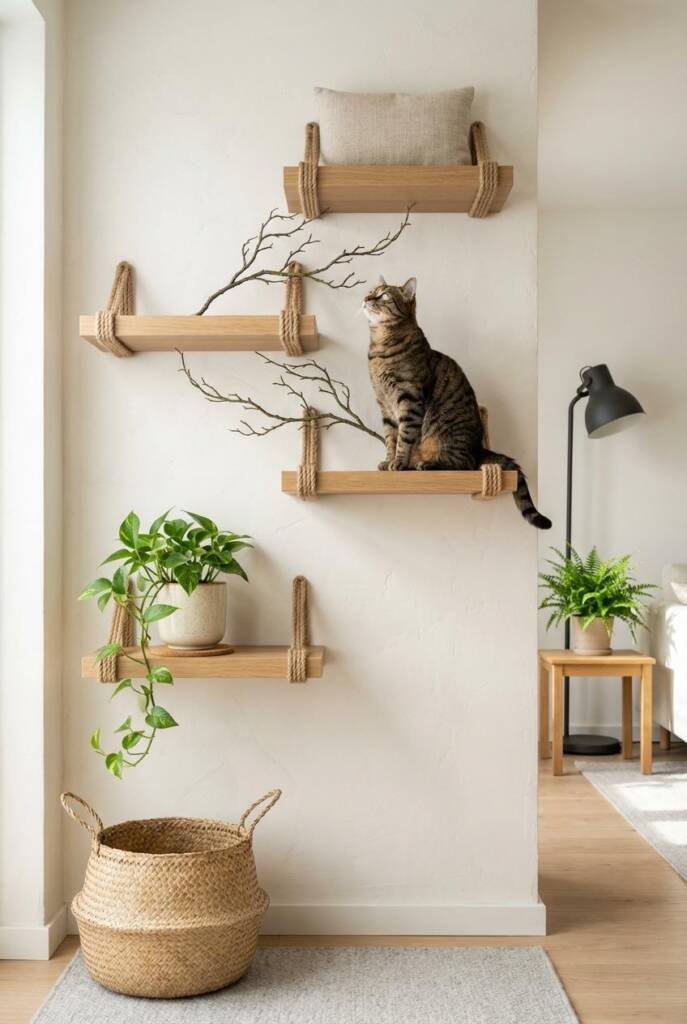
Your cat wants to climb your walls — might as well make it look like a Japanese garden.
Wall-mounted cat furniture usually looks like it belongs in a veterinary clinic, not a curated living room. This hack changes that entirely. By staggering shelves at ascending angles and connecting them with curved faux bonsai branches, you create a climbing wall that reads as a sculptural tree installation — the kind of thing that gets saved 10,000 times on Pinterest. The secret ingredient is manzanita wood branches (available on Etsy for $15–$30), which naturally mimic the gnarled, windswept look of aged bonsai without any shaping required.
Cats are hardwired to climb vertically, and a wall system gives them exactly that without eating a single square foot of floor space. Wrap the branches and select shelf surfaces in 6mm natural jute rope (a 100-foot roll from SGT KNOTS runs about $14) for grip and scratch satisfaction. Mount everything into studs and you’ve got a system that holds cats up to 20 pounds per shelf. The LACK’s hollow-core design keeps the whole installation surprisingly lightweight — you’re not fighting gravity to get this up.
For the full zen effect, mount a single preserved moss accent beneath the lowest shelf and paint the wall behind it in a warm off-white like Benjamin Moore Simply White. The tree practically floats.
How to Build a Budget Bonsai Cat Wall Using IKEA LACK Shelves
- Mount the LACK shelves: Secure 4–5 LACK shelves into wall studs at staggered heights, spacing them 14–18 inches apart vertically so your cat can comfortably hop between levels.
- Attach manzanita branches: Use heavy-duty L-brackets and wood screws to fix 2–3 manzanita branches ($15–$30 each on Etsy) between shelves, angling them to mimic a bonsai trunk and canopy.
- Wrap with jute rope: Cover each branch and at least one shelf surface with 6mm SGT KNOTS jute rope ($14/100 ft), securing the ends with hot glue underneath where it won’t show.
- Add finishing details: Glue preserved sheet moss to the top surface of 1–2 shelves and attach a few faux bonsai leaf sprigs to branch tips with floral wire for a realistic canopy effect.
- Budget move: Buy the LACK shelves during IKEA Family sales and source manzanita branches as a bundle on Etsy to keep the entire build under $120.
3. A Zen Garden Base That Hides the Cat Litter Tray (Yes, Really)
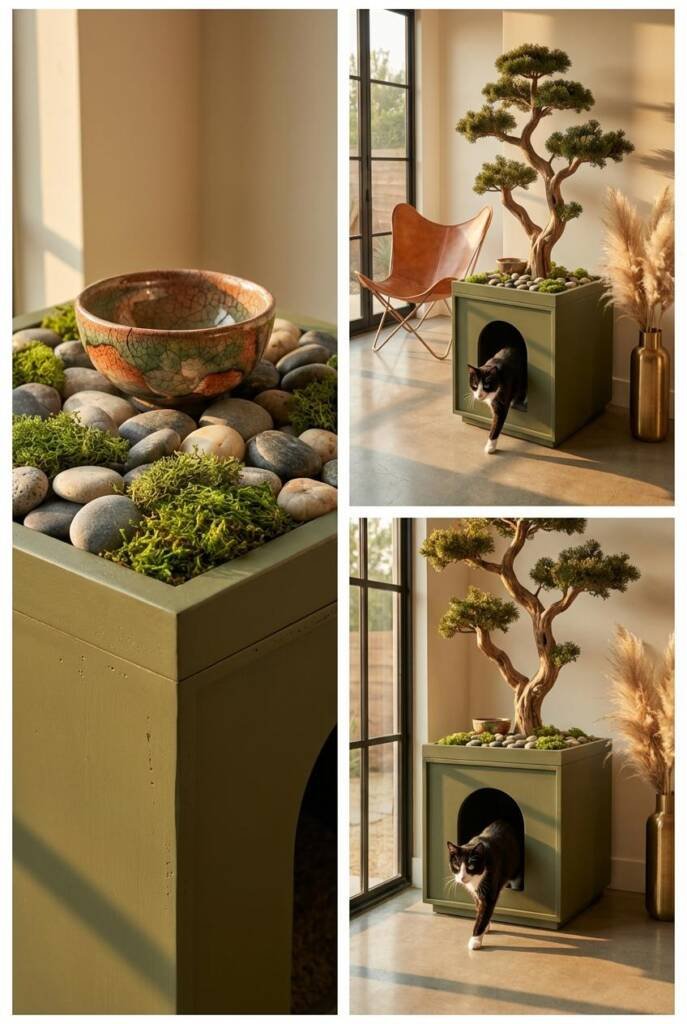
Your cat’s litter box is about to become the most complimented piece of furniture in your apartment.
What if the base of your bonsai cat tree wasn’t just decorative weight — but a fully functional litter box enclosure disguised as a zen garden? We’re talking faux moss tops, river pebble accents, and a clean-lined cabinet that looks like it belongs in a Japanese tea house, not a pet aisle. Guests will compliment your planter before they ever suspect what’s inside.
Place a sturdy bonsai-style cat tree directly on top or beside it, and you’ve created a single vertical unit that handles climbing, scratching, and bathroom duty in under four square feet of floor space. The enclosed design also contains litter scatter and traps odor better than an open tray, which your nose and your Japandi aesthetic will both appreciate.
For the full zen garden effect, add a shallow tray of polished black pebbles and a mini rake on the cabinet top surrounding the tree’s trunk. It reads as intentional decor rather than pet furniture — the ultimate stealth move for small apartments where every piece needs to multi-task.
How to Conceal a Litter Box Inside a Zen Garden Base Unit
- Choose Your Cabinet: Start with an enclosed litter cabinet at least 20″ wide — that fits standard and large litter boxes comfortably.
- Reinforce the Top: If you’re placing a cat tree on top, add a ¾” plywood panel inside the cabinet lid to distribute weight evenly across the frame.
- Style the Zen Garden Surface: Glue a sheet of faux moss ($8 at Michaels) to the top, then arrange river pebbles and a miniature sand tray around the tree base for that authentic zen garden look.
- Manage Odor: Place a charcoal-based odor absorber like the Way Basics Purrified Air filter ($15) inside the cabinet — it lasts 6+ months and skips the artificial fragrance.
- Budget move: DIY the entire setup by converting an IKEA KALLAX cube ($40) with a cat-hole cut in the side and a pebble tray on top — total cost under $65.
4. Wabi-Sabi Branch Towers Your Cat Will Climb Like a Real Tree
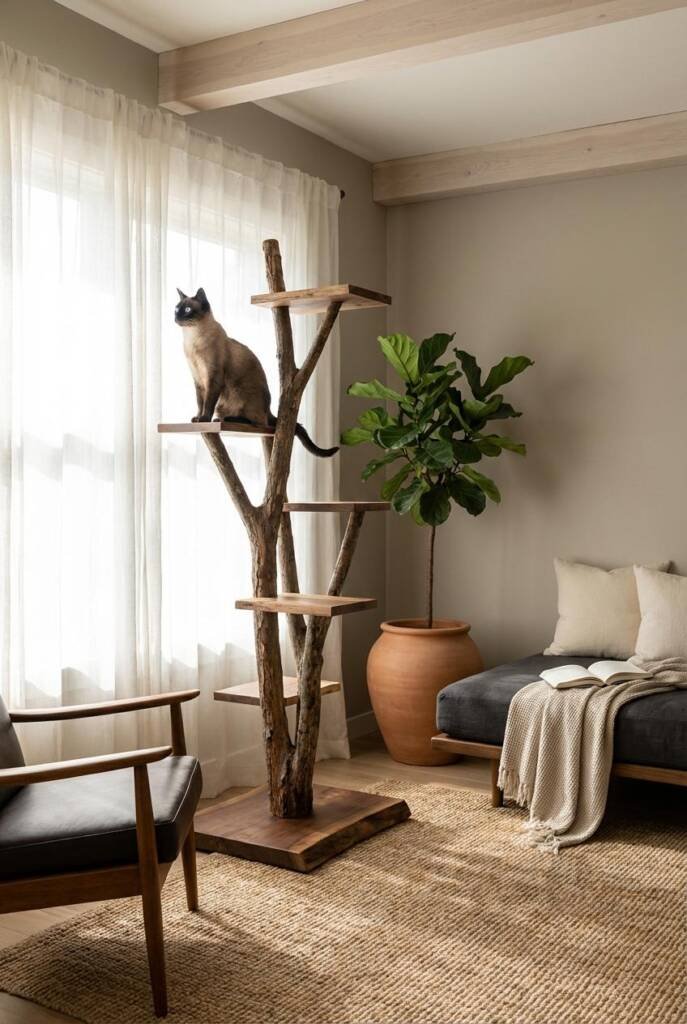
Perfect symmetry is boring — your cat already knows this, and wabi-sabi cat towers finally prove it.
Wabi-sabi celebrates imperfection — the beauty of a gnarled branch, an asymmetrical silhouette, bark that’s rough to the touch. A real-branch cat tower captures that raw, organic energy in a way no symmetrical condo ever could. These pieces look like sculptural driftwood installations that happen to have perching platforms, and they make minimalist spaces feel alive without adding visual clutter. Your cat gets vertical territory that actually engages their climbing instincts — gripping real bark instead of sliding on carpet-wrapped particle board.
The honest tradeoff: real branches shed, and bark can flake. A quick weekly brush-down keeps debris minimal, and most owners say the aesthetic payoff makes it a non-issue.
How to Choose a Wabi-Sabi Cat Tower With Authentic Branch Design
- Check branch diameter for safety: Look for trunks at least 3–4 inches in diameter at the thinnest point — anything narrower can wobble under a 12-lb cat mid-leap.
- Match the silhouette to your space: Wall-mounted systems work for small rooms, while On2Pets floor trees need a 3×3-foot footprint but don’t require drilling into walls.
- Inspect platform spacing for your cat’s age: Platforms 12–16 inches apart suit agile adults; senior cats need 8–10 inch gaps so they’re not overextending joints.
- Verify the finish is pet-safe: Confirm any sealant on the bark is non-toxic and VOC-free.
- Budget move: Source a fallen hardwood branch locally for free and add two $15 wrapped sisal platforms yourself for a DIY wabi-sabi tower under $40.
5. Faux Moss and Preserved Greenery That Makes Any Cat Tree Look Zen
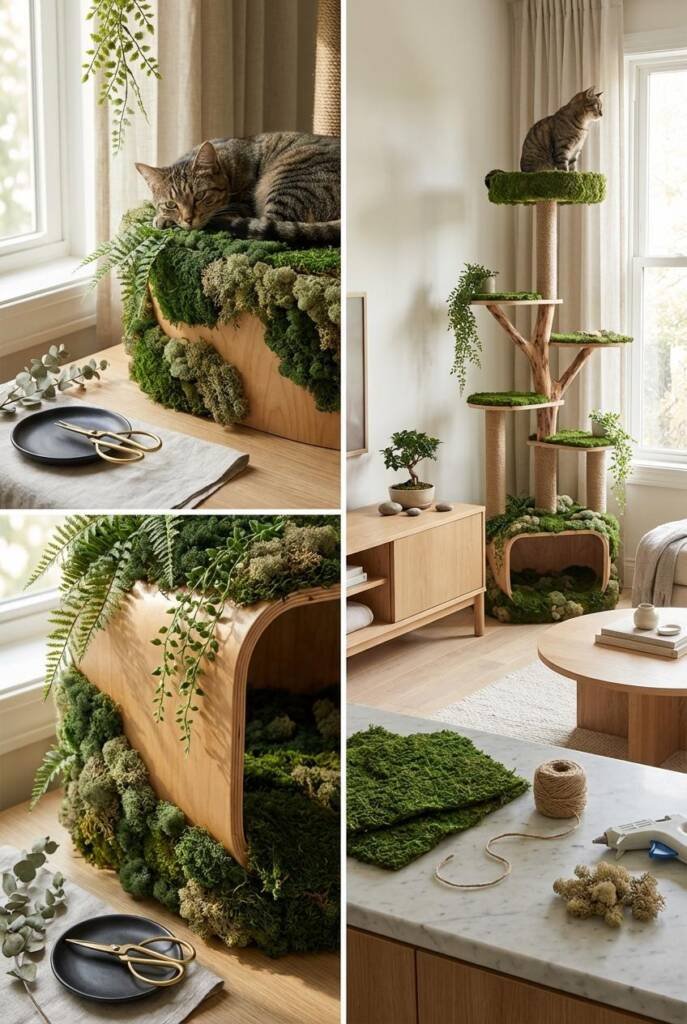
You don’t need a new cat tree — you need $30 worth of preserved moss and 30 minutes.
Preserved sheet moss and faux trailing greenery turn a basic cat tree from pet furniture into a living sculpture — without a single real plant your cat could chew on. The effect is immediate: wrap the base in moss, tuck dried mood moss clumps into corners, and suddenly your beige carpet tower looks like it grew out of a forest floor. It’s the fastest path to a bonsai cat tree aesthetic without building anything from scratch.
Preserved moss is non-toxic once fully treated, but you’ll want to secure it under sisal twine or staple it to areas your cat can’t easily pull apart and ingest. SuperMoss Preserved Sheet Moss covers roughly 2–3 square feet and comes in natural greens that don’t fade for years. Pair it with a few strands of faux trailing pothos from IKEA’s FEJKA line ($5–$10) draped from upper platforms, and you’ve got a zen cat tree that photographs like a japandi showpiece. The whole transformation costs less than a single new cat bed and takes about 30 minutes.
How to Add Preserved Moss and Faux Greenery to Your Existing Cat Tree
- Prep the surfaces: Lightly sand or rough up any smooth surfaces on your cat tree where you want moss to stick. Focus on the base, post tops, and platform edges — skip areas your cat actively scratches.
- Apply preserved sheet moss: Use a hot glue gun to attach SuperMoss sheet moss in overlapping patches, then wrap exposed edges tightly with sisal twine ($4 at any hardware store) so your cat can’t peel it up.
- Add mood moss accents: Tuck dried mood moss clumps into crevices between platforms and around post bases — these 3D mounds create the bonsai-garden depth that flat sheet moss alone can’t.
- Drape faux trailing greenery: Zip-tie 2–3 faux pothos vines to upper platforms so they cascade down naturally, keeping them tight against the structure where cats can’t bat them loose.
- Budget move: A full moss-and-greenery makeover runs about $25–$35 total using craft store materials, which is less than most cat toys your cat will ignore.
6. The Cat Canopy Hammock That Floats Like a Bonsai Cloud
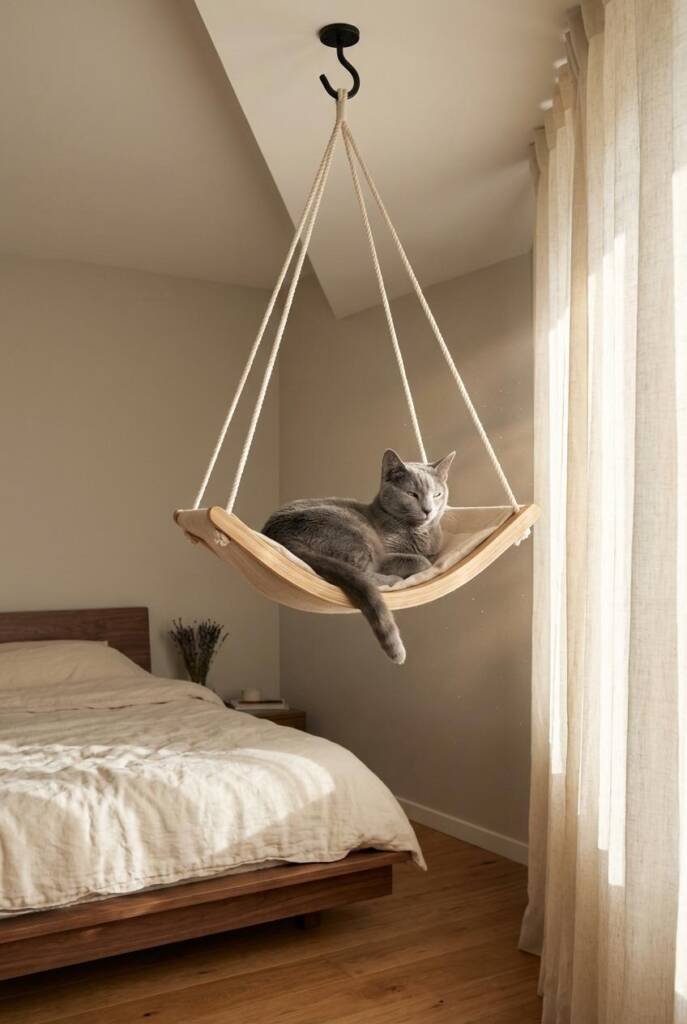
What if your cat tree had no tree at all — just the canopy, suspended in midair?
There’s something deeply satisfying about a cat perch that doesn’t touch the ground. A suspended hammock in natural linen and bent wood captures that weightless bonsai canopy look — branches floating above a miniature landscape, except your cat is the landscape. Hung from a single ceiling point, it eliminates the visual bulk of a traditional cat tree entirely, leaving your floor plan untouched and your zen aesthetic intact.
The organic curves mimic the windswept silhouette of a trained bonsai crown, and the natural fiber palette disappears into any japandi room. Cats love it because elevated sleeping spots trigger that instinctive “safe perch” behavior — they’ll pick this over your couch within a week.
The single-hook install also means you can reposition it seasonally or move it room to room without leaving a constellation of anchor holes in your ceiling.
How to Install a Floating Cat Hammock for Instant Bonsai Canopy Vibes
- Find your ceiling joist: Use a stud finder to locate a joist where you want the hammock — ideally 6–7 feet high so your cat can leap from a nearby shelf or bookcase.
- Install a heavy-duty swag hook: Drill a pilot hole and screw in a 3/8″ lag eye bolt rated for at least 50 lbs (about $4 at any hardware store).
- Hang and level the hammock: Attach the Cloud Hammock’s included carabiner to the eye bolt, then adjust the rope length so the sling sits roughly 4–5 feet off the floor.
- Add a launch point: Place a wall-mounted step shelf 18–24″ below the hammock so your cat has an easy on-ramp.
- Budget move: DIY a similar look with a $15 macramé plant hanger and a thrifted wooden embroidery hoop wrapped in natural linen — total cost under $25.
7. Dark Moody Bonsai Trees That Suit a Black-Walled Room Perfectly
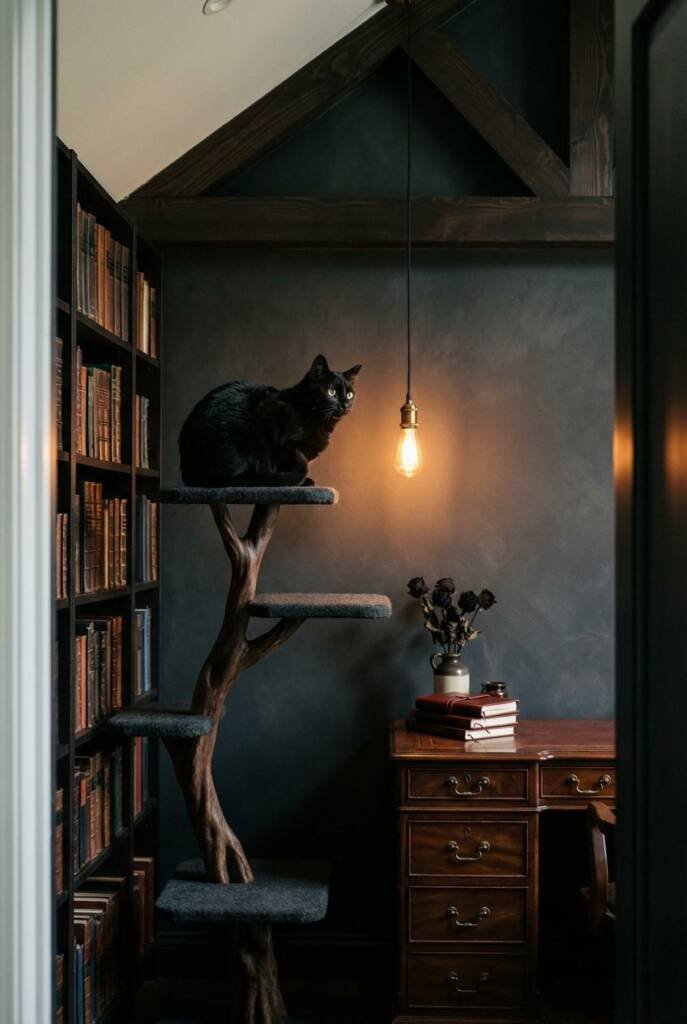
Not every zen space is light and airy — some of the best ones are wrapped in black.
Most bonsai cat trees lean into natural wood tones, but a matte black twisted trunk against a dark-walled room hits different. Think dark academia study, moody noir bedroom, or a deep charcoal living space where a light-colored tree would stick out like a sore thumb. A dark-stained bonsai cat tree disappears into the palette while its sculptural silhouette commands attention — it’s the kind of piece that looks like it belongs in an architectural digest spread, not a pet store.
How to Style a Dark Bonsai Cat Tree in a Moody Interior
- Anchor the palette: Start with your darkest wall — ideally a matte or limewash finish in a near-black shade like Farrow & Ball’s Paean Black — and position the tree within 18 inches of it so the trunk reads as a shadow rather than a standalone object.
- Add textural contrast: Layer a dark jute or wool rug ($40–$80 from Amazon) beneath the tree to break up hard flooring and give the base visual weight.
- Light it intentionally: Place a single warm-toned spotlight or clip lamp ($15–$25) above or beside the tree to catch the trunk’s curves and create dramatic shadows on the wall.
- Edit ruthlessly: Keep the surrounding 3-foot radius minimal — one dark ceramic planter or a stack of vintage books max. Moody rooms lose their power when cluttered.
- Budget move: Spray-paint a light-toned secondhand cat tree with Rust-Oleum Matte Black ($7 a can) for the dark bonsai look at a fraction of the cost.
8. A Modular Bonsai Cat Tree You Can Reconfigure Every Season
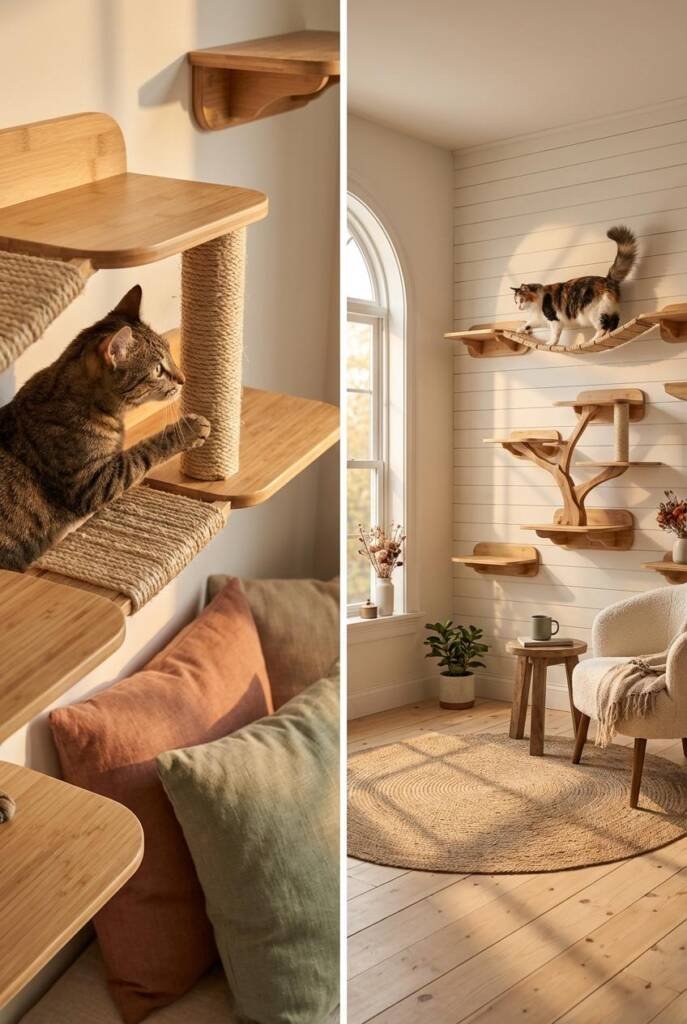
What if your bonsai cat tree could look completely different by next season — without buying a single new piece?
Most bonsai cat trees lock you into one design forever. This one is a wall-mounted modular system with interchangeable branches, platforms, shelves, and bridges that you rearrange whenever the mood strikes. Stain the wood components in warm walnut and weave in faux cherry blossom branches, and you’ve got a living bonsai installation that shifts with the seasons.
The modular approach is genuinely better for cats, not just aesthetics. Rearranging climbing routes every few months prevents territorial stagnation in multi-cat homes and re-engages cats who’ve memorized (and gotten bored with) their usual paths. Each shelf holds up to 85 pounds, so even your largest cat can launch between platforms confidently. The wall-mount design also frees up floor space — critical in the smaller rooms where japandi cat furniture tends to live.
This is the only option on our list that actively fights the biggest problem with statement cat trees: you spend $500, love it for six months, then it becomes visual wallpaper. A seasonal refresh takes 20 minutes with a drill and keeps both you and your cats engaged year-round.
How to Use a Modular Cat Tree System for Seasonal Bonsai Layouts
- Map Your Wall Space: Measure a minimum 4′ × 6′ wall section and mark stud locations.
- Choose Your Base Configuration: Start with the base configuration that includes 5 core pieces: two shelves, two bridges, and one hammock platform.
- Add Seasonal Bonsai Elements: Wrap branches in faux wisteria for spring, maple leaves for fall, or bare twisted driftwood for winter — swap them out in under 10 minutes per branch using zip ties or floral wire.
- Rotate the Layout Quarterly: Every 3 months, move at least two platforms to new positions and change one climbing route — this resets your cats’ mental map and keeps the tree feeling fresh.
9. Japanese Noren Curtains That Turn a Cat Tree Nook Into a Zen Alcove
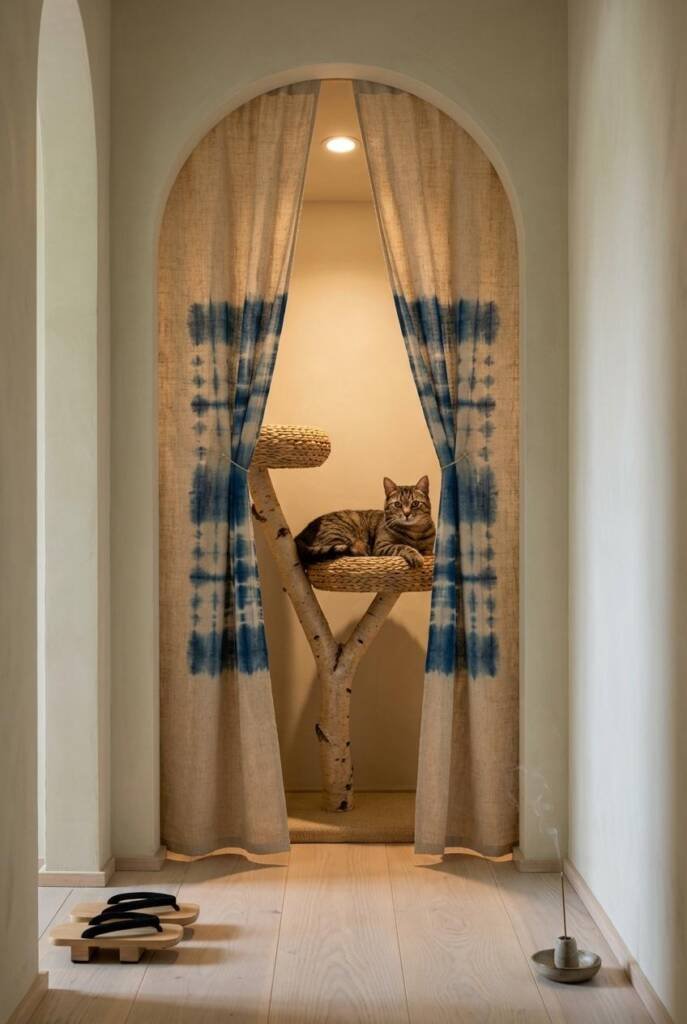
One $15 curtain can make your cat tree disappear into the wall — in the best possible way.
A Japanese noren curtain — those split fabric panels you see hanging in doorways of izakayas and ryokans — instantly transforms a basic cat tree alcove into a Japandi statement. Hung from a simple tension rod across an open shelf, closet nook, or bookcase recess, a noren frames your bonsai cat tree like it’s sitting inside a tokonoma alcove, hiding cords and visual clutter behind one elegant textile. The split design means your cat walks through effortlessly while you get that curated, intentional look that makes the whole room feel calmer.
Cats are hardwired to love enclosed, semi-hidden spaces — a noren gives them the den-like security of a covered bed without actually boxing them in. The fabric filters light softly, reduces drafts, and muffles ambient noise, all of which lower feline stress. Go with the 33″ × 59″ size for most standard alcove nooks.
Bonus: Unlike permanent room dividers, a noren swaps out in seconds, so you can rotate patterns seasonally or toss it in the wash when it collects fur.
How to Frame Your Bonsai Cat Tree With a Japanese Noren Curtain
- Measure and mount the rod: Measure the width of your alcove or nook opening, then install a tension rod ($6–$10 at any hardware store) about 6–8 inches above the top of the cat tree so the fabric drapes without resting on it.
- Choose the right noren: Pick a linen or cotton-blend noren in a neutral tone or shibori pattern — the 33″ × 59″ size from Sunnymi fits most standard nooks and runs about $15.
- Position your cat tree inside: Center your bonsai cat tree 4–6 inches back from the curtain line so the noren hangs freely and your cat can slip through the split without snagging.
- Train the entrance: Prop the panels open with a small clip for the first few days so your cat learns the path, then let them hang naturally once your cat is comfortable walking through.
Bonsai Cat Tree, Zen Cat Tree That Welcome Pets
From sculptural statement pieces to clever IKEA hacks and hidden litter trays disguised as zen garden bases, every idea on this list pulls double duty — giving your cat vertical territory, cozy perches, and scratching surfaces while giving you a home that actually looks intentional. A bonsai cat tree isn’t about choosing between design and function; it’s proof that the two were never really at odds.
Mix and match these concepts to suit your space. Pair the modular tree with preserved moss accents, hang a cloud hammock above a wabi-sabi branch tower, or tuck the whole setup behind a noren curtain for a zen alcove that makes guests forget a cat even lives there — until your cat dramatically reveals herself from the canopy.
Here at Sweet Purrfections, we create content at the intersection of cool home decor and real life with pets. Because we believe your home should look like it belongs in a design magazine AND work for the furry family members who actually run it.
Leave a Reply