
Why Your Garden Should Work for Both You and Your Dog
You shouldn’t have to choose between a stunning garden and a happy dog. The secret isn’t in keeping them separate—it’s in designing spaces where both can thrive together. These ten ideas prove that dog-friendly doesn’t mean sacrificing style. Each design solves real problems while creating outdoor spaces you’ll actually want to spend time in.
1. The Sensory Sniffing Garden with Meandering Pathways
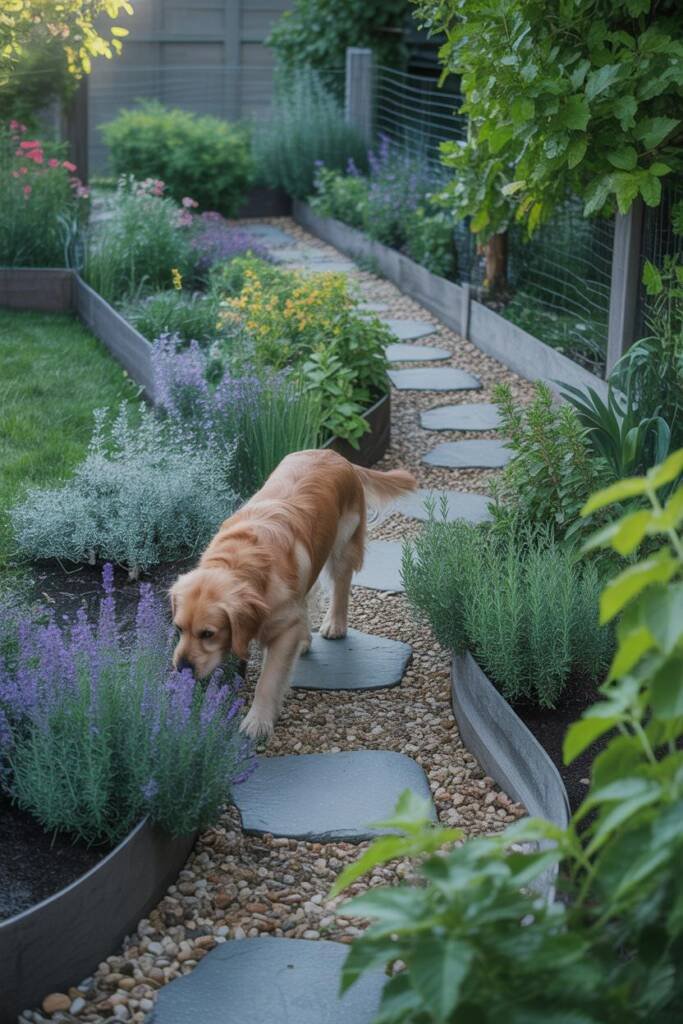
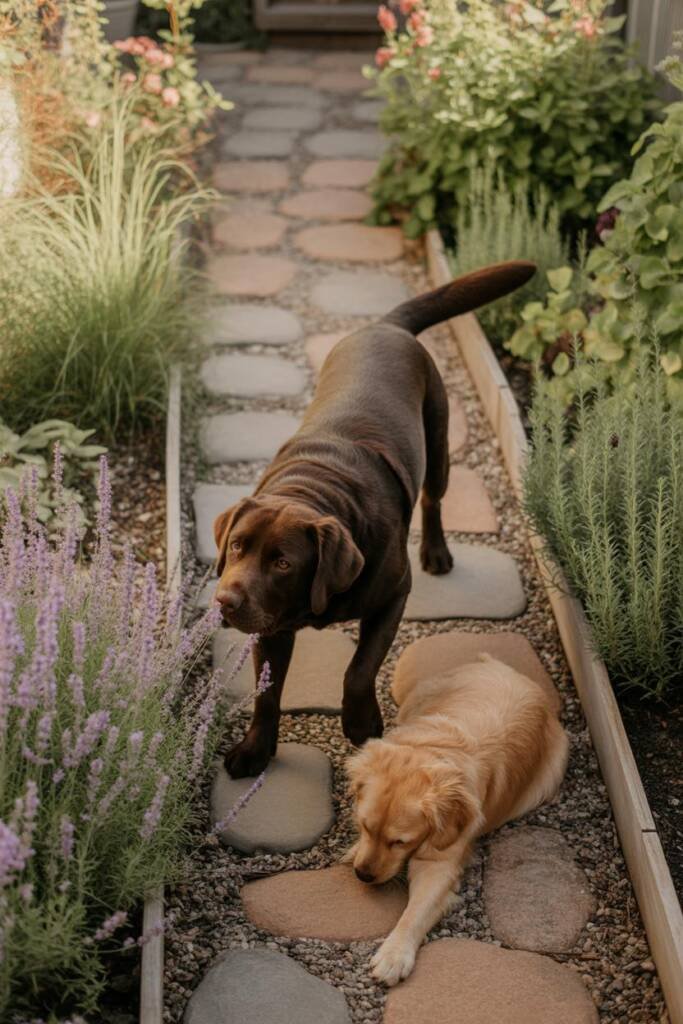
Dogs experience the world through their noses, so why not design for it? Plant dog-safe herbs like rosemary, thyme, and lavender along curved pathways made from flagstone or river rock. The winding layout naturally slows down your dog’s pace, turning zoomie sessions into curious exploration.
These herbs release scent when brushed against, creating an engaging sensory experience. The curved paths also add visual flow to your garden while protecting plant beds from trampling. Use decorative edging to clearly define where paths end and planting begins—dogs learn these boundaries quickly.
2. Splash Zone Central: Built-In Water Features Dogs Actually Use
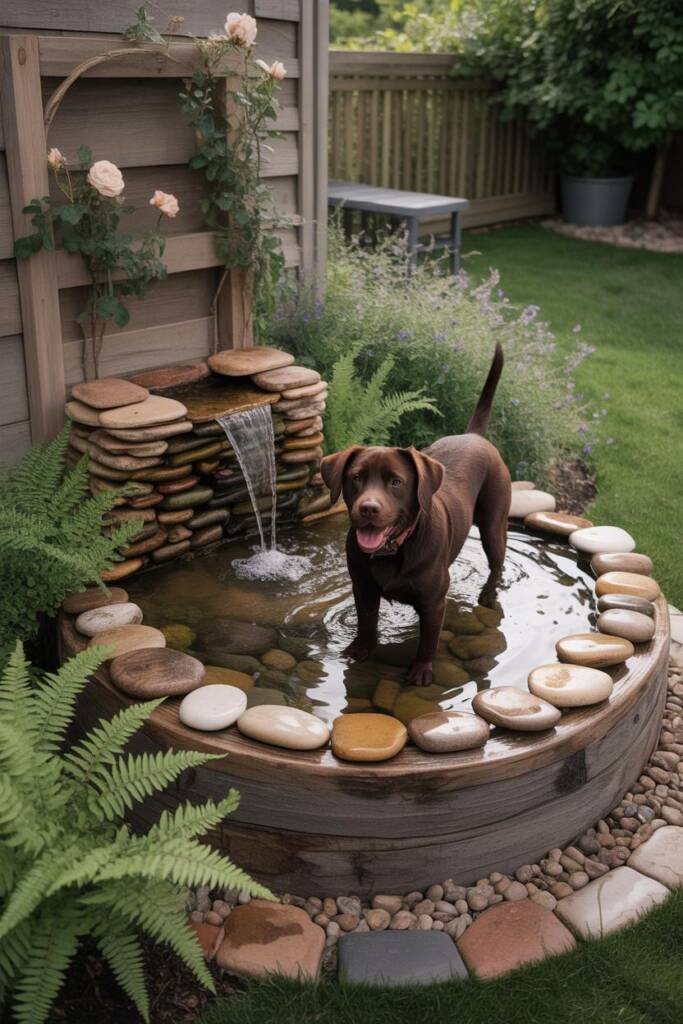
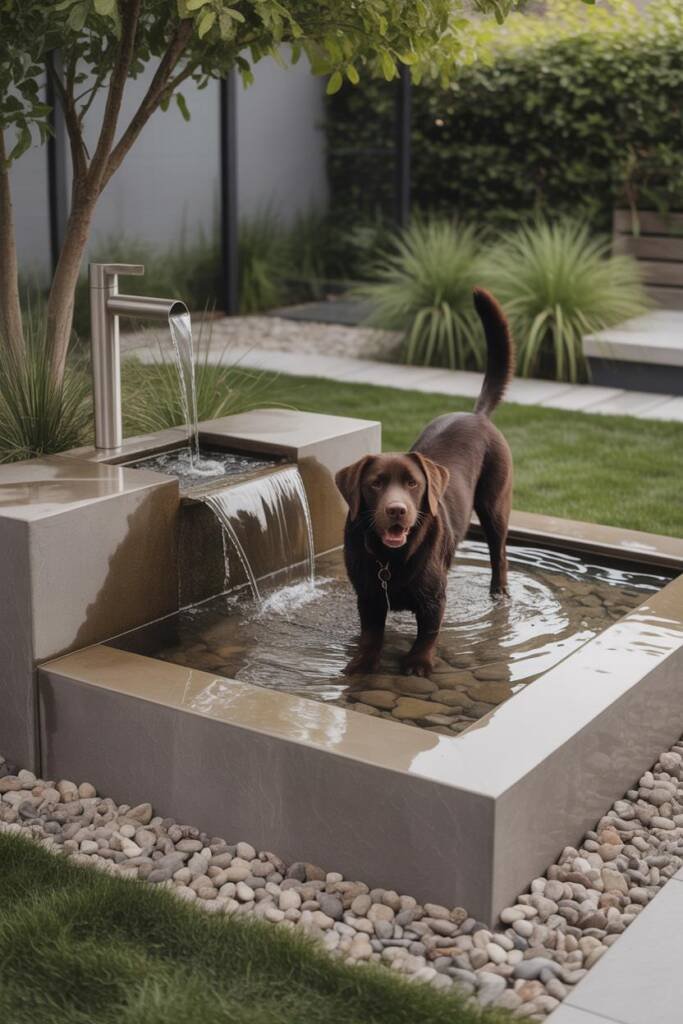
Forget fighting over the birdbath. Install a shallow recirculating water feature with one section just 2-4 inches deep specifically for your dog. Natural stone edges make it look like an intentional design element, not a dog accessory.
Position it in a partially shaded area to keep water cool and encourage use during hot days. The sound of running water attracts dogs naturally, and the constant circulation keeps it cleaner than a static bowl. This doubles as a stunning focal point that adds the luxury of water features while serving a practical purpose.
3. The Durable Green Carpet: Clover and Hardy Ground Covers
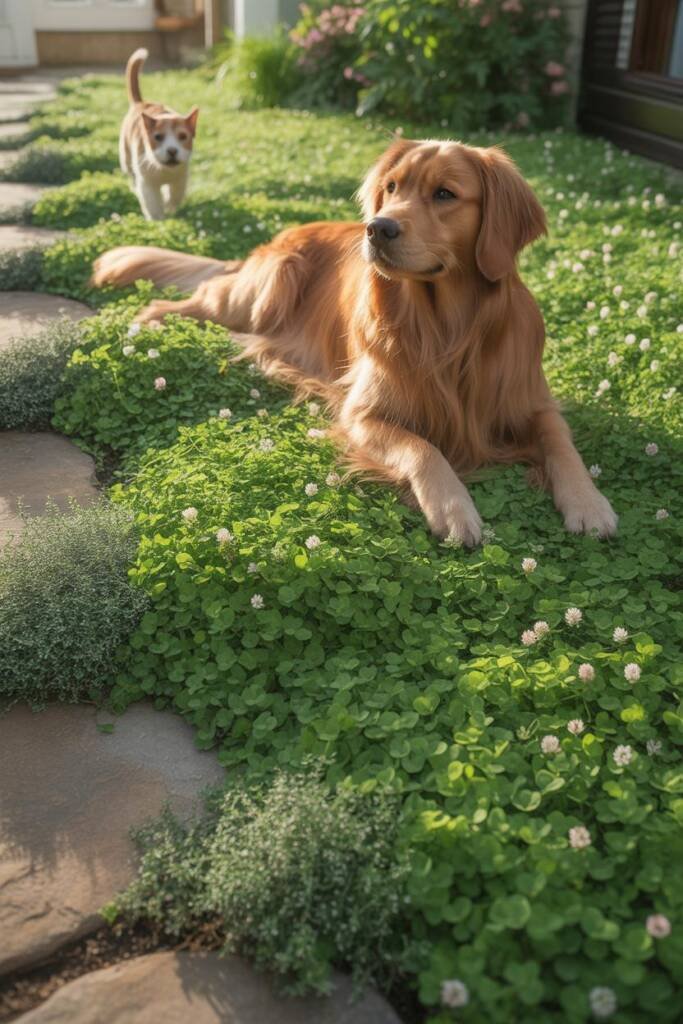
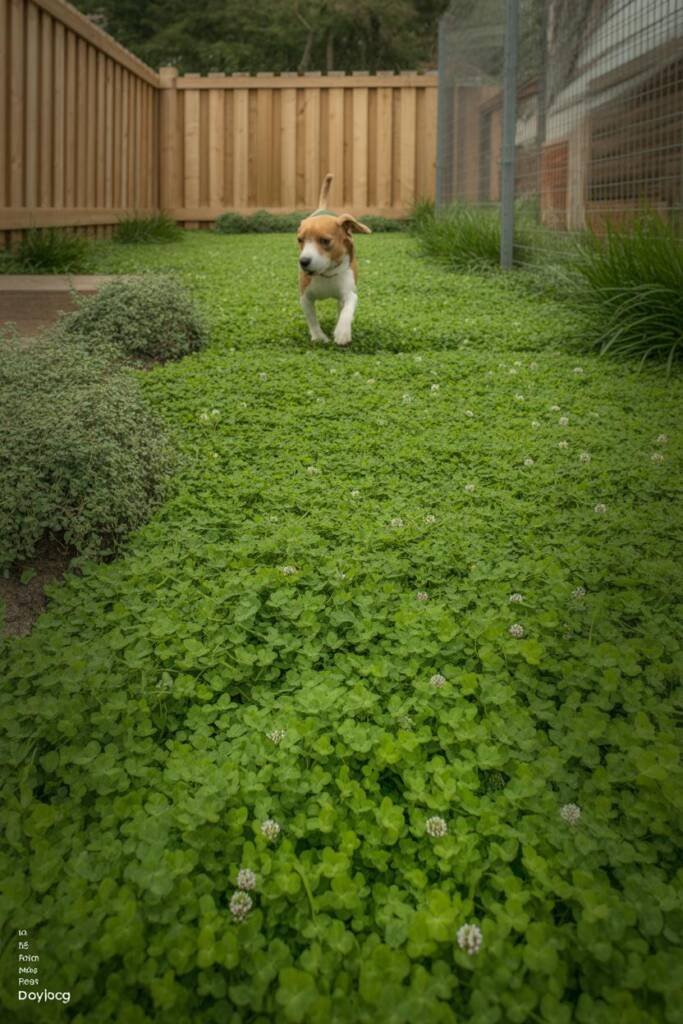
Traditional grass and dogs often don’t mix, but clover lawns thrive under paw traffic. Microclover stays green with minimal water, fixes its own nitrogen, and feels soft underfoot. It bounces back from play sessions that would destroy regular grass.
For high-traffic areas near doors, consider creeping thyme or dymondia—both tolerate foot traffic and release pleasant scents when stepped on. These alternatives need less mowing, no fertilizer, and actually improve as dogs use them. The varied texture also adds visual interest compared to uniform grass.
4. Adventure-Ready Garden Rooms with Strategic Fencing
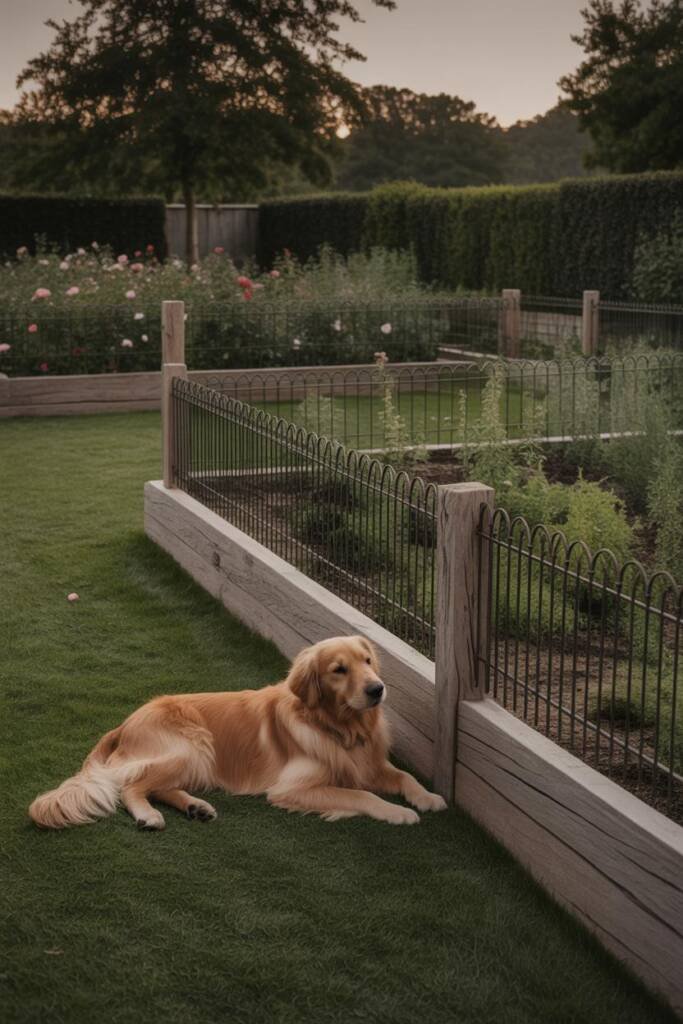
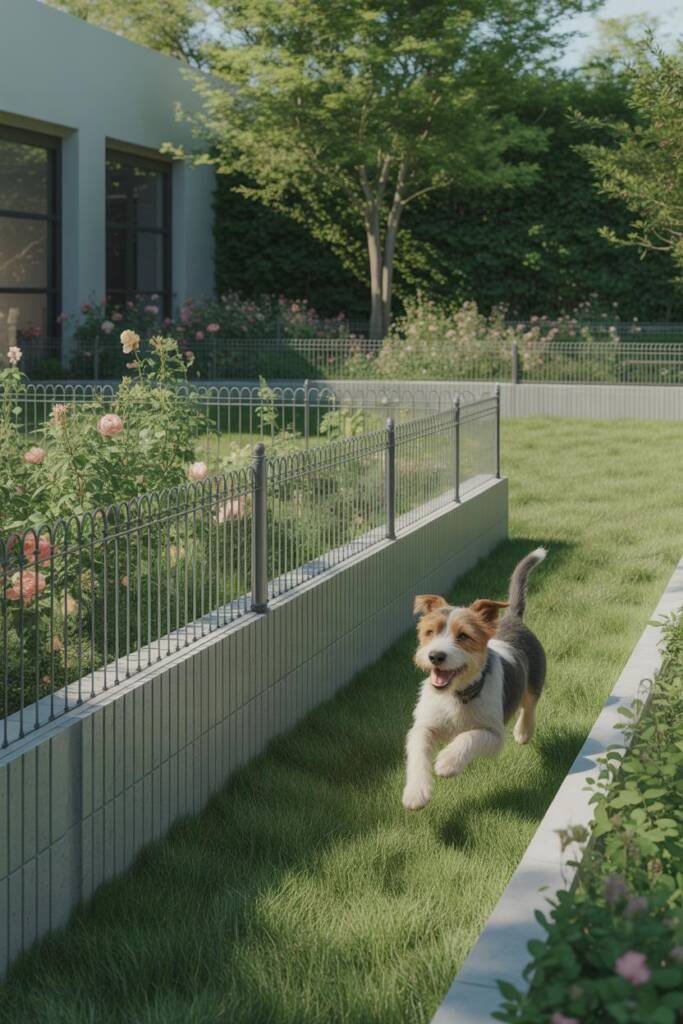
Low decorative fencing (18-24 inches) creates distinct “rooms” in your garden without blocking views. Use it to protect rose beds or vegetable gardens while giving dogs clear boundaries. Choose styles that complement your home—wrought iron for traditional spaces, horizontal slats for modern designs.
This approach lets you grow delicate plants without constant supervision. Your dog gets open play areas while your prized dahlias stay safe. The varied heights and sections make gardens feel larger and more designed.
5. The Elevated Planter Paradise
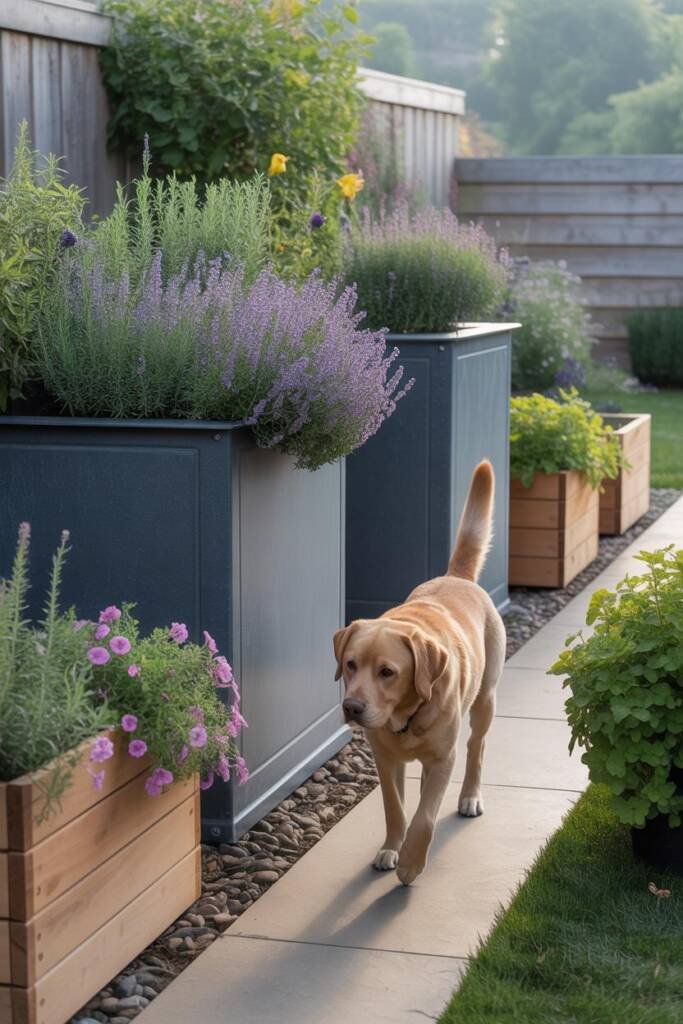
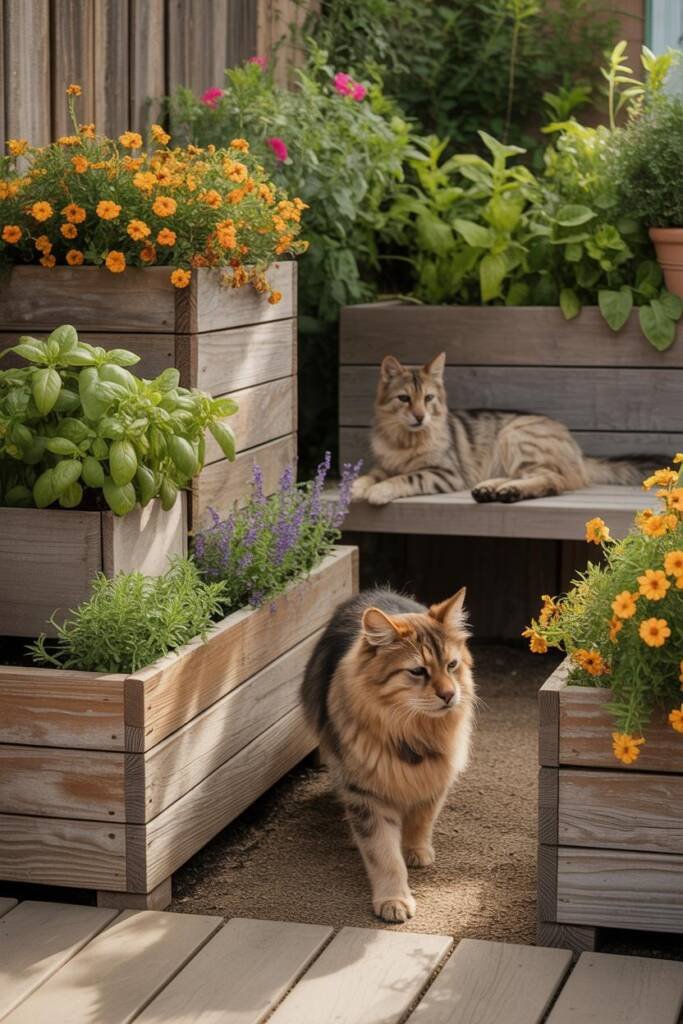
Raised beds solve the “dog vs. flowers” dilemma instantly. Build or buy planters at 24-30 inches high—tall enough to keep curious noses out but low enough to maintain garden aesthetics. Group them in clusters to create layers and depth. Plant trailing varieties that cascade over edges for a lush look.
Dogs can move freely through the garden while vegetables, flowers, and herbs grow safely above. This works especially well for small yards where every square foot matters. Cedar or composite materials last longer than pine and resist weathering.
6. Digging Pit Disguised as a Zen Sand Garden
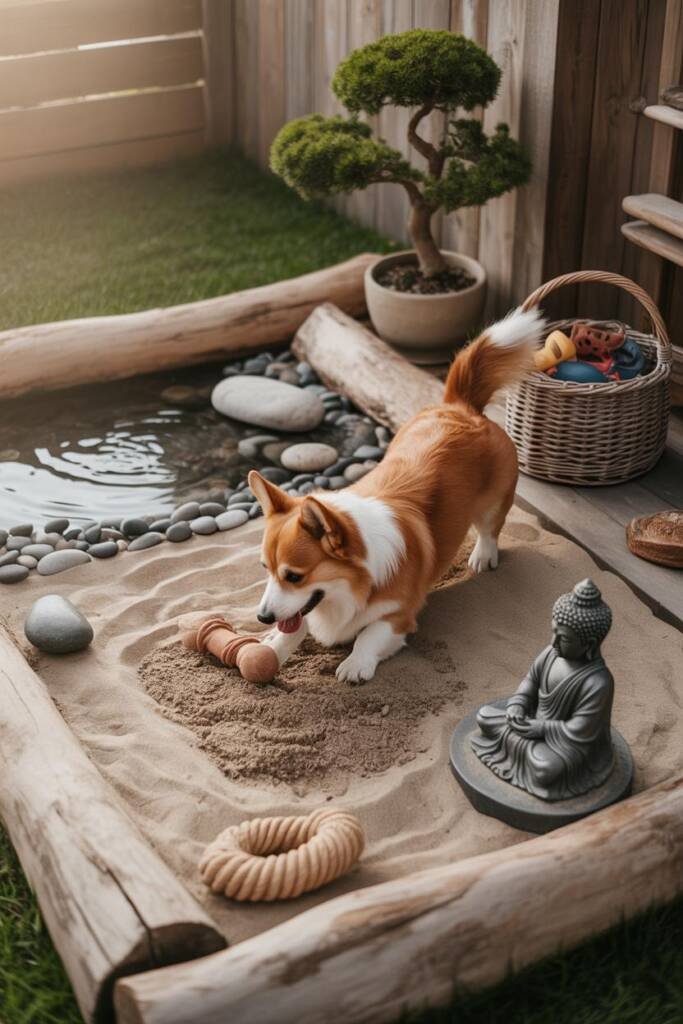
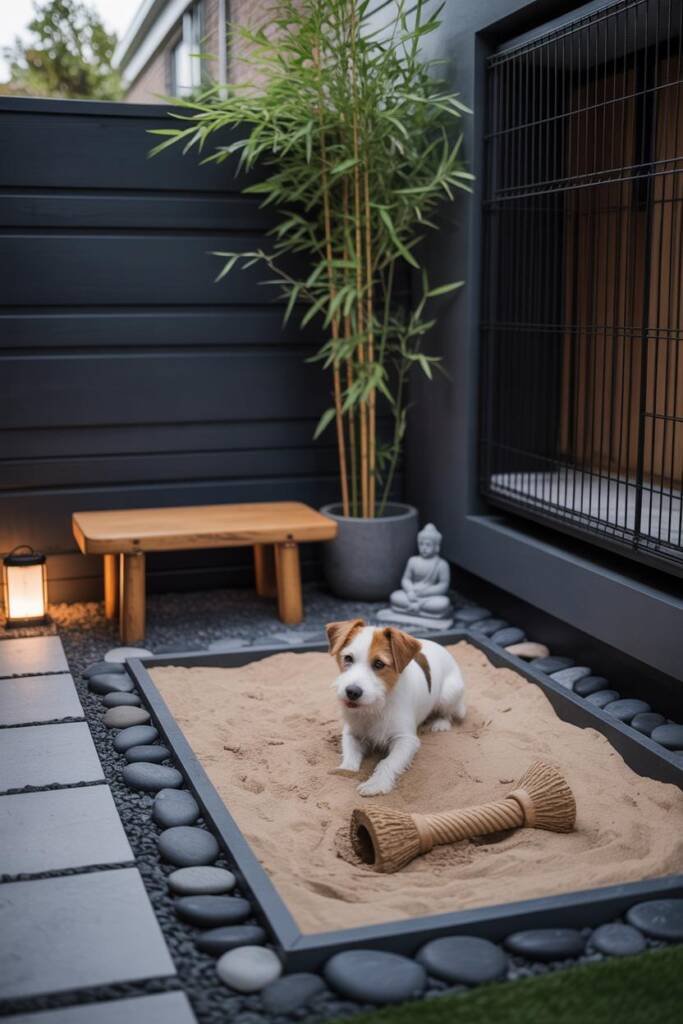
Some dogs dig—it’s instinct, not defiance. Create a designated 4×4 foot digging zone using sand or loose soil, bordered by large rocks or timber. Bury toys partially to encourage use in this spot only. Frame it like a zen garden with a few sculptural plants in containers and perhaps a small Buddha statue.
This gives your dog an appropriate outlet while looking like an intentional Japanese-inspired feature. When they dig here instead of your flower beds, redirect and praise. Most dogs learn the difference within weeks.
7. Shaded Retreat Corners with Natural Cooling
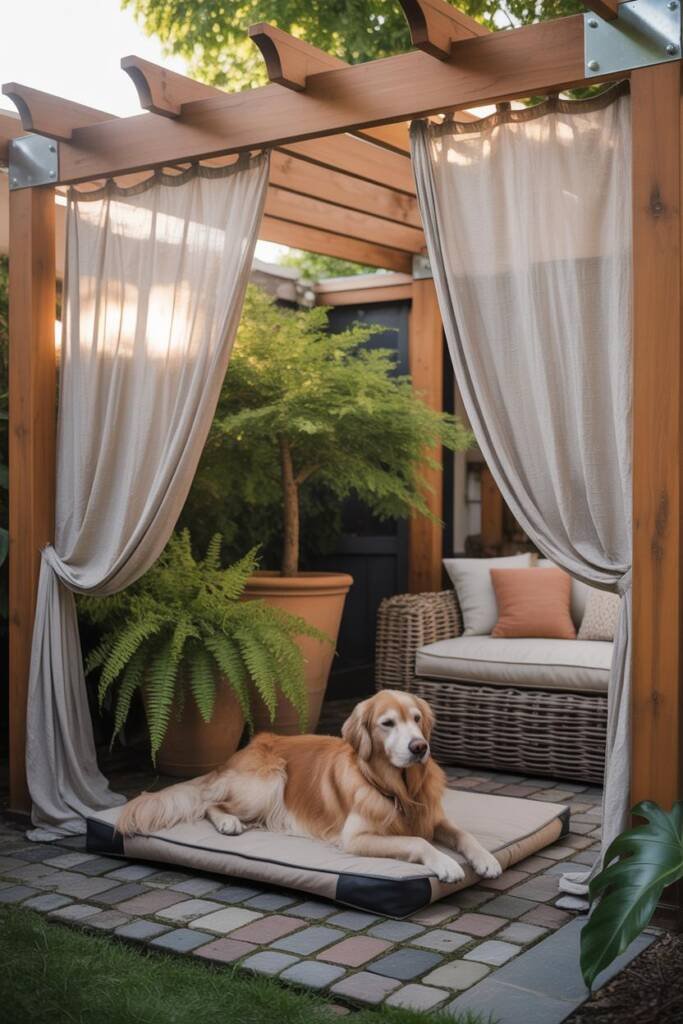
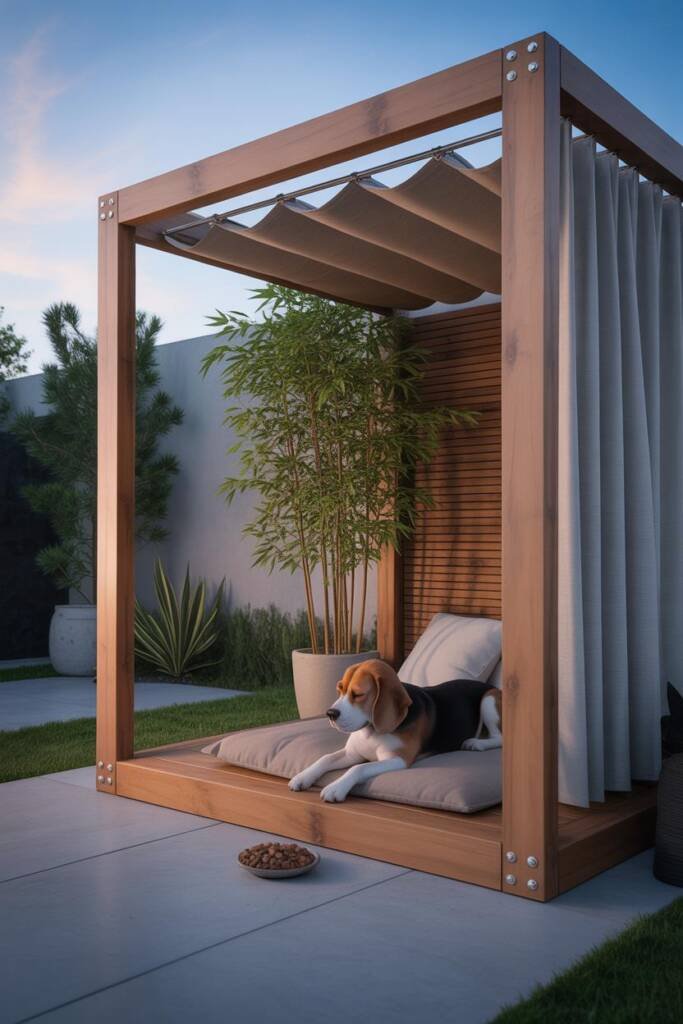
Dogs overheat quickly, so shaded rest spots aren’t optional—they’re essential. Install a pergola over a corner with flagstone flooring (stays cooler than wood decking). Add outdoor curtains for adjustable shade and style.
Place this near the house so dogs use it naturally. For instant shade, use large plant containers with ornamental trees like Japanese maple or crepe myrtle. The combo of hard shade structure plus soft plant elements creates a resort-like feel. Add an outdoor-rated dog bed and suddenly you’ve got a space that works for both of you.
8. Smooth Stone Pathways That Protect Paws and Plants
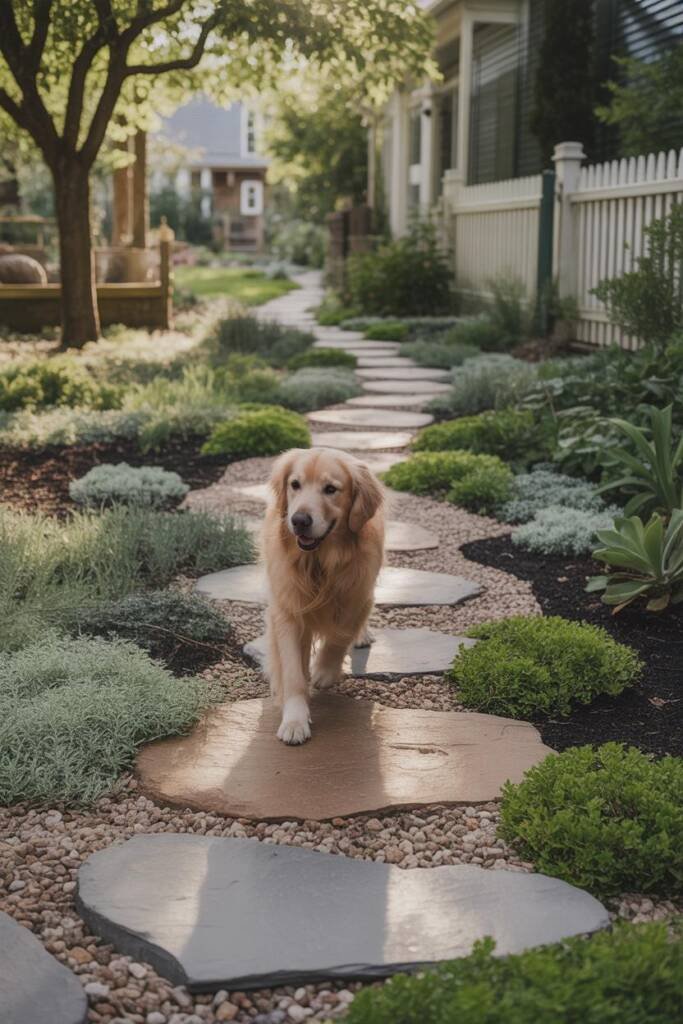
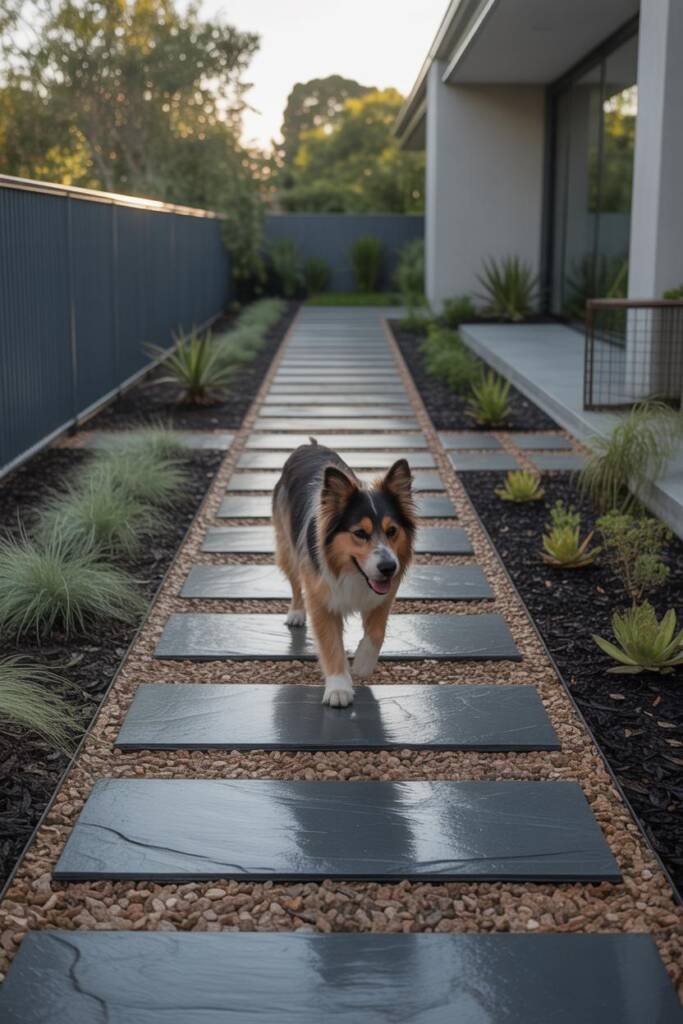
Dogs are creatures of habit—they’ll use the same routes repeatedly. Work with this by installing pathways where they already walk. Decomposed granite is budget-friendly and looks natural, while large flagstones feel more upscale. Both options drain well, preventing muddy paws and dead grass.
Run paths along fence lines and between key areas (door to favorite sunny spot, for example). Edge them with low groundcovers to soften the look. This guides traffic intentionally while keeping both paws and plants happy.
9. The Reinforced Border Garden with Natural Edging
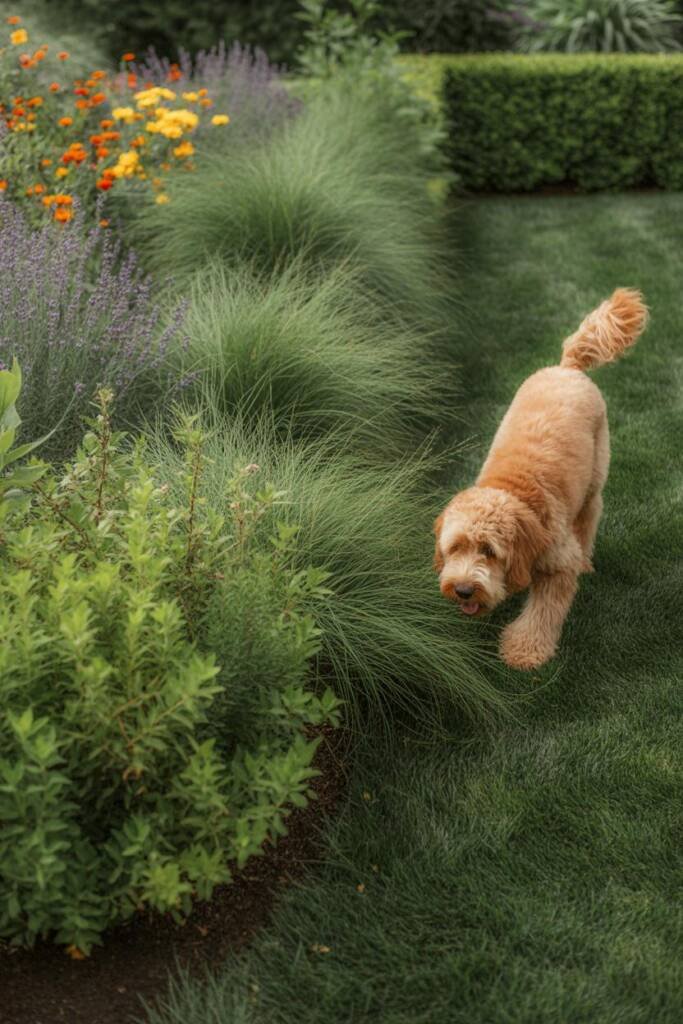
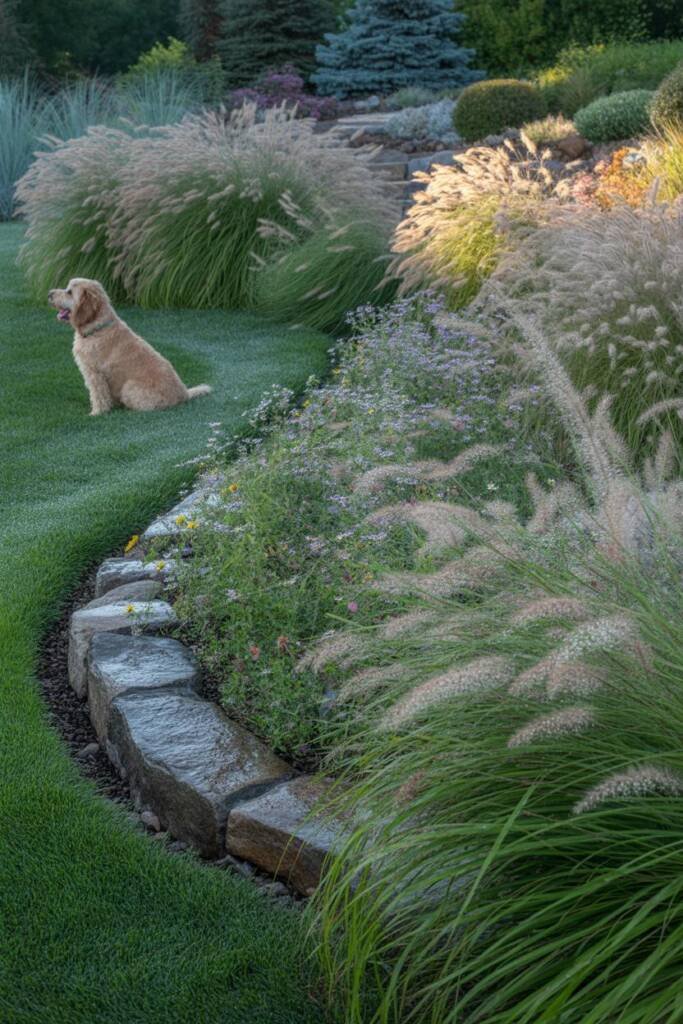
Strong perimeter plants create structure without hard barriers. Ornamental grasses like Karl Foerster feather reed grass grow dense enough to define spaces. Boxwood hedges work for formal gardens.
These living borders communicate boundaries to dogs while adding year-round structure to your design. Back them with slightly taller plants and you’ve created depth and layers. This approach feels softer than fencing but still protects inner garden areas from rough play.
10. Peek-Through Fence Windows for Watchful Pups
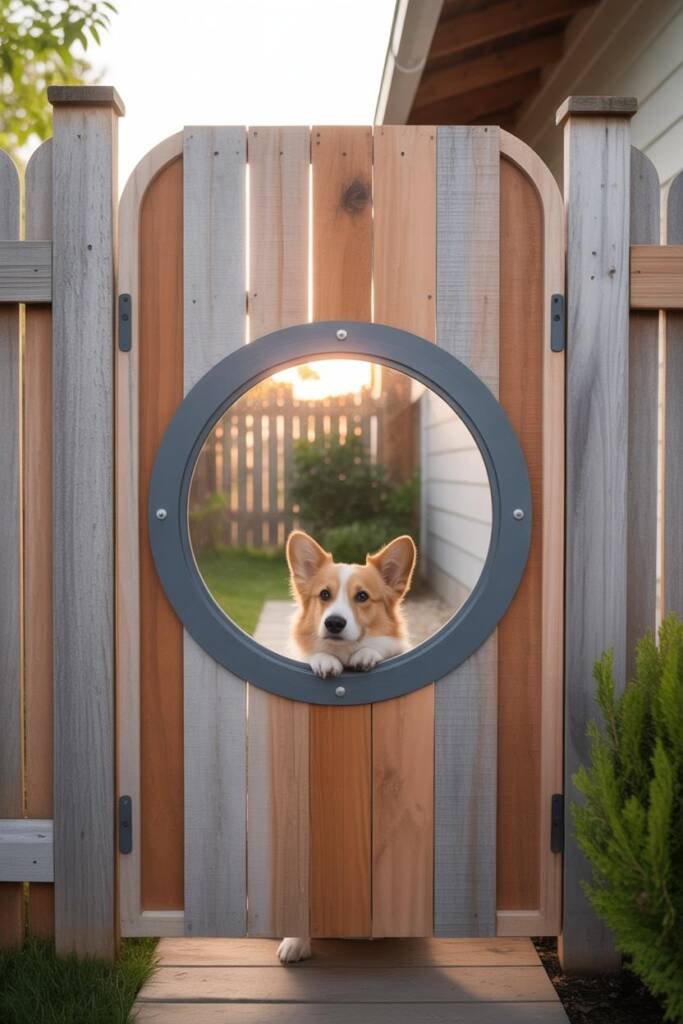
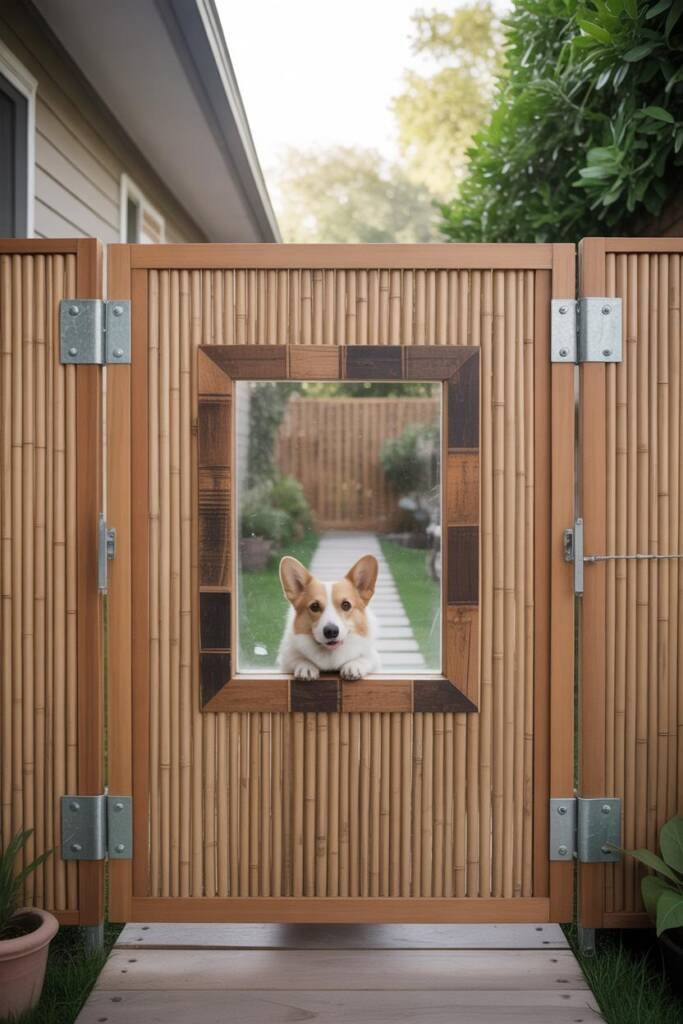
Dogs bark less when they can see what’s happening. Cut 12×12 inch windows at dog eye-height in solid fences, or install clear acrylic panels. This satisfies their need to survey without jumping or digging. Frame the openings with trim to make them look architectural rather than accidental.
For front yards, this reduces territorial behavior because your dog doesn’t feel trapped behind a blind barrier. It’s a simple modification that significantly impacts behavior while adding unique character to standard fencing.
Essential Items to Bring These Ideas to Life
Getting started is easier than you think. These five items work across multiple design ideas and deliver immediate impact.
- Pet-Safe Ground Cover Seeds (Clover or Creeping Thyme) – Replace worn grass patches with varieties that actually thrive under paw traffic. One pound covers approximately 4,000 square feet.
- Decorative Landscape Edging – Defines pathways and protects plant beds. Choose metal for modern looks or natural stone for traditional gardens. Clear boundaries help dogs understand where not to walk.
- Raised Planter Boxes (Cedar or Composite) – Instant elevation for vulnerable plants. Look for 24-30 inch heights. Pre-made options install in minutes and last for years.
- Recirculating Water Fountain with Basin – Provides fresh drinking water while adding ambient sound. Solar-powered versions eliminate electrical work and reduce operating costs.
- Outdoor Shade Sail Kit – Quick-install shade that covers 150-200 square feet. UV-resistant fabric protects both dogs and outdoor furniture. Available in colors that complement any garden style.
Creating Spaces Where Every Family Member Thrives
Your garden can be both beautiful and functional—these ideas prove it. The key is understanding that dogs need purpose, boundaries, and comfort just like we do. When you design with both in mind, you’ll spend less time correcting behavior and more time actually enjoying your outdoor space together.
At Sweet Purrfections, we believe great design works for every family member, whether they have two legs or four. Your home and garden should reflect the life you actually live, not some impossible standard that excludes the pets who make it complete. These aren’t compromises—they’re smart solutions that make outdoor spaces better for everyone.