
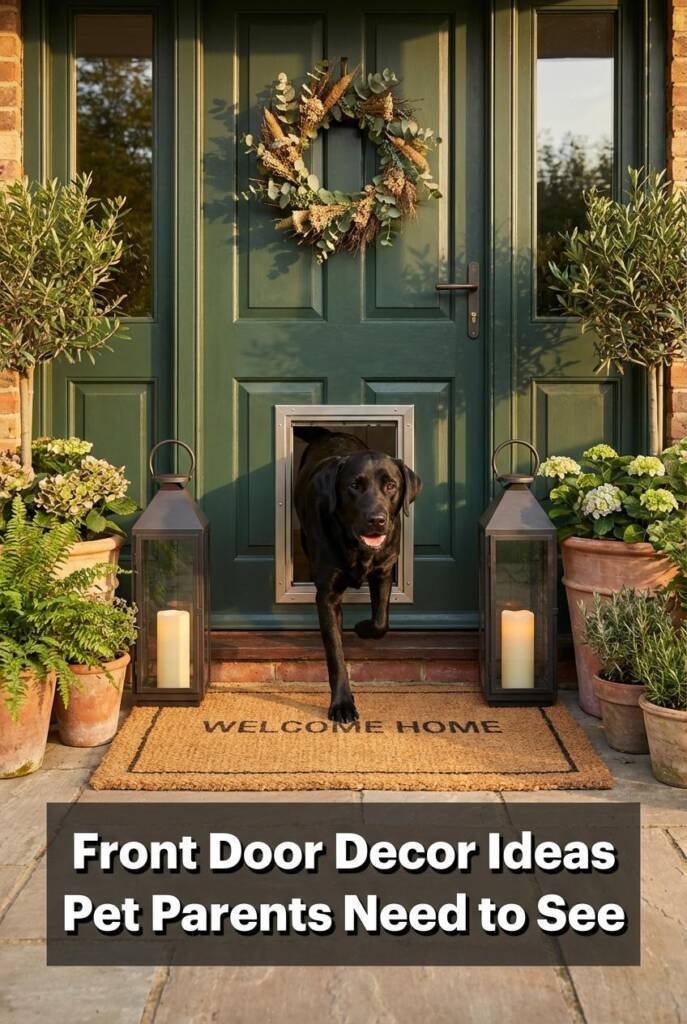
You love your dog. You also love a front door that doesn’t scream “a pet lives here and we’ve given up.”
Good news — the days of flimsy plastic flaps jammed into a beautiful entrance door design are officially over. Today’s pet-friendly front door ideas blend seamlessly into your home’s architecture, and some of them are so sleek your guests won’t even notice the doggy door until your Golden Retriever casually strolls through it.
Whether you’re building new, renovating, or just want to upgrade your existing front door decor without sacrificing style, this list has something for you. We’ve pulled together 16 ideas that are practical, pin-worthy, and proof that pet parents can have nice things.
Let’s get into it.
1. The Flush-Panel Front Door With a Hidden Pet Entry
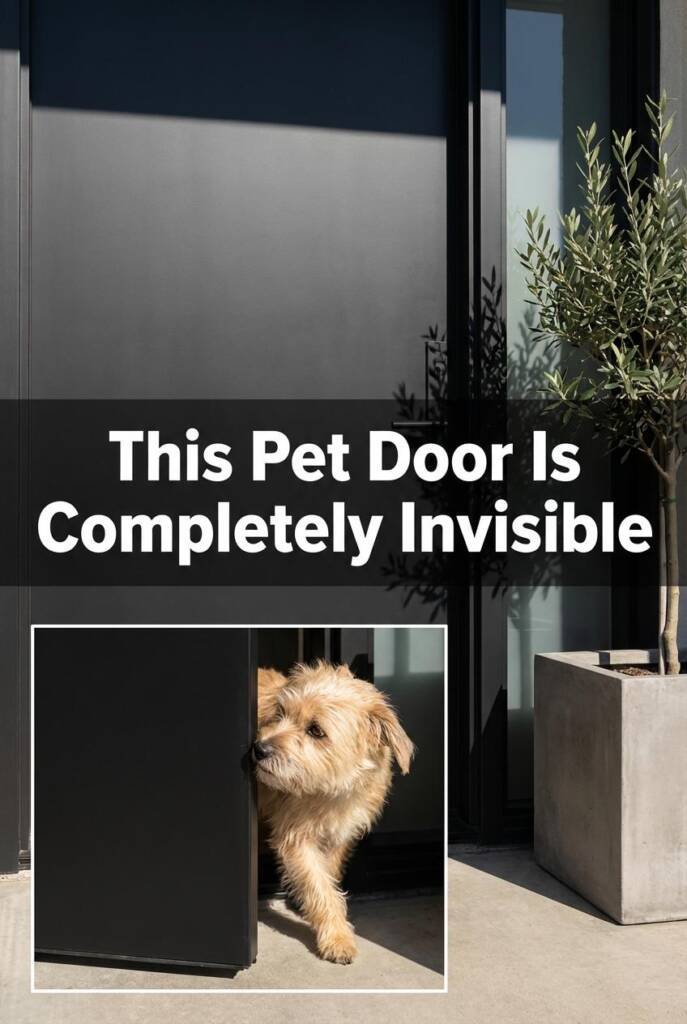
This is the sleeper hit of pet-friendly entrance door design. A flush-panel (slab) door has zero raised detailing, which means a built-in pet door sits completely flat against the surface. Paint it the same color as the door and it practically disappears.
The look is ultra-modern, minimal, and incredibly clean. It works especially well with contemporary and mid-century exteriors where you want crisp lines and zero visual clutter.
PRO TIP: Choose a pet door with a magnetic closure and no visible frame. Companies like Hale and Endura Flap make models specifically designed for flush-mount installation.
2. Craftsman-Style Front Door With a Matching Wood Pet Panel
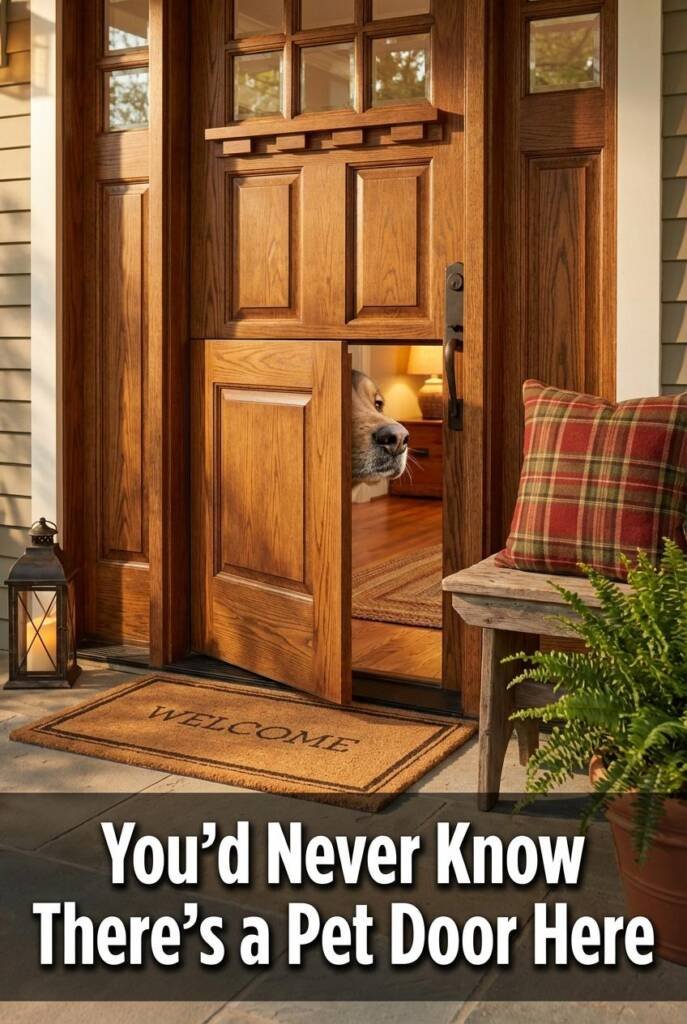
Craftsman doors already have those beautiful lower wood panels — and that’s exactly where a pet door hides beautifully. The trick is having your installer cut the pet opening into one of the existing bottom panels and frame it with the same wood profile.
The result? A front door that looks 100% original Craftsman. The pet door reads as just another design detail in the door’s architecture. This is one of the most popular front door ideas for older homes with traditional curb appeal.
PRO TIP: Match the wood stain exactly by taking a sample from the door to your local woodworker. A slight color mismatch will be obvious in daylight.
3. Dutch Door With Built-In Pet Access on the Bottom Half
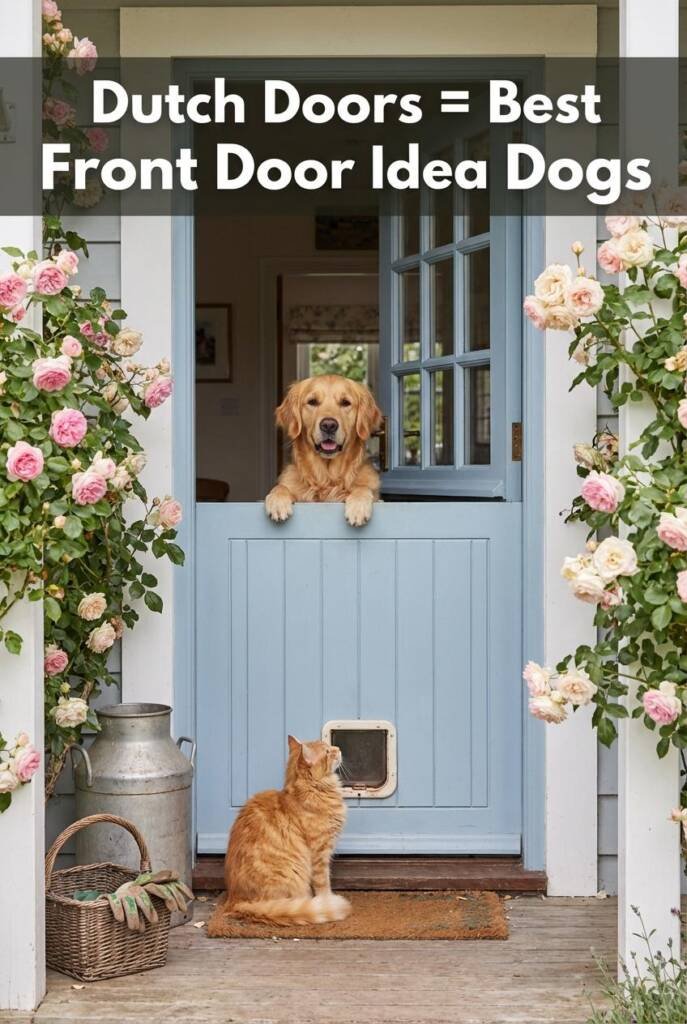
Dutch doors are already having a massive moment in front door decor — and they’re secretly perfect for pet owners. The bottom half operates independently, so you can install a pet flap in the lower section while keeping the top open for airflow and that gorgeous divided-door aesthetic.
This style is a showstopper for farmhouse, cottage, and coastal homes. It gives your dog freedom while letting you control ventilation and keep an eye on the neighborhood.
PRO TIP: Choose a Dutch door with a built-in shelf on the lower half’s top edge — it doubles as a plant ledge or a spot for your keys when both halves are closed.
4. Glass Sidelight Panel With an Integrated Pet Door
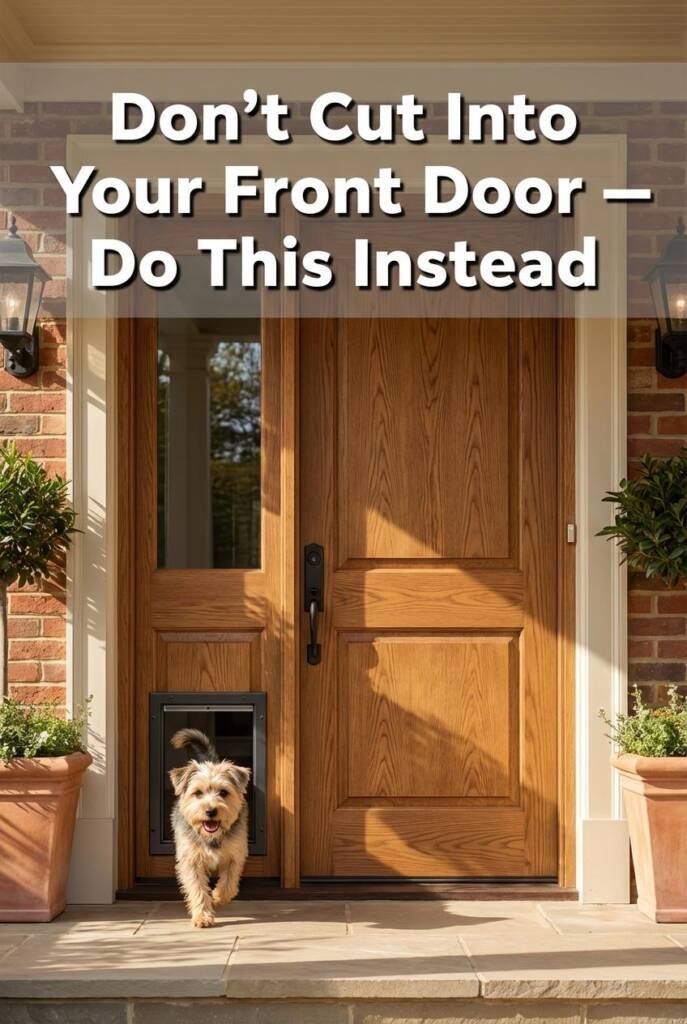
Here’s a brilliant move: don’t touch the front door at all. Instead, install the pet door in one of the sidelight panels flanking your entrance. Most sidelights have a solid lower portion that’s the perfect size for a medium pet flap.
This keeps your main entrance door design completely untouched while still giving your pet easy access. It’s especially smart for homeowners who have an expensive or custom front door they don’t want to modify.
PRO TIP: If your sidelights are full glass, ask your door company about a custom sidelight with a solid lower third. It’ll look intentional and architectural.
5. Matte Black Steel Front Door With a Concealed Bottom Vent Pet Entry
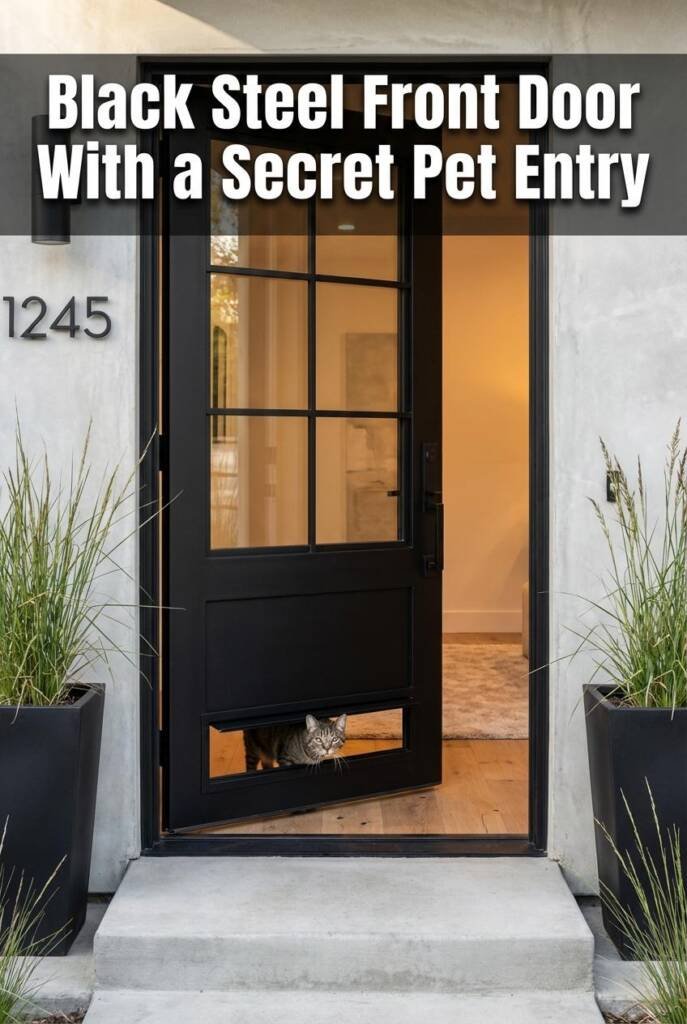
Steel-framed front doors with glass grid panes are one of the hottest entrance door design trends right now. The trick for adding a pet door? Use a vent-style concealed opening at the base of the door. It looks like an intentional architectural detail — like a return air vent — not an afterthought.
The dark steel framing makes the pet entry virtually invisible, especially if you use a black-framed flap. This is the front door idea for anyone who wants that industrial-modern look without compromising for their pet.
6. Barn-Style Sliding Front Door With Side-Mounted Pet Access
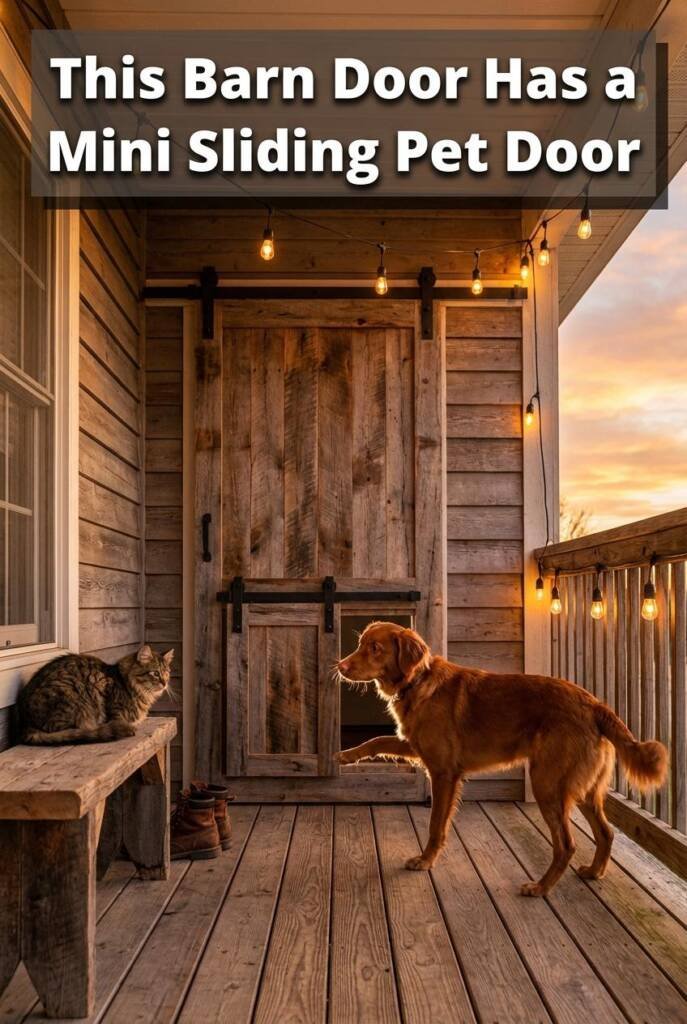
If your home’s exterior leans rustic, modern farmhouse, or eclectic, a barn-style sliding front door is already a statement piece. Adding pet access works best as a separate, smaller sliding panel mounted alongside or below the main track.
The parallel sliding motion means your dog learns to nudge their own mini door open along the same track. Visually, it looks like a design choice, not a pet compromise. Use matching hardware and wood tone for a cohesive look.
PRO TIP: This setup works incredibly well for larger dogs who struggle with traditional flap-style pet doors. The sliding motion requires less effort than pushing through a flap.
7. Arched Front Door With a Pet Door Hidden Behind a Decorative Iron Grate
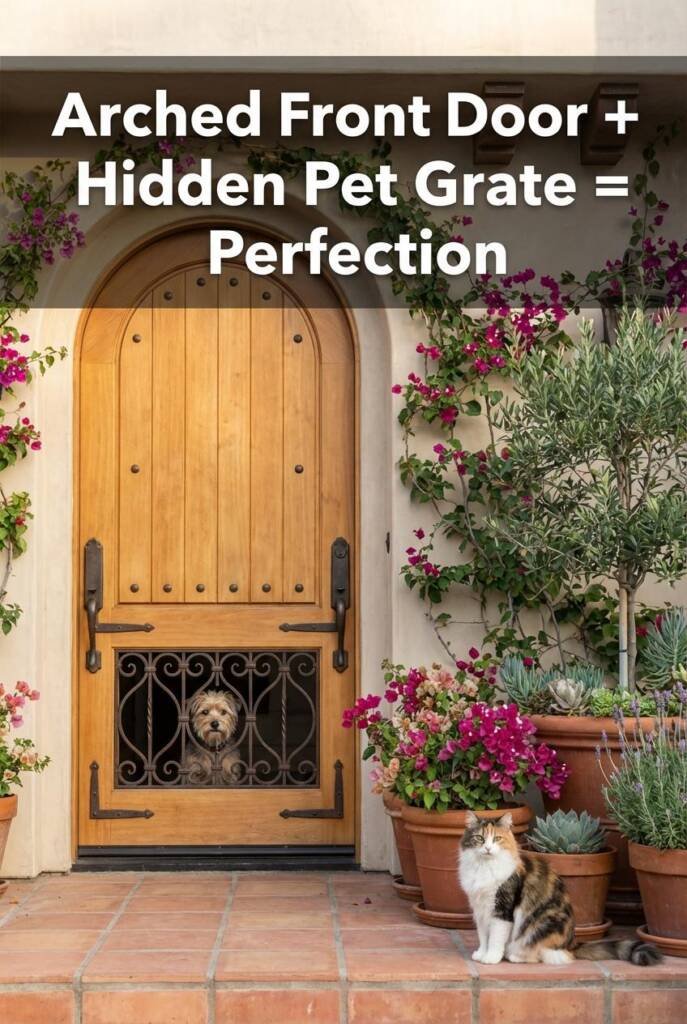
Arched front doors scream elegance — Mediterranean, Spanish Colonial, Old World charm. A standard pet flap would absolutely kill the look. The solution? A decorative wrought-iron grate at the base of the door that conceals the pet opening behind scrollwork.
The grate serves as front door decor while functioning as your pet’s private entrance. You can commission a local metalworker to create a custom design that matches your existing door hardware — hinges, knockers, handle sets.
8. Smart Electronic Pet Door With Microchip Recognition
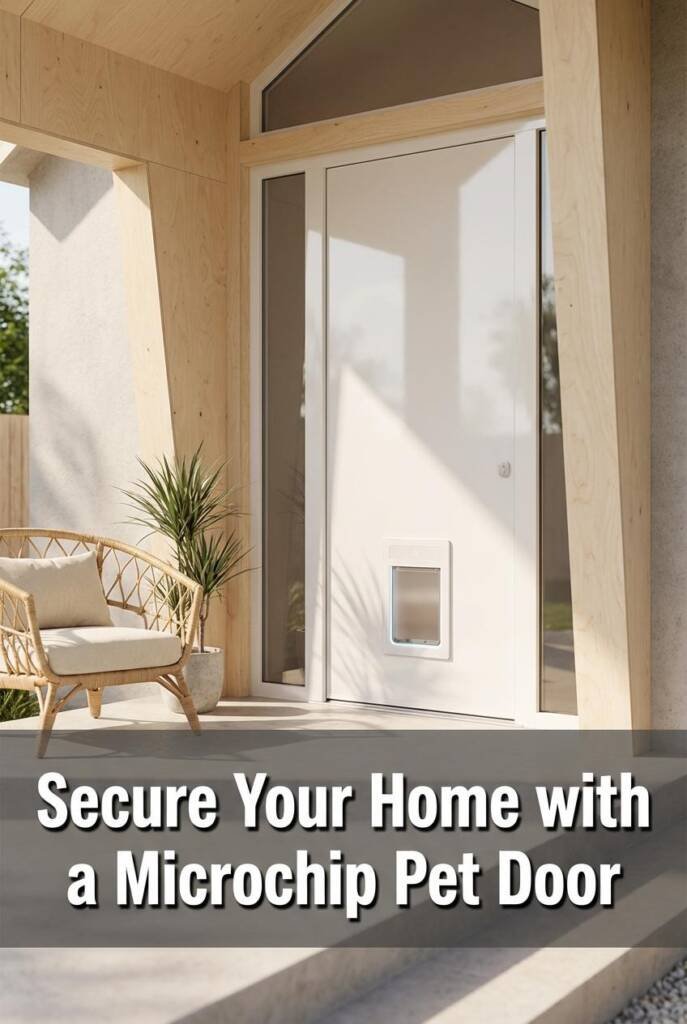
This one’s about technology meeting curb appeal. Smart pet doors use your pet’s microchip or a collar sensor to unlock — meaning only YOUR pet gets in. No raccoons. No neighborhood cats. No uninvited guests.
The latest models from SureFlap and PetSafe have incredibly low-profile frames that mount nearly flush. Combined with a front door in a dark color (think matte black, deep navy, or charcoal), the electronic unit blends right in.
For front door ideas that are as smart as they are stylish, this is the one tech-loving pet parents are going crazy over.
PRO TIP: Some models connect to an app so you can lock/unlock remotely and set curfew times. Perfect if you want your dog to have daytime freedom but stay inside after dark.
9. Double Front Doors With a Pet Entry in One Door Only
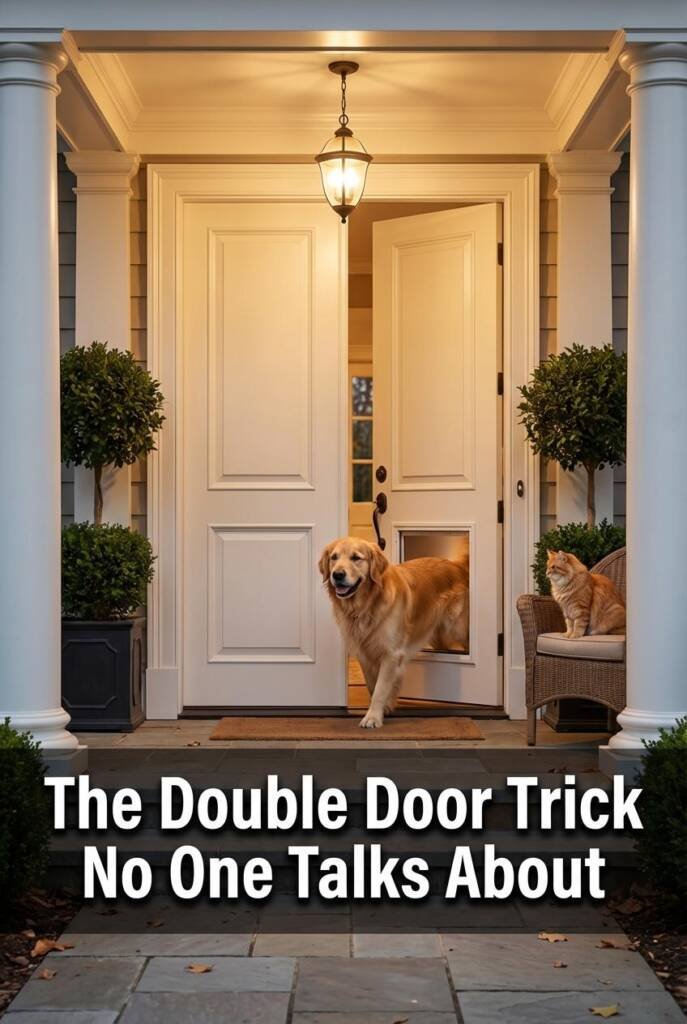
Double front doors are a luxury feature — and they give you a huge advantage for pet access. You can install the pet door in the less-used door (usually the one that stays bolted) so your primary entrance remains completely untouched.
Visually, both doors look identical from the outside. The pet entry is only visible if you know where to look. This is one of the best-kept secrets in entrance door design for larger homes.
10. Front Door With a Matching Pet Door Surround — Framed Like a Mini Entrance
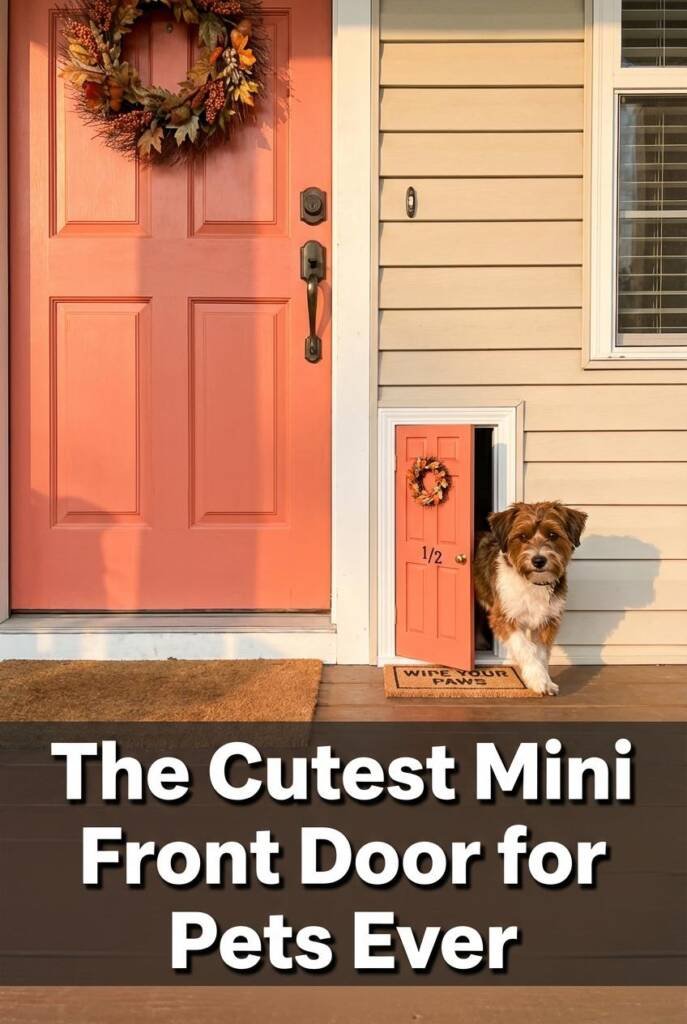
This is the fun one. Instead of hiding the pet door, you CELEBRATE it. Frame the pet entry with matching trim, a tiny architrave, or even a mini pediment that mirrors your home’s main entrance detail.
It’s whimsical, it photographs incredibly well, and it tells the world you’re a proud pet parent who takes their front door decor seriously. Pinterest absolutely eats this up — the “mini matching front door for pets” concept regularly goes viral.
PRO TIP: Add a tiny house number or a miniature welcome mat in front of the pet door for maximum charm. This is the detail that makes people stop and take photos.
11. Pivot Front Door With Floor-Level Pet Passage
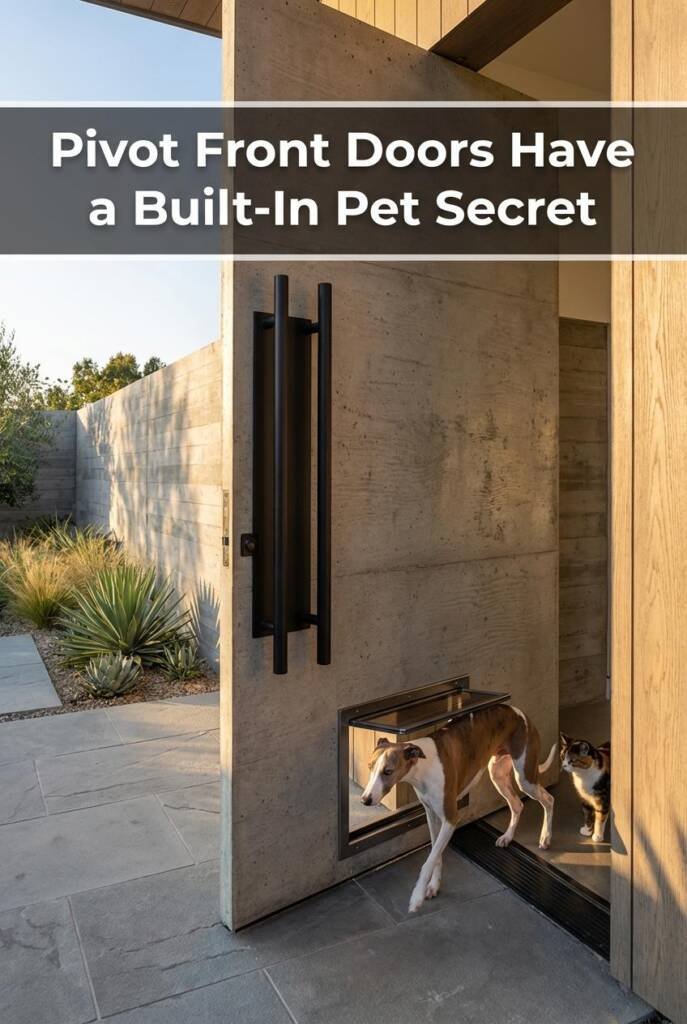
Pivot doors rotate on a central or offset hinge rather than swinging from the side, and they’re one of the most dramatic front door ideas in modern architecture. Because pivot doors don’t have a traditional threshold seal at the bottom, you can engineer a slim pet passage at floor level.
This works as a permanent open slot (best for mild climates and covered porches) or with a thin magnetic flap that seals weather-tight when not in use. The effect is incredibly sleek — the pet access looks like part of the door’s engineering, not an add-on.
12. Screened Front Porch Door With Full Pet Panel
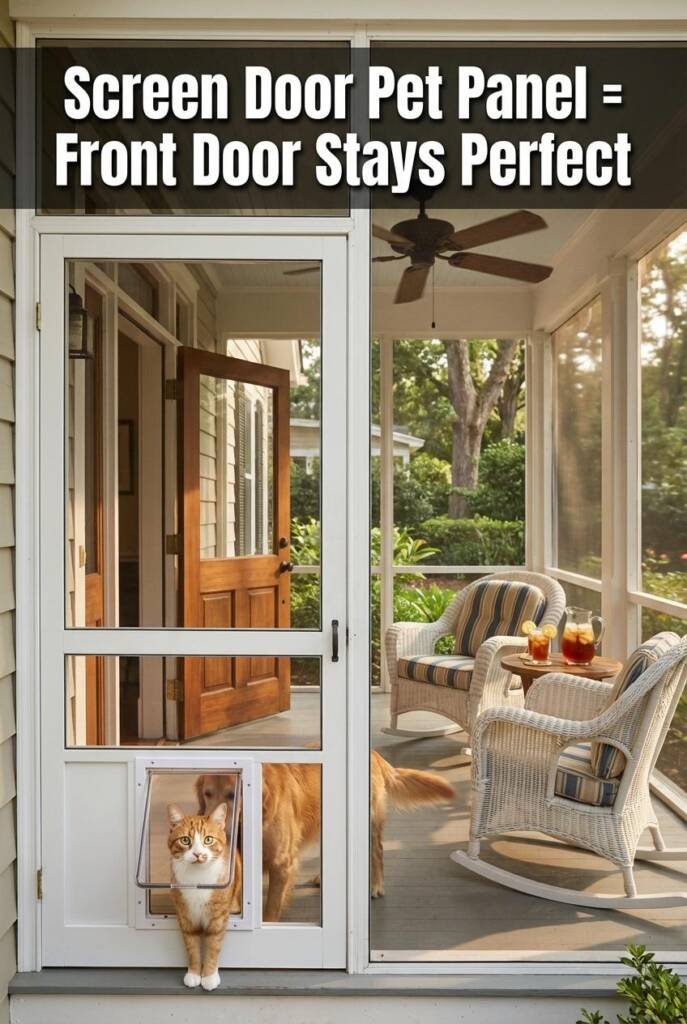
If you have a screened-in front porch, the screen door is actually the ideal location for pet access — not the main front door. A full pet panel replaces the bottom third of the screen door with a solid, weather-resistant material that includes the pet flap.
This keeps your actual entrance door design completely untouched while giving your pet access to the porch and yard. It also means you can leave the main front door open on nice days for airflow while your dog comes and goes through the screen door.
13. Frosted Glass Front Door With Pet Door in a Privacy Panel
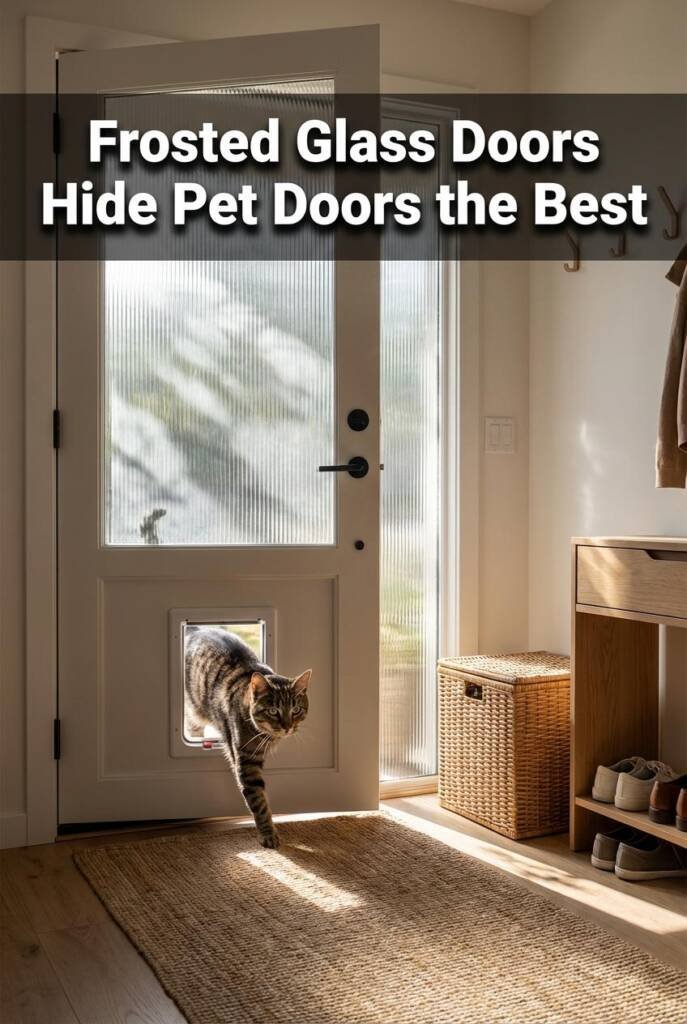
Frosted and reeded glass front doors are everywhere in 2026 — they let light in while maintaining privacy. The bottom section of these doors is typically a solid privacy panel (since frosted glass at floor level serves no purpose), making it the natural spot for a pet door.
The opaque lower panel completely disguises the pet entry. Behind the frosted glass aesthetic, your dog has their own private entrance that’s invisible from the street. It’s one of the smartest entrance door design solutions we’ve seen.
14. Oversized Front Door With a Proportionally Scaled Pet Entry
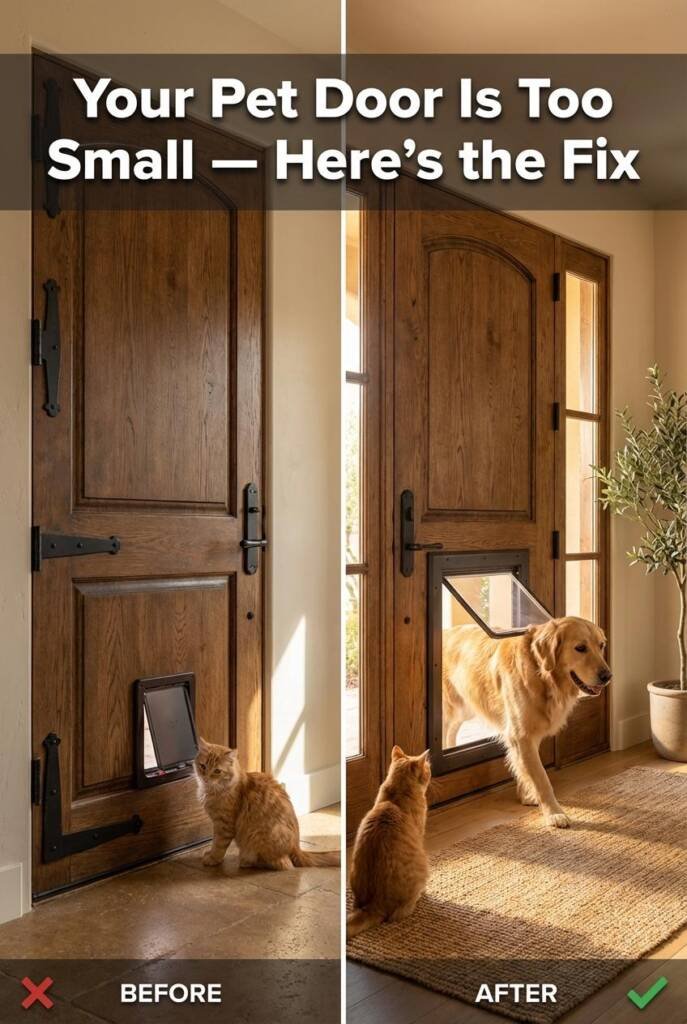
Here’s a mistake a lot of people make: putting a standard small pet door on a massive oversized front door. It looks comically tiny. The fix? Scale the pet door proportionally to the main door.
For a 8-to-10-foot front door, go with a larger-than-standard pet entry (think large or extra-large sizes, even if your dog is medium). The bigger flap looks intentional and proportional rather than like an afterthought stuck at the bottom of a luxury door.
PRO TIP: Use the same proportional rule for trim and framing around the pet door. Bigger door = wider trim on the pet entry to maintain visual balance.
15. Reclaimed Wood Front Door With a Rustic Dog Gate Insert
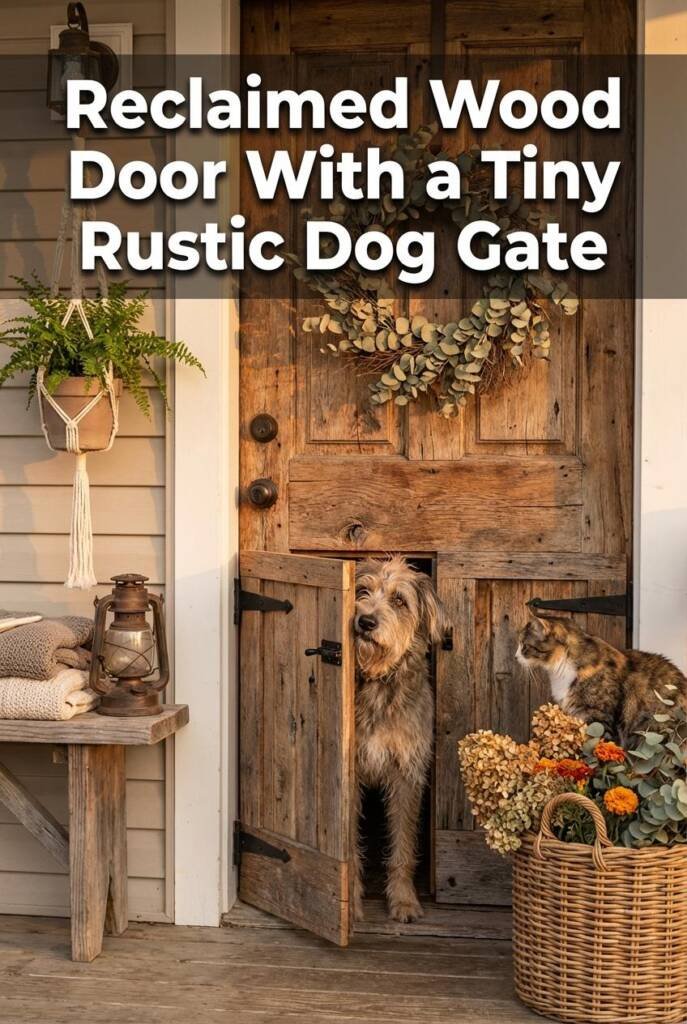
For homes with a rustic, reclaimed, or boho-farmhouse vibe, swap the traditional pet flap for a tiny hinged gate built into the lower portion of the door. Think of it as a miniature stable door within your front door.
Build it from the same reclaimed wood as the main door, add small iron hinges that match the main hardware, and you’ve got a front door decor moment that feels handcrafted and intentional. Your dog pushes through a little wooden gate instead of a plastic flap — it’s rustic, charming, and completely on-brand.
16. Color-Blocked Front Door With a Contrasting Pet Entry Accent
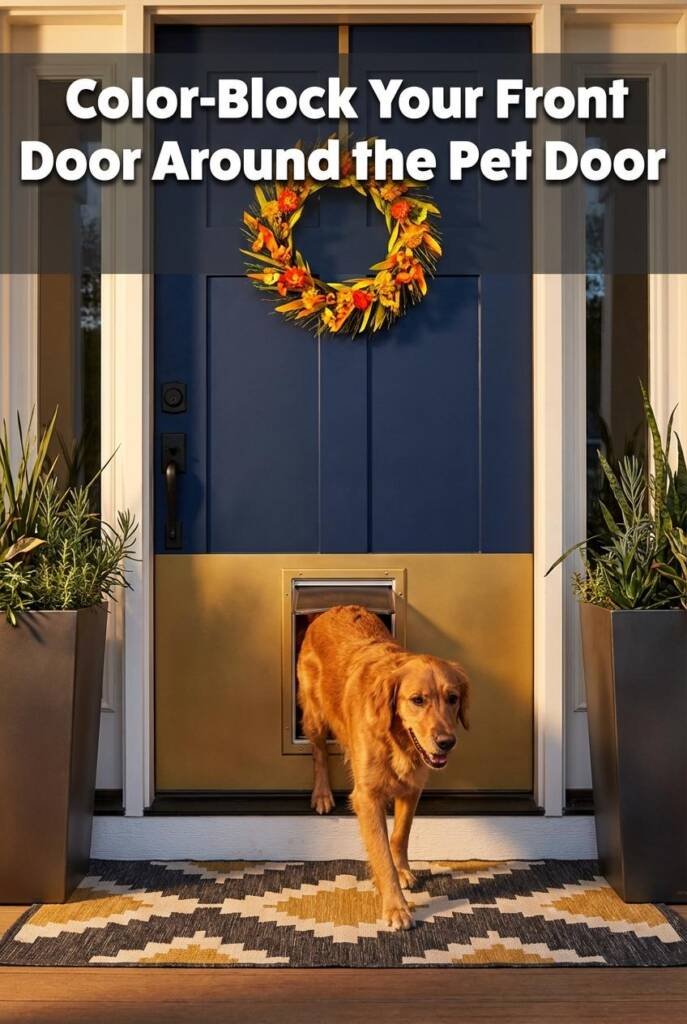
If you’re bold with color, lean all the way in. Paint your front door in two tones — a dominant color on the upper two-thirds and a contrasting accent color on the lower third. Place the pet door in the accent-colored section.
This turns the pet entry into a deliberate design choice rather than something you’re trying to hide. Think deep forest green on top with a warm terracotta base, or navy with a gold accent section. The pet door becomes part of the front door’s personality.
It’s bold, it’s different, and it’s the kind of front door idea that stops people mid-scroll on Pinterest. If you’re going to have a pet door, why not own it?
How to Choose the Right Front Door and Pet Door Combo
Before you commit to any of these front door ideas, here are the things to consider:
- Your climate matters. If you live somewhere with extreme heat, cold, or storms, prioritize insulated and weather-sealed pet doors. Flush-panel and electronic models tend to offer the best thermal performance.
- Measure your pet standing naturally. The pet door needs to be wide enough for their shoulders and tall enough that they don’t have to duck. Always size up — a too-small opening will annoy your pet and they’ll stop using it.
- Think about security. A pet door is a potential entry point. Look for models with locking mechanisms, reinforced frames, or smart locks. Electronic microchip doors solve this entirely.
- Match your materials. This is the single biggest factor in keeping your curb appeal intact. If your door is stained wood, the pet door frame should be stained wood. If your door is painted steel, use a steel-frame pet entry. Consistency is everything.
Your Front Door Should Work for Your Whole Family — Including the Furry Ones
The best entrance door design is one that serves everyone who walks through it — two legs or four. And as you’ve seen, there’s absolutely no reason to sacrifice style for function. Every single one of these ideas proves that a pet-friendly front door can be just as beautiful, just as curated, and just as pin-worthy as one without a doggy door.
The key is treating the pet entry as a design element, not an apology.
Here at Sweet Purrfections, this is what we’re all about — helping pet parents create homes that are stylish, functional, and designed for the way you actually live. Because you shouldn’t have to choose between a magazine-worthy front door and a happy dog. You deserve both.
If you found this helpful, stick around. We’ve got plenty more where this came from — practical, beautiful home ideas for people who refuse to compromise on design just because they share their space with a four-legged best friend.
Leave a Reply