
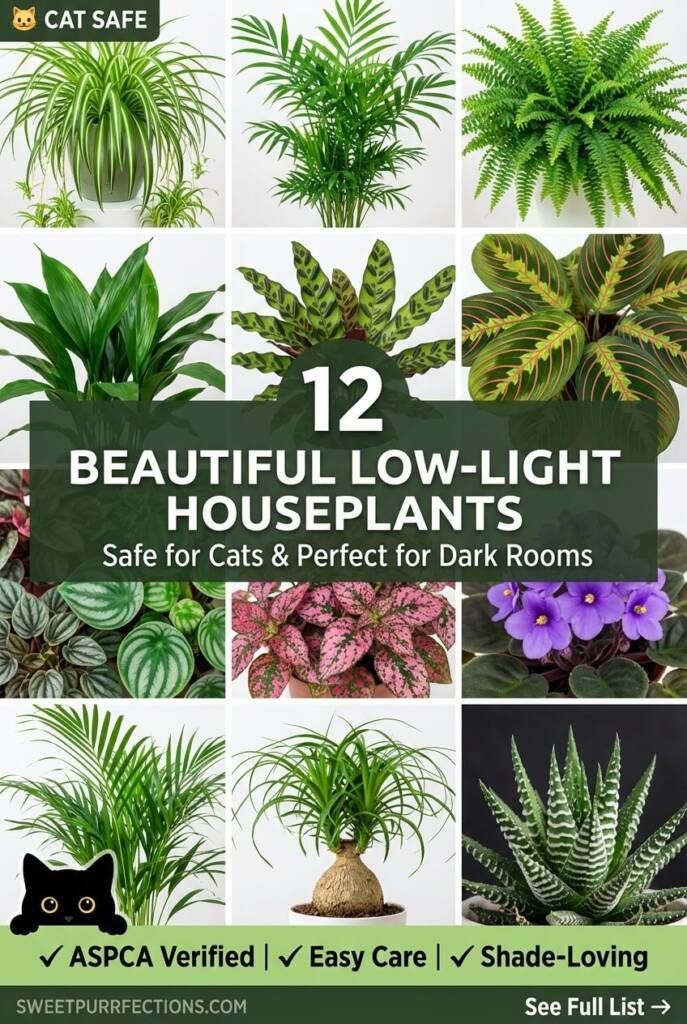
Why Finding Low-Light Cat-Safe Plants Is So Challenging
If you have a cat and a home that doesn’t get much natural sunlight, you’ve probably discovered the frustrating truth: most of the popular low-light houseplants are actually toxic to cats. Pothos, snake plants, ZZ plants, philodendrons, and peace lilies—all the go-to recommendations for dim corners—can cause serious health issues if your curious feline decides to take a nibble.
The good news? There are plenty of gorgeous alternatives that thrive in low light AND are completely safe for your whiskered companion. Every plant on this list has been verified as non-toxic by the ASPCA, so you can finally create that lush indoor jungle without worrying about emergency vet visits.
Have an outdoor cat? Check our list of yard plants that could be toxic to your adventurous kitty>>
1. Spider Plant (Chlorophytum comosum)
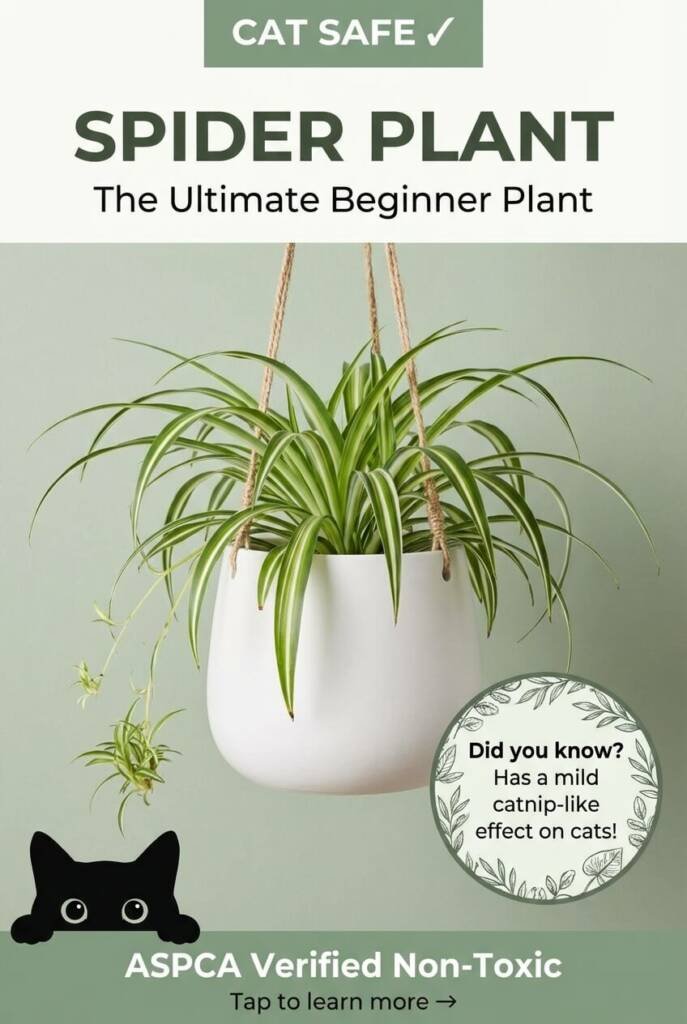
Spider plants are probably the most forgiving houseplant you’ll ever own. They tolerate low light like champions, bounce back from neglect, and produce adorable “spiderettes” (baby plants) that dangle from the mother plant on long stems.
Light requirements: Tolerates low light, thrives in moderate indirect light
Watering: Water when the top inch of soil is dry
Size: 12-24 inches tall and wide
Cat safety note: ASPCA verified non-toxic. Fun fact—spider plants may have a mild euphoric effect on some cats (similar to catnip), which explains why your cat might be extra interested in nibbling. It’s completely harmless, but you may want to hang it out of reach to protect your plant!
2. Parlor Palm (Chamaedorea elegans)
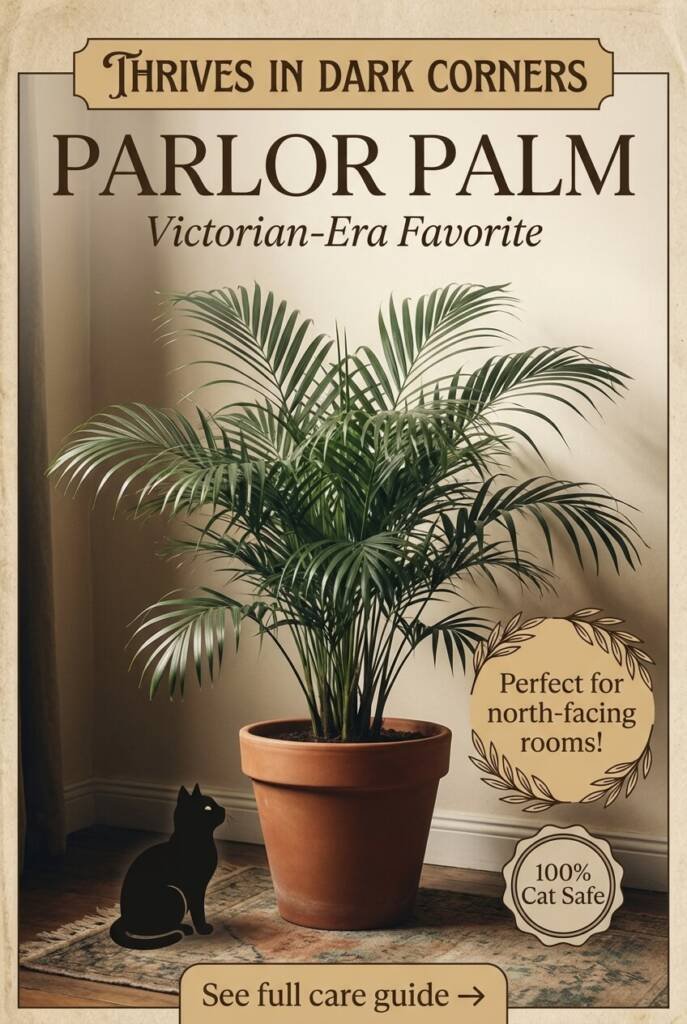
If you want that tropical palm aesthetic without needing a sunroom, the parlor palm is your answer. This Victorian-era favorite earned its name because it thrived in the dimly lit parlors of the 1800s—and it’s still one of the best indoor palms for low-light spaces today.
Light requirements: True low-light tolerance; perfect for darker corners and north-facing rooms
Watering: Keep soil slightly moist; allow top inch to dry between waterings
Size: 3-4 feet indoors
Cat safety note: ASPCA verified non-toxic to cats, dogs, and horses. A completely worry-free choice for pet owners.
3. Boston Fern (Nephrolepis exaltata)
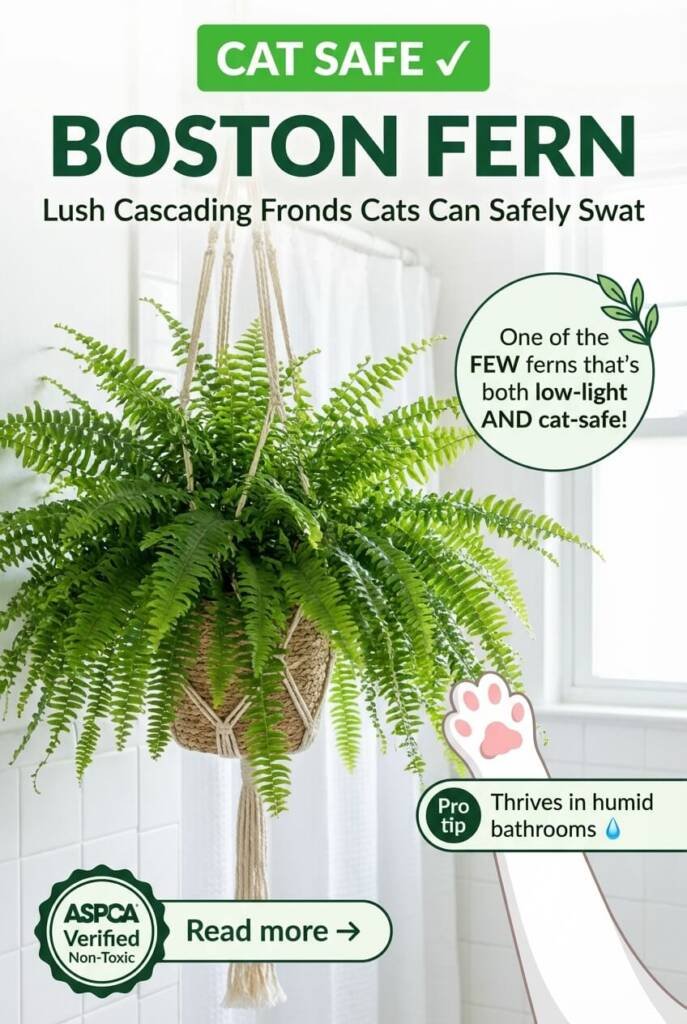
Boston ferns bring a touch of the tropics to your home with their lush, feathery fronds that cascade beautifully from hanging baskets or elevated plant stands. They’re one of the few ferns that are both low-light tolerant AND cat-safe (many ferns are toxic, so always verify the specific variety).
Light requirements: Thrives in indirect light and shade; avoid direct sunlight
Watering: Keep soil consistently moist (not soggy); loves humidity
Size: 2-3 feet tall and wide
Pro tip: Boston ferns thrive in humid environments, making them perfect for bathrooms with windows. Mist them regularly or place on a pebble tray with water to keep the fronds from browning at the tips.
Cat safety note: ASPCA verified non-toxic. Your cat may love batting at the dangling fronds—totally safe!
4. Cast Iron Plant (Aspidistra elatior)
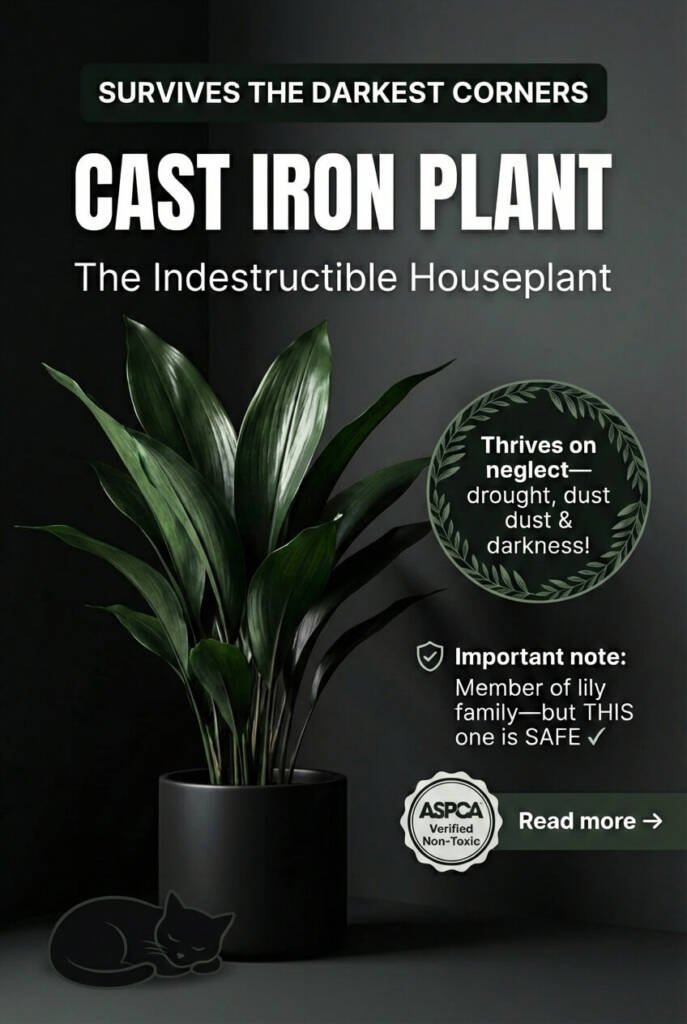
The cast iron plant earned its name for a reason—it’s nearly impossible to kill. This tough-as-nails plant thrives on neglect, tolerates drought, temperature fluctuations, dust, and can survive in genuinely dark corners where most plants would give up. Native to Japan and Taiwan, it features elegant, long, lance-shaped dark green leaves.
Light requirements: One of the best true low-light plants; survives in very dim conditions
Watering: Drought-tolerant; water when top 2-3 inches of soil are dry
Size: Up to 2 feet tall
Cat safety note: ASPCA verified non-toxic. Despite being a member of the lily family (many of which are deadly to cats), the cast iron plant is a safe exception.
5. Calathea (Calathea spp.)
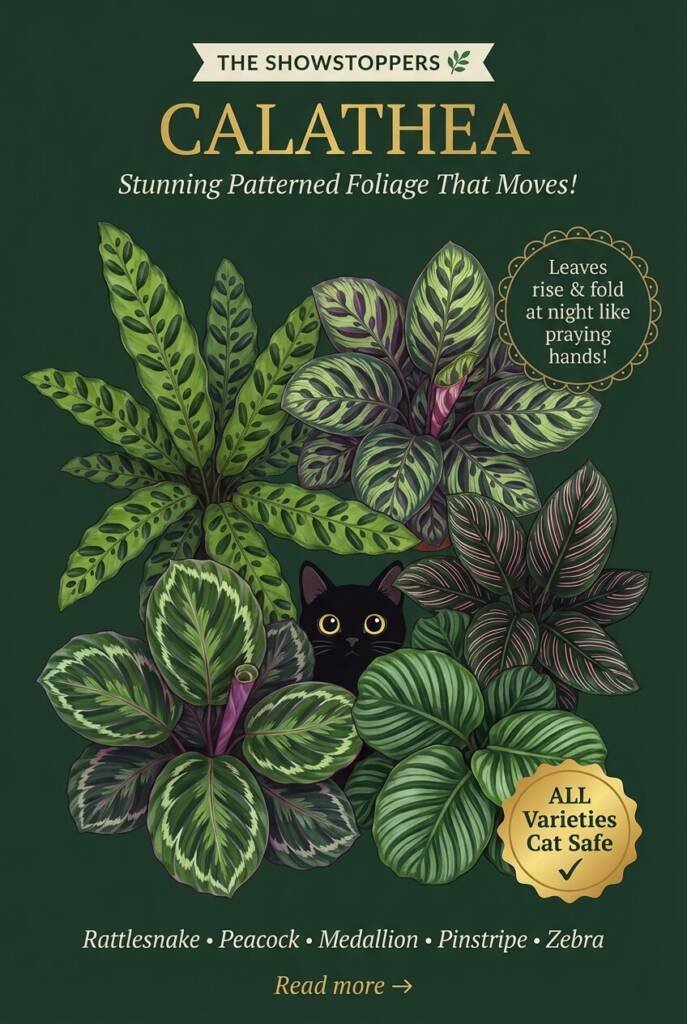
Calatheas are the show-stoppers of the cat-safe plant world. Their leaves look like they’ve been hand-painted with intricate patterns in shades of green, purple, pink, and silver. Even better, they’re part of the “prayer plant” family, which means their leaves rise and fold at night like hands in prayer—a phenomenon called nyctinasty that makes them endlessly fascinating to watch.
Popular varieties: Rattlesnake Plant (Calathea lancifolia), Peacock Plant (Calathea makoyana), Medallion (Calathea veitchiana), Pinstripe (Calathea ornata), Zebra Plant (Calathea zebrina)
Light requirements: Low to medium indirect light; direct sun will fade the patterns and scorch leaves
Watering: Keep soil consistently moist but not soggy; use filtered or distilled water (sensitive to chemicals in tap water)
Size: 1-2 feet tall depending on variety
Care note: Calatheas are slightly pickier than other plants on this list—they love humidity (50%+), so bathrooms or near a humidifier are ideal spots.
Cat safety note: ASPCA verified non-toxic. ALL Calathea varieties are safe for cats.
6. Prayer Plant (Maranta leuconeura)
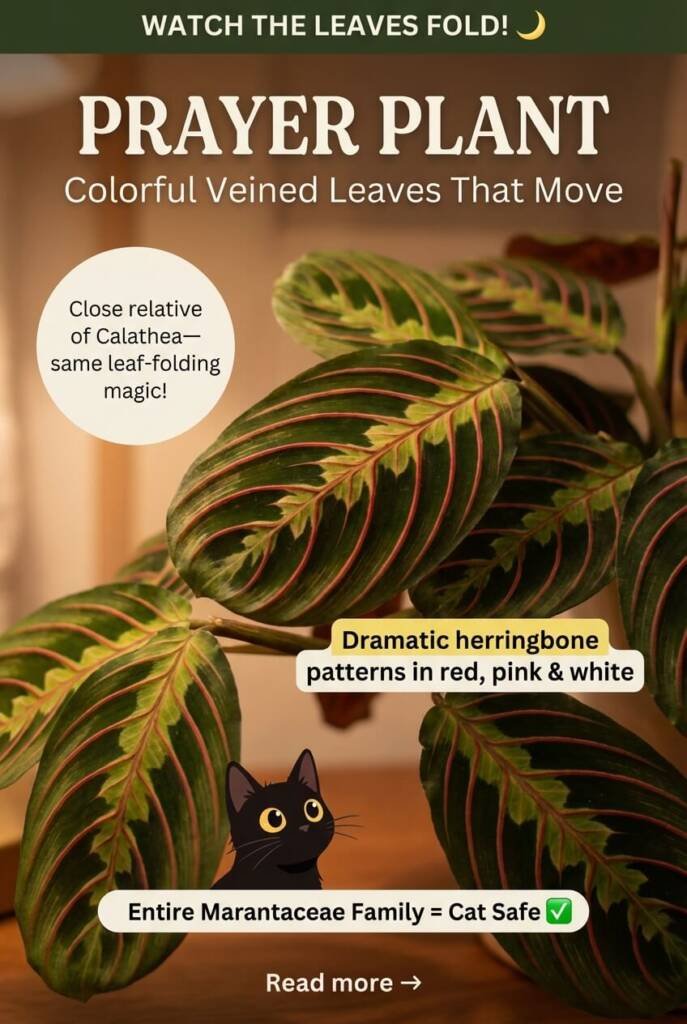
The Maranta prayer plant is a close relative of Calathea and shares the same fascinating leaf-folding behavior. What sets it apart is its striking red, pink, or white veins against green leaves. The popular “Red Prayer Plant” variety features dramatic herringbone patterns that add serious visual interest to any low-light space.
Light requirements: Low to medium indirect light; too much sun fades the colors
Watering: Keep soil moist but not waterlogged; prefers filtered water
Size: 6-12 inches tall; spreads outward
Cat safety note: ASPCA verified non-toxic. The entire Marantaceae family (which includes both Maranta and Calathea) is safe for cats.
7. Peperomia (Peperomia spp.)
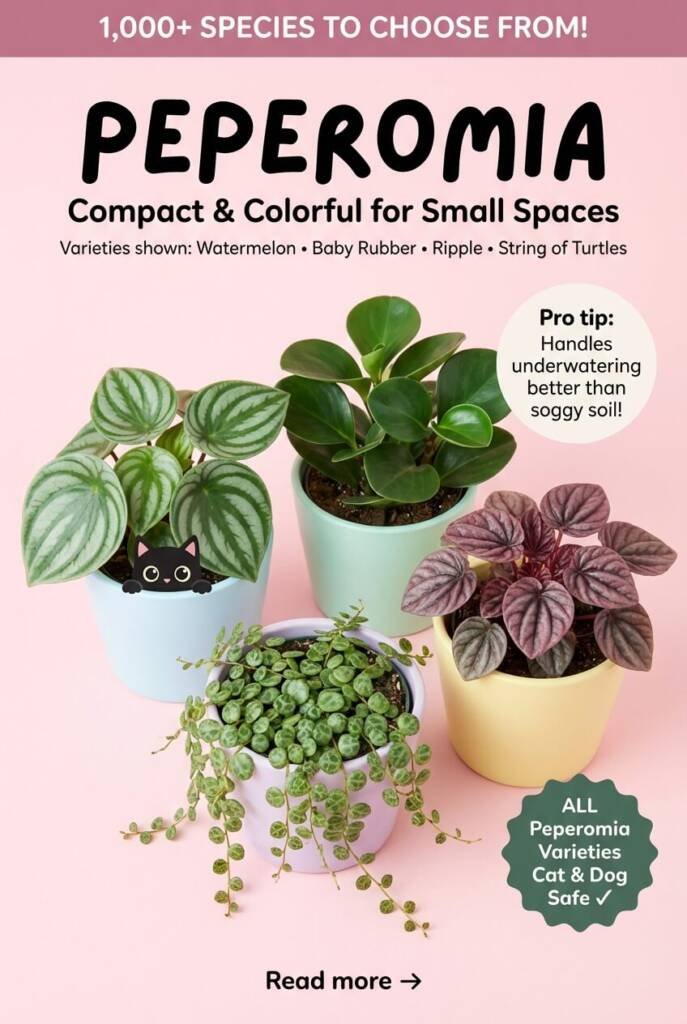
Peperomias are the perfect pet-safe plants for small spaces. With over 1,000 species to choose from, you’ll find an incredible variety of leaf shapes, colors, and textures—from the round, glossy leaves of the Baby Rubber Plant to the striped watermelon-like patterns of the Watermelon Peperomia. They’re compact, low-maintenance, and completely safe for your feline friends.
Popular varieties: Watermelon Peperomia (Peperomia argyreia), Baby Rubber Plant (Peperomia obtusifolia), Ripple Peperomia (Peperomia caperata), String of Turtles (Peperomia prostrata)
Light requirements: Tolerates low light; prefers medium indirect light
Watering: Allow soil to dry out between waterings; drought-tolerant
Size: 8-15 inches depending on variety
Pro tip: Peperomias are easy to overwater. If in doubt, wait another few days—these plants handle underwatering much better than soggy soil.
Cat safety note: ASPCA verified non-toxic. ALL Peperomia varieties are safe for cats and dogs.
8. Polka Dot Plant (Hypoestes phyllostachya)
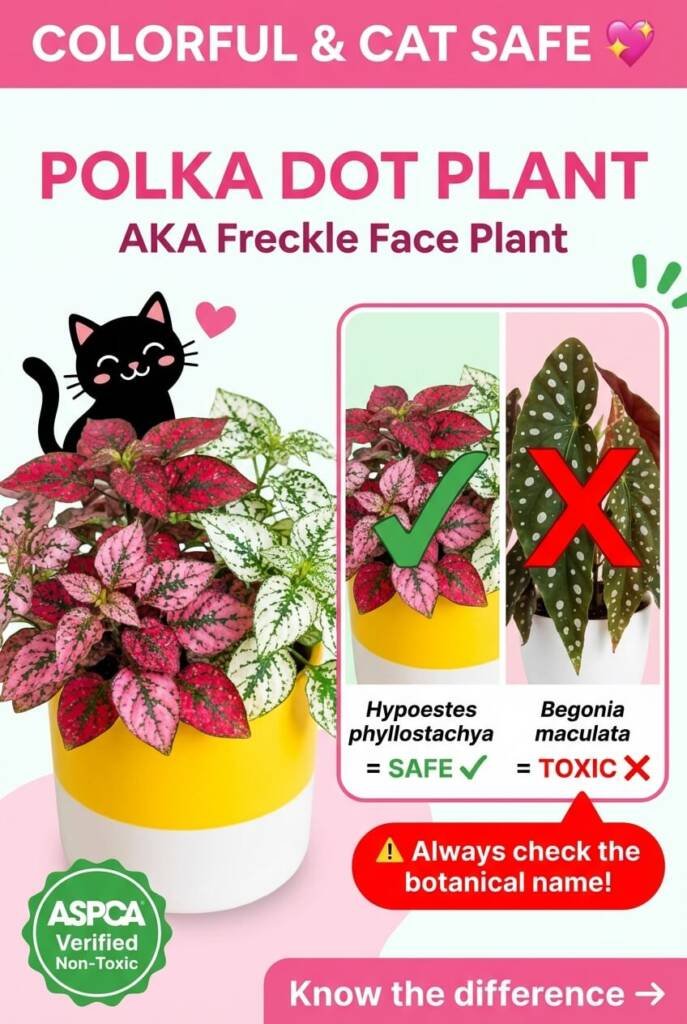
Looking for something more colorful than the typical green houseplant? The polka dot plant delivers with its eye-catching spotted leaves in shades of pink, red, and white against green backgrounds. Also known as the freckle face plant, it’s a cheerful addition to any room and completely safe for curious cats.
Light requirements: Tolerates lower light; colors are more vibrant in brighter indirect light
Watering: Keep soil evenly moist but not soggy
Size: 6-12 inches tall
Important warning: Don’t confuse the Polka Dot Plant (Hypoestes phyllostachya) with the Polka Dot Begonia (Begonia maculata)—they look similar but the begonia is TOXIC to cats. Always check the botanical name before purchasing!
Cat safety note: ASPCA verified non-toxic. May cause mild stomach upset if large amounts are eaten, but no serious toxicity.
9. African Violet (Saintpaulia)
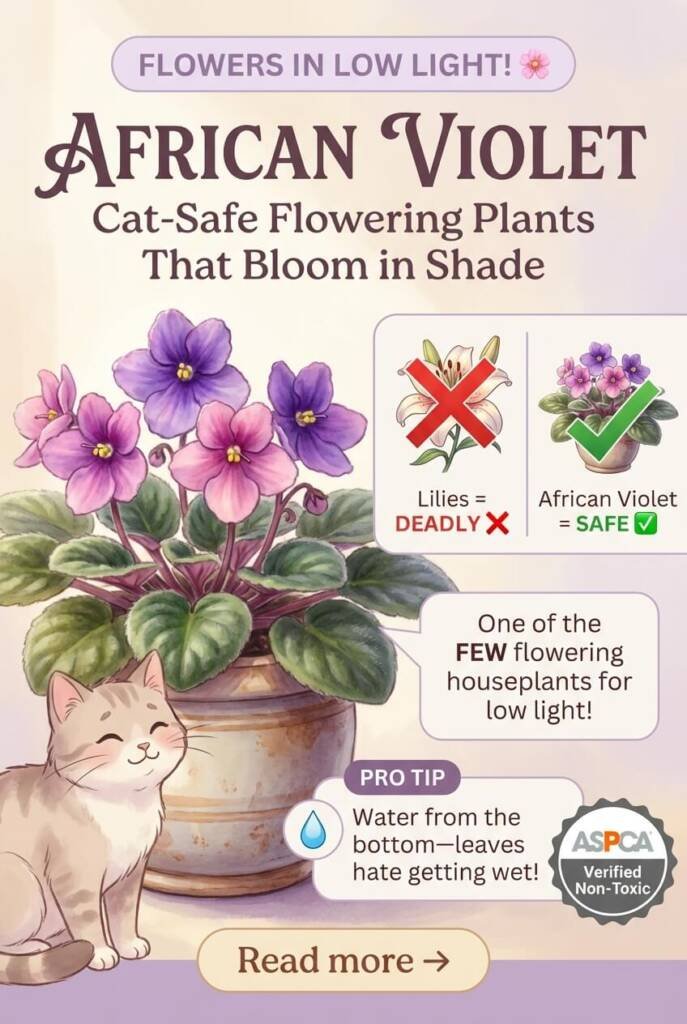
If you want flowers in a low-light room without risking your cat’s health, African violets are a godsend. These compact flowering plants produce beautiful blooms in shades of purple, pink, blue, and white, and they’re one of the few flowering houseplants that actually thrive in lower light conditions. Best of all, they’re completely non-toxic to cats.
Light requirements: Thrives in low to moderate indirect light; avoid direct sun
Watering: Water from the bottom to avoid getting leaves wet; keep soil slightly moist
Size: 6-9 inches tall and wide
Pro tip: Keep water off the velvety leaves—it can cause spotting. Bottom watering or using a watering can with a narrow spout works best.
Cat safety note: ASPCA verified non-toxic. A safe alternative to lilies, which are extremely toxic to cats.
10. Areca Palm (Dypsis lutescens)
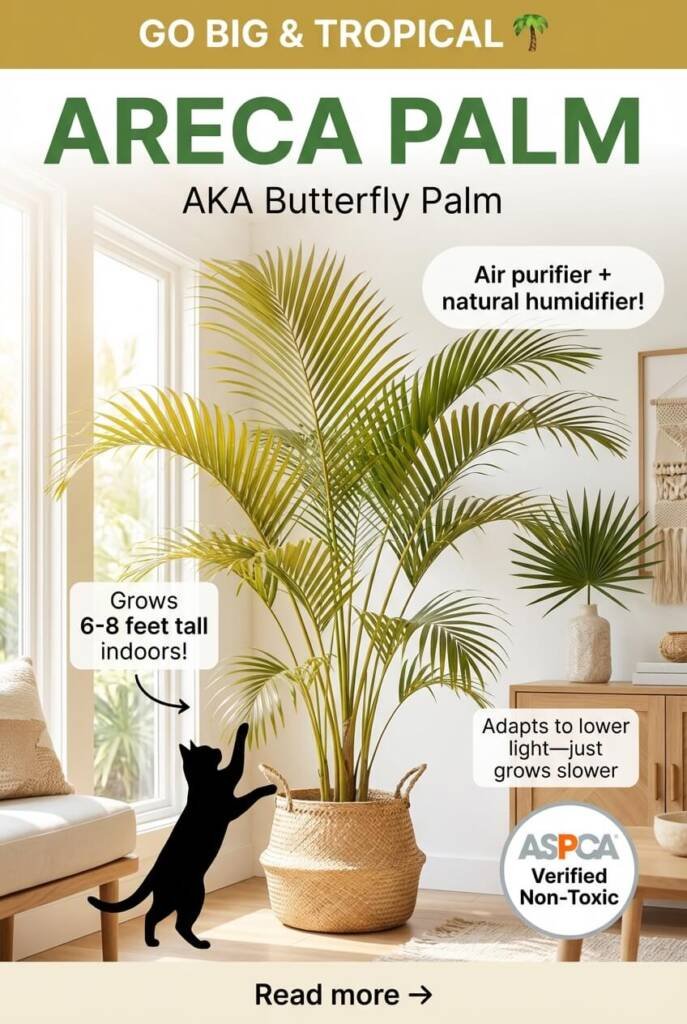
Want to go bigger? The Areca Palm (also called the Butterfly Palm) brings serious tropical vibes to your space with its graceful, arching fronds. It’s the larger sibling of the Parlor Palm and while it prefers brighter light, it can adapt to lower light conditions—growth will just be slower.
Light requirements: Prefers bright indirect light but tolerates lower light conditions
Watering: Keep soil consistently moist but not waterlogged; allow top inch to dry
Size: 6-8 feet tall indoors
Bonus: Areca Palms are excellent air purifiers and natural humidifiers, releasing moisture into the air.
Cat safety note: ASPCA verified non-toxic. The wispy fronds may attract playful swatting—completely harmless! Just watch for gastrointestinal issues if your cat eats large amounts of fronds.
11. Ponytail Palm (Beaucarnea recurvata)
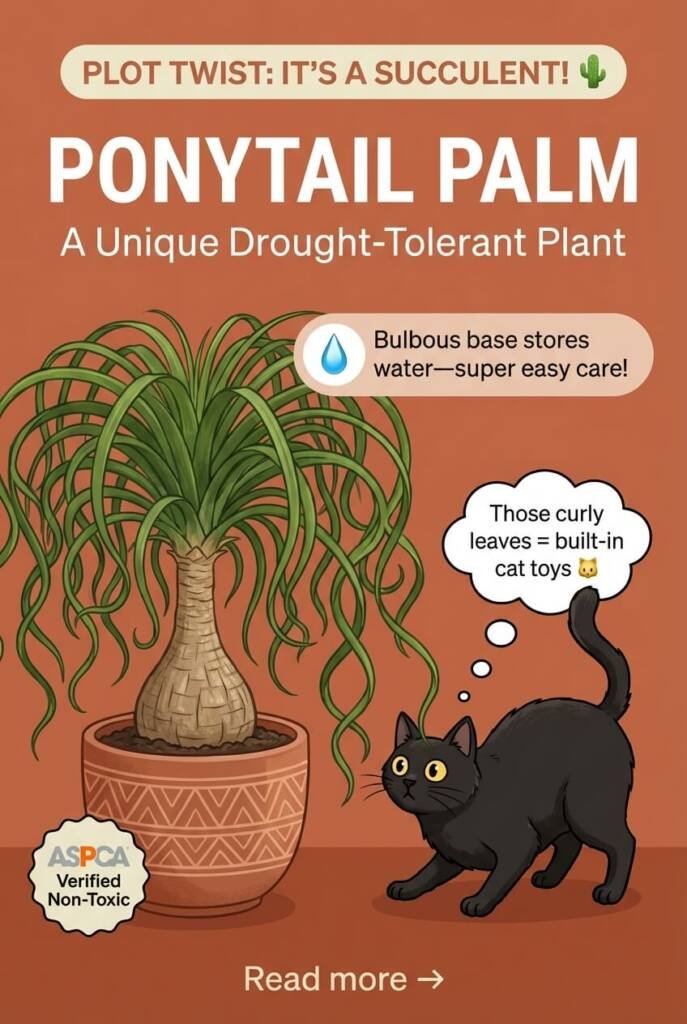
Despite its name, the Ponytail Palm isn’t actually a palm—it’s a succulent! Its distinctive bulbous base stores water, making it incredibly drought-tolerant. The long, curly leaves that cascade from the top give it a fun, whimsical appearance that cats often find irresistible to bat at.
Light requirements: Prefers bright light but tolerates lower light conditions
Watering: Very drought-tolerant; water sparingly and let soil dry out completely between waterings
Size: Can grow several feet tall indoors over many years; slow-growing
Cat safety note: ASPCA verified non-toxic. Those dangling leaves are basically cat toys—luckily, they’re safe to chew!
12. Haworthia (Haworthia spp.)
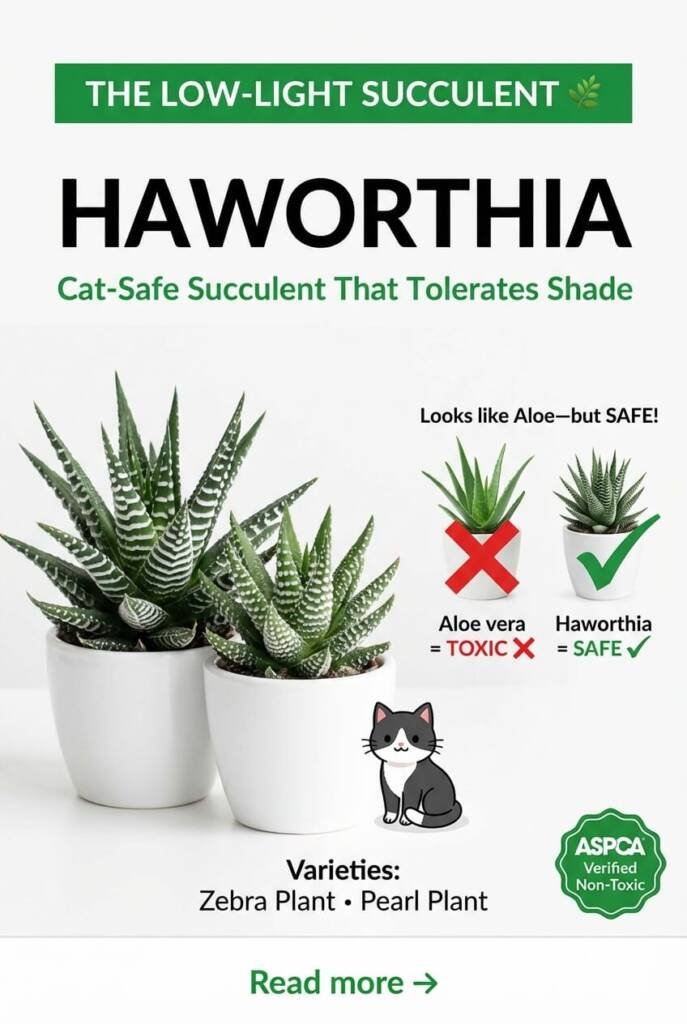
Most succulents need bright light to thrive, but Haworthias are the exception. These compact, rosette-forming plants tolerate lower light conditions better than almost any other succulent, making them perfect for offices or rooms without much natural light. They look similar to Aloe but unlike Aloe, they’re completely safe for cats.
Popular varieties: Zebra Plant (Haworthia fasciata), Pearl Plant (Haworthia margaritifera)
Light requirements: Tolerates low to medium indirect light; more adaptable than most succulents
Watering: Water every 2-3 weeks; allow soil to dry out completely between waterings
Size: 3-5 inches tall; stays compact
Cat safety note: ASPCA verified non-toxic. A safe alternative to the similar-looking Aloe vera, which is toxic to cats.
Popular Low-Light Plants That Are Toxic to Cats
Before you grab that trendy houseplant from your local nursery, double-check this list. These are some of the most commonly recommended low-light plants that are actually dangerous for cats:
- Pothos (Epipremnum aureum): Contains calcium oxalate crystals that cause mouth irritation, drooling, and vomiting.
- Snake Plant (Sansevieria): Causes nausea, vomiting, and diarrhea in cats.
- ZZ Plant (Zamioculcas zamiifolia): Often recommended for beginners but toxic to cats; causes oral irritation and stomach upset.
- Philodendrons (all varieties): Contain calcium oxalate crystals; toxic to cats and dogs.
- Peace Lily (Spathiphyllum): Not a true lily but still toxic; causes mouth and stomach irritation.
- Dracaena (all varieties): Mildly toxic; can cause vomiting, drooling, and loss of appetite.
- Dieffenbachia (Dumb Cane): Highly toxic; causes intense burning and swelling of the mouth and throat.
When in doubt, always check the ASPCA’s Toxic and Non-Toxic Plants database before bringing a new plant home.
Quick Care Tips for Cat-Safe Low-Light Plants
- Even non-toxic plants can cause mild tummy trouble: Cats aren’t designed to digest large amounts of plant material. If your cat is a chronic plant-chewer, consider providing cat grass as a safe alternative to redirect their munching habits.
- Low light doesn’t mean no light: These plants tolerate dim conditions, but they still need some ambient brightness. A room where you can comfortably read during the day typically has enough light.
- Protect your plants from playful paws: Hanging baskets, high shelves, and plant stands can keep your greenery safe from cats who love to dig or knock things over.
- Always verify the botanical name: Common names can be misleading. Plants with similar names (like Polka Dot Plant vs. Polka Dot Begonia) can have very different toxicity levels. When in doubt, check the scientific name against the ASPCA database.
Create Your Perfect Cat-Friendly Indoor Garden
You don’t have to choose between your love of plants and keeping your cat safe. With these 12 beautiful low-light houseplants, you can transform even the darkest corners of your home into a lush, green oasis—without a single trip to the emergency vet.
Start with just one or two plants that catch your eye. Spider plants and cast iron plants are nearly impossible to kill, making them perfect for beginners. As you gain confidence, branch out to showier varieties like Calatheas or add a statement Areca Palm to your living room.
Your cat will thank you for creating a safe environment where they can explore and nibble without danger—and you’ll love having beautiful greenery brightening up your space.
For more tips on keeping your feline friends happy, healthy, and safe, visit us at Sweet Purrfection—your go-to blog for all things cat care, pet-friendly home ideas, and everything else a devoted cat lover needs to know!