
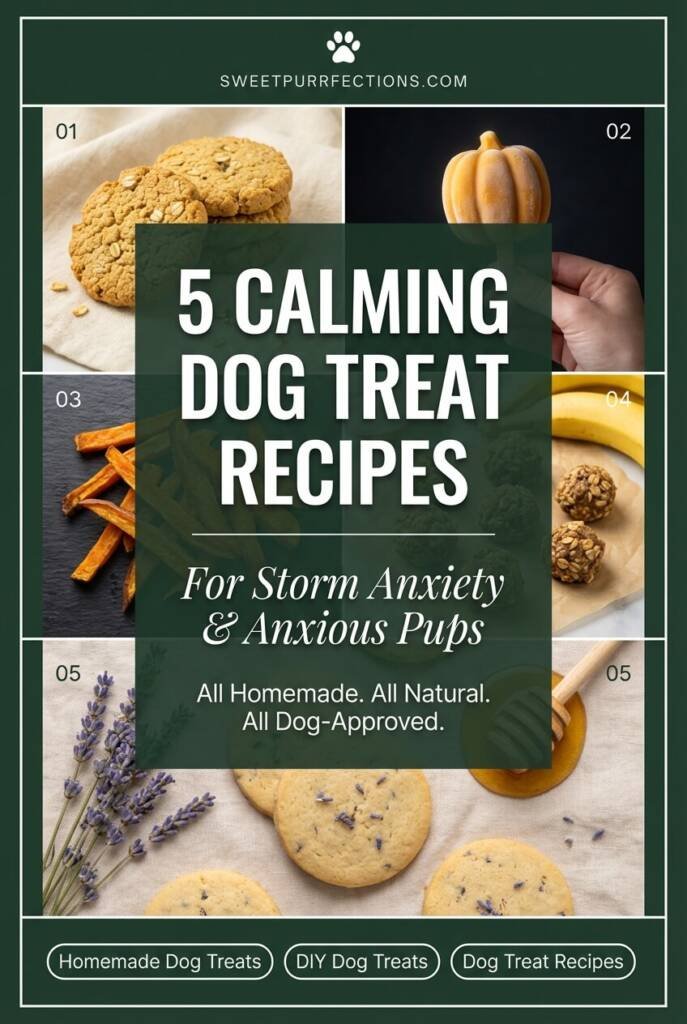
Introduction
If you’ve ever watched your dog tremble, pace, or hide under the bed during a thunderstorm, you know how heartbreaking it can be. The booming thunder, flashing lightning, and changes in barometric pressure can send even the bravest pups into a panic. As pet parents, we’d do anything to help our furry friends feel safe and secure when Mother Nature puts on her loudest show.
Here’s the truth: homemade calming dog treats aren’t a miracle cure for severe storm anxiety. They won’t work like prescription anti-anxiety medication, and they’re not a substitute for professional veterinary care if your dog has debilitating fear. But what they can do is offer gentle, natural support using ingredients you likely already have in your kitchen. Combined with the soothing distraction of chewing and licking, these treats can help take the edge off your dog’s stress during storms.
At Sweet Purrfections, we’re all about practical, accessible solutions that real pet parents can use without expensive specialty products or complicated procedures. These five recipes use calming ingredients like chamomile, oats, pumpkin, and peanut butter—all safe, wholesome options that may help your pup feel a little more relaxed when the sky starts rumbling.
Let’s dive into five simple, soothing treat recipes that show your dog some extra love when they need it most.
Why Homemade Calming Dog Treats Work (Sort Of)
Before we get into the recipes, it’s important to understand what these treats can and can’t do. Homemade calming treats work through a combination of mildly relaxing ingredients and behavioral distraction—not sedation.
Ingredients with calming properties
- Chamomile: This gentle herb has been used for centuries to promote relaxation in both humans and animals. It contains compounds that may have mild anti-anxiety effects.
- Oats: Rich in tryptophan (the same amino acid in turkey that makes you sleepy after Thanksgiving dinner), oats can promote feelings of calm and may help regulate serotonin levels.
- Pumpkin: While primarily known for digestive health, a calm tummy can reduce overall stress. Plus, the fiber helps dogs feel satisfied and content.
- Peanut butter: The act of licking peanut butter is inherently soothing for dogs. Repetitive licking releases endorphins and can redirect anxious energy into a positive activity.
- Sweet potato: Complex carbohydrates provide steady, sustained energy rather than the spikes and crashes that can worsen anxiety.
The power of distraction
Sometimes the best “medicine” is simply keeping your dog occupied. A long-lasting chew or frozen treat gives anxious dogs something to focus on besides the scary sounds outside. This redirection can break the anxiety cycle before it escalates into full-blown panic.
Setting realistic expectations
These treats contain food-grade ingredients with gentle, subtle effects—not pharmaceutical compounds. They won’t knock your dog out or eliminate fear responses entirely. Think of them as one tool in your storm-anxiety toolkit, alongside:
- Creating a safe, den-like space (crate with blankets, closet, bathroom)
- Playing white noise or calming music to mask thunder
- Using a thunder shirt or anxiety wrap
- Staying calm yourself (dogs mirror our energy)
- Desensitization training during calm weather
When to seek professional help
If your dog experiences severe symptoms like destructive behavior, self-harm, refusal to eat for extended periods, or panic attacks lasting hours after storms end, please consult your veterinarian. They can recommend behavioral therapy, prescription medications, or supplements with stronger calming compounds like L-theanine or melatonin that aren’t available in regular kitchen ingredients.
Recipe 1: Chamomile & Oat Calming Biscuits

These crunchy biscuits combine the calming power of chamomile with the tryptophan-rich goodness of oats. They’re perfect for pre-storm preparation and store beautifully in an airtight container.
Ingredients
- 2 cups whole wheat flour (or oat flour for grain-free option)
- 1 cup rolled oats
- 2 chamomile tea bags (or 2 tablespoons dried chamomile flowers)
- 1/2 cup unsweetened applesauce
- 1/4 cup coconut oil, melted
- 1 egg
- 1/2 cup water (may need slightly more or less)
Equipment
- Mixing bowls
- Measuring cups and spoons
- Rolling pin
- Cookie cutters (bone shapes are cute but any shape works)
- Baking sheet
- Parchment paper
Step-by-Step Instructions
- Preheat your oven to 350°F (175°C) and line a baking sheet with parchment paper. This prevents sticking and makes cleanup easier.
- Brew a strong chamomile tea. Boil 1/2 cup of water and steep the tea bags (or loose chamomile) for 10 minutes. You want a concentrated brew. Remove tea bags and let cool to room temperature.
- Mix dry ingredients. In a large bowl, combine the whole wheat flour and rolled oats. Stir to distribute evenly.
- Combine wet ingredients. In a separate bowl, whisk together the cooled chamomile tea, applesauce, melted coconut oil, and egg until smooth.
- Make the dough. Pour the wet ingredients into the dry ingredients and stir with a wooden spoon or your hands until a firm dough forms. If it’s too crumbly, add water one tablespoon at a time. If too sticky, add a bit more flour.
- Roll and cut. On a lightly floured surface, roll the dough to about 1/4-inch thickness. Use cookie cutters to cut out shapes. Gather scraps, re-roll, and cut until all dough is used.
- Bake. Place treats on the prepared baking sheet about 1/2 inch apart. Bake for 25-30 minutes until golden brown and firm. For extra-crunchy treats (which last longer), turn off the oven and let treats sit inside for another 30 minutes to dry out.
- Cool completely. Transfer to a wire rack and let cool for at least 30 minutes before giving to your pup. They’ll continue to harden as they cool.
Storage Tips
- Store in an airtight container at room temperature for up to 2 weeks
- Refrigerate for up to 1 month
- Freeze for up to 3 months
Why This Works
The chamomile provides gentle, natural calming properties while the oats offer tryptophan for relaxation. The crunchy texture gives anxious dogs something satisfying to chew on, and the repetitive chewing motion itself can be meditative and stress-reducing. The act of chewing also releases endorphins in dogs’ brains, creating positive feelings that can counteract anxiety.
Pro Tip: Make a batch when the weather’s calm and store them so you’re prepared when storms roll in. The scent of chamomile itself may have aromatherapy benefits for your dog!
Recipe 2: Pumpkin Peanut Butter Frozen Calming Treats
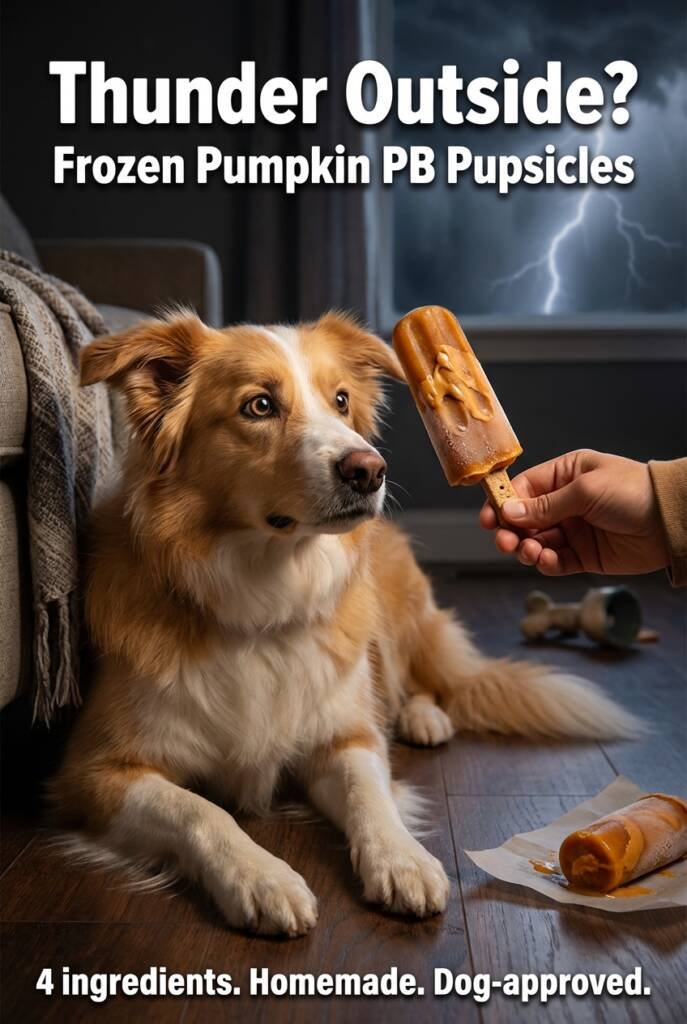
These frozen treats are a game-changer during storm season. The long licking time keeps dogs occupied, while the cold sensation can be soothing. Plus, pumpkin and peanut butter are doggy favorites!
Ingredients
- 1 cup pure pumpkin puree (NOT pumpkin pie filling—check the label!)
- 1/2 cup natural peanut butter (xylitol-free—very important!)
- 1/4 cup plain Greek yogurt (optional, for extra creaminess and probiotics)
- 1 tablespoon honey (optional, for dogs over 1 year old)
Equipment
- Mixing bowl
- Spoon or whisk
- Ice cube trays, silicone molds, or small paper cups
- Freezer
Step-by-Step Instructions
- Check your peanut butter label carefully. This is crucial: make absolutely sure your peanut butter does NOT contain xylitol, an artificial sweetener that’s toxic to dogs. Natural peanut butter with just peanuts (and maybe salt) is safest.
- Mix all ingredients. In a medium bowl, combine the pumpkin puree, peanut butter, Greek yogurt, and honey (if using). Stir vigorously until smooth and well-blended. The mixture should be thick but spoonable.
- Fill your molds. Spoon the mixture into ice cube trays, silicone molds, or small paper cups. Leave a tiny bit of space at the top since the mixture will expand slightly when frozen.
- Optional: Add a stick. If you want to make “pupsicles,” insert a small dog biscuit or popsicle stick into each mold before freezing. This gives dogs something to hold onto (or for you to hold while they lick).
- Freeze solid. Place molds in the freezer for at least 4 hours or overnight until completely frozen.
- Pop and serve. When a storm is brewing, pop out a frozen treat and give it to your pup. If using paper cups, you can peel away the paper for easier eating, or let them lick it right from the cup for extra challenge.
Storage Tips
- Keep frozen in molds or transfer to a freezer bag for up to 3 months
- Label with the date so you know when you made them
Why This Works
Pumpkin is incredibly soothing for dogs’ digestive systems, and a calm belly equals a calmer dog overall. The high fiber content also promotes satiety, which can reduce restless behavior. Peanut butter is irresistible to most dogs, and the prolonged licking required to eat a frozen treat releases calming endorphins. The cold sensation can also be physically soothing during stressful moments—similar to how we might sip ice water when anxious.
Pro Tip: Make these in different sizes. Small cubes for little dogs or short storms, larger molds for big dogs or extended thunderstorms. You can also smear a spoonful of this mixture inside a Kong toy before freezing for an even longer-lasting distraction!
Recipe 3: Sweet Potato Calming Chews
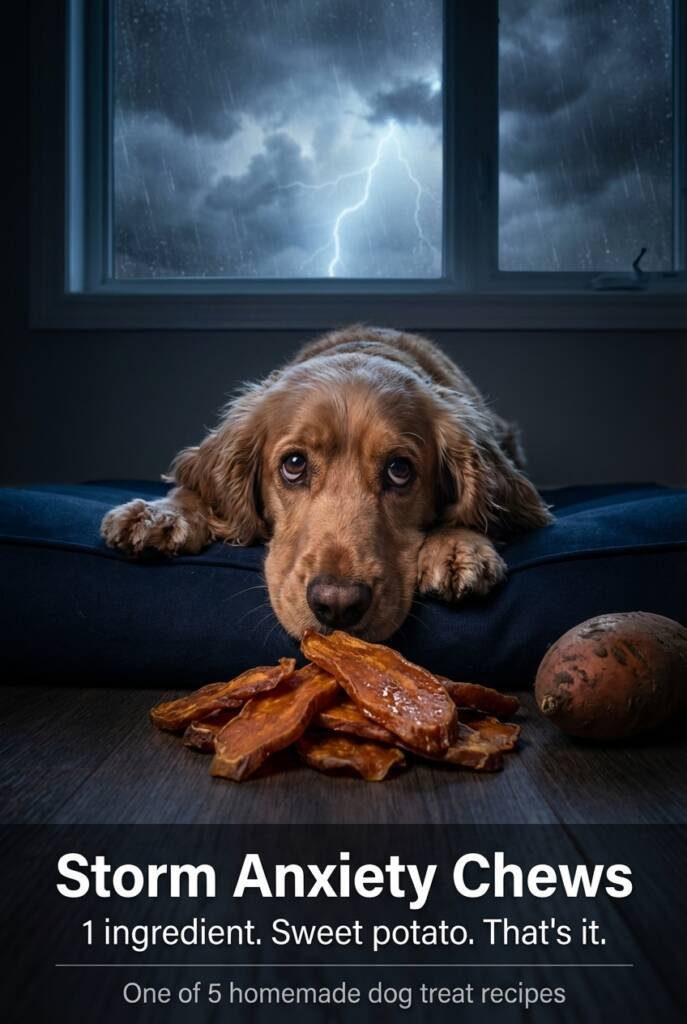
These chewy treats are incredibly simple—just one ingredient!—but don’t let that fool you. Sweet potato chews are a favorite among dogs and provide a long-lasting, satisfying chew that keeps anxious pups occupied during storms.
Ingredients
- 2-3 large sweet potatoes (orange-fleshed variety works best)
Equipment
- Sharp knife or mandoline slicer
- Cutting board
- Baking sheets
- Parchment paper
- Oven or food dehydrator (if you have one)
Step-by-Step Instructions
- Preheat your oven to 250°F (120°C). Low and slow is the key to dehydrating without burning. If using a dehydrator, set it to 135°F according to manufacturer instructions.
- Wash and slice the sweet potatoes. Scrub the sweet potatoes thoroughly but don’t peel them—the skin contains extra nutrients and fiber. Slice them lengthwise into strips about 1/4-inch thick. For smaller dogs, make thinner strips (1/8-inch). For larger dogs who need more chewing time, go slightly thicker (1/3-inch).
- Arrange on baking sheets. Line your baking sheets with parchment paper and lay the sweet potato slices in a single layer. Don’t overlap them or they won’t dry evenly.
- Bake low and slow. Place in the oven and bake for about 3 hours, flipping the slices halfway through. The exact time depends on thickness—thinner slices may be done in 2.5 hours, thicker ones might need 3.5 hours. You want them leathery and chewy, not crispy like chips (though some dogs like them crispy too—your choice!).
- Check for doneness. The chews are ready when they’re bendable but firm, with no moisture pockets. They should feel dry to the touch but still have some give. If they’re still soft or squishy in the middle, keep baking and check every 15 minutes.
- Cool completely. Remove from oven and let cool on the baking sheets for at least 30 minutes. They’ll continue to firm up as they cool.
Storage Tips
- Store in an airtight container in the refrigerator for up to 3 weeks
- For longer storage, freeze for up to 3 months
- If stored at room temperature, use within 1 week and watch for any mold
Why This Works
Sweet potatoes are packed with complex carbohydrates that provide steady, sustained energy without sugar spikes that can worsen anxiety. They’re also rich in vitamins A, C, and B6, which support overall nervous system health. The real magic, though, is in the chewing. The leathery texture requires extended gnawing, which gives anxious dogs a productive outlet for their nervous energy. Chewing is naturally calming—it’s why anxious dogs often become destructive chewers. Give them something appropriate to chew, and you redirect that anxiety into a positive behavior.
Pro Tip: Make a big batch when sweet potatoes are on sale! These store beautifully and you’ll always have emergency storm treats ready. You can also experiment with thickness—some dogs prefer crispy chips, others love the leathery chews.
Recipe 4: No-Bake Banana Oat Calming Bites

When storm clouds are rolling in fast and you need treats NOW, this recipe saves the day. No oven required, just a few minutes of mixing and chilling. Perfect for last-minute preparation!
Ingredients
- 2 ripe bananas, mashed
- 2 cups old-fashioned rolled oats
- 1/4 cup natural peanut butter (xylitol-free)
- 2 tablespoons ground flaxseed (optional, adds omega-3s)
- 1 tablespoon honey (optional, for dogs over 1 year)
Equipment
- Mixing bowl
- Fork for mashing
- Spoon
- Baking sheet or plate
- Parchment paper
- Refrigerator
Step-by-Step Instructions
- Mash the bananas. In a medium bowl, mash the ripe bananas with a fork until smooth. The riper the banana (brown spots are great!), the sweeter and easier to mash.
- Add peanut butter and mix. Stir in the peanut butter until well combined with the banana. If it’s too thick to stir easily, you can microwave for 10-15 seconds to soften.
- Incorporate dry ingredients. Add the rolled oats, ground flaxseed, and honey (if using). Stir everything together until you have a thick, sticky mixture. If it’s too wet and won’t hold shape, add more oats a tablespoon at a time. If too dry and crumbly, add a tiny bit of water.
- Shape the bites. Line a baking sheet or plate with parchment paper. Using a spoon or your hands (slightly wet hands prevent sticking), scoop out tablespoon-sized portions and roll into balls. You can also press them into small discs if your dog prefers flat treats.
- Chill to firm up. Place the baking sheet in the refrigerator for at least 1 hour. This allows the oats to absorb moisture and the treats to firm up enough to handle without falling apart.
- Serve chilled. These are best served cold or at room temperature. Some dogs actually prefer them straight from the fridge!
Storage Tips
- Refrigerate in an airtight container for up to 5 days
- Freeze in a freezer bag for up to 2 months (thaw in fridge before serving, or serve frozen for extra distraction time)
Why This Works
Bananas are a natural source of potassium, vitamin B6, and vitamin C—all nutrients that support stress management. They also contain natural sugars that provide quick energy without the crash of processed treats. The oats bring their calming tryptophan to the table, and the peanut butter makes these irresistible to most pups. Because there’s no baking involved, you can whip these up in under 10 minutes when you check the weather forecast and see storms predicted for later in the day.
Pro Tip: Keep the ingredients on hand during storm season so you can make these on short notice. You can also freeze the balls on a baking sheet, then transfer to a freezer bag—this way you can grab just one or two at a time without thawing the whole batch.
Recipe 5: Lavender Honey Calming Cookies
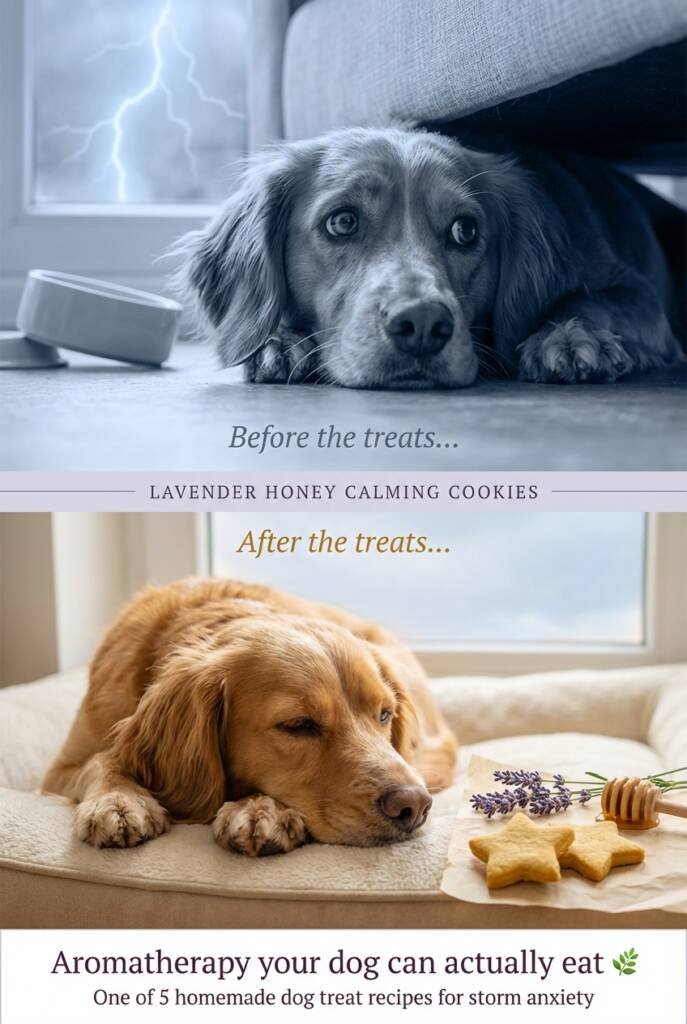
These cookies add the power of aromatherapy to the mix. The subtle scent of lavender can have calming effects on dogs, while the familiar flavors of honey and oats make them delicious.
Ingredients
- 2 cups whole wheat flour (or rice flour for grain-free)
- 1 cup rolled oats
- 1/4 cup honey
- 1/4 cup coconut oil, melted
- 1 egg
- 1/2 cup water
- 1 teaspoon dried culinary lavender (food-grade only—never use essential oils!)
Equipment
- Mixing bowls
- Measuring cups and spoons
- Rolling pin
- Cookie cutters
- Baking sheet
- Parchment paper
Step-by-Step Instructions
- Preheat oven to 350°F (175°C) and line a baking sheet with parchment paper.
- Grind the lavender (optional). For better distribution and less likelihood of your dog picking around the lavender bits, you can grind the dried lavender in a spice grinder or mortar and pestle. This also releases more of the aromatic oils. If you don’t have a grinder, finely chop it with a knife.
- Mix dry ingredients. In a large bowl, combine flour, oats, and ground lavender. Stir well so the lavender is evenly distributed throughout.
- Combine wet ingredients. In another bowl, whisk together the honey, melted coconut oil, egg, and water until smooth and well combined.
- Form the dough. Pour wet ingredients into dry and mix with a wooden spoon or your hands until a cohesive dough forms. It should be firm but pliable. If too sticky, add flour a tablespoon at a time. If too dry, add water by the teaspoon.
- Roll and cut. On a lightly floured surface, roll the dough to about 1/4-inch thickness. Cut with cookie cutters and place on prepared baking sheet, spacing about 1/2 inch apart.
- Bake until golden. Bake for 20-25 minutes until the edges are golden brown and the cookies are firm to touch. For crunchier cookies that store longer, reduce oven to 200°F after the initial baking and leave them in for another 30 minutes to dry out.
- Cool completely. Transfer to a wire rack and let cool for at least 30 minutes before serving.
Safety Note
- Lavender in moderation: Use only food-grade dried lavender in the small amount specified. Too much lavender can upset some dogs’ stomachs. Never use lavender essential oil in dog treats—it’s far too concentrated and can be toxic.
- Honey caution: Honey should not be given to puppies under 1 year old due to the risk of botulism spores. For adult dogs, honey in small amounts is safe and even beneficial.
Storage Tips
- Airtight container at room temperature for up to 2 weeks
- Refrigerate for up to 1 month
- Freeze for up to 3 months
Why This Works
Lavender has been studied for its calming aromatherapy effects in both humans and animals. When dogs smell lavender, it can trigger relaxation responses in the brain. Combined with the familiar, soothing act of chewing and the gentle sweetness of honey, these cookies offer multi-sensory comfort. The honey also has natural antimicrobial properties and provides quick energy, while the oats continue to deliver that beneficial tryptophan.
Pro Tip: You can place one of these cookies in your dog’s safe space (crate, bed, storm shelter area) about 15 minutes before you give it to them. This allows the lavender scent to fill the space, creating an even more calming environment.
How and When to Use These Calming Dog Treats
Making the treats is only half the battle—knowing how and when to use them makes all the difference in their effectiveness.
Timing Matters
- Preventive approach: If you know storms are forecast, give your dog a calming treat 20-30 minutes before the storm arrives. This allows the ingredients time to start working and creates a positive association before anxiety kicks in.
- During the storm: Offer frozen treats or long-lasting chews when thunder starts. The act of eating provides immediate distraction from scary sounds.
- After the storm: Some dogs remain anxious even after storms pass. A treat afterward can help signal that everything is okay and help them decompress.
Don’t Overfeed – Portion Guidelines
These are treats, not meals! Here’s a general guide based on dog size:
- Small dogs (under 20 lbs): 1-2 small treats per storm event
- Medium dogs (20-50 lbs): 2-3 medium treats per storm event
- Large dogs (50-80 lbs): 3-4 treats per storm event
- Extra-large dogs (80+ lbs): 4-5 treats per storm event
Remember: treats should not exceed 10% of your dog’s daily caloric intake. If your dog gets multiple treats during a particularly active storm season, reduce their regular meal portions slightly to avoid weight gain.
Combine with Other Calming Strategies
Treats work best as part of a comprehensive storm-anxiety plan:
- Create a safe den: Set up a cozy space in an interior room (closets and bathrooms work great) with blankets, familiar-smelling items, and soft lighting.
- Thunder shirts or anxiety wraps: These apply gentle, constant pressure that can calm nervous systems—like a hug!
- White noise or calming music: Mask the sound of thunder with fans, TV, classical music, or dog-specific calming playlists available on streaming services.
- Stay engaged but calm: Play with a favorite toy, practice simple tricks with treat rewards (redirect that anxious energy!), or just sit calmly near your dog. Your energy matters—if you’re anxious, they’ll pick up on it.
Stay Calm Yourself
Dogs are incredibly perceptive and mirror our emotional states. If you act worried, hover anxiously, or coddle your dog excessively during storms, you may actually reinforce their fear. Instead:
- Act normal and relaxed
- Use a cheerful, matter-of-fact tone
- Don’t make a big deal about the storm
- Offer treats casually, not frantically
Create Positive Associations
Here’s a training tip that goes beyond treats: don’t ONLY give these special treats during storms. Occasionally give them on calm, sunny days too. This prevents your dog from thinking “special treat = something scary is happening.” You want the treats to be a positive surprise, not a storm predictor.
Ingredients to AVOID in Homemade Dog Treats
Before you get creative with recipes, here’s a critical safety list. These common kitchen ingredients are toxic to dogs and should NEVER be included in treats:
Absolutely Toxic – Can Be Fatal
- Chocolate: Contains theobromine, which dogs cannot metabolize. Dark chocolate and baking chocolate are the most dangerous.
- Xylitol: This artificial sweetener (found in sugar-free peanut butter, gum, and baked goods) causes rapid insulin release and liver failure in dogs. Check every label!
- Grapes and raisins: Even small amounts can cause sudden kidney failure. We don’t know exactly why, but the risk is serious.
- Macadamia nuts: Cause weakness, vomiting, tremors, and hyperthermia in dogs.
- Onions and garlic: All forms (raw, cooked, powder, dehydrated) damage dogs’ red blood cells and can cause anemia. Even small amounts over time are harmful.
Use Extreme Caution
- Excessive salt: Can cause sodium ion poisoning. Keep treats low-sodium.
- Nutmeg: Contains myristicin, which is toxic to dogs in moderate amounts. Skip it entirely.
- Raw yeast dough: Expands in warm, moist stomachs and can cause bloating or alcohol poisoning as it ferments.
- Avocado: Contains persin, which can cause vomiting and diarrhea in dogs.
- Cooked bones: These splinter and can cause choking or internal injuries. Raw bones are sometimes okay under supervision, but never cooked.
When in Doubt
If you’re not 100% certain an ingredient is safe, don’t use it. Stick to dog-safe basics: whole grains, plain proteins, dog-friendly fruits (apples, bananas, blueberries), vegetables (carrots, sweet potato, pumpkin), and limited healthy fats (coconut oil, peanut butter without xylitol).
Resources: The ASPCA has an excellent searchable database of toxic and non-toxic foods for pets at aspca.org if you want to verify an ingredient.
When Homemade Treats Aren’t Enough
We want to be absolutely clear: homemade calming treats are wonderful for mild to moderate anxiety, but they’re not appropriate for every situation. Here’s how to know when your dog needs more help than treats can provide.
Red Flags That Warrant a Vet Visit:
- Destructive behavior: Chewing through crates, breaking windows, destroying doors, or causing property damage in attempts to escape
- Self-harm: Excessive licking or chewing that causes wounds, scratching until bleeding, or other self-injurious behaviors
- Extreme panic responses: Uncontrollable shaking, drooling, panting to the point of hyperventilation, or collapse
- Prolonged anxiety: Panic that continues for hours after the storm ends, or anticipatory anxiety that starts days before predicted storms
- Refusal to eat or drink: Missing multiple meals or becoming dehydrated because they’re too anxious to eat or drink
- Aggression: Storm anxiety that manifests as snapping, growling, or biting (fear-based aggression)
- Urination or defecation indoors: House-trained dogs who lose bowel/bladder control from fear
Professional Options:
If your dog shows these signs, consult your veterinarian. They can:
- Prescribe anti-anxiety medication: Options like trazodone, alprazolam, or SSRIs can make a real difference for dogs with severe phobias
- Recommend veterinary behaviorists: Board-certified specialists who can create comprehensive behavior modification plans
- Suggest stronger supplements: Pharmaceutical-grade supplements with compounds like L-theanine, melatonin, or CBD (where legal) that are more potent than food ingredients
- Rule out medical issues: Sometimes what looks like anxiety is actually pain or other medical problems
You’re Not Failing Your Dog:
If treats alone don’t solve the problem, that doesn’t mean you’re doing something wrong. Some dogs have genuine phobias that require medical intervention, just like some people need medication for anxiety disorders. There’s no shame in seeking professional help—it’s actually the most responsible thing you can do.
Conclusion
Storm anxiety in dogs is real, distressing, and heartbreaking to witness. While these five homemade calming treats—Chamomile & Oat Biscuits, Pumpkin Peanut Butter Frozen Treats, Sweet Potato Chews, No-Bake Banana Oat Bites, and Lavender Honey Cookies—aren’t miracle cures, they offer gentle, natural support that can genuinely help take the edge off your pup’s stress.
By combining calming ingredients like chamomile, oats, pumpkin, and lavender with the soothing distraction of chewing and licking, you’re giving your dog both physical comfort and emotional redirection. These treats work best as part of a holistic approach that includes safe spaces, white noise, calming wraps, and most importantly, your calm, reassuring presence.
Remember: being a caring, proactive pet parent means trying natural approaches first but also knowing when to escalate to professional help. You know your dog best. Trust your instincts.
The best part? All five of these recipes use simple kitchen ingredients you probably already have at home. No expensive specialty products, no complicated techniques—just wholesome, homemade love in treat form.
Have you tried making calming treats for your anxious pup? Do you have a favorite recipe or storm-soothing strategy that works for your dog? Share your experience in the comments below! We’d love to hear what helps your furry family member feel safe when the thunder rolls.
For more simple, practical, kitchen-friendly pet care tips and recipes, keep exploring Sweet Purrfections. Because every dog deserves to feel safe, loved, and a little less scared when the skies get stormy.
Stay calm, stay prepared, and give your pup an extra scratch behind the ears from us!