
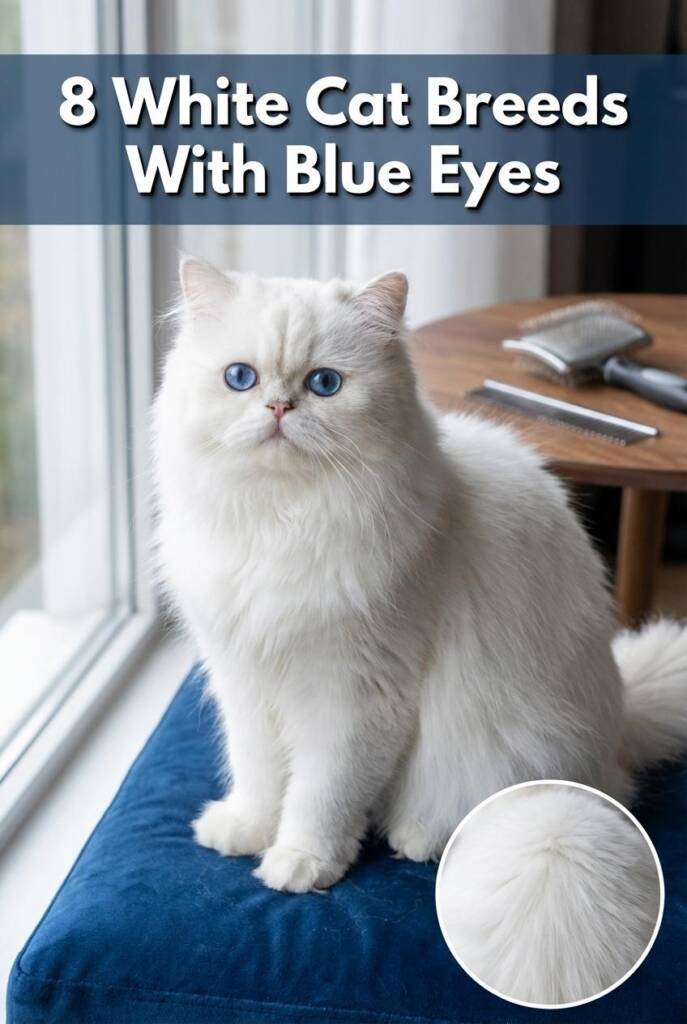
White cats with blue eyes look like they stepped out of a fairy tale. That combination of snow-white fur and sapphire eyes creates an almost ethereal appearance that stops people in their tracks. But beyond their stunning looks, these cats are real animals with distinct personalities, specific care needs, and fascinating genetics that explain why they look the way they do.
If you’re drawn to white cats with blue eyes, you should know what you’re signing up for. Some of these breeds are high-maintenance fluff balls that need daily grooming. Others are vocal communicators who will absolutely tell you about their day whether you asked or not. A few have potential health considerations linked to their coloring. And yes, we need to talk about the deafness connection—it’s real, but it’s not a guarantee, and deaf cats can live perfectly happy lives with the right accommodations.
These 8 breeds represent a range of personalities, energy levels, and care requirements. Some are ancient breeds with royal histories. Others are relatively modern creations from careful breeding programs. What they all have in common is that striking appearance and the fact that they’re not just pretty faces—they’re cats with needs, quirks, and personalities that deserve understanding.
What You Need to Know About Blue Eyes in White Cats
Before we dive into specific breeds, let’s talk about the science behind those blue eyes and white coats, because understanding the genetics helps you make informed decisions.
- The Blue Eye Gene: Blue eyes in cats aren’t actually blue—there’s no blue pigment in their eyes. The iris lacks melanin (the pigment that creates color), and when light reflects off the curved surface of the eye, it appears blue. It’s the same principle that makes the sky look blue.
- The White Coat Connection: White cats can get their coloring from different genetic sources. The dominant white gene (W gene) produces a completely white coat regardless of what other color genes the cat carries. The white spotting gene (S gene) can create so much white that it covers the entire cat. And pointed breeds (like Siamese) have a gene that restricts color to their extremities, leaving their bodies pale or white.
- The Deafness Reality: Here’s the truth about white cats with blue eyes and deafness. Studies show that 65-85% of white cats with two blue eyes experience some degree of hearing loss. If a white cat has one blue eye and one non-blue eye, there’s about a 40% chance of deafness in the ear on the same side as the blue eye. White cats with non-blue eyes have only a 17-22% chance of hearing issues. The same lack of melanin-producing cells that creates blue eyes and white fur also affects the development of structures in the inner ear needed for hearing. Not all white, blue-eyed cats are deaf, but the correlation is real. Responsible breeders test for this using BAER (brainstem auditory evoked response) testing.
- Sun Sensitivity: White cats have very little melanin in their skin, which means they sunburn easily. Their ears are particularly vulnerable. Indoor living is typically recommended, and if they do go outside, cat-safe sunscreen on their ears is important. Chronic sun exposure can lead to skin cancer in white cats.
- What This Means for You: If you fall in love with a white, blue-eyed cat, you might be bringing home a deaf cat. That’s not a deal-breaker—deaf cats adapt beautifully and live full lives. They rely more on their other senses and can learn to respond to vibrations and visual cues. But you need to commit to indoor living (deaf cats can’t hear cars or predators), and you’ll communicate differently with hand signals and gentle touch to get their attention.
1. Persian (White with Blue Eyes)
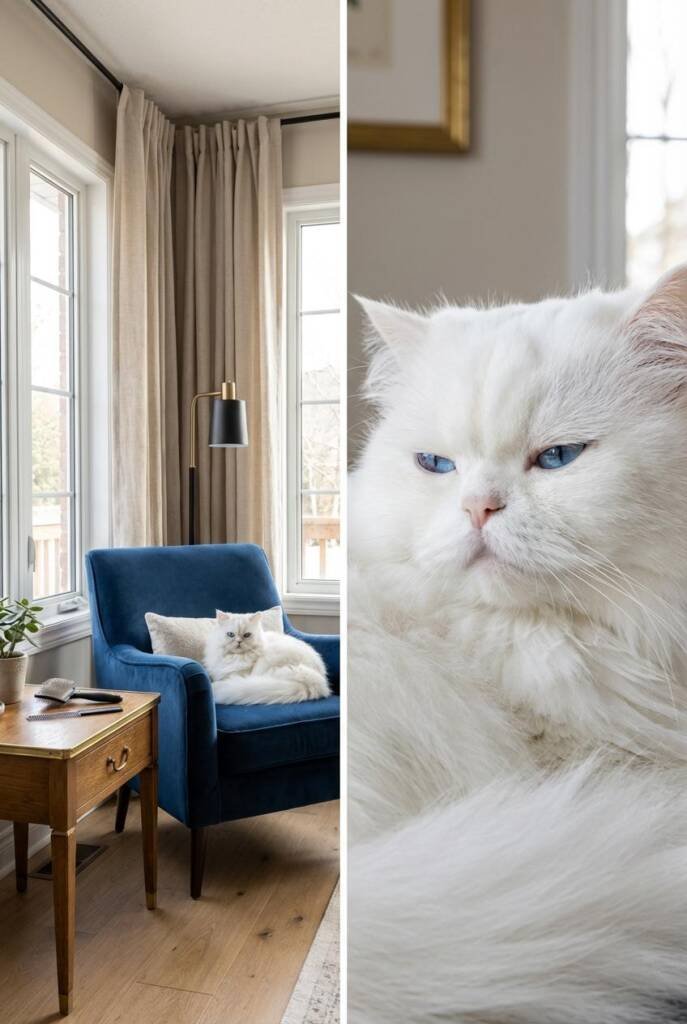
The Persian is the poster child for luxurious, high-maintenance cat breeds, and the white, blue-eyed variety takes that elegance to another level. These cats have been status symbols for centuries, favored by royalty and aristocrats who had servants to handle all that grooming. Today’s Persian still requires significant grooming commitment, but what you get in return is a sweet, calm companion who prefers lounging on silk cushions to climbing your curtains.
Persians have flat faces (brachycephalic structure), enormous eyes, and coats so long and dense that they seem to defy gravity. The white Persian with blue eyes is particularly striking because those huge eyes really pop against the pure white fur. But that face structure and coat create specific care needs you can’t ignore.
What Makes Them Unique
- Temperament: Persians are the definition of a lap cat. They’re gentle, quiet, and affectionate without being demanding. They don’t climb excessively, they’re not vocal, and they’re perfectly content spending hours just being near you. If you want an elegant companion who moves through life at a leisurely pace, this is your cat. They’re good with calm children and other pets, but they prefer peaceful environments without a lot of chaos or noise.
- Physical Characteristics: Persians are medium to large cats (7-12 pounds) with a cobby, sturdy build. Their most distinctive feature is their flat face with a short nose, which gives them that “pansy flower” appearance breeders aim for. Their eyes are large, round, and expressive. The coat is extremely long, fine, and thick, forming a full ruff around the neck and a plumed tail.
- Grooming Reality: This is not optional. Persians need daily brushing—and we mean daily, not “when you remember.” Their fine fur mats easily, especially in the armpits, behind the ears, and around the rear end. Without daily attention, you’ll end up with painful mats that require professional grooming to remove. Plan on 15-20 minutes of brushing every single day. Many Persian owners also schedule monthly baths and professional grooming every 6-8 weeks.
- Health Considerations Specific to White Blue-Eyed Persians: Beyond the deafness connection, white Persians with blue eyes can be more prone to eye discharge (those flat faces don’t drain tears well), and they need their faces wiped daily. The brachycephalic structure can also cause breathing difficulties, especially in hot weather. They’re indoor-only cats both because of sun sensitivity and because they can’t defend themselves effectively with that long coat getting in the way.
Living with a White Blue-Eyed Persian
- Activity Level: Low to moderate. Persians are not acrobatic, high-energy cats. They’ll play gently with feather toys but won’t destroy your house. They’re perfectly happy with a sunny windowsill, a comfortable cat tree (not too tall), and your lap.
- Space Requirements: Persians adapt well to apartments or houses. They don’t need a lot of vertical space or room to run. What they do need is a clean environment—that long white coat shows every speck of dirt.
- Best For: People who work from home or have flexible schedules to accommodate grooming needs. Retirees, apartment dwellers, and anyone who values a calm, beautiful companion over an interactive, playful cat. Not ideal for first-time cat owners unless you’re committed to learning proper grooming techniques.
- Cost Considerations: Persians from reputable breeders are expensive ($1,000-$3,000 or more). Factor in ongoing costs for professional grooming, special tools (slicker brushes, combs, mat splitters), and potentially more vet visits due to breed-specific health issues.
- The Honest Assessment: Persians are high-maintenance but incredibly rewarding if you’re prepared for the commitment. That white coat will not stay white without effort. If you’re looking for a low-maintenance cat, keep scrolling. But if you want a serene, stunning companion and you’re willing to put in the grooming time, a white Persian with blue eyes is an unforgettable addition to your home.
2. Ragdoll (White/Cream Colorpoint with Blue Eyes)
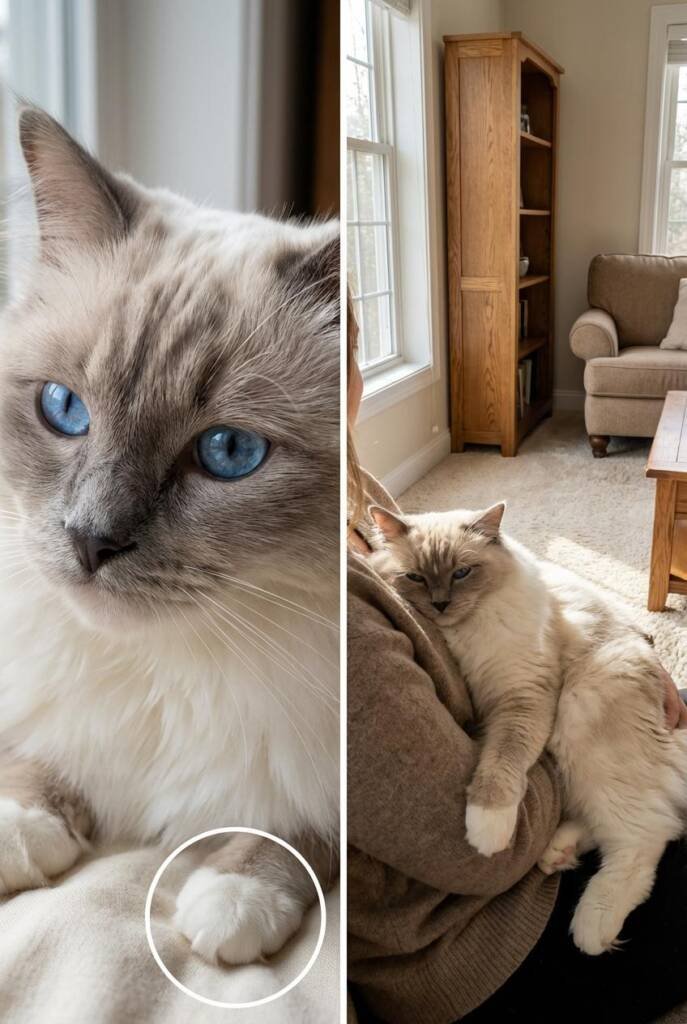
Ragdolls are the gentle giants of the cat world, and they’re famous for going limp when you pick them up—hence the name. These are large, laid-back cats with semi-long fur and those signature blue eyes. While not all Ragdolls are pure white (many have darker “points” on their face, ears, legs, and tail), the lighter variations approach white, and all Ragdolls have blue eyes as part of their breed standard.
What makes Ragdolls special isn’t just their appearance—it’s their dog-like personality. These cats follow you from room to room, greet you at the door, and genuinely enjoy being handled. If you want a cat who acts more like a friendly dog in a cat’s body, Ragdolls deliver.
What Makes Them Unique
- Temperament: Ragdolls are affectionate, social, and surprisingly tolerant. They’re known for their docile nature and tendency to relax completely when held. They’re not typically lap cats in the “sit still for hours” sense, but they want to be near you, touching you, following you. They’re gentle with children, accepting of other pets, and generally easygoing about handling. They’re not particularly vocal, though they’ll communicate in soft, sweet voices when they have something to say.
- Physical Characteristics: Ragdolls are BIG. Males can reach 15-20 pounds, females 10-15 pounds. They’re muscular and solid despite their fluffy appearance. They have medium-length coats that are silky and surprisingly low-mat (they lack the dense undercoat that causes matting in Persians). Their eyes are always blue—vivid, bright blue. The colorpoint pattern means they’re born white and develop color on their points as they mature. The “mitted” variety has white paws that look like socks.
- Grooming Reality: Way easier than Persians, but not maintenance-free. Ragdolls need brushing 2-3 times per week to prevent mats and reduce shedding. Their coat is silky and doesn’t tangle as easily as Persian fur, but they do shed seasonally. A good brushing session takes about 10 minutes.
- Health Considerations: Ragdolls can be prone to hypertrophic cardiomyopathy (a heart condition), so regular vet checkups are important. They’re also at risk for obesity because they’re so laid-back—they need encouragement to exercise. Because of their size, they take 3-4 years to reach full maturity.
Living with a Ragdoll
- Activity Level: Moderate. Ragdolls are playful but not hyperactive. They’ll chase feather toys and enjoy interactive play sessions, but they’re not bouncing off walls. They like climbing to moderate heights (not skyscraper cat trees) and appreciate puzzle toys that challenge their intelligence.
- Space Requirements: Because of their size, Ragdolls do better with more space. They’re not ideal for tiny apartments unless you provide plenty of vertical territory. They need sturdy cat furniture that can support their weight—cheap cat trees will collapse under a 20-pound Ragdoll.
- Best For: Families with children, multi-pet households, people who want an interactive, social cat. Ragdolls don’t do well alone for long periods—they’re companion animals who genuinely need company. If you work long hours, consider two Ragdolls so they have each other.
- Cost Considerations: Ragdolls from reputable breeders run $1,200-$2,500. Their size means they eat more than average cats, and they need larger litter boxes, carriers, and cat trees. Budget for potential heart monitoring as they age.
- The Honest Assessment: Ragdolls are easier to care for than Persians but still require commitment. They’re not “set it and forget it” cats—they need interaction, play, and attention. But if you want a beautiful, friendly, dog-like cat who will be your shadow around the house, Ragdolls are hard to beat. Just be prepared for a BIG cat who thinks they’re a lap cat regardless of their size.
3. Turkish Angora (White with Blue Eyes)
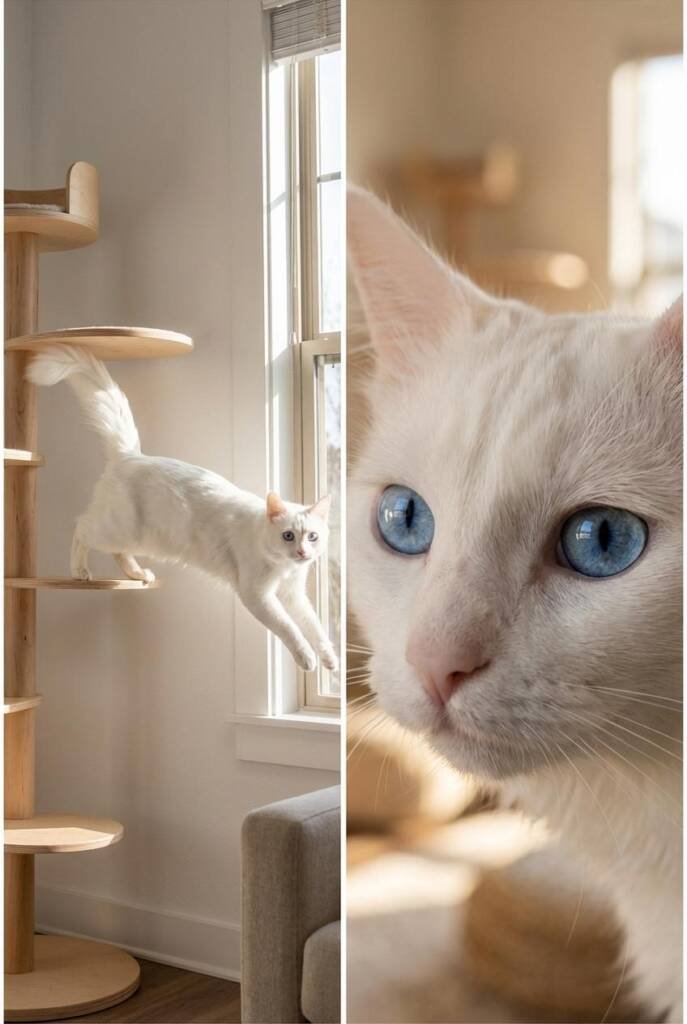
The Turkish Angora is an ancient, elegant breed that originated in Turkey and has been prized for centuries. These cats are the athletes of the white, blue-eyed world—graceful, energetic, and incredibly intelligent. Unlike the laid-back Persian or Ragdoll, Turkish Angoras are active, playful, and sometimes mischievous cats who need mental and physical stimulation.
The white Turkish Angora with blue eyes is considered the “original” look for this breed, though they come in many colors. These cats have a regal bearing and a reputation for being the companions of gods in Turkish legend. Today, they’re still considered special in their homeland and make fascinating, engaging pets for the right owner.
What Makes Them Unique
- Temperament: Turkish Angoras are smart, social, and assertive. They’re not aggressive, but they know what they want and they’ll let you know. They’re affectionate on their terms, playful throughout their lives, and excellent problem-solvers. They form strong bonds with their chosen person but are generally friendly with the whole family. They’re vocal and will absolutely participate in conversations. These are not cats who fade into the background—they’re active participants in household life.
- Physical Characteristics: Turkish Angoras are medium-sized (5-10 pounds) with a fine-boned, elegant build. Their coat is medium-long, silky, and flows as they move. They don’t have the dense undercoat of Persians or Ragdolls, so their fur lays flatter against the body. Their eyes are large, almond-shaped, and often a striking blue (though they can also have odd eyes—one blue, one amber). Their tail is long, plumed, and often carried high like a flag.
- Grooming Reality: Surprisingly easy. The Turkish Angora’s silky coat doesn’t mat easily and sheds minimally. Weekly brushing is usually sufficient, though they may need more during seasonal shedding. They’re fastidious groomers themselves and typically keep their white coats quite clean.
- Health Considerations: White Turkish Angoras with blue eyes have the same deafness risks as other white, blue-eyed cats. They can also be prone to hypertrophic cardiomyopathy. Some lines carry a genetic condition called ataxia, so choosing a reputable breeder who tests for this is crucial.
Living with a Turkish Angora
- Activity Level: High. Turkish Angoras are energetic, playful cats who need outlets for their energy. They’re exceptional jumpers and climbers—expect them on top of your refrigerator, bookshelves, and anywhere else they can reach. They love interactive play, puzzle feeders, and toys that challenge their intelligence. Boredom leads to destructive behavior with this breed.
- Space Requirements: Turkish Angoras need vertical space more than floor space. Cat trees, wall-mounted shelves, and high perches are essential. They’ll create their own climbing routes through your home, so be prepared for them to treat your furniture as their personal jungle gym.
- Best For: Active owners who want an engaging, intelligent cat. People who work from home or have time for daily play sessions. Experienced cat owners who can provide mental stimulation and handle a cat with a strong personality. Not ideal for people who want a decorative, calm lap cat.
- Cost Considerations: Turkish Angoras from reputable breeders cost $800-$2,000. They’re not high-maintenance in terms of grooming costs, but you’ll spend money on quality toys, cat furniture, and enrichment to keep them happy.
- The Honest Assessment: Turkish Angoras are gorgeous, intelligent, and entertaining—but they’re not for everyone. If you want a cat who will challenge you, make you laugh, and keep you on your toes, they’re fantastic. If you want a quiet, easy-going companion, look elsewhere. These cats need jobs, whether that’s puzzle feeders, training sessions, or elaborate play routines. Give them the stimulation they need, and you’ll have a devoted, fascinating companion. Ignore their needs, and you’ll have a destructive troublemaker.
4. Siamese (Colorpoint with Blue Eyes)
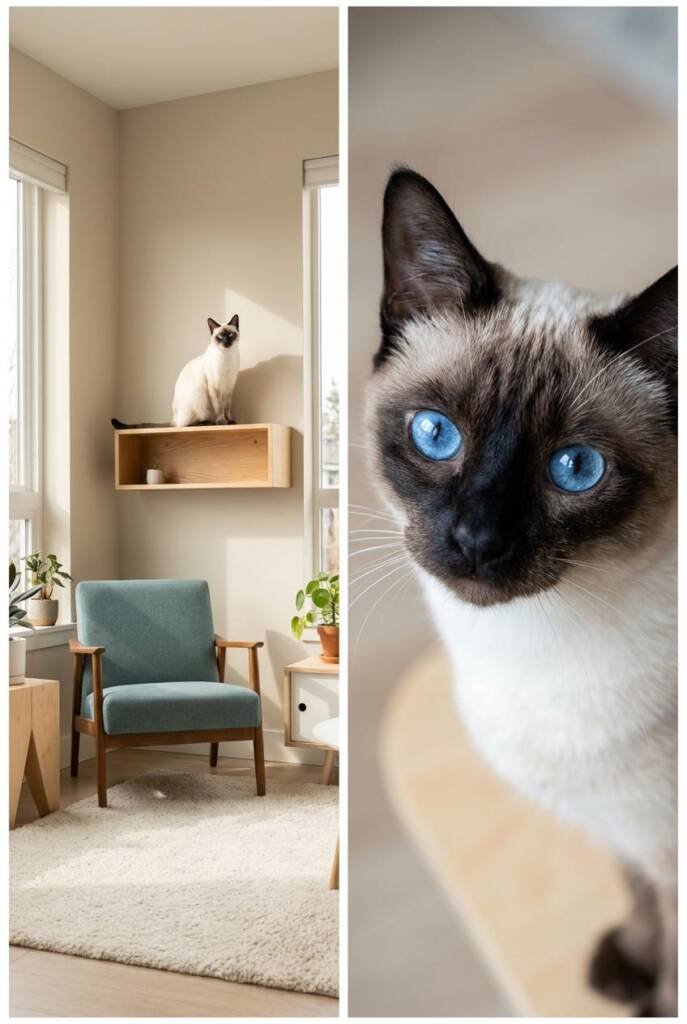
The Siamese is one of the most recognizable cat breeds in the world, and while they’re not solid white, their pale cream or white bodies combined with darker points (face, ears, legs, tail) and brilliant blue eyes absolutely qualify them for this list. Siamese cats are ancient, originating in Thailand (formerly Siam), and they’ve been beloved for their striking appearance and bold personalities for centuries.
If you want a cat with opinions—strong opinions that they will share loudly and frequently—the Siamese is your breed. These are not quiet, background cats. They’re vocal, demanding, intelligent, and incredibly social. They’re also deeply loyal and form intense bonds with their people.
What Makes Them Unique
- Temperament: Siamese cats are extroverts. They’re talkative, opinionated, and emotionally expressive. They’ll tell you when they’re hungry, when they’re bored, when they disapprove of your choices, and when they love you—all in a distinctive, loud voice that sounds somewhere between a baby crying and a person yelling. They’re extremely people-oriented and do not do well being left alone for long periods. They want to be involved in everything you do. They’re intelligent, trainable, and can learn tricks, play fetch, and walk on leashes.
- Physical Characteristics: Siamese are sleek, muscular, and athletic. They’re medium-sized (8-12 pounds) with a long, tubular body, wedge-shaped head, and large ears. Their eyes are almond-shaped and always bright blue. The colorpoint pattern means they’re born white and develop darker color on their face, ears, legs, and tail as they mature. The body remains pale cream or white. There are two types: traditional Siamese (rounder head, stockier body) and modern Siamese (extreme wedge head, very slender).
- Grooming Reality: Easy. Siamese have short, fine coats that lie close to the body. Weekly brushing is plenty. They shed minimally and groom themselves well. This is one of the lowest-maintenance coats on this list.
- Health Considerations: Siamese can be prone to dental issues, so regular teeth cleaning is important. Some lines have respiratory issues or crossed eyes (though responsible breeders work to eliminate this). They can also develop progressive retinal atrophy. Their pale bodies mean they need sun protection if they spend time near windows where UV penetrates.
Living with a Siamese
- Activity Level: Very high. Siamese are athletic, energetic cats who need daily play sessions. They’re excellent jumpers, curious explorers, and will get into everything if bored. They need cat trees, interactive toys, and ideally, another cat companion to play with when you’re not available.
- Space Requirements: Siamese adapt to apartments or houses, but they need vertical territory and enrichment. They’re not content being sedentary—they need things to do, places to climb, and puzzles to solve.
- Best For: People who want a cat-dog hybrid. Someone who’s home often or works from home. Families with older children who can engage with an active cat. People who don’t mind noise—Siamese are LOUD. Not ideal for people who want a quiet, independent cat or who work long hours away from home.
- Cost Considerations: Siamese from reputable breeders cost $600-$1,500. Their grooming costs are low, but factor in dental care, quality interactive toys, and potentially getting a second cat so they’re not lonely. They’re food-motivated and can become overweight, so quality diet matters.
- The Honest Assessment: Siamese are amazing if you want a demanding, vocal, intensely bonded companion. They’re not for people who want a low-maintenance, background pet. That voice is divisive—some people find it endearing, others find it grating. They’re needy and will follow you everywhere, including the bathroom. If you embrace their neediness and give them the attention they crave, you’ll have an incredibly loyal, entertaining friend. If you ignore them, they’ll make your life difficult out of sheer boredom and loneliness.
5. Balinese (Long-Haired Siamese with Blue Eyes)
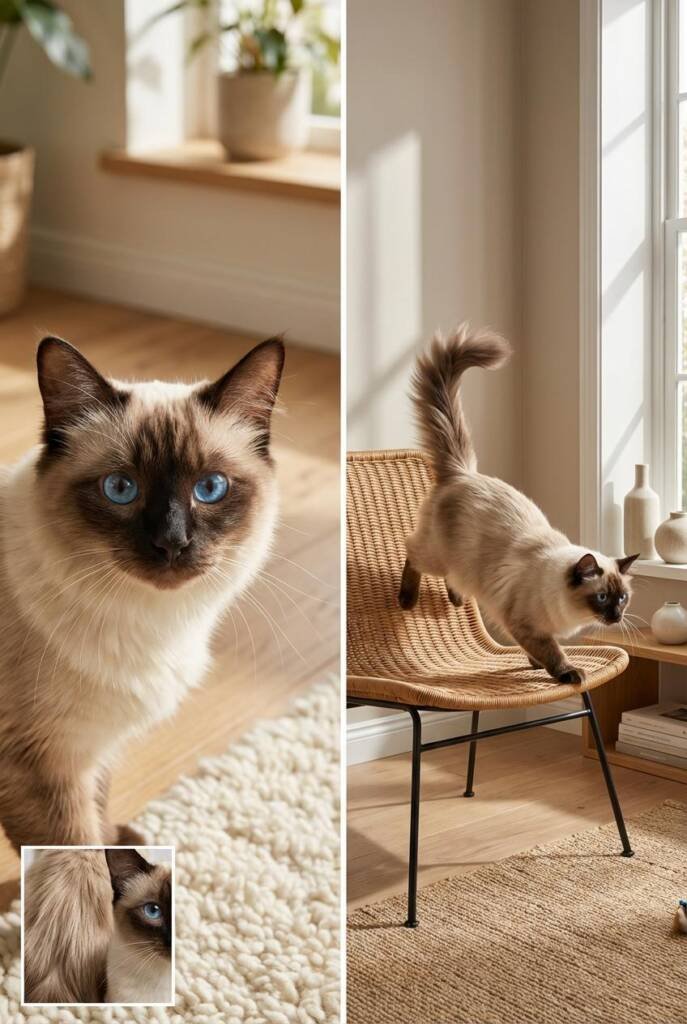
The Balinese is essentially a long-haired Siamese. They have the same colorpoint pattern, the same bright blue eyes, the same athletic build—but with a silky, flowing coat that gives them an elegant, graceful appearance. The name “Balinese” was chosen because their flowing coat and graceful movements reminded breeders of Balinese dancers, though the breed has no connection to Bali.
Like Siamese, Balinese are vocal, social, and incredibly people-oriented. The main difference is that coat, which is surprisingly easy to maintain despite its length.
What Makes Them Unique
- Temperament: Nearly identical to Siamese—talkative, social, intelligent, and demanding. Balinese are affectionate, loyal, and want to be involved in every aspect of your life. They’re playful throughout their lives, excellent problem-solvers, and can learn tricks and commands. They’re less vocal than Siamese (slightly), but still far more talkative than most breeds. They bond intensely with their chosen person but are generally friendly with everyone in the household.
- Physical Characteristics: Balinese have the same sleek, muscular, wedge-shaped build as Siamese, just with longer fur. They’re medium-sized (8-12 pounds) with a tubular body, large ears, and stunning almond-shaped blue eyes. Their coat is medium-long, silky, and lies close to the body without the fluff of a Persian. The colorpoint pattern means a pale cream or white body with darker points. Their tail is plumed and elegant.
- Grooming Reality: Easier than you’d expect. Despite the longer coat, Balinese lack the dense undercoat that causes matting. Weekly brushing is usually sufficient. They shed less than you’d think and their silky coat doesn’t tangle easily. During seasonal sheds, bump up to 2-3 times per week.
- Health Considerations: Same as Siamese—potential for dental issues, progressive retinal atrophy, and some respiratory concerns. Reputable breeders screen for genetic conditions. The pale coat means sun protection is necessary for window-lounging cats.
Living with a Balinese
- Activity Level: High. Balinese are athletic, energetic, and playful. They’re excellent climbers and jumpers who need outlets for their energy. Interactive play, puzzle toys, and cat furniture are essential. They’ll play fetch, learn tricks, and generally act more dog-like than cat-like.
- Space Requirements: Similar to Siamese—they adapt to various living situations but need vertical space and enrichment. They’re not couch potatoes. Boredom leads to destructive behavior, so apartments work fine as long as you provide adequate stimulation.
- Best For: People who loved the idea of a Siamese but want that elegant long coat. Active households with time for daily interaction. People who work from home or have flexible schedules. Families with children who can engage with an energetic cat. Anyone who wants a beautiful, intelligent companion and doesn’t mind the vocal conversations.
- Cost Considerations: Balinese from reputable breeders cost $800-$1,800. Grooming costs are minimal since you can handle most of it yourself. Budget for quality food, interactive toys, dental care, and potentially a companion cat. They eat more than average due to their activity level.
- The Honest Assessment: If you want a Siamese but love long-haired cats, the Balinese is perfect. You get all the personality, intelligence, and social nature of a Siamese with a gorgeous flowing coat that’s actually easier to maintain than many short-haired breeds. The trade-off is the same as with Siamese—they’re demanding, vocal, and need significant attention. They’re not independent cats who entertain themselves. But if you’re prepared for that level of interaction, Balinese are stunning, devoted companions.
6. Birman (Sacred Cat of Burma with Blue Eyes)
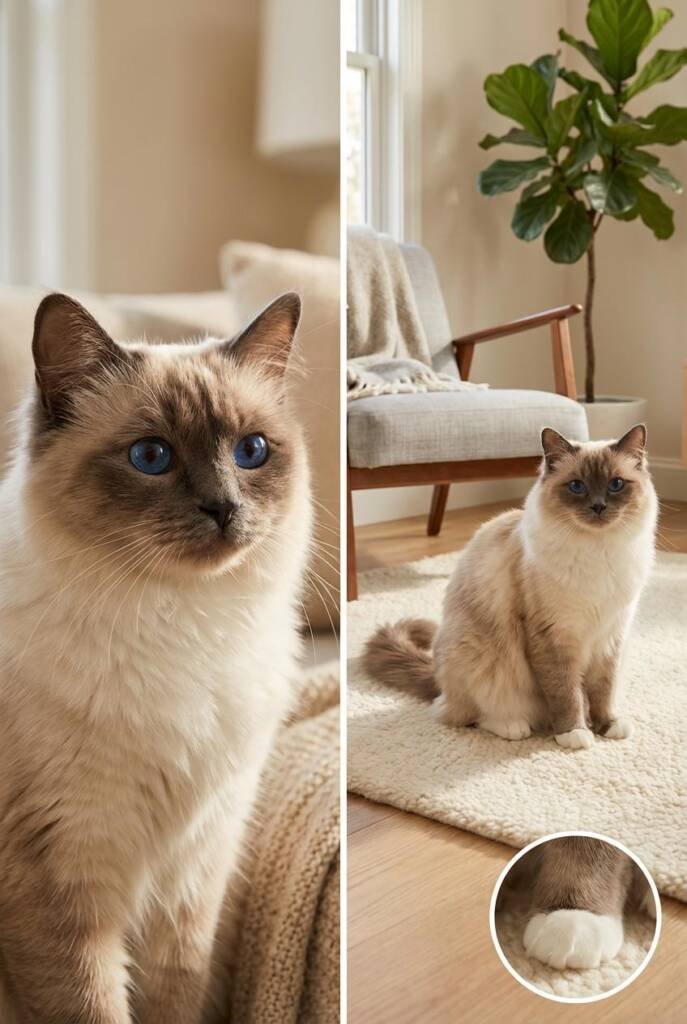
The Birman, also called the Sacred Cat of Burma, is a gentle, affectionate breed with a fascinating legend. According to Burmese legend, these cats were temple guardians whose white paws represented purity. Whether you believe the legend or not, Birmans are undeniably beautiful with their colorpoint pattern, white “gloves” on all four paws, and deep sapphire eyes.
Birmans are often called the “middle ground” between Persians and Siamese—they have the calm temperament of a Persian but the social nature of a Siamese, without the extremes of either. If you want a beautiful, friendly cat without high maintenance or excessive vocalization, Birmans deserve consideration.
What Makes Them Unique
- Temperament: Birmans are gentle, sweet-natured, and moderately social. They’re affectionate without being needy, playful without being hyperactive, and vocal without being loud. They enjoy human company and will follow you around, but they’re also content to entertain themselves. They’re good with children and other pets, adaptable to various household situations, and generally easygoing. They’re intelligent but not mischievous—they won’t plot elaborate schemes to open your cabinets.
- Physical Characteristics: Birmans are medium to large cats (10-15 pounds for males, 6-10 for females) with a long, stocky body. They have semi-long, silky coats that don’t mat as easily as Persian fur. The colorpoint pattern means pale cream or beige bodies with darker points on the face, ears, legs, and tail. The distinctive feature is their white “gloves”—pure white paws on all four feet that end in perfect lines. Their eyes are large, round, and always a deep blue.
- Grooming Reality: Moderate maintenance. Birmans need brushing 2-3 times per week to prevent tangles, especially around the ruff and tail. Their coat is silky and less prone to matting than many long-haired breeds, but it’s not maintenance-free. They shed seasonally and need extra brushing during those times.
- Health Considerations: Birmans are generally healthy but can be prone to hypertrophic cardiomyopathy. They can also develop kidney issues as they age. Reputable breeders screen for genetic conditions. Their white paws need to stay clean—those gloves show dirt easily.
Living with a Birman
- Activity Level: Moderate. Birmans enjoy play but aren’t hyperactive. They like interactive toys and will chase feather wands, but they’re equally happy lounging in sunny spots. They’re not climbers to the same degree as Siamese or Turkish Angoras—they prefer mid-level perches to skyscraper cat trees.
- Space Requirements: Birmans adapt well to apartments or houses. They don’t need massive vertical territory, but they appreciate having their own space with comfortable perches. They’re indoor cats due to their trusting nature—they’re too friendly and don’t have strong survival instincts.
- Best For: Families with children, multi-pet households, first-time cat owners who want a beautiful breed without extreme maintenance. People who want an affectionate cat that’s not overly demanding. Anyone looking for a “goldilocks” cat—not too high-energy, not too sedentary, not too vocal, not too quiet.
- Cost Considerations: Birmans from reputable breeders cost $800-$2,000. Grooming costs are moderate—you can handle most brushing yourself but may want occasional professional grooming. Budget for potential heart monitoring as they age.
- The Honest Assessment: Birmans are wonderful for people who want a beautiful, friendly cat without the extremes of other breeds. They’re easier than Persians, calmer than Siamese, and generally adaptable. Those white gloves mean their paws show every speck of dirt, so keep litter boxes clean and consider light-colored flooring. They’re social enough to need companionship but not so demanding that they’ll drive you crazy. If you want a stunning cat with a sweet personality and moderate care needs, Birmans are an excellent choice.
7. Khao Manee (Diamond Eye Cat)
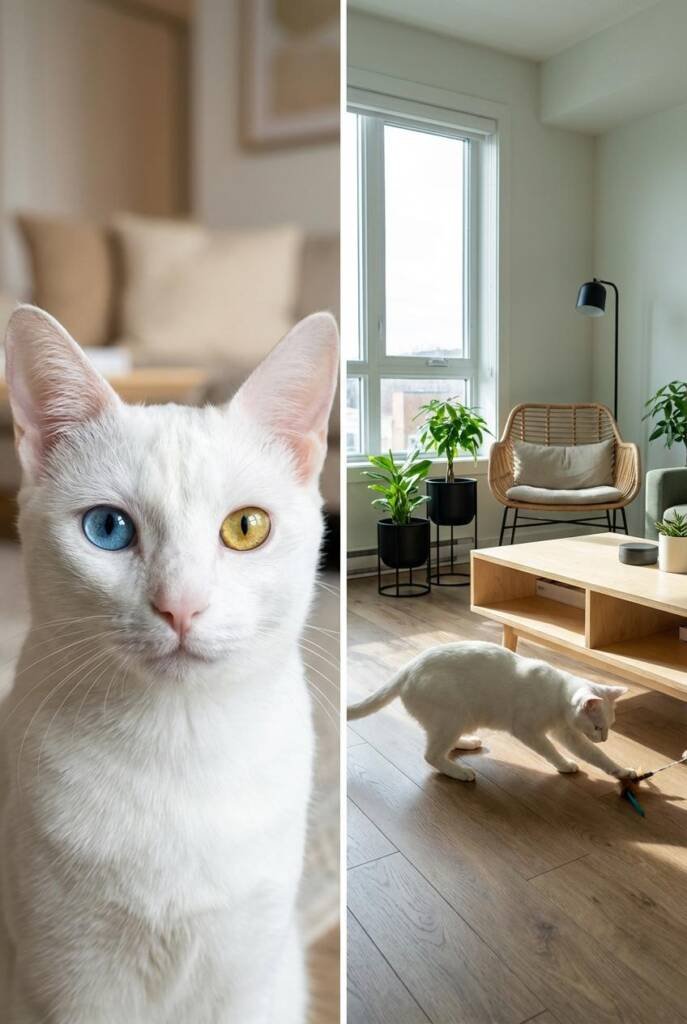
The Khao Manee is a rare, ancient breed from Thailand that’s considered a national treasure in its homeland. These are pure white cats with jewel-like eyes—often blue, but they can also have odd eyes (one blue, one green/gold) or both eyes amber/green. The name “Khao Manee” means “white gem,” and in Thailand, these cats were historically kept by royalty and believed to bring good fortune.
Khao Manees are relatively unknown outside of Thailand and are one of the rarest breeds in the world. They’re playful, intelligent, and intensely social—more like the personality of a Siamese than a calm lap cat.
What Makes Them Unique
- Temperament: Khao Manees are active, curious, and social. They’re intelligent problem-solvers who need mental stimulation. They’re affectionate and bond closely with their families, but they’re not content to just sit still—they want to explore, play, and be involved in everything. They’re moderately vocal and will communicate with chirps and trills. They’re good with children and other pets if properly socialized. They’re playful throughout their lives and maintain kitten-like energy well into adulthood.
- Physical Characteristics: Khao Manees are medium-sized (6-12 pounds) with a muscular, athletic build. They’re pure white with short, smooth coats that lie close to the body. Their most striking feature is their eyes—large, luminous, and often a brilliant blue (though odd eyes are common and prized). They have heart-shaped faces, large ears, and an overall elegant but sturdy appearance.
- Grooming Reality: Minimal. The short coat requires only weekly brushing to remove loose hair. They’re low-shedding and fastidious self-groomers. This is one of the easiest coats to maintain on this list.
- Health Considerations: Like all white cats with blue eyes, Khao Manees have a significant risk of congenital deafness. Responsible breeders test for this. They’re otherwise generally healthy. Because they’re rare, finding a reputable breeder who does proper health screening is crucial.
Living with a Khao Manee
- Activity Level: High. Khao Manees are energetic, playful cats who need daily interactive play. They’re climbers, jumpers, and explorers. Boredom leads to destructive behavior. They need cat trees, puzzle toys, and regular play sessions to stay happy.
- Space Requirements: They adapt to apartments or houses as long as they have enrichment. They need vertical space and interactive elements more than floor space. They’re not sedentary cats who lounge all day.
- Best For: Experienced cat owners who want a rare, beautiful breed and can provide high levels of interaction. Active households with time for daily play. People who appreciate an intelligent, engaging cat. Not ideal for people who want a calm, quiet, independent cat.
- Cost Considerations: Khao Manees are expensive—$7,000-$11,000 from reputable breeders, and they’re extremely rare outside of Thailand. Waiting lists are long. Grooming costs are minimal, but factor in quality enrichment toys, cat furniture, and potentially genetic testing for inherited conditions.
- The Honest Assessment: Khao Manees are stunning, rare, and fascinating—but they’re also expensive and hard to find. They’re not for casual cat owners. If you’re drawn to them, be prepared for a long search to find an ethical breeder, a substantial financial investment, and a cat who needs significant mental and physical stimulation. They’re worth it if you want something truly special and unique, but don’t get a Khao Manee just for their looks—get one because you genuinely want an active, intelligent, social cat who happens to be breathtakingly beautiful.
8. Himalayan (Colorpoint Persian)
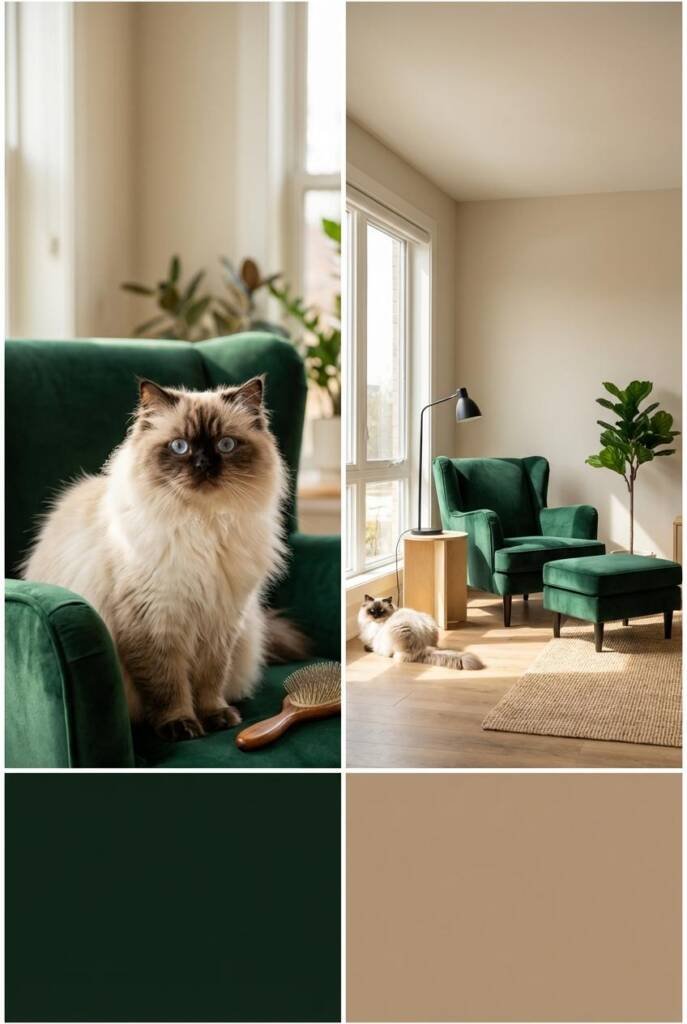
The Himalayan is essentially a Persian with Siamese coloring—they have the flat face, long luxurious coat, and stocky build of a Persian combined with the colorpoint pattern and blue eyes of a Siamese. They’re sometimes considered a variety of Persian rather than a separate breed, but they have distinct characteristics worth discussing separately.
Himalayans combine the calm, gentle temperament of Persians with slightly more social tendencies. If you love the look of Persians but want a cat with a bit more personality, Himalayans might be the answer.
What Makes Them Unique
- Temperament: Himalayans are sweet, calm, and affectionate. They’re more social and playful than typical Persians but nowhere near as demanding as Siamese. They enjoy human company and will seek out attention, but they’re also content lounging in comfortable spots. They’re gentle with children and other pets, adaptable to quiet households, and generally easygoing. They have soft, quiet voices and use them sparingly.
- Physical Characteristics: Himalayans are medium to large cats (7-12 pounds) with the characteristic Persian body—cobby, muscular, and low to the ground. They have flat faces (brachycephalic), enormous round eyes, and extremely long, thick coats. The colorpoint pattern means pale cream or white bodies with darker points on the face, ears, legs, and tail. Their eyes are always vivid blue.
- Grooming Reality: Just as demanding as Persians. Daily brushing is mandatory—that thick, long coat mats easily without constant attention. Plan on 15-20 minutes of brushing daily, plus regular baths (every 4-6 weeks), and professional grooming every couple of months. Their flat faces require daily face wiping to prevent tear staining. The light-colored body shows dirt easily.
- Health Considerations: Himalayans face all the health issues of Persians—breathing difficulties due to the flat face, eye discharge, dental problems, and potential kidney disease. They’re also prone to polycystic kidney disease (PKD), so choose breeders who test for this. They’re indoor-only cats due to their grooming needs and inability to regulate temperature well.
Living with a Himalayan
- Activity Level: Low to moderate. Himalayans are not highly active cats. They enjoy gentle play but won’t climb your curtains or demand marathon play sessions. They’re happy with a sunny window, soft bed, and occasional interactive play.
- Space Requirements: Himalayans adapt well to apartments or houses. They don’t need extensive vertical territory or large spaces to run. What they need is a clean, comfortable environment where their long coat won’t pick up dirt and debris.
- Best For: People who love both Persians and Siamese and want a blend of both. Experienced cat owners who understand the grooming commitment. People who work from home or have flexible schedules. Retirees looking for a beautiful, calm companion. Not ideal for busy professionals or first-time cat owners.
- Cost Considerations: Himalayans from reputable breeders cost $1,000-$2,500. Factor in significant grooming expenses—professional grooming every 6-8 weeks adds up. You’ll need quality grooming tools, special cat shampoo, and potentially more frequent vet visits for breed-related health issues.
- The Honest Assessment: Himalayans are gorgeous, sweet cats that require serious grooming commitment. If you loved the idea of a Persian but wanted a bit more personality, or you loved Siamese but wanted a calmer temperament, Himalayans split that difference. But don’t underestimate the maintenance—that coat is as demanding as a full Persian’s. If you’re prepared for daily grooming and potential health issues, you’ll have a stunning, affectionate companion.
Choosing the Right White Blue-Eyed Cat for You
Now that you’ve seen all 8 breeds, here’s how to narrow down your choice:
- If you want a calm, lap-cat companion: Persian or Himalayan. Both are gentle, quiet, and content to lounge near you. Be prepared for intensive daily grooming.
- If you want a social, dog-like cat: Ragdoll, Siamese, or Balinese. These breeds follow you around, want constant interaction, and are trainable. Siamese and Balinese are more vocal and energetic than Ragdolls.
- If you want an active, intelligent cat: Turkish Angora or Khao Manee. Both need mental stimulation and physical activity. Turkish Angoras are more common and affordable; Khao Manees are rare and expensive.
- If you want a balanced, moderate cat: Birman. They’re the goldilocks breed—not too high-energy, not too sedentary, social but not demanding, beautiful but manageable grooming.
- If grooming is a concern: Siamese or Khao Manee have short coats requiring minimal maintenance. Turkish Angoras and Balinese have longer fur but it’s surprisingly low-maintenance. Persians, Ragdolls, Birmans, and Himalayans need more regular grooming.
- If you work long hours: None of these breeds do well being alone all day, but Ragdolls, Birmans, and Persians handle it slightly better than the others. Consider getting two cats so they have companionship.
- If you have children: Ragdolls, Birmans, and Siamese are generally best with kids. Persians and Himalayans prefer calm environments. Turkish Angoras and Khao Manees need older children who understand how to interact respectfully.
- If cost matters: Siamese are typically the most affordable ($600-$1,500). Turkish Angoras, Birmans, and Balinese are mid-range ($800-$2,000). Persians, Ragdolls, and Himalayans are higher ($1,000-$3,000). Khao Manees are extremely expensive ($7,000-$11,000) and rare.
The Reality of Living with a Potentially Deaf Cat
Since many white, blue-eyed cats experience hearing loss, let’s talk about what that actually means for daily life.
- Deaf cats can’t hear danger: Cars, predators, aggressive dogs, other hazards—deaf cats have no auditory warning system. They must be indoor-only cats. No exceptions.
- Communication changes: You can’t call a deaf cat’s name. Instead, you’ll use vibrations (stomping gently on the floor), visual cues (hand signals, turning lights on and off), and touch. Many deaf cat owners teach their cats sign language commands. It works beautifully.
- They startle easily: Deaf cats can’t hear you approaching. Always enter their line of sight before touching them. Waking a sleeping deaf cat requires gentle vibration or light touch—sudden grabbing will terrify them.
- They’re often vocal: Many deaf cats are surprisingly loud because they can’t hear themselves. They may meow excessively or at odd times (like 3am) because they don’t realize how loud they are.
- They adapt perfectly: Deaf cats have enhanced other senses. They rely more on smell and vibration. They live full, happy lives indoors with no awareness that they’re “missing” anything.
- Testing is important: If you’re getting a kitten, ask the breeder about BAER testing (brainstem auditory evoked response). This definitively confirms hearing status. If you adopt an adult white, blue-eyed cat, you can have them tested or simply observe—do they respond to sounds when not looking at you?
Deaf cats are not “broken” or “less than.” They’re simply cats who interact with the world differently. With appropriate accommodations, they make wonderful companions.
Finding the Right White Cat Breeds With Blue Eyes for Your Home
At Sweet Purrfections, we believe choosing a pet should be about finding the right match for your lifestyle, not just falling for a pretty face. Whether you’re a pet lover searching for your perfect feline companion or a home lover creating spaces where beautiful cats feel comfortable and safe, we’re here with information that helps you make smart decisions.
Ready to bring home a white cat with blue eyes? Research breeders thoroughly—ask about health testing, especially BAER testing for deafness. Visit in person if possible. Ask about the parents’ temperaments. Understand the grooming commitment for your chosen breed. Factor in all costs, not just the purchase price. And prepare your home for a cat who might be deaf, because that’s a real possibility with these stunning breeds.