
When temperatures drop, feral cats face life-threatening challenges that most people don’t realize they’re creating. These well-meaning mistakes can be the difference between a cat surviving winter or succumbing to the cold. Whether you’re already helping or just want to avoid doing harm, knowing what to watch for makes you part of the solution. Let’s fix what’s putting these resilient creatures at risk.
1. Using Blankets or Towels for Bedding Instead of Straw
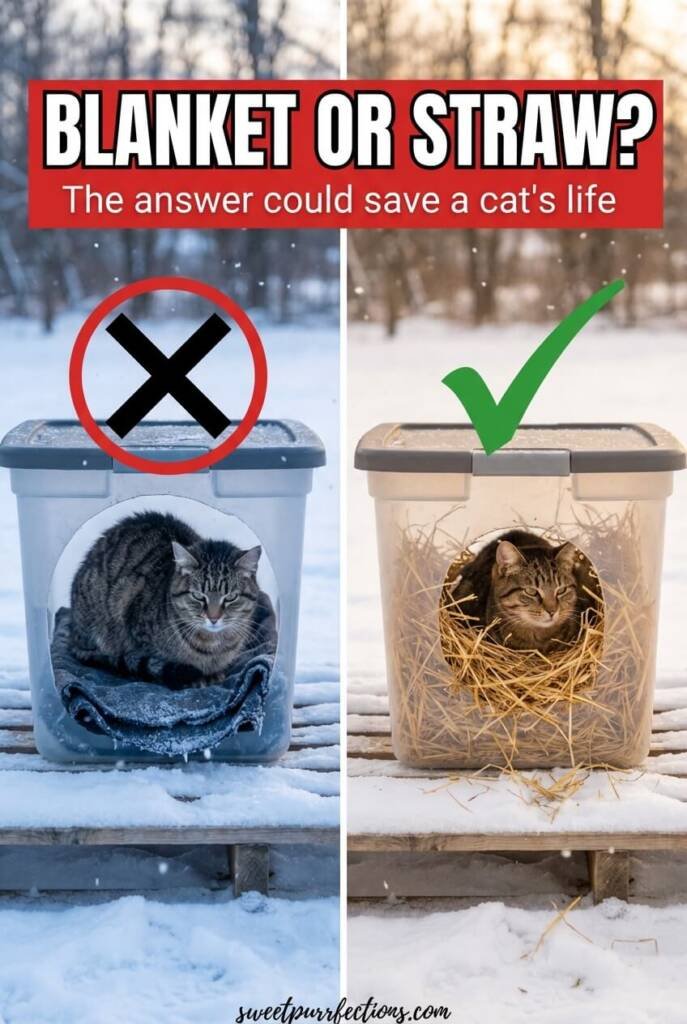
You’d think soft fabric would keep cats warm, but it’s actually dangerous. Blankets and towels absorb moisture from the cat’s breath, wet paws, and humid air. Once damp, fabric pulls heat away from a cat’s body rather than insulating it. In freezing temperatures, that moisture can actually freeze, turning your cozy gesture into an ice trap.
Straw is the gold standard because it repels moisture, allows air circulation, and creates insulating pockets that trap the cat’s body heat. Each hollow straw stem works like a tiny insulation tube. The cat can burrow into it, and their body warmth gets reflected back rather than absorbed into wet fabric.
How to Prep Your Straw Bedding the Right Way
- Fluff the straw generously before placing it in the shelter—compressed straw loses its insulating power
- Fill the shelter at least 6-8 inches deep so cats can fully burrow and create a warm nest
- Replace straw every 4-6 weeks during winter as it breaks down and compacts
- Never use hay—it looks similar but retains moisture and grows mold quickly
- Check for dampness weekly by reaching into the shelter; if straw feels wet, replace immediately
The transformation is immediate. Cats sleeping on straw maintain their body temperature through the night, while those on fabric often show signs of hypothermia by morning.
2. Placing Shelters Directly on Frozen Ground
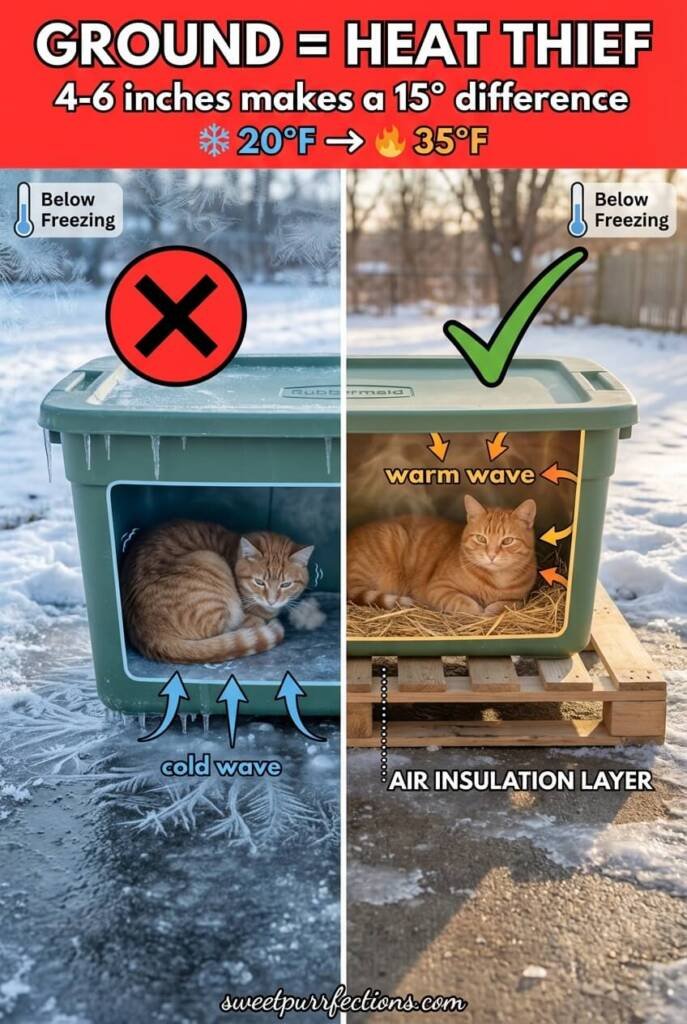
The ground is a massive heat sink in winter. When a shelter sits directly on frozen earth, concrete, or snow, the cold conducts straight through the floor and steals warmth faster than the cat can generate it. It’s like sleeping on an ice pack—no amount of insulation inside the shelter can compensate for that constant heat drain from below.
Elevating shelters even just 4-6 inches creates an air buffer that dramatically reduces heat loss. The trapped air layer acts as insulation, breaking the direct thermal connection between the frozen ground and the shelter floor.
Best Materials to Elevate Your Winter Shelter
- Wooden pallets (free from many businesses)—naturally elevate 4-6 inches and allow air circulation
- Styrofoam blocks or sheets—exceptional insulators that also create height
- Concrete blocks positioned with holes facing sideways—sturdy, permanent, and the air chambers add extra insulation
- Bricks stacked in a grid pattern—allows airflow underneath while providing stability
- Shipping pallets cut to size—easy to find and weather-resistant
For extra protection, place a piece of rigid foam insulation board between the ground barrier and the shelter floor. This double-layer approach can keep the interior 15-20 degrees warmer than ground-level shelters.
3. Feeding Cats Only Once Per Day During Winter
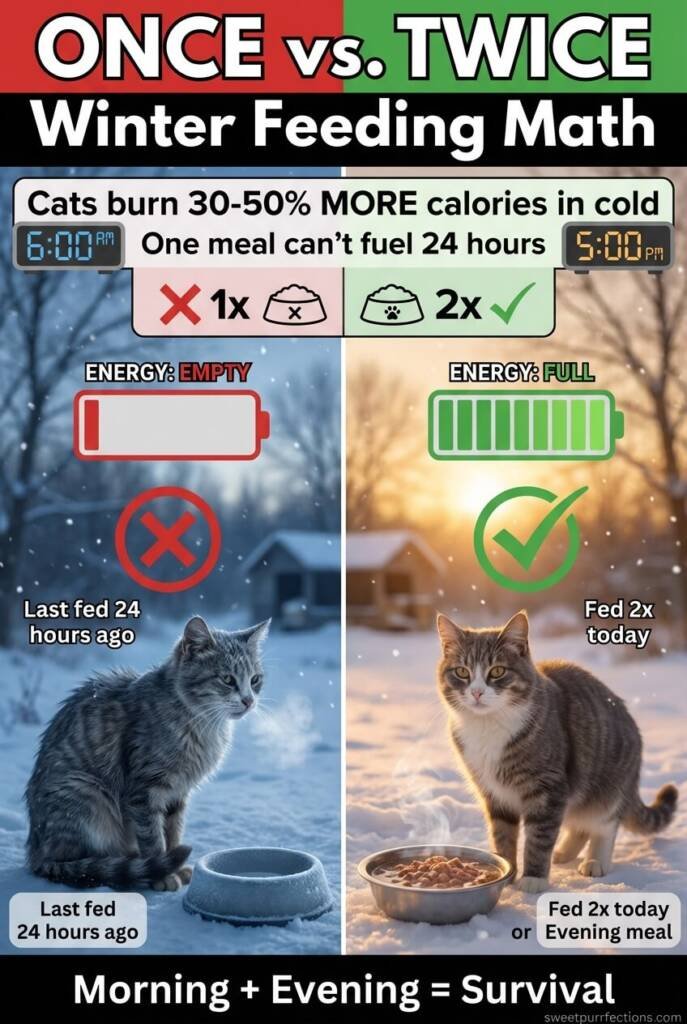
Cats burn calories at an astonishing rate trying to stay warm. In freezing weather, their metabolic rate increases by 30-50% just to maintain body temperature. A single meal doesn’t provide enough sustained energy to generate heat through long winter nights. By morning, they’ve depleted their reserves and face the coldest hours with no fuel.
Splitting the same amount of food into two feedings—morning and evening—keeps their internal furnace stoked. The evening meal is particularly critical because digestion itself produces heat, giving cats a metabolic boost right when they need it most for overnight survival.
Creating a Winter Feeding Schedule That Actually Works
- Morning feeding (7-9 AM): Provide 40% of daily calories to fuel daytime activity and heat generation
- Evening feeding (4-6 PM): Offer 60% of daily calories 2-3 hours before sunset so digestion peaks during coldest overnight hours
- Increase portions by 25-30% compared to warmer months—they genuinely need more calories
- Add warm water to dry food to create a “gravy” that provides both hydration and immediate warmth
- Offer higher-fat foods like kitten formula or add a small amount of fish oil for concentrated calories
Watch for cats finishing everything quickly. If bowls are licked clean within 20 minutes, they need more food. Winter is not the time to worry about overfeeding outdoor cats.
4. Building Shelters Big Enough for Multiple Cats
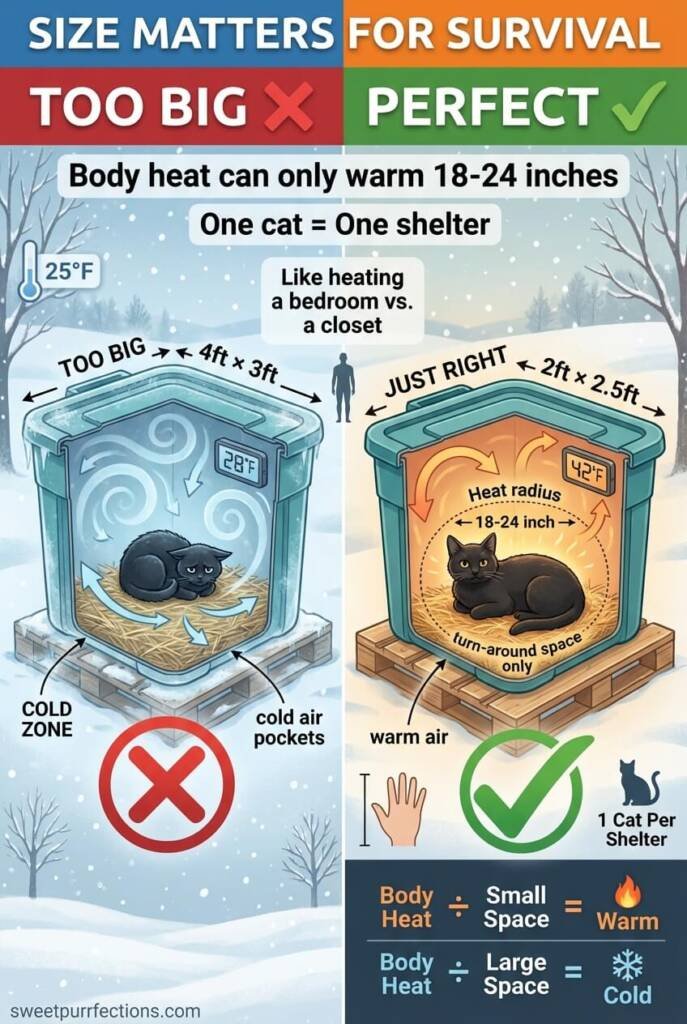
It seems generous to create a large shelter where several cats can huddle together, but feral cats are solitary by nature and won’t share tight sleeping quarters. What actually happens is the shelter becomes too large for any single cat to heat effectively with their body warmth. The extra space just fills with cold air that the cat can’t warm up, making the shelter essentially useless.
A properly sized shelter should be just big enough for one cat to turn around comfortably—roughly 2 feet wide by 3 feet deep with an 18-inch height. This forces the cat’s body heat to warm a small, manageable space. Think of it like the difference between heating a walk-in closet versus heating a bedroom with the same tiny space heater.
Find the perfect design in our 12 DIY Cat Shelter Ideas collection>>
Perfect Single-Cat Shelter Dimensions and Setup
The Ideal Footprint:
- Interior: 18-24 inches wide × 24-30 inches deep × 14-18 inches tall
- Entrance: 5-6 inches diameter, positioned 4-6 inches from the floor to prevent drafts
- Doorway placement: Near a corner, not centered, so cats can curl away from the opening
Space-Saving Modifications:
- Place a divider inside larger existing shelters to create proper single-cat zones
- Use Rubbermaid totes (18-gallon size) as they’re already perfectly proportioned
- Stack shelters vertically if feeding multiple cats in limited space—they’ll each claim their own level
The Body Heat Test: After 30 minutes with a cat inside, the shelter interior should feel noticeably warmer than outside. If it doesn’t, the space is too large.
5. Placing Food and Water Inside the Shelter
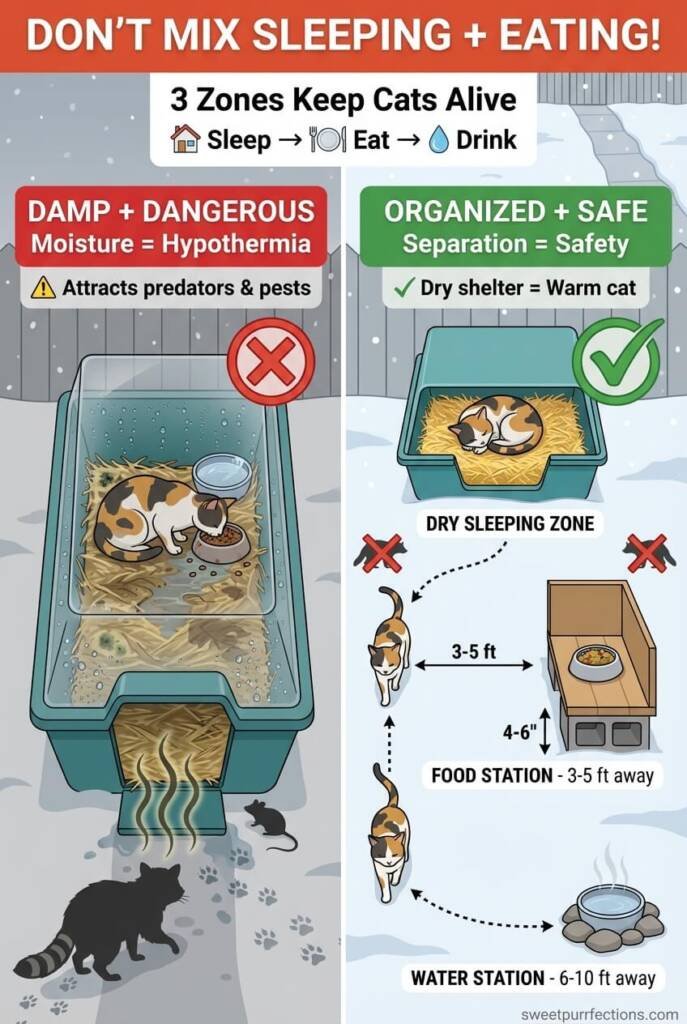
This feels intuitive—put everything cats need in one warm spot. But moisture from water bowls and food creates condensation inside the shelter, and that dampness destroys the insulation value of straw bedding. Food odors also linger in the enclosed space, advertising the shelter’s location to predators like coyotes, raccoons, and even aggressive dogs who view it as a convenient hunting ground.
Wet bedding from spilled water can freeze overnight, and food scraps attract rodents who burrow into the straw. Suddenly your safe haven becomes a cold, dangerous trap. Cats also instinctively avoid soiling their sleeping areas—they won’t use a shelter that smells like old food.
Keep the shelter exclusively for sleeping. Place food stations 3-5 feet away, and water stations even farther if possible. This separation keeps the sleeping area dry, odor-free, and off predators’ radar.
Strategic Feeding Station Setup for Winter Safety
Location Rules:
- Position food stations in semi-covered areas like under evergreen branches or porch overhangs to prevent snow accumulation
- Place against buildings or fences rather than in open areas where cats feel exposed while eating
- Keep 10+ feet from street-facing areas to avoid attracting attention from passing cars or people
The Three-Zone System:
- Zone 1 (Shelter): Sleeping only—bone dry and odor-free
- Zone 2 (Food Station, 3-5 feet away): Elevated feeding platform to keep food above snow level
- Zone 3 (Water Station, 6-10 feet away): Separate location prevents food contamination and keeps moisture away from both shelter and food
Winter Food Station Essentials:
- Use heated bowls or place regular bowls on microwavable heating pads wrapped in weatherproof covers
- Anchor bowls with bricks or heavy stones so wind doesn’t flip them
- Create a wind barrier with storage bins or boards positioned in an L-shape around the feeding area
Cats adapt to this layout within 2-3 days and quickly learn the routine: eat, drink, then retreat to their dry shelter.
6. Forgetting to Check Under Car Hoods Before Starting Your Engine
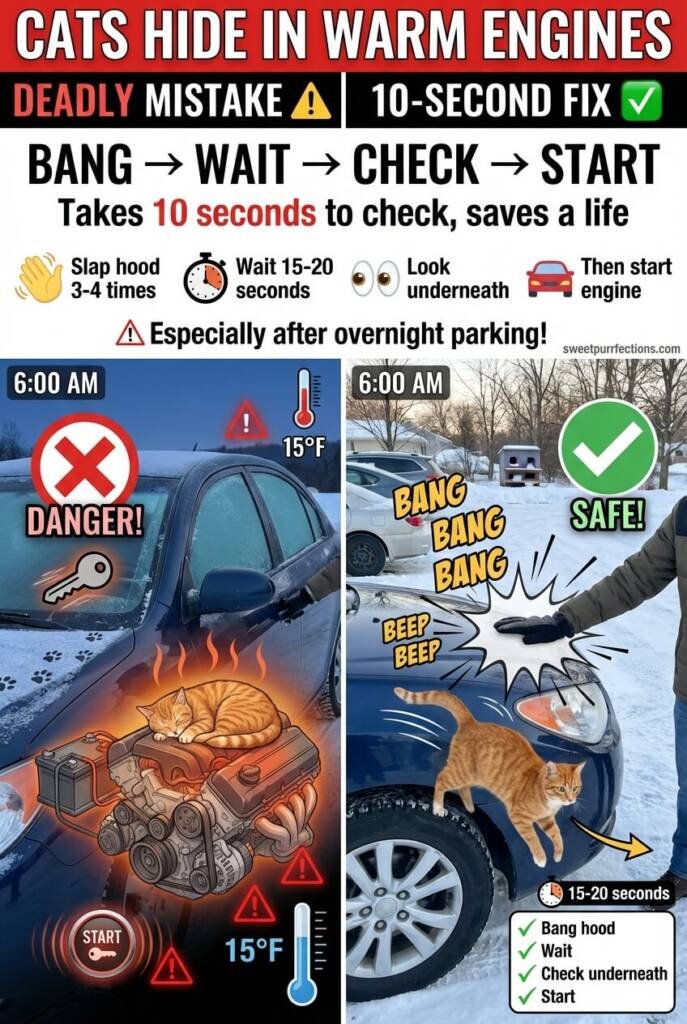
Car engines retain heat for hours after being turned off, and wheel wells offer wind protection. To a freezing feral cat, your parked car is an irresistible heated shelter. They climb up through the undercarriage and curl around the still-warm engine block or nestle above the tires. When you start your car without checking, the results are catastrophic.
This happens most often in the early morning when cats have been seeking warmth all night and temperatures are at their lowest. The first few seconds of engine ignition can severely injure or kill a sleeping cat before you even realize they’re there. A simple 10-second check can prevent this tragedy.
The Life-Saving Pre-Drive Routine
The Bang-and-Wait Method:
- Slap the hood firmly 3-4 times with your palm before approaching the driver’s door
- Wait 15-20 seconds for cats to escape—they need time to navigate down through the engine compartment
- Tap your horn twice as a secondary warning for cats that didn’t respond to hood banging
- Look underneath the car quickly before getting in—you’ll spot cats running away
High-Risk Situations Requiring Extra Vigilance:
- After your car has been parked overnight, especially in below-freezing temperatures
- In areas where you regularly see feral cats during the day
- Near feeding stations or known colony locations—cats associate the area with safety
- During snow or ice storms—desperation drives cats to take more risks
Quick Visual Inspection Points:
- Paw prints on hood or roof in snow/frost
- Disturbed snow around wheel wells
- Small clumps of fur near the undercarriage
Share this habit with neighbors, delivery drivers, and anyone who parks in areas with outdoor cats. Post a small weatherproof sign near community feeding stations: “CATS SEEK WARMTH IN ENGINES—BANG HOOD BEFORE STARTING.”
7. Creating Shelter Entrances That Let Wind Tunnel Straight Through
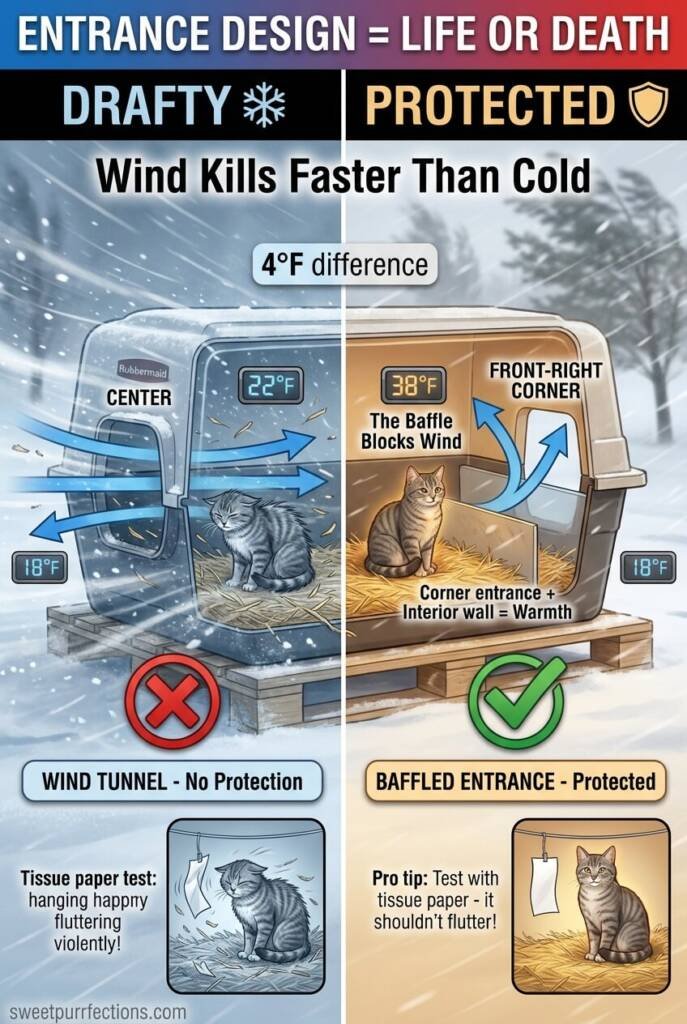
A simple hole cut in the side of a shelter creates a direct wind channel. Cold air blows in, warm air escapes, and the cat sits in a constant draft. Even with perfect insulation and straw bedding, that wind circulation prevents the interior from ever warming up. It’s like trying to heat your house with all the windows open.
The entrance needs to force wind to deflect or change direction before reaching the sleeping area. This creates what’s called a “baffle”—an obstruction that breaks up air currents while still allowing the cat easy access. Professional shelter designs always incorporate this feature because it can make a 10-15 degree temperature difference inside.
Three Proven Entrance Designs That Block Wind
The Offset Double-Wall Method:
- Cut entrance hole in the front-right or front-left corner (not centered)
- Install a 6-inch tall interior wall running parallel to the entrance, about 4 inches inside
- Cat enters, turns left or right around the wall, then accesses the main sleeping area
- Wind hits the interior wall and deflects upward instead of flowing through
The Tunnel Extension:
- Attach a 6-8 inch plastic pipe or drainage tube to the exterior entrance hole
- Angle it slightly downward so rain doesn’t run inside
- Stuff the first 2 inches loosely with straw to further diffuse wind while allowing cat passage
- Creates an airlock effect that dramatically reduces drafts
The Flap Door Addition:
- Install heavy rubber flap (cut from old floor mat or truck mud flap)
- Hang it so it overlaps the entrance by 2 inches on all sides
- Cut the flap into 3-4 vertical strips so cats can push through easily without resistance
- Flap closes behind cat automatically, sealing out wind
Pro tip: Test your entrance by holding a small piece of tissue paper inside the shelter near the sleeping area. If it flutters in the wind, your entrance needs better baffling.
Shopping List to Make These Winter Fixes Work
Get your feral cat colony through winter safely with these essential supplies:
- Straw Bales (Not Hay) – One compressed bale fills 3-4 shelters and lasts 6-8 weeks. Look for agricultural feed stores or farm supply shops where bales cost $6-10 versus $15-20 at pet stores. The difference matters when you’re maintaining multiple shelters.
- Styrofoam Coolers or Storage Bins – Pre-made insulated containers already have the thick walls cats need. Coolers are free from grocery store dumpsters (ask the manager), or buy 18-gallon Rubbermaid totes for $8-12. Skip expensive “cat shelter kits”—these work identically.
- Heating Pads for Outdoor Use – Look for electric pads rated for outdoor/garage use with chew-resistant cords. K&H brand makes versions specifically designed for feral cats that maintain safe 102°F temperatures. Worth the $35-45 investment for severe climate zones.
- Elevated Platform Materials – Wooden pallets (free from many retail stores), cinder blocks ($2-3 each), or scrap lumber pieces. Anything that creates 4-6 inches of air space between shelter and ground provides crucial insulation.
- Waterproof Tarp or Vinyl Covering – An $8 tarp draped over shelters and secured with bungee cords creates a rain shield while allowing air circulation underneath. Replace the moisture barrier between your shelter and the elements.
Winter Mistakes That Put Feral Cats in Danger End With You
The cats in your neighborhood are counting on people who notice, people who care enough to make these adjustments. You don’t need expensive equipment or construction skills—just the willingness to replace fabric with straw, elevate a shelter off the ground, or bang on your hood before driving away. These aren’t complicated fixes, but they’re the difference between a cat making it through February or not.
Every cat that survives winter because of a properly baffled entrance or a second feeding is a small victory against the cold. They won’t thank you with purrs or head bumps—feral cats don’t work that way—but you’ll see them return to those shelters night after night, and that’s all the confirmation you need.
At Sweet Purrfections, we believe the best ideas for pet lovers and home enthusiasts are the ones that actually work in real life. Whether you’re caring for outdoor cats, creating a cozy space indoors, or finding practical solutions that make a difference, we’re here with ideas worth trying. Because when you know better, you do better—and these cats deserve nothing less.