
Living with dogs and kids means your living room takes a beating. Muddy paw prints on the sofa, juice spills on the rug, toys scattered everywhere, and pet hair tumbling across your floors like tiny tumbleweeds.
But here’s the truth: you don’t have to choose between a beautiful living room and a functional one. These 12 living room decor ideas solve real problems while looking incredible. No basic “just buy a slipcover” advice here—these are game-changing designs that’ll make you wonder why you didn’t think of them sooner.
1. Custom Built-In Bench with Hidden Dog Crate Underneath
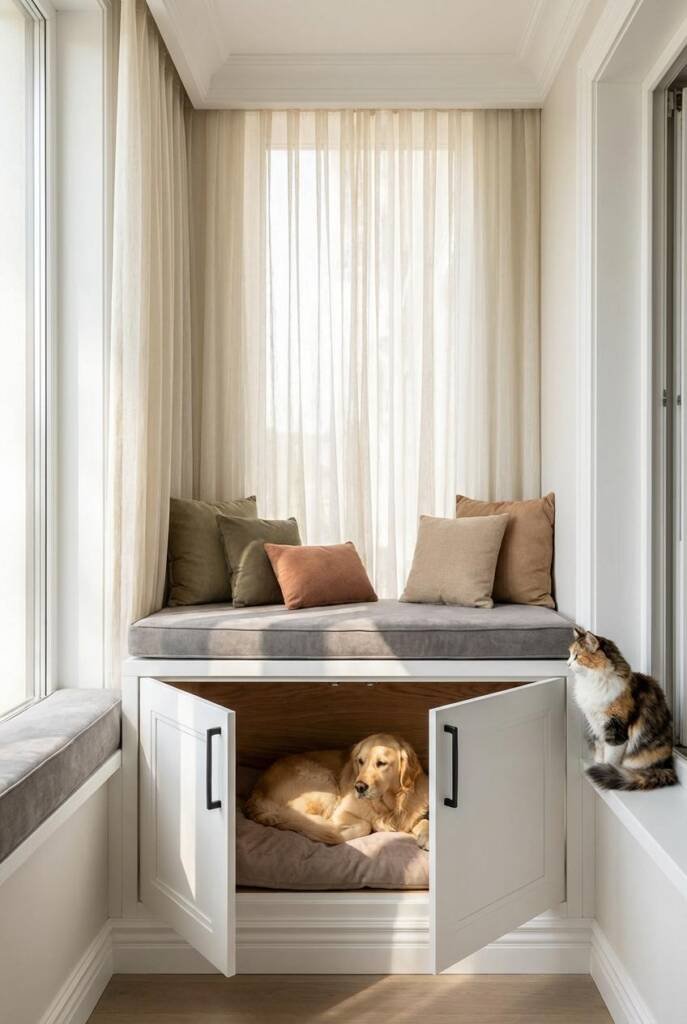
This built-in transforms your living room by creating designer seating that doubles as your dog’s personal den. The bench sits against a wall or window, with cabinet-style doors that open to reveal a fully ventilated crate space. From the outside, it looks like expensive custom millwork. Inside, your dog has a cozy retreat away from kid chaos.
DIY vs Professional Install
Professional installation ($1,200-$3,000):
- Custom measurements for your specific space and dog size
- Proper ventilation system built in
- Seamless integration with existing baseboards and trim
- Cushioned top that won’t shift or slide
DIY route ($400-$800):
- Requires intermediate carpentry skills
- IKEA cabinet hacks work well (Besta or Kallax series)
- Add metal grating or decorative lattice for airflow
- Use furniture-grade plywood for durability
- Allow 2-3 full days for completion
Size Requirements by Breed
- Small dogs (under 25 lbs): 24″W x 18″D x 21″H minimum
- Medium dogs (25-50 lbs): 30″W x 21″D x 24″H minimum
- Large dogs (50-80 lbs): 36″W x 24″D x 27″H minimum
- Extra large dogs (80+ lbs): 42″W x 30″D x 33″H minimum
Add 3-4 inches to each dimension so your dog can stand, turn around, and stretch comfortably. Dogs with separation anxiety benefit from crates positioned where they can see family activity.
2. Convertible Coffee Table That Lifts to Kid Activity Table
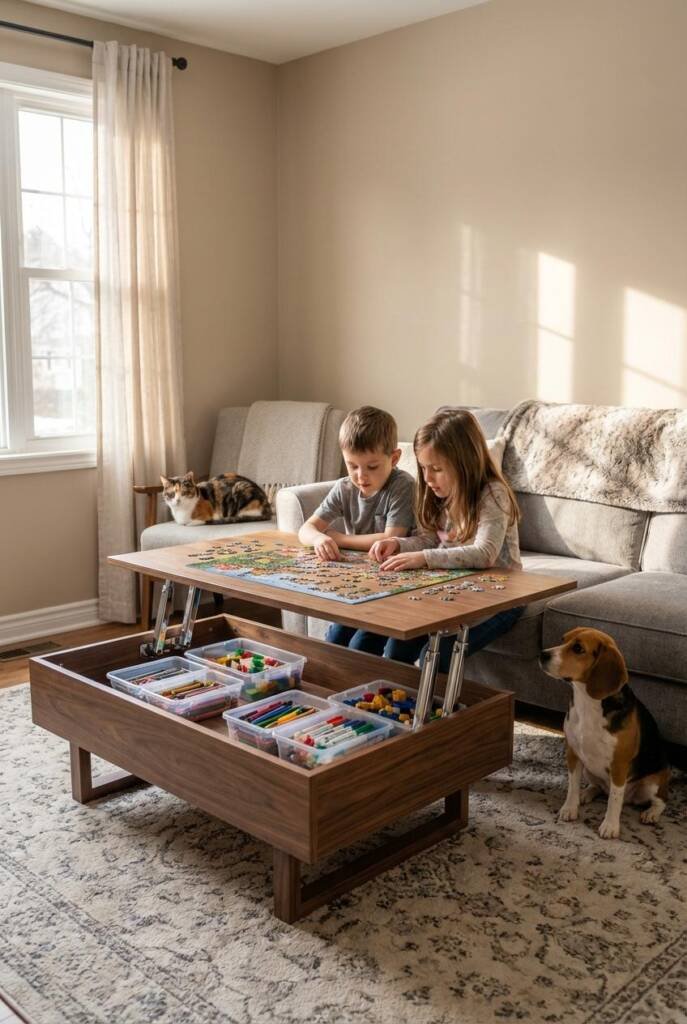
This hydraulic lift table changes your living room from adult space to kid workspace in seconds. The top raises 10-15 inches and tilts forward, creating the perfect height for coloring, puzzles, or snack time. When playtime ends, lower it back to standard coffee table height. Most models include hidden storage underneath—lift the top and drop toys, art supplies, or pet items into the compartment.
Smart Storage Organization Inside
Daily access tier:
- Crayons and washable markers in zippered pouches
- Small puzzle sets in flat containers
- Pet toys that don’t squeak (save your sanity)
- Wipeable placemats for snack time
Weekly rotation tier:
- Craft supplies in labeled bins
- Seasonal books
- Card games and activity cards
- Dog training treats in sealed containers
Emergency tier:
- Backup tablet chargers
- Bandaids and antiseptic wipes
- Stain removal pen
- Lint roller for last-minute pet hair removal
Activities That Actually Work at This Height
Kids aged 3-8 hit the sweet spot for this table height. Seated on the floor or low stools, they can:
- Complete 100+ piece puzzles without back strain
- Build LEGO sets with proper viewing angle
- Work on homework while you supervise from the couch
- Eat snacks without climbing on furniture (keeps crumbs contained and dogs from counter-surfing)
The tilted surface keeps materials from sliding into your dog’s mouth. Hard plastic pieces don’t lodge in paws, and spills stay on the wipeable table top instead of soaking into your rug.
3. Floor-to-Ceiling Cat Climbing Wall in Natural Wood
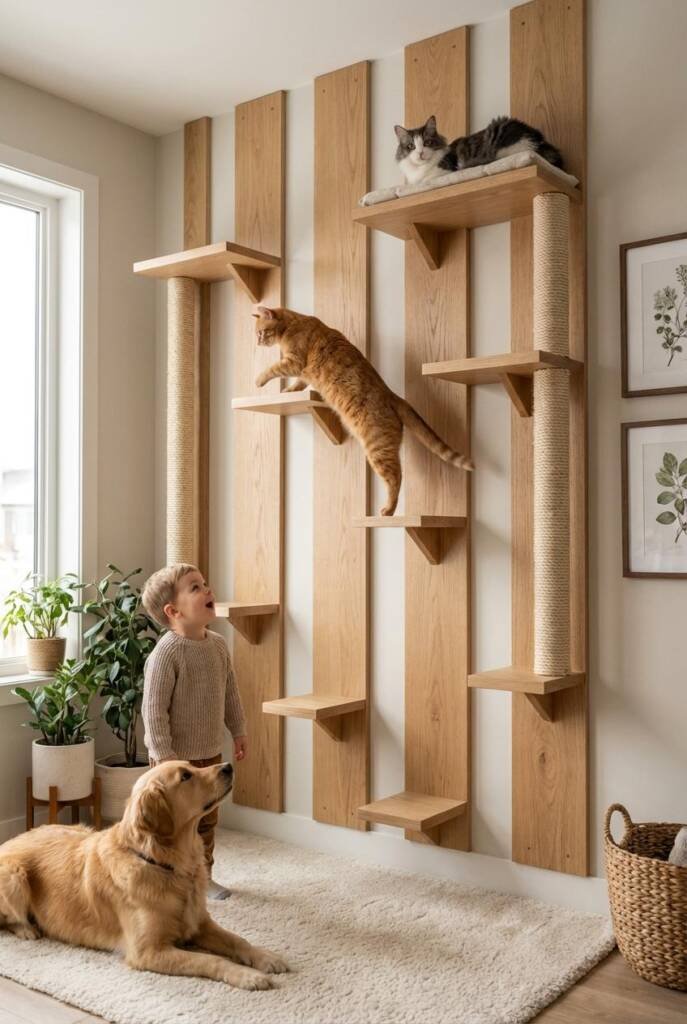
Forget ugly carpet-covered cat trees. A wall-mounted climbing system in natural wood or floating shelves becomes sculptural art that happens to be your cat’s personal jungle gym. Staggered platforms lead from floor to ceiling, giving cats vertical territory while keeping your furniture scratch-free. This works especially well in homes with dogs—cats retreat up high when they need space from energetic kids or curious pups.
Planning Your Layout
Spacing between levels:
- 12-18 inches vertical spacing for athletic cats
- 8-12 inches for senior or overweight cats
- Alternate left and right sides for zigzag climbing path
- Include at least one 14″x14″ platform for napping
Weight capacity requirements:
- Each shelf must hold 25-30 lbs minimum
- Wall studs are non-negotiable for mounting
- Use 3-inch screws into studs, not drywall anchors
- Test each shelf with 40 lbs before allowing cat access
Material choices:
- Natural pine: budget-friendly, easy to stain
- Walnut or oak: premium look, extreme durability
- Sisal rope wrapped around sections: built-in scratching posts
- Carpet squares on platforms: soft napping spots (choose low-pile for easy cleaning)
Why Vertical Space Reduces Cat Stress
Cats are ambush predators who instinctively seek high vantage points. In multi-pet households, vertical territory prevents conflicts. A cat perched 6 feet up observes dogs and kids without feeling threatened. This reduces:
- Stress-related urination outside the litter box
- Aggressive swatting at passing dogs
- Furniture scratching (they’re using designated posts instead)
- Nighttime zoomies (they’ve burned energy climbing)
Indoor cats especially need this environmental enrichment. Without it, they become bored, overeat, and develop behavioral issues. Your climbing wall solves this while looking like intentional interior design.
4. Modular Foam Couch You Can Rearrange and Wash
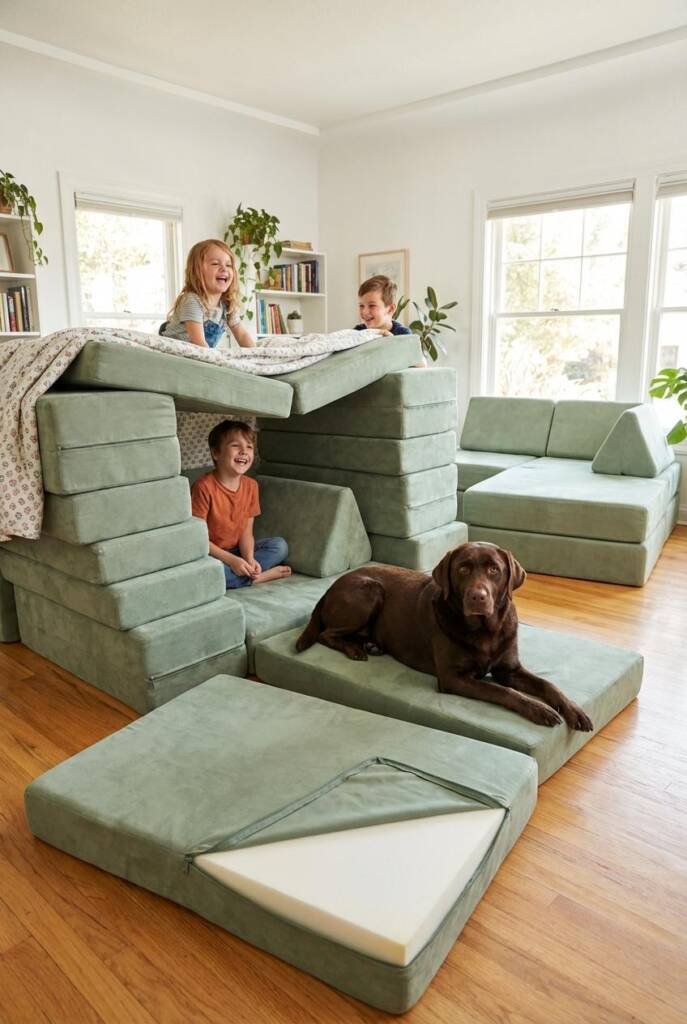
These couches consist of dense foam blocks with removable, machine-washable covers. Kids rearrange pieces into forts and obstacle courses. Adults configure them as sectional seating. Dogs nap on them without destroying expensive upholstery. When juice spills or muddy paws strike, unzip the cover and throw it in the washing machine.
Top Brands Worth Investigating
Nugget ($230-$270 per 4-piece set):
- Original foam couch, massive cult following
- Microsuede covers in 40+ colors
- Each piece: 4 inches of firm foam
- Holds adults up to 250 lbs per cushion
Lovesac Sactionals ($2,000-$8,000 depending on size):
- Premium option with lifetime guarantee
- Covers in performance fabrics (durable weave, Cordura, velvet)
- Modular – add or subtract pieces as needed
- Deep seats perfect for family movie nights
The Foam Factory Custom Cushions ($500-$1,500):
- Build your own using high-density foam
- Choose custom dimensions and firmness
- Source washable covers separately from fabric retailers
- DIY route with professional materials
Fort Designs That Occupy Kids for Hours
- The Cave: Stack all pieces into walls with blanket roof. Dogs love sleeping inside while kids play.
- The Maze: Line up pieces in hallway pattern. Kids crawl through, dogs follow.
- The Mountain: Stack pieces in pyramid. Kids climb and slide down. Supervise toddlers on this one.
- The Boat: Arrange in rectangular perimeter with opening. Add stuffed animals as passengers. Dogs sit at the “bow” while kids pretend to sail.
These configurations tire kids out before dinner and give dogs interactive play without destroying your actual furniture.
5. Living Room Dog Shower Station Built Into Mudroom Entry
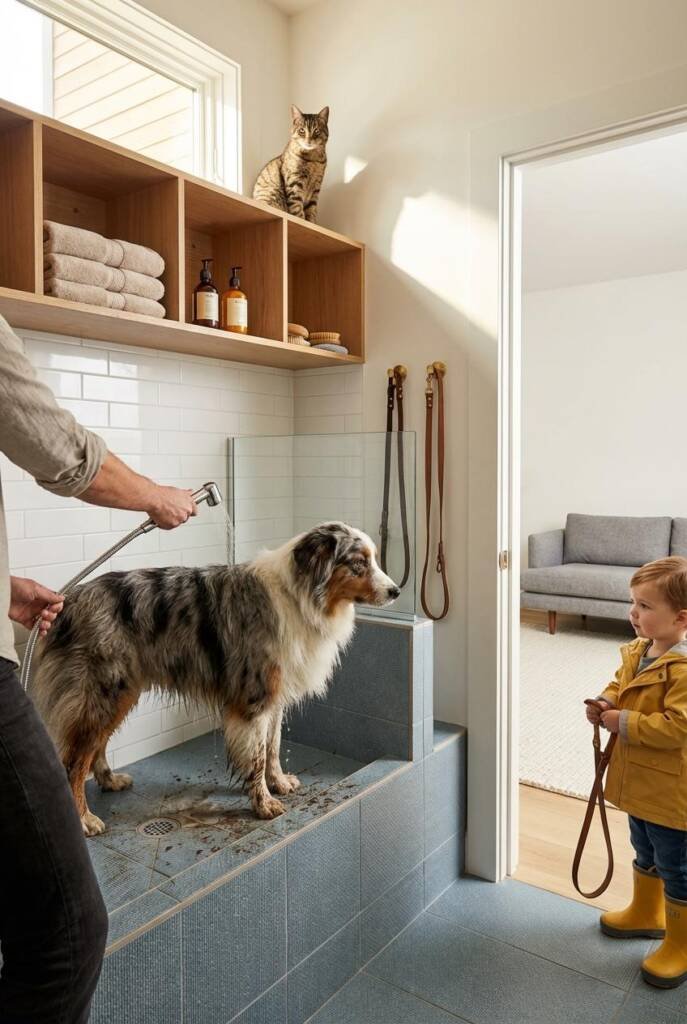
If your mudroom connects to your living room, install a tiled shower station with a handheld sprayer right at the entry point. Wash muddy paws, dirty bellies, and wet fur before your dog tracks it onto your living room rug. This works best in homes where the mudroom opens directly into the main living space—you catch the mess at the source.
Essential Design Features
The basin:
- Minimum 30″x30″ for medium dogs
- 36″x36″ for large breeds
- Slightly sloped floor with center drain
- Non-slip textured tile (not smooth ceramic that becomes skating rink when wet)
The sprayer system:
- Handheld wand on 6-foot hose minimum
- Water temperature mixing valve (lukewarm water works best)
- On/off trigger on the sprayer head
- Wall-mounted holder at waist height
Storage integration:
- Recessed shelf for shampoo, towels, grooming tools
- Waterproof cabinet below for bulk supplies
- Hooks for leashes and grooming apron
- Sealed containers for treats (rewards for cooperative dogs)
Splash containment:
- Half-height glass panel or shower curtain
- Sloped threshold to keep water from spreading
- Floor drain should handle 5 gallons per minute
Grooming Products That Won’t Irritate
For dogs with sensitive skin:
- Earthbath Oatmeal & Aloe Shampoo: fragrance-free, soap-free formula
- Burt’s Bees Hypoallergenic Shampoo: pH balanced for dogs
- 4-Legger Organic Dog Shampoo: USDA certified organic ingredients
Bathing frequency by coat type:
- Short-haired breeds: every 2-3 months
- Medium-haired breeds: every 4-6 weeks
- Long-haired breeds: every 4-6 weeks with weekly brushing
- Dogs who swim or roll in mud: rinse after each incident, full bath monthly
Skip human shampoo—it has wrong pH (4.5-5.5 for humans vs 6.2-7.4 for dogs) and strips natural oils that protect skin. Dogs with dry, itchy skin often improve dramatically with proper bathing products and frequency.
6. Hidden Murphy Pet Bed That Folds Into Wall
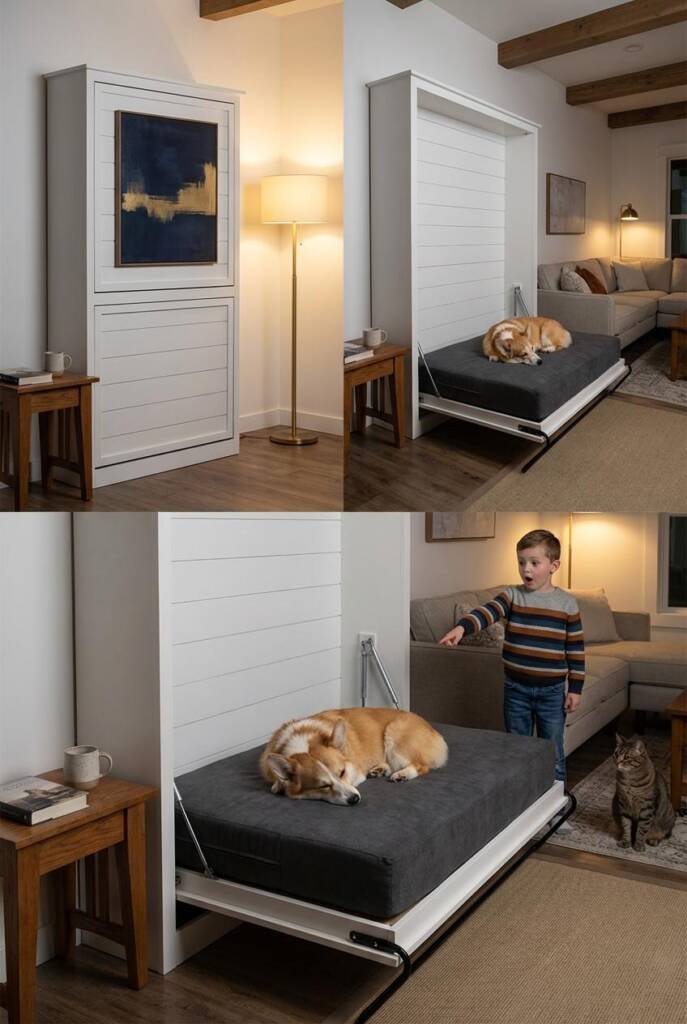
During the day, this looks like decorative wall paneling or framed art. Pull a handle and the panel folds down to reveal a cushioned pet bed. Your dog sleeps in their designated spot at night, and in the morning, you fold it back up to reclaim your floor space. This works beautifully in smaller living rooms where a permanent dog bed eats up square footage.
Choosing the Right Mechanism
Side-fold Murphy bed style ($400-$800):
- Hinges on left or right side
- Swings down like cabinet door
- Gas pistons assist with lifting
- Best for dogs under 50 lbs
Drop-down shelf style ($200-$400):
- Hinges at top
- Folds down horizontally
- Includes leg supports that unfold
- Works for dogs up to 80 lbs
Weight capacity testing:
- Mechanism should support 1.5x your dog’s weight
- Test empty bed with sandbags before introducing dog
- Check screws and mounting monthly for first 6 months
- Use French cleat system for maximum strength
Installation requirements:
- Must mount into wall studs (16-inch spacing)
- Studs should be 2×4 minimum thickness
- Add horizontal blocking between studs for large dogs
- Hire contractor if you’re unsure about structural integrity
Training Your Dog to Use Their Murphy Bed
Dogs are creatures of habit and might resist new sleeping arrangements initially.
Week 1: Introduction
- Leave bed in down position 24/7
- Place favorite blanket and toys inside
- Reward with treats when dog investigates
- Feed dinner next to the bed
Week 2: Bedtime routine
- Give “go to bed” command at same time each night
- Toss treats onto bed
- Sit nearby while dog settles
- Leave bed down all night
Week 3: Fold up during day
- Morning: wait until dog exits, then fold up immediately
- Evening: unfold at designated bedtime
- Maintain consistency—same time every night
- Reward compliance with high-value treats
Why dogs need designated sleep areas: Dogs sleep 12-14 hours daily. Without a designated spot, they claim furniture or inconvenient floor spaces. A Murphy bed gives them security (enclosed space) without sacrificing your living room layout during waking hours.
7. Oversized Bean Bag Loungers in Bouclé Fabric
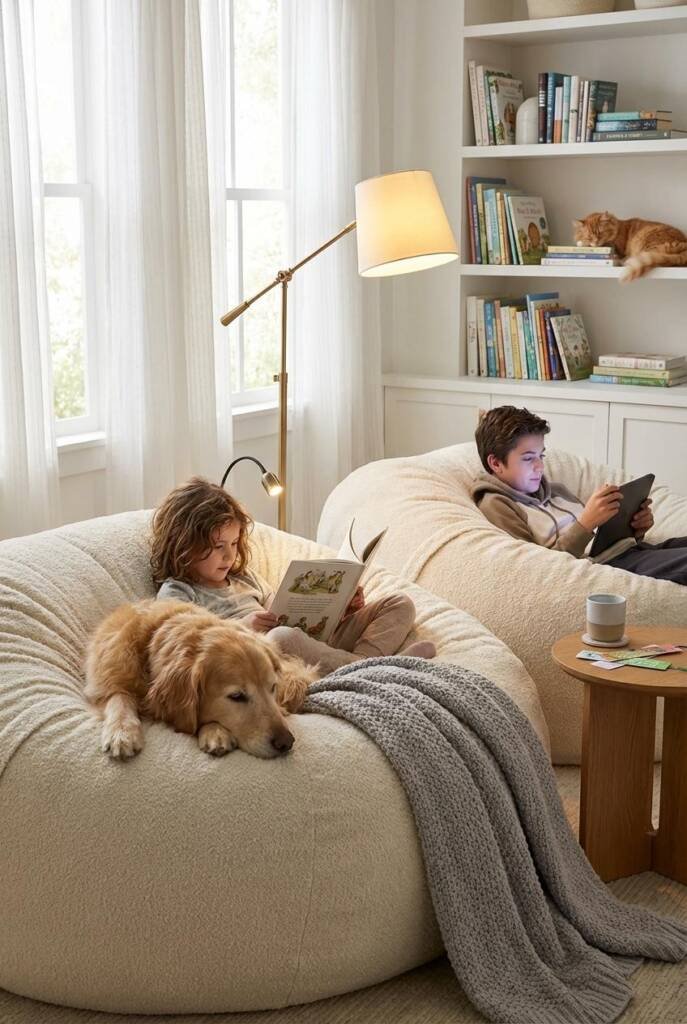
Giant bean bags in luxe bouclé fabric solve the eternal problem of “where does everyone sit when the couch is full?” Kids burrow into them while reading. Dogs curl up for naps. Adults sink in for movie marathons. The bouclé texture (looped, nubby weave) hides pet hair better than smooth fabrics and feels expensive while being surprisingly durable.
Maintaining Bouclé Fabric
Weekly maintenance:
- Vacuum using upholstery brush attachment
- Brush in direction of loops, never against
- Use lint roller on high-traffic areas
- Shake covers outdoors to release embedded debris
Spot cleaning:
- Blot spills immediately with white cloth (colored cloth transfers dye)
- Mix 1 tsp mild detergent with 1 cup cool water
- Dab solution onto stain—never scrub or rub
- Blot with damp cloth to remove soap residue
- Air dry completely before replacing
Deep cleaning schedule:
- Remove covers every 3 months
- Machine wash cold on gentle cycle
- Add 1/4 cup white vinegar to remove odors
- Tumble dry low or air dry flat
- Never use bleach—it yellows natural fibers
Professional cleaning:
- Once yearly for high-use pieces
- Upholstery cleaning service costs $75-$150
- Request low-moisture cleaning method
- Protects fabric structure better than DIY steam cleaners
Creating a Multi-Use Reading Corner
Position your bean bag near a window for natural light. Add these elements:
Lighting for evening reading:
- Floor lamp with adjustable arm
- Warm white LED bulb (2700K color temperature)
- Dimmer switch for ambient lighting
- Nightlight for kids who read before bed
Book storage within arm’s reach:
- Wall-mounted shelves at kid height (24-36 inches)
- Adult books on higher shelves (48+ inches)
- Rotating book bin for current favorites
- Bookends that match your living room aesthetic
Cozy additions:
- Chunky knit throw blanket in washable cotton
- 18″x18″ accent pillows (removable covers)
- Small side table for water cups and snacks
- Basket for bookmarks, reading glasses, dog toys
Kids aged 6-12 will actually use a designated reading spot if it’s more comfortable than their bedroom. Dogs gravitate toward spaces where family members spend time. A well-designed reading corner becomes the most-used spot in your living room.
8. Built-In Window Seat with Pet Stairs Integrated
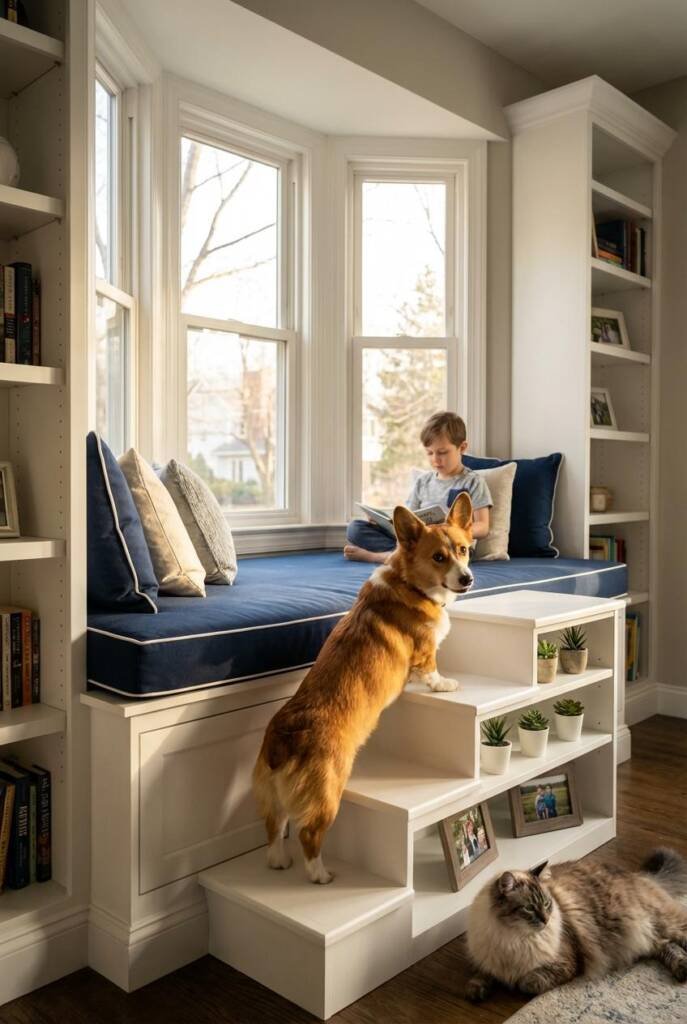
A cushioned window seat creates prime real estate in your living room—kids read there, cats sunbathe, everyone fights over it. Integrate pet stairs into the design so small dogs and cats can access it without jumping (protects aging joints). Build storage drawers underneath for toys, blankets, or pet supplies. The stairs can double as side tables or decorative stepped shelving when not in use.
Cushion Fabrics That Survive Sunlight and Claws
Sunbrella Canvas ($30-$45 per yard):
- Solution-dyed acrylic resists UV fading for 10+ years
- Water repellent coating beads liquids on surface
- Scratch resistant weave (cats can’t shred it)
- Machine washable in cold water
- Available in 300+ colors and patterns
Crypton Super Fabric ($40-$60 per yard):
- Moisture barrier prevents liquid from penetrating foam
- Anti-microbial treatment stops odor-causing bacteria
- Stain resistant without topical sprays
- Softer hand-feel than Sunbrella
- Ideal for homes with pets who drool or have accidents
Indoor/Outdoor Performance Velvet ($25-$40 per yard):
- Polyester velvet that mimics luxe cotton velvet
- Claws slide across surface instead of snagging
- Pile direction hides minor wear patterns
- Spot cleans with damp cloth
- Rich depth of color that photographs well
Construction details:
- Use 4-inch high-density foam (not soft cushion foam that flattens)
- Add 1-inch memory foam topper for comfort
- Wrap foam in batting before covering with fabric
- Create piped edges for tailored appearance
- Attach cushion with velcro strips for easy removal
Why Window Access Matters for Indoor Cats
Cats are crepuscular hunters—most active at dawn and dusk. Window watching provides mental stimulation that prevents destructive boredom behaviors.
What cats watch:
- Birds and squirrels trigger prey drive (healthy mental exercise)
- Moving leaves and shadows keep attention engaged
- Passing pedestrians and cars provide changing scenery
- Weather changes (rain, snow, wind) offer sensory variety
Behavioral improvements from window access:
- 60% reduction in furniture scratching when cats have climbing access to windows
- Decreased nighttime activity (they’re mentally tired from daytime watching)
- Reduced aggression toward other pets (fulfilled hunting instincts)
- Lower likelihood of stress-related overgrooming
Optimal window seat height:
- 18-24 inches from floor for easy jumping
- Place stairs for cats over age 8 or under 7 lbs
- Position away from heating vents (cats overheat easily)
- Ensure window locks are secure—determined cats push screens out
Add bird feeders 10-15 feet from the window for entertainment without startling birds. Your cat gets endless nature television, birds stay safe, and your living room becomes your pet’s favorite spot.
9. Charging Station Coffee Table with Toy Storage Drawers
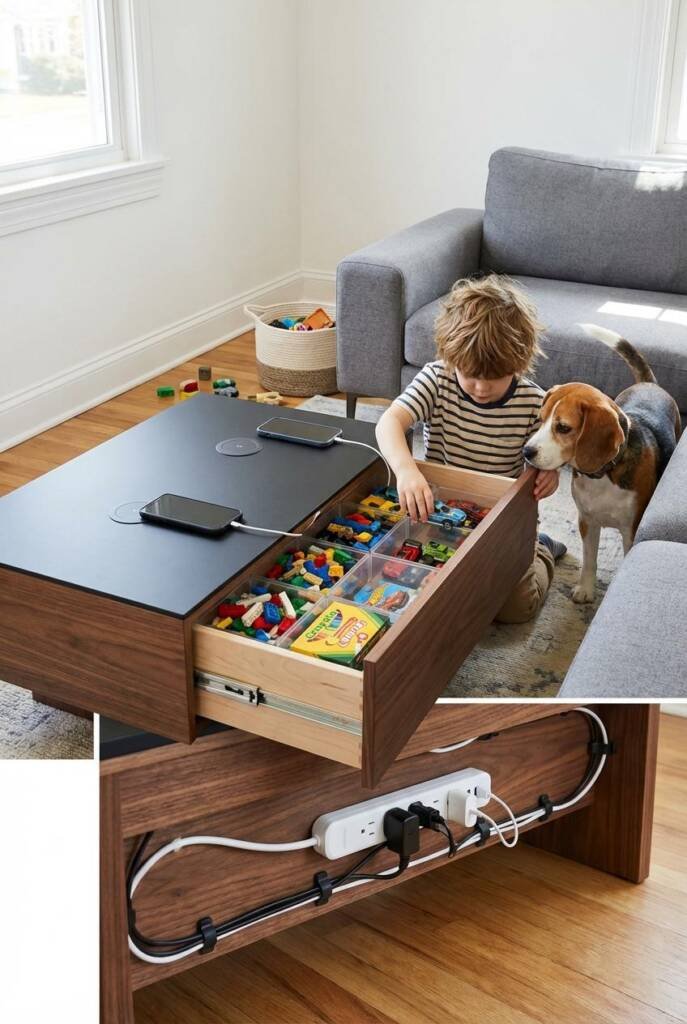
This coffee table solves two chaos sources: device charging cables sprawled across surfaces and toys scattered on the floor. Built-in USB ports and wireless charging pads keep phones and tablets powered without visible cords. Deep drawers slide out to reveal toy storage with dividers—kids clean up in 30 seconds by tossing items into designated compartments.
Cable Management System
Built-in power strip placement:
- Mount inside table, accessible through back panel
- Minimum 6 outlets plus 4 USB ports
- Surge protector rated for 1,200+ joules
- On/off switch accessible without moving furniture
Wireless charging pad integration:
- Flush-mount Qi chargers on table surface
- Mark charging zones with subtle inlay or contrasting material
- Position away from table edges (prevents accidental bumping)
- Include 2-3 charging spots for multiple devices
Cord routing channels:
- Routed groove along table underside
- Adhesive cable clips every 8 inches
- Label each cord at power strip end
- Keep charging cables 5 feet long minimum
Pet-proofing electrical components:
- Bitter apple spray on exposed cord sections
- Cord protectors for persistent chewers (plastic spiral wrap)
- Elevate power strip 6+ inches off floor
- Check cords monthly for damage from teeth marks
Dogs and puppies chew cords out of boredom, teething pain, or attraction to electrical current smell. Rabbits and cats chew to file down continuously growing teeth. Prevention beats replacing destroyed electronics.
Toy Rotation System
Kids lose interest when all toys are accessible constantly. Rotating inventory maintains novelty.
Drawer organization:
- Drawer 1: Current week’s toys (rotate every 7 days)
- Drawer 2: Next week’s toys (out of sight, out of mind)
- Drawer 3: Building toys (LEGO, blocks, magnetic tiles)
- Drawer 4: Art supplies (crayons, paper, stickers)
What stays in living room:
- 5-7 active toys maximum
- One puzzle or board game
- Coloring/drawing supplies
- Comfort items (favorite stuffed animals)
What rotates:
- Action figures and dolls
- Pretend play sets
- Electronic learning toys
- Seasonal toys (beach toys, holiday themed)
Storage elsewhere:
- Large ride-on toys in garage
- Outdoor toys in mudroom bins
- Noisy toys in bedrooms (save your sanity)
- Dog toys in separate basket (prevents toy confusion)
Set a weekly alarm to swap toy bins. Kids perceive “new” toys each week without spending money. Fewer choices reduce decision paralysis and cleanup overwhelm.
10. Hanging Bubble Chair or Swing
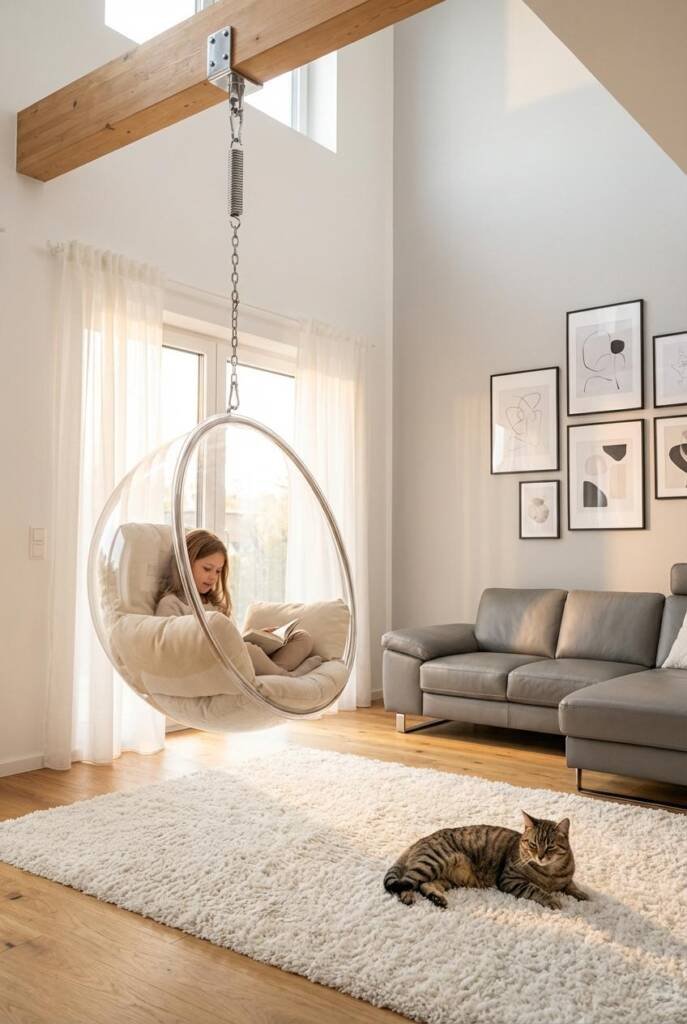
A suspended acrylic bubble chair or fabric swing becomes your living room’s showstopper. Kids swing while watching TV. Teens scroll phones while gently rocking. Dogs learn to sleep underneath since it becomes everyone’s preferred seat. The gentle motion has calming sensory benefits for energetic kids—20 minutes of swinging before homework improves focus.
Installation Safety Requirements
Ceiling joist identification:
- Use stud finder to locate joists (typically 16 or 24 inches apart)
- Verify joist direction (usually perpendicular to floor joists above)
- Look for nail patterns in drywall—they mark joist locations
- Access attic if possible to visually confirm joist size and condition
Weight capacity calculations:
- Chair weight: 30-50 lbs
- Maximum user weight: 250-300 lbs
- Safety factor: 3x (support 3x the combined weight)
- Total system must hold 900-1,050 lbs minimum
Mounting hardware:
- Eye bolt diameter: 3/8 inch minimum for single-point mount
- Threading into joist depth: 3+ inches
- Swivel hook rated for 500+ lbs
- Spring or shock absorber reduces jolt stress on ceiling
Professional installation when:
- Ceiling height exceeds 10 feet
- Joists run wrong direction (perpendicular to desired chair location)
- Ceiling shows cracks, water damage, or sagging
- Home built before 1970 (older framing standards)
- You’re uncertain about any structural element
DIY installation ($50-$150 in hardware):
- Drill pilot hole into joist center
- Install eye bolt with washer
- Add swivel hook and spring
- Test with 500 lbs weight before human use
- Recheck bolts monthly for first 6 months
Sensory Benefits of Swinging
The vestibular system (inner ear balance organs) processes motion input. Swinging provides “heavy work” sensory input that regulates the nervous system.
Benefits for high-energy kids:
- Calms fight-or-flight stress response
- Improves body awareness and coordination
- Increases attention span for seated activities
- Releases endorphins (natural mood boost)
- Provides proprioceptive input (muscle and joint awareness)
Optimal swinging schedule:
- 15-20 minutes before homework or meals
- 10 minutes before bedtime (calming motion)
- Throughout day for kids with ADHD or sensory processing needs
- After high-stress situations (tantrums, arguments, overstimulation)
When dogs need calm too: Dogs pick up on household stress. Anxious kids create anxious dogs. When kids swing and decompress, dogs relax nearby. The predictable, gentle motion becomes a calming ritual for the entire household. Dogs with separation anxiety benefit from this structured calming activity before departures.
11. Two-Tier Coffee Table with Lower Pet Bed Level

This custom coffee table features a standard top surface with a recessed lower shelf designed as a built-in dog bed. Your dog sleeps 6 inches off the floor, close to family but not underfoot. The raised edge of the lower level contains the bed cushion. You drink coffee on top, your dog naps below—everyone coexists in the same square footage.
Dimensions by Dog Size
Small breeds (under 25 lbs):
- Lower level: 24″L x 18″W x 6″H
- Overall table: 36″L x 24″W x 18″H
- Cushion: 2-inch orthopedic foam
Medium breeds (25-50 lbs):
- Lower level: 30″L x 22″W x 6″H
- Overall table: 42″L x 28″W x 18″H
- Cushion: 3-inch memory foam
Large breeds (50-80 lbs):
- Lower level: 36″L x 26″W x 8″H
- Overall table: 48″L x 32″W x 18″H
- Cushion: 4-inch orthopedic foam with gel layer
Extra-large breeds (80+ lbs): Most coffee tables can’t accommodate beds large enough. Consider ottomans with hidden dog beds instead, or position a separate elevated dog bed adjacent to the coffee table.
Multiple pet households: Build two-compartment lower level with divider. Each dog gets their own space. Reduces resource guarding and provides retreat options.
Why Dogs Want Close Proximity
Dogs are pack animals with 30,000 years of domestication selecting for human attachment. Proximity to family members provides security.
Pack mentality basics:
- Dogs perceive family as their pack
- Pack members sleep in close quarters for safety
- Being near the “alpha” (you) reduces anxiety
- Isolation from pack triggers stress hormones
Separation anxiety signs:
- Destructive behavior when left alone
- Excessive barking or howling
- House training regression
- Pacing or restlessness when you move between rooms
- Following you everywhere (including bathroom)
How built-in beds help:
- Dog remains close during family activities
- Learns to relax while family is present but occupied
- Creates secure “den” space in high-traffic area
- Reduces anxiety about being separated or forgotten
Training “place” command: Direct your dog to their coffee table bed with “place” command. Reward stays with treats. Over time, your dog automatically goes to their spot during meals, TV time, or when guests arrive. This prevents begging, jumping, and underfoot tripping hazards while keeping your dog emotionally satisfied.
12. Living Wall or Vertical Garden Safe for Pets
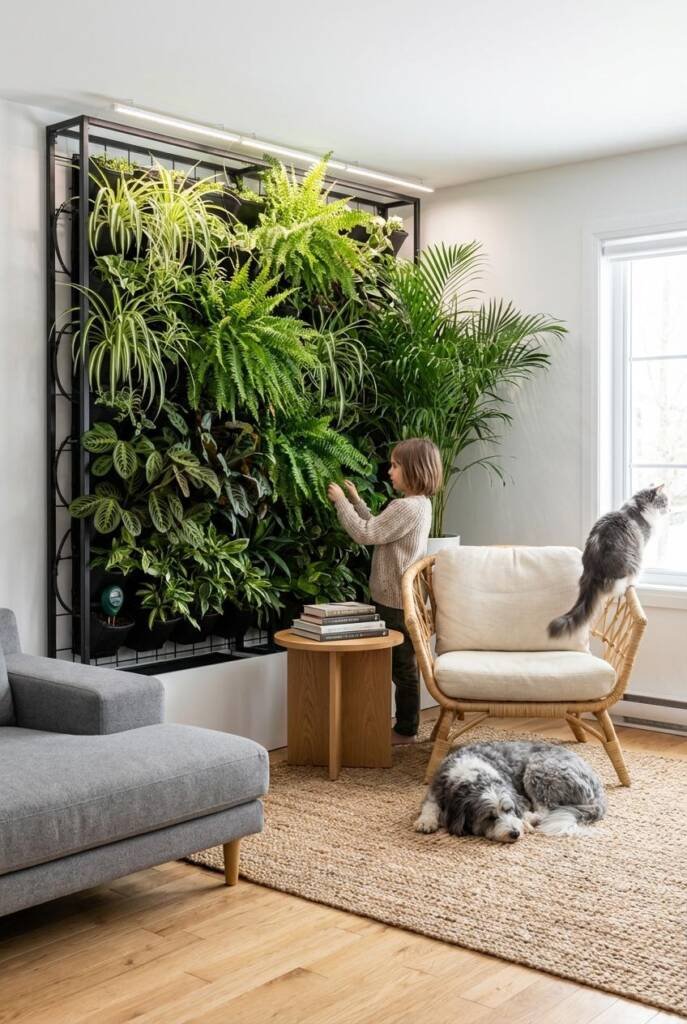
A floor-to-ceiling living wall filled with non-toxic plants becomes a stunning focal point that purifies air and brings nature indoors. Proper plant selection is critical—many common houseplants are toxic to pets. Choose from dozens of pet-safe varieties that thrive in vertical growing systems. This works especially well in living rooms with limited floor space for planters.
Pet-Safe Plant Options
Low-light tolerant (north-facing rooms):
- Spider plant: removes formaldehyde, safe if nibbled
- Boston fern: humidity lover, air purifying, non-toxic
- Prayer plant: colorful foliage, thrives in shade
- Peperomia varieties: thick leaves resist browsing
- African violet: flowering plant, safe for curious cats
Moderate to bright light (east/west windows):
- Parlor palm: elegant fronds, removes benzene
- Ponytail palm: drought tolerant, safe if chewed
- Areca palm: feathery texture, powerful air cleaner
- Calathea varieties: patterned leaves, pet friendly
- Haworthia succulents: architectural interest, non-toxic
Bright light (south-facing rooms):
- Burro’s tail succulent: trailing stems, safe for pets
- Christmas cactus: seasonal blooms, non-toxic
- Echeveria rosettes: colorful, pets ignore them
- Blue star fern: unique texture, air purifying
Avoid these common toxic plants:
- Pothos (causes mouth irritation, vomiting)
- Philodendron (calcium oxalate crystals burn mouth)
- Monstera (same toxic compound as philodendron)
- Snake plant (causes nausea, vomiting, diarrhea)
- ZZ plant (all parts toxic to pets)
Watering requirements:
- Vertical systems need irrigation 2-3x weekly
- Install drip system on timer for consistency
- Include moisture meter at root level
- Ensure drainage so roots don’t rot
- Most pet-safe plants prefer evenly moist soil
Air Quality Benefits in Pet Households
NASA’s Clean Air Study identified plants that remove volatile organic compounds (VOCs) from indoor air. Homes with pets benefit from enhanced air quality.
Common indoor air pollutants:
- Formaldehyde: from furniture, flooring, cleaning products
- Benzene: from plastics, synthetic fibers, tobacco smoke
- Trichloroethylene: from dry cleaning, carpet cleaners
- Ammonia: from pet urine, glass cleaners
- Xylene: from paints, markers, leather treatments
How plants clean air:
- Leaves absorb gases through stomata (leaf pores)
- Soil microbes break down pollutants
- Transpiration increases humidity (reduces airborne particles)
- One plant per 100 square feet improves air quality 25%
Specific benefits with pets:
- Reduces pet dander suspended in air
- Neutralizes litter box ammonia smell
- Increases oxygen levels (pets benefit too)
- Maintains 40-60% humidity (optimal for respiratory health)
- Natural odor absorption without chemical air fresheners
Humidity control prevents:
- Dry, itchy skin on pets
- Respiratory irritation
- Static electricity (dogs dislike shock sensations)
- Cracked paw pads in winter
Living walls with 20-30 plants create measurable air quality improvements within 4-6 weeks. Pets with allergies or respiratory sensitivity show reduced symptoms. You breathe cleaner air while enjoying a living art installation.
13. Glass Garage Doors Between Living Room and Playroom
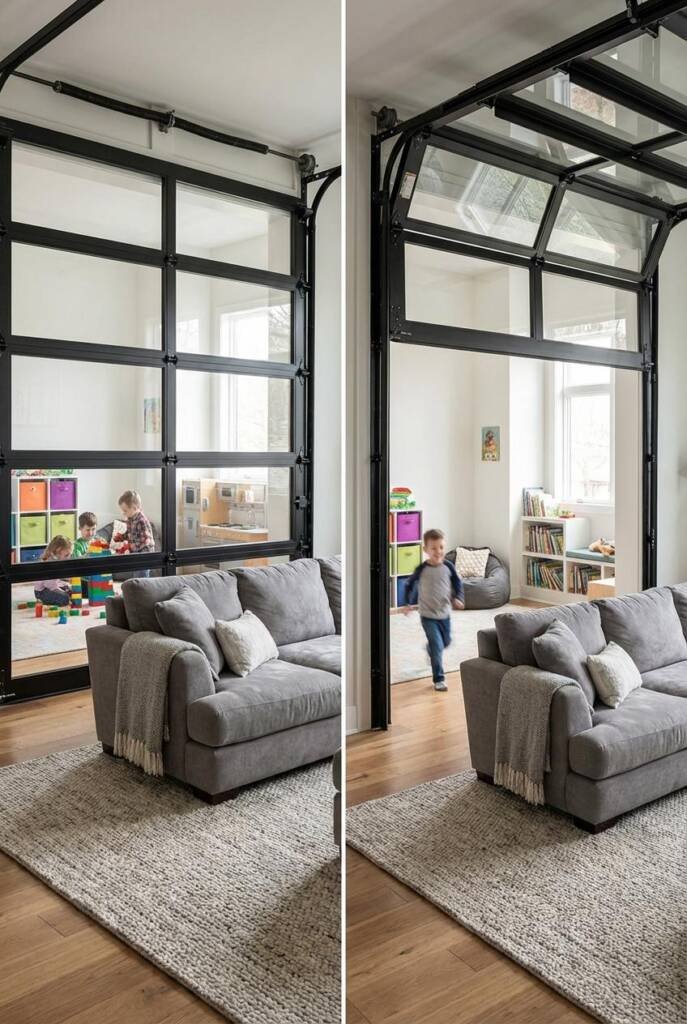
Replace a standard wall or French doors with aluminum-framed glass garage doors that roll up to the ceiling. When open, living room and playroom become one large space for parties or active play. When closed, you contain toy chaos while still supervising kids through the glass. Dogs can see through to both sides, reducing barrier frustration and barking.
Glass Options and Privacy Levels
Clear glass:
- Full visibility both directions
- Best for supervision of young children
- Shows dust and fingerprints (windex weekly)
- Lets maximum light pass between rooms
Frosted or etched glass:
- Obscures clutter while allowing light
- Maintains privacy for teen playrooms
- Hides toy mess during dinner parties
- Reduces visual stimulation for anxious dogs
Tinted glass:
- Gray or bronze tint reduces glare
- Maintains visibility while softening appearance
- Works well when playroom faces afternoon sun
- Minimal maintenance beyond basic cleaning
Safety considerations:
- Tempered glass required for floor-to-ceiling installation
- 1/4-inch thickness minimum for panels under 50 sq ft
- 3/8-inch thickness for larger panels
- Include “safety pattern” etching at eye level (prevents walking into closed glass)
Installation for Homes with Toddlers
Safety rails when closed:
- Install tension rod or decorative barrier 12 inches from glass
- Prevents toddlers from running into closed doors
- Remove once children understand glass transparency (usually age 4-5)
Lock mechanisms:
- Keyed lock prevents unauthorized opening
- Childproof latch at adult height
- Consider auto-close feature for safety
Soft-close hardware:
- Prevents pinched fingers
- Dampens noise during operation
- Extends track system lifespan
- Worth the $200-300 upgrade cost
Glass garage doors typically cost $2,500-$5,000 installed for an 8-foot opening. ROI comes from improved supervision, natural light flow, and the wow factor that makes your living room look larger and more modern.
14. Sunken Living Room Conversation Pit with Cushions
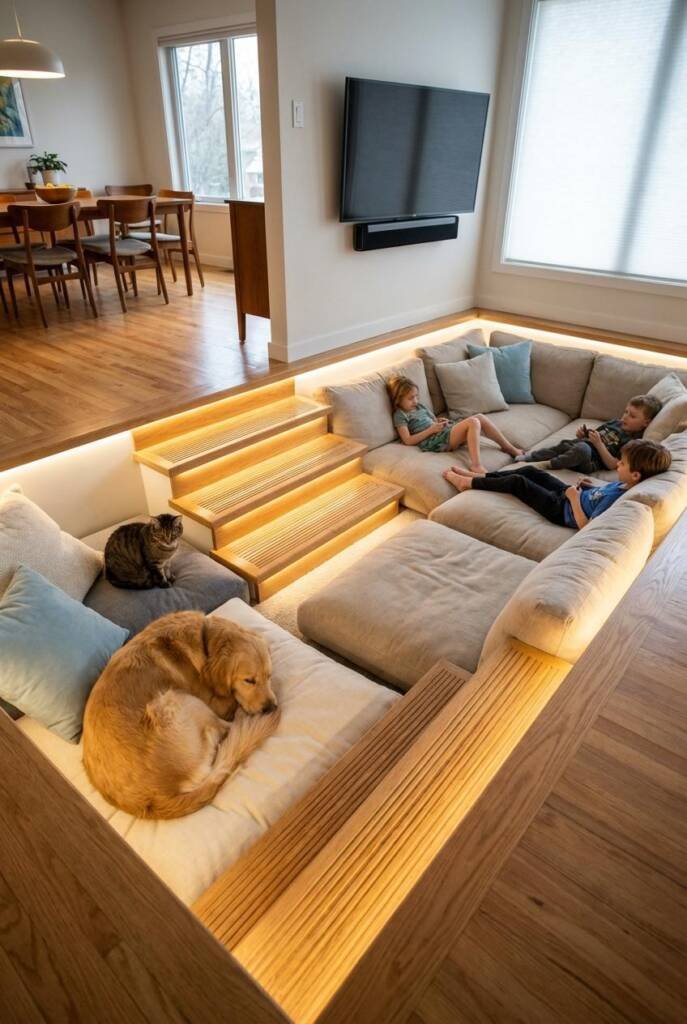
Excavate your living room floor to create a recessed seating area 12-18 inches below the main floor level. Fill it with modular cushions and pillows. This 1970s architectural feature is resurging because it creates a cozy, contained space that kids instinctively treat as special. Dogs curl up on the cushions. Adults sink in for movie marathons. The lowered position provides acoustic benefits—sound stays contained, reducing noise transfer to other rooms.
Construction Requirements
Foundation and structural considerations:
- Works only with slab or basement foundations (not crawl spaces)
- Requires structural engineer evaluation ($500-1,000)
- Must ensure no plumbing or electrical runs below
- Budget $8,000-$15,000 for professional excavation and finishing
Pit dimensions:
- Minimum 8’x8′ for functional seating
- Ideal size: 10’x12′ seats 6-8 people comfortably
- Depth: 12-18 inches (deeper feels cave-like, not cozy)
- Access: two or three entry points prevents bottleneck
Step design:
- Tread depth: 11 inches minimum (full foot placement)
- Riser height: 6-9 inches (comfortable step-down)
- Include LED strip lighting along top edge
- Non-slip surface on steps (textured tile or rubber tread)
Cushion specifications:
- High-density foam bases (won’t flatten with use)
- Removable, washable covers in performance fabrics
- Variety of sizes (24″x24″, 30″x30″, body pillows)
- Store extras nearby for expanding seating
Safety Modifications for Young Children
For toddlers (ages 1-3):
- Install foam pool noodles along pit edge (prevents rolling off)
- Add foam floor mat at bottom (cushions falls)
- Gate entry points when unsupervised
- Use only floor-level cushions (no stacked pillows to climb)
For preschoolers (ages 3-5):
- Teach “sit before stepping down” rule
- Practice stepping up/down repeatedly
- Keep area well-lit (eliminates depth perception issues)
- Remove clutter from pit floor (tripping hazards)
Ongoing safety:
- Avoid glass coffee tables near pit edge
- Ensure pets don’t jump from pit edge (stress on joints)
- Position furniture away from pit perimeter
- Install subtle lighting at floor level for nighttime safety
Conversation pits excel at defining separate zones in open-concept homes. The lowered area signals “relaxation zone” while the main floor remains functional for foot traffic. Kids treat it as their special hangout. Dogs appreciate the den-like coziness. Your living room becomes architecturally interesting without adding square footage.
15. Rotating Bookshelf That Hides Pet Supplies
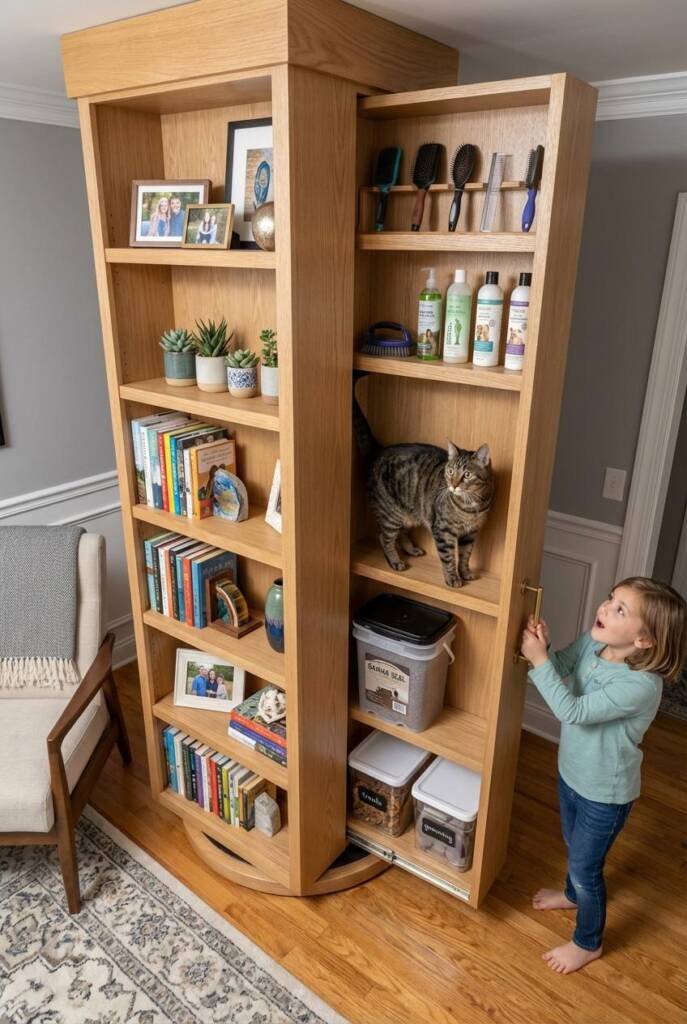
A floor-to-ceiling bookshelf on a rotating mechanism spins 180 degrees to reveal hidden storage on the reverse side. Display books, photos, and décor on the public-facing side. Rotate it to access dog food bins, leashes, grooming supplies, and toys stored on the hidden side. This works beautifully in living rooms where you want function without visible pet clutter.
Mechanism Options
Lazy Susan bearing system ($150-$300):
- Heavy-duty rotating platform
- Rated for 500+ lbs capacity
- Ball bearing or roller bearing options
- Smooth 360-degree rotation
- DIY installation possible with carpentry skills
Piano hinge system ($50-$100):
- Hinges allow 90-degree swing
- Less dramatic than full rotation
- Easier installation than lazy susan
- Works for floor-to-ceiling applications
- Best for shelves against walls (not freestanding)
Murphy door kit ($800-$1,500):
- Pre-engineered rotating bookshelf door
- Includes all hardware and instructions
- Professional appearance
- Installs in standard doorway opening
- Hidden latch mechanism
What to store on hidden side:
Daily access items:
- Leashes and harnesses on hooks
- Dog food in airtight containers
- Treat pouches and training rewards
- Grooming brushes and nail clippers
- Poop bags and waste disposal bags
Weekly access items:
- Extra food bags (sealed against pests)
- Seasonal gear (sweaters, rain gear, booties)
- Bulk treat purchases
- Backup toys for rotation
- Medical supplies (flea treatment, medications)
Rarely accessed items:
- Vaccination records and vet paperwork
- Old collars and tags
- Holiday-themed accessories
- Travel gear (portable bowls, car seat covers)
Organization Tips
Use clear bins for visibility:
- See contents without opening
- Stack efficiently
- Label with large print or photos
- Choose square bins (no wasted space from rounded edges)
Install adjustable shelving:
- Accommodate different container heights
- Modify as needs change
- Include one deep shelf for food bags
- Keep heavy items at bottom (stability)
Prevent odors:
- Store food in gamma seal buckets
- Add activated charcoal packets
- Wipe shelves monthly with vinegar solution
- Avoid storing used toys without washing first
Aesthetic considerations for public side:
- Mix books with decorative objects
- Include 2-3 framed family photos
- Add small plants or sculptural pieces
- Leave some negative space (not every shelf filled)
- Arrange books by color for visual impact
The rotating bookshelf becomes a conversation piece when guests notice it spin. Kids love the “secret door” aspect. You maintain a clutter-free living room aesthetic while keeping pet essentials immediately accessible.
Shopping List to Make These Ideas Work
Ready to transform your chaotic living room into a space that works for pets, kids, AND design lovers? Here’s your starting point:
- Performance Fabric Protector Spray – Scotchgard Fabric & Upholstery Protector creates an invisible barrier on furniture before the first spill happens. Apply to new sofas, cushions, and bean bags. One can treats a full sectional. Reapply every 6 months or after professional cleaning. Makes the difference between a permanent stain and an easy wipe-up.
- Heavy-Duty Wall Anchors and Mounting Hardware – Toggle bolts, lag screws, and French cleat systems for cat shelves, Murphy beds, and hanging chairs. The WingIts Master Kit includes anchors rated for drywall, plaster, and tile installations up to 65 lbs per anchor. Don’t use the anchors that came with furniture—they’re inadequate. Professional-grade hardware prevents catastrophic failures.
- Enzyme-Based Pet Cleaning Kit – Nature’s Miracle or Rocco & Roxie enzyme cleaners break down organic stains and odors at molecular level. Chemical cleaners mask smells that resurface later. Include enzyme spray, microfiber cloths, and a UV flashlight to locate dried urine stains invisible to naked eye. Essential for homes with puppies or senior dogs.
- Modular Storage Bins in Neutral Tones – IKEA Kvarnvik rattan baskets or canvas bins from Target that match your aesthetic. Choose open tops for toys kids grab repeatedly, lidded for items you don’t want dogs accessing. Square shapes maximize space. Buy more than you think you need—storage requirements expand as you get organized.
- Washable Area Rugs in High-Traffic Patterns – Ruggable or similar machine-washable rugs in geometric or multi-color patterns. The two-piece system (pad + rug) allows washing without moving furniture. Dark patterns with varied colors hide stains between washes. Size up from what you think you need—larger rugs ground furniture groupings and contain mess better than small accent rugs.
Create the Living Room You Deserve
Your living room doesn’t have to look like a pet store exploded. These 15 ideas prove you can have beautiful design that accommodates the reality of muddy paws, sticky fingers, and daily chaos. Start with one project that solves your biggest pain point. Maybe it’s the built-in dog crate that finally contains the wire monstrosity in your corner. Or the convertible coffee table that ends the toy explosion across your floors.
At Sweet Purrfections, we’re dedicated to bringing you creative solutions that work for pet lovers and home lovers who refuse to compromise. Whether you’re managing shedding season, potty training accidents, or the endless influx of kid toys, your living room can be both functional and Instagram-worthy. Pick your favorite idea, make it happen, and watch your space transform into a place where everyone—humans, dogs, cats, and kids—actually wants to spend time.
Leave a Reply