
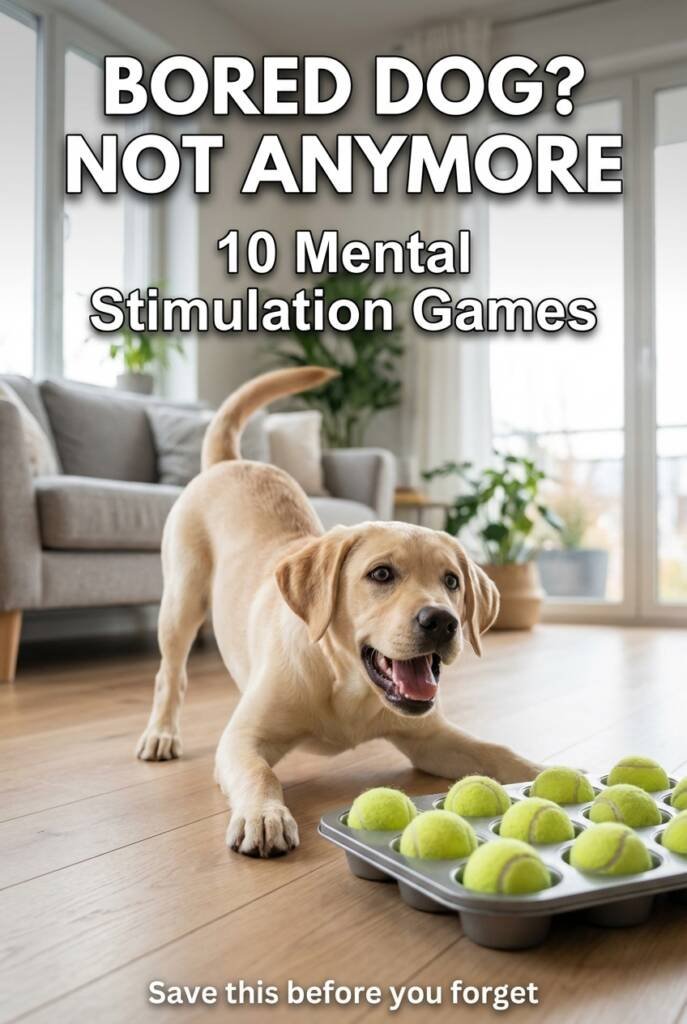
A tired dog is a happy dog, but here’s the secret most dog owners miss. Mental exercise actually tires out your pup faster than physical exercise alone. If your dog is chewing furniture, barking nonstop, or following you around the house like a shadow, they’re probably bored. And a bored dog will find ways to entertain themselves (usually ways you won’t love).
The good news? You don’t need expensive toys or fancy equipment. These 10 mental stimulation games for dogs use stuff you already have at home — and they actually work.
Let’s get into it.
Why Do Dogs Need Mental Stimulation?
Dogs were bred to work. Herding, hunting, guarding — their brains are wired for problem-solving and focus. But most pet dogs today spend hours doing… nothing.
That mental energy has to go somewhere.
Without an outlet, it turns into:
- Destructive chewing
- Excessive barking
- Anxiety and restlessness
- Attention-seeking behavior
Mental stimulation games give your dog a job to do. They engage your dog’s brain, build confidence, reduce anxiety, and — best of all — leave them genuinely tired and content.
Even 15 minutes of brain work can be more tiring than an hour-long walk.
10 Best Mental Stimulation Games for Dogs
1. Muffin Tin Puzzle Game for Dogs
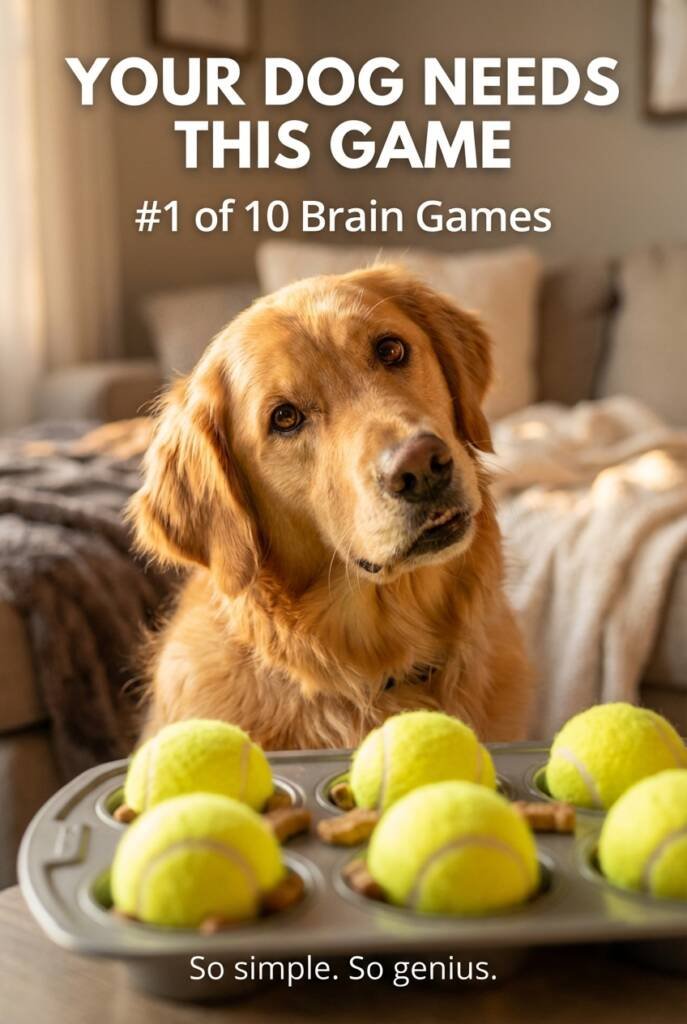
What you need: A muffin tin, tennis balls (or small toys), and treats.
How to play:
- Place a treat in each cup of the muffin tin.
- Cover each cup with a tennis ball.
- Set the tin on the floor and let your dog figure out how to get the treats.
Your dog has to use their nose to sniff out which cups have treats, then use their paws or mouth to remove the balls.
Pro tip: Start with only a few cups covered. As your dog gets better, cover all of them and add decoy cups with no treats to make it harder.
2. Snuffle Mat for Dogs
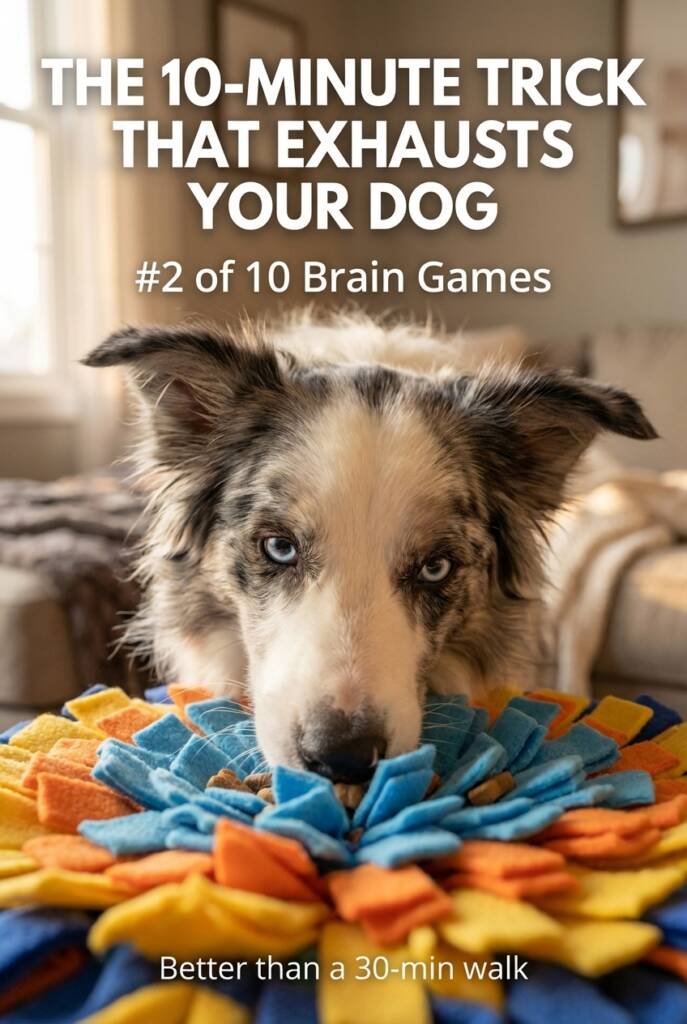
What it is: A snuffle mat is a fabric mat with lots of hiding spots where you can bury treats or kibble. It mimics the experience of foraging in grass — something dogs find naturally satisfying.
How to play:
- Sprinkle your dog’s kibble or small treats throughout the mat.
- Push the food down into the fabric folds so it’s hidden.
- Let your dog sniff and search to find every piece.
DIY option: Don’t want to buy one? Make your own by tying fleece strips onto a rubber sink mat with holes. It works just as well.
Why it works: Sniffing is mentally exhausting for dogs. A 10-minute snuffle session can tire them out like a 30-minute walk.
3. Frozen Kong Recipes for Dogs
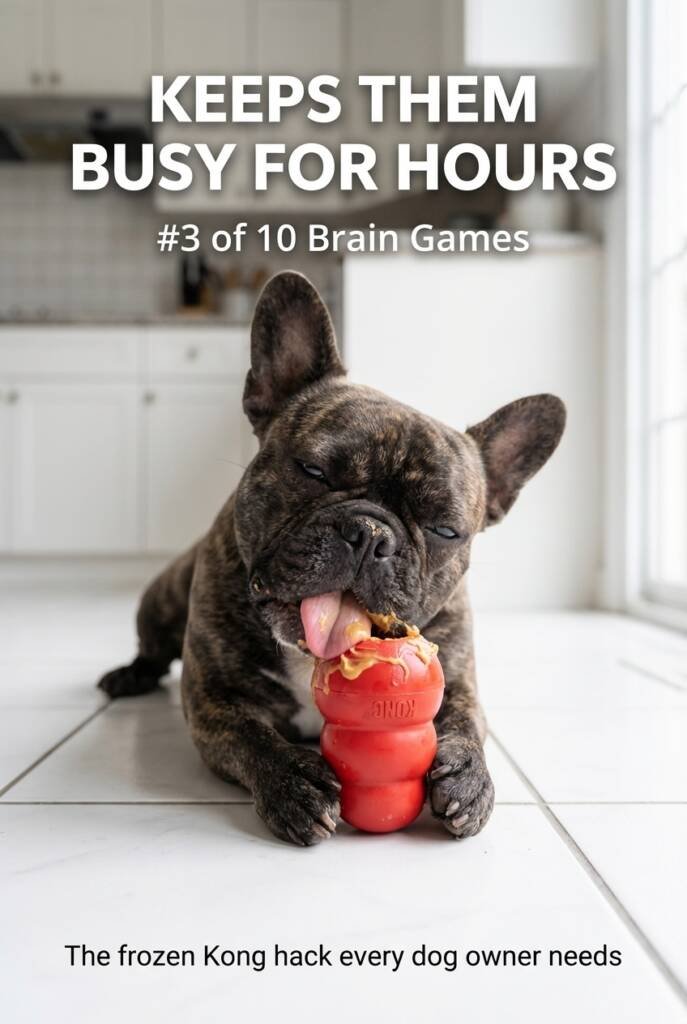
What you need: A Kong toy (or any hollow rubber toy) and dog-safe fillings.
How to play:
- Stuff the Kong with a mixture of fillings.
- Freeze it for at least 4 hours (overnight is best).
- Give it to your dog and let them work to lick out all the good stuff.
Easy filling ideas:
- Peanut butter (xylitol-free) + banana
- Plain yogurt + blueberries
- Wet dog food + kibble
- Pumpkin puree + a few treats
Pro tip: Layer your fillings and freeze in stages for an extra challenge. The frozen texture makes your dog work harder and keeps them busy longer — perfect for separation anxiety or crate time.
4. Cardboard Box Enrichment Game for Dogs
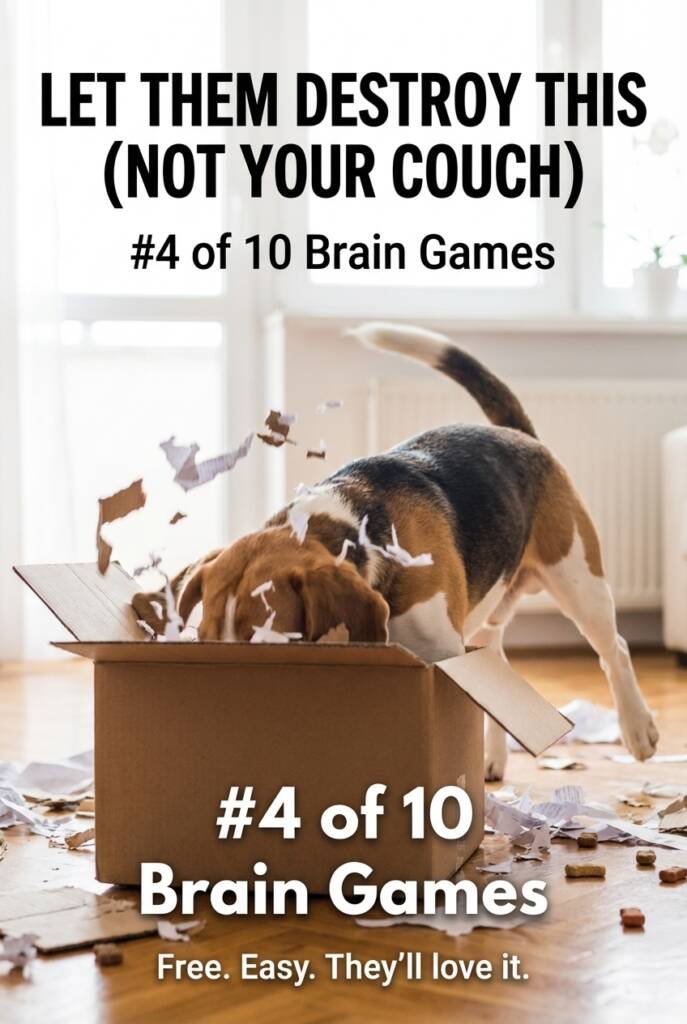
What you need: Cardboard boxes (any size), paper, and treats.
How to play:
- Crumple up some paper and toss it in a box with treats hidden inside.
- Close the box loosely (or leave it open for beginners).
- Let your dog tear it apart to find the rewards.
Level it up:
- Put smaller boxes inside bigger boxes.
- Use paper towel rolls with treats stuffed inside.
- Create a whole “destruction zone” with multiple boxes.
Why dogs love it: Dogs get to shred, dig, and search — all instincts they rarely get to use. Plus, it’s free. Just supervise to make sure they don’t eat the cardboard.
5. Shell Game for Dogs

What you need: 3 cups (or bowls) and a treat.
How to play:
- Show your dog you’re placing a treat under one cup.
- Shuffle the cups slowly while your dog watches.
- Let them knock over or paw at the cup they think has the treat.
- Reward them when they get it right.
How to teach it:
- Start without shuffling — just let them pick the right cup.
- Once they understand, start moving the cups slowly.
- Gradually increase speed and complexity.
Why it works: This classic game tests your dog’s memory and focus. It’s simple but surprisingly challenging — and most dogs get obsessed with it once they understand the rules.
6. How to Play Hide and Seek With Your Dog
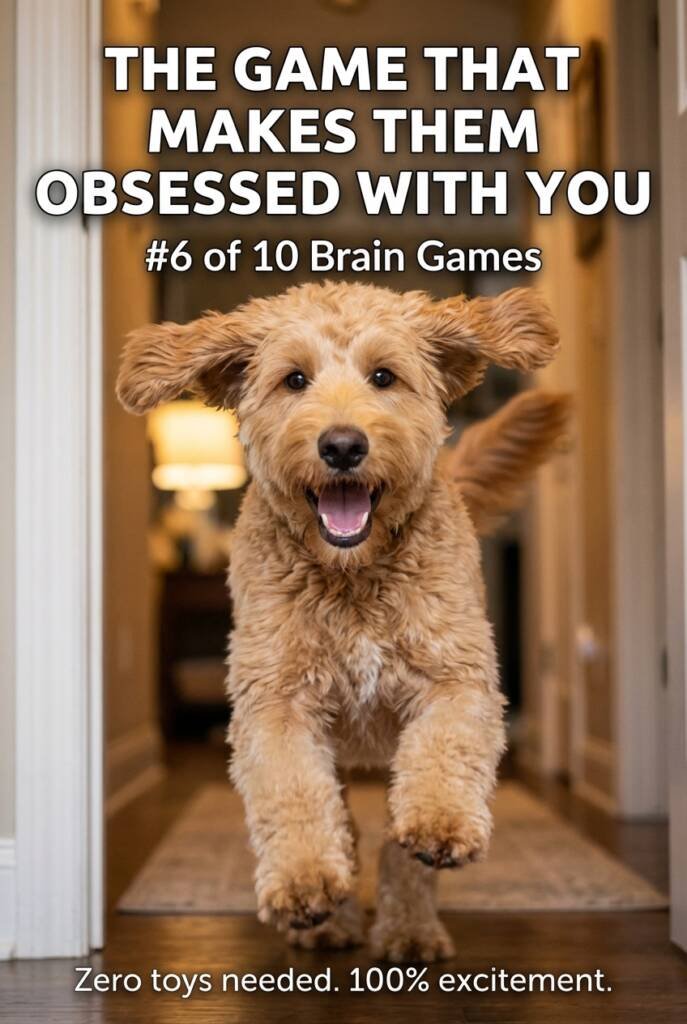
What you need: Just yourself (and maybe a helper if your dog doesn’t know “stay” yet).
How to play:
- Ask your dog to sit and stay (or have someone hold them).
- Go hide somewhere in your house — behind a door, in a closet, under a blanket.
- Call your dog’s name once.
- Wait for them to find you. Celebrate big when they do.
How to build up:
- Start easy — hide in the same room, partially visible.
- As they improve, hide in different rooms and trickier spots.
- Stay quiet after calling once so they have to use their nose.
Why it works: Hide and seek taps into your dog’s natural hunting instincts. It also reinforces recall (coming when called) in a fun, low-pressure way. Most dogs absolutely love this game — and it’s a great one for kids to play with dogs too.
7. Teach Your Dog Toy Names
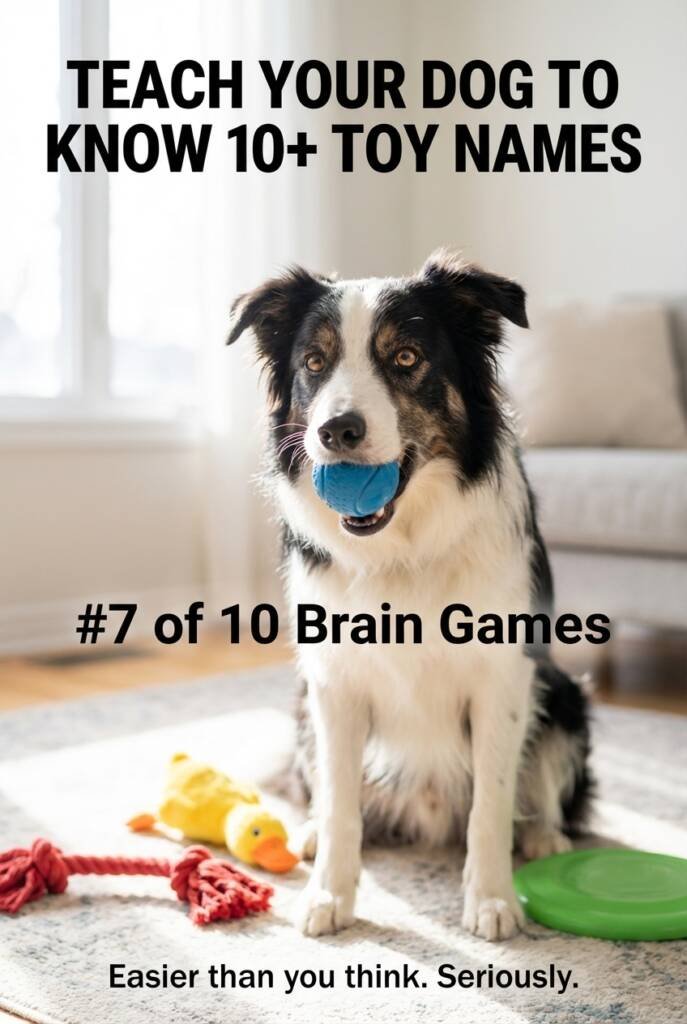
What it is: Teaching your dog to recognize and fetch specific toys by name. It sounds fancy, but most dogs can learn it faster than you’d expect.
How to play:
- Pick one toy to start. Say its name clearly (“Get your ball”) and hand it to your dog.
- Repeat this 10-15 times over a few sessions.
- Place the toy on the ground. Say “Get your ball” and reward when they pick it up.
- Once they’ve got it, introduce a second toy and practice with both.
Pro tip: Start with toys that look very different from each other — like a ball vs. a rope. This makes it easier for your dog to distinguish at first.
Why it works: Learning names is serious brain work. It builds focus, strengthens your communication, and gives your dog a sense of accomplishment. Some dogs learn dozens of toy names — the world record is over 1,000.
8. Find It Game for Dogs (Scent Work at Home)
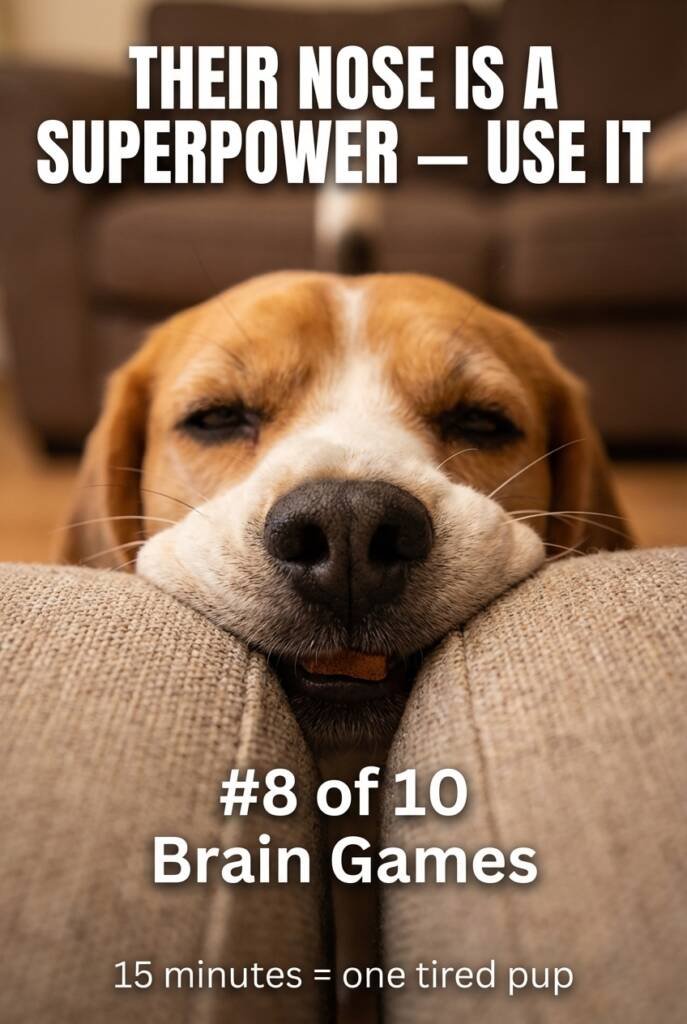
What you need: Treats or kibble.
How to play:
- Have your dog sit and stay (or hold them gently).
- Let them watch you place a treat a few feet away.
- Say “Find it!” and release them to get the treat.
- Gradually make it harder — hide treats behind furniture, under blankets, in corners.
Level it up:
- Hide treats in multiple rooms.
- Use a specific high-value treat so they learn to search for that scent.
- Hide treats while they’re out of the room so they can’t rely on memory.
Why it works: Scent work is one of the most mentally draining activities for dogs. Their noses have up to 300 million scent receptors (humans have about 6 million). A 15-minute scent session can exhaust a hyper dog like nothing else.
9. DIY Indoor Agility Course for Dogs

What you need: Household items — pillows, chairs, blankets, broomsticks, boxes.
How to set it up:
- Create a simple course using what you have:
- Drape a blanket over two chairs for a tunnel.
- Lay a broomstick across two stacks of books for a low jump.
- Line up pillows for your dog to weave through.
- Guide your dog through the course using treats and encouragement.
- Use simple commands like “jump,” “through,” and “weave.”
How to build up:
- Start with just one obstacle. Add more as they gain confidence.
- Time them and try to beat your record together.
- Rearrange the course regularly to keep it fresh.
Why it works: Agility combines physical movement with mental focus — your dog has to think about what comes next while also moving their body. It builds confidence, burns energy, and strengthens your bond.
10. Towel Puzzle Game for Dogs
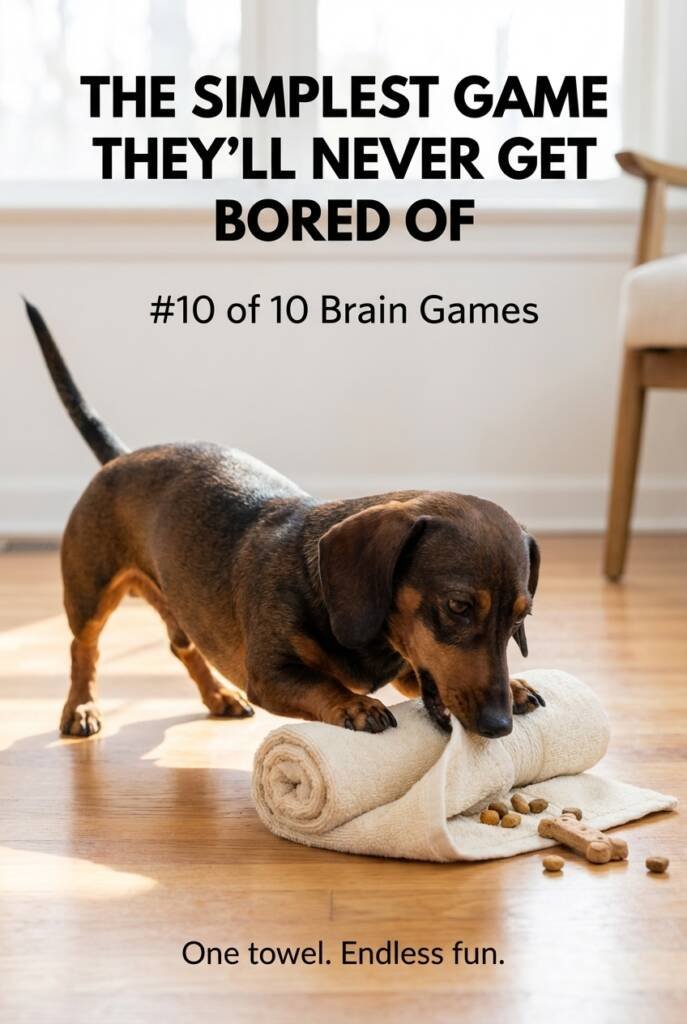
What you need: A towel (or old t-shirt) and treats.
How to play:
- Lay a towel flat on the ground.
- Scatter a few treats across the towel.
- Roll the towel up loosely with the treats inside.
- Let your dog unroll it with their nose and paws to get the rewards.
Make it harder:
- Roll it tighter.
- Tie a loose knot in the middle.
- Use multiple towels layered together.
Why it works: This game taps into your dog’s natural problem-solving instincts. The unrolling motion is satisfying, and the smell of hidden treats keeps them engaged. It’s also great for dogs who love to “dig” — this gives them an appropriate outlet.
How to Mentally Tire Out Your Dog Fast
Want to get the most out of these games? Keep these tips in mind:
- Start easy, then level up. If a game is too hard, your dog will get frustrated and quit. Let them win at first, then gradually increase the challenge.
- Rotate your games. Dogs get bored with repetition just like we do. Switch things up every few days so each game stays exciting.
- Keep sessions short. 10-15 minutes is plenty. Mental work is tiring — don’t overdo it, especially with puppies or senior dogs.
- Pair brain games with calm-down time. After a stimulating session, give your dog a chance to settle. A chew toy or quiet rest helps them process what they learned.
- Use meal times. Instead of feeding from a bowl, use games like snuffle mats, Kongs, or scatter feeding. Your dog works for their food — the way nature intended.
Final Thoughts on Brain Games for Dogs
A bored dog isn’t a bad dog, they just need something to do. These 10 mental stimulation games are easy, affordable (mostly free), and genuinely effective. You don’t need to do all of them. Even adding one or two brain games to your dog’s routine can make a huge difference in their behavior, happiness, and overall well-being.
At Sweet Purrfections, we believe every pet deserves a life full of enrichment and joy. Start today. Pick one game from this list and try it with your pup. You’ll be surprised how quickly they catch on, and how calm they are afterward.