
So, Why Do Dogs Eat Poop?
Let’s cut straight to it: dogs eat poop — and yes, it’s as gross as it sounds. The scientific name for this lovely habit is coprophagia, and it’s far more common than most dog owners realize. Studies show that roughly 1 in 4 dogs have been caught eating poop at least once, and about 16% are what researchers call “serious” poop eaters — meaning they’ve been observed doing it five or more times.
The short answer to why dogs eat their poop is that it can stem from perfectly natural instincts, behavioral triggers, or underlying health issues. Sometimes it’s as simple as curiosity. Other times, it’s your dog’s way of telling you something isn’t right with their diet, their gut health, or their emotional wellbeing.
The good news? Once you understand the reason behind the behavior, stopping your dog from eating poop becomes a whole lot easier. Below, we’re breaking down the 7 most common reasons dogs eat feces — and what you can actually do about each one.
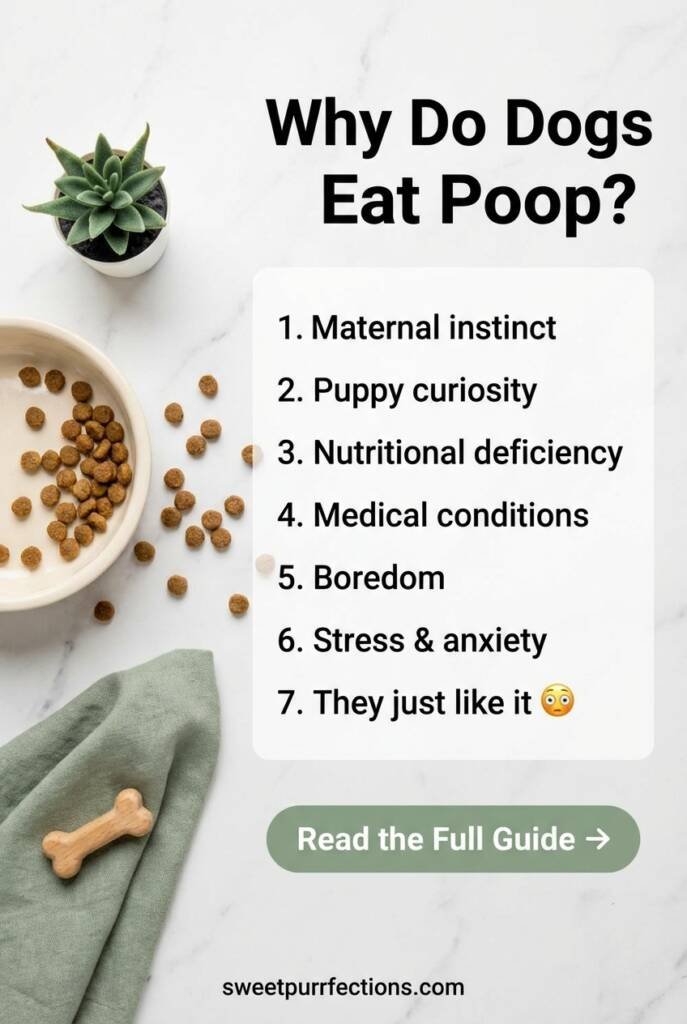
1. It’s a Natural Maternal Instinct
If you’ve ever watched a mother dog with her newborn puppies, you’ve probably noticed something that made you look twice: she licks her puppies to stimulate them to go to the bathroom, and then she eats the result. Before you judge her, know that this is completely normal and biologically hardwired. Mother dogs do this to keep their den clean and free from parasites and predators that might be attracted by the scent of waste.
This behavior typically fades on its own once puppies start eating solid food and eliminating outside the sleeping area. It’s one of the most natural forms of dog coprophagia and generally requires no intervention.
| 💡 Tip: No action needed. This is healthy, instinctive behavior that nursing mothers outgrow naturally within the first few weeks. |
2. Puppy Curiosity — Everything Goes in the Mouth
Puppies explore the world with their mouths the same way human babies explore with their hands. Shoes, socks, furniture legs, and yes — poop — are all fair game. If your puppy is eating poop, it doesn’t necessarily mean something is wrong. They’re investigating their environment, and feces just happens to be an accessible, smelly, and therefore interesting item on the ground.
Most puppies grow out of this phase by the time they’re around nine months old. They may also learn it from watching their mother clean up after them, which reinforces the behavior early on.
| 💡 Tip: Supervise your puppy during bathroom breaks, clean up immediately, and redirect their attention with a treat or toy right after they finish. This prevents the habit from becoming established. |
3. Nutritional Deficiencies and Poor Diet
One of the more concerning reasons dogs eat feces is that they’re not getting enough nutrients from their regular meals. If your dog’s food is low quality, lacks essential vitamins (particularly B vitamins), or doesn’t provide enough calories for their breed and activity level, they may turn to poop as a way to supplement what’s missing.
This is especially common in dogs on very restrictive diets or those being underfed. The undigested proteins, fats, and nutrients still present in stool can actually smell appealing to a dog whose body is craving more fuel.
| 💡 Tip: Talk to your vet about your dog’s current food. A switch to a higher-quality, nutrient-dense diet can make a significant difference. Adding a digestive enzyme supplement may also help your dog absorb more from each meal. |
4. Medical Conditions That Increase Appetite
Sometimes poop eating in dogs is a symptom of an underlying medical issue rather than a behavioral quirk. Several conditions can cause a dramatically increased appetite, driving your dog to eat anything available — including their own stool.
Conditions to watch for include:
- Exocrine Pancreatic Insufficiency (EPI) — the pancreas doesn’t produce enough digestive enzymes, so food passes through partially undigested
- Intestinal parasites — worms steal nutrients from your dog’s gut, leaving them constantly hungry
- Diabetes and Cushing’s Disease — both can cause a dramatic spike in appetite
- Thyroid conditions — an imbalanced thyroid can affect metabolism and hunger signals
- Certain medications — especially steroids, which are known to increase appetite significantly
| 💡 Tip: If your adult dog suddenly starts eating poop when they never did before, schedule a vet appointment. Blood work and a stool analysis can rule out or identify these conditions quickly. |
5. Boredom and Lack of Mental Stimulation
Dogs that spend long hours alone, confined to small spaces, or without enough physical and mental activity are significantly more likely to develop coprophagia. Think of it this way: a bored dog will find something to do, and if the most interesting thing in their environment is a pile of poop, that’s what they’ll engage with.
Research has also found that dogs in multi-dog households are more likely to eat poop, possibly because there’s simply more of it available and the behavior can be socially learned between dogs.
| 💡 Tip: Increase your dog’s daily exercise and introduce enrichment activities like puzzle feeders, snuffle mats, and interactive toys. A mentally tired dog is far less likely to go looking for entertainment in the yard. |
6. Stress, Anxiety, and Fear-Based Behavior
Anxiety is a powerful driver of unusual behaviors in dogs, and eating poop is no exception. Dogs that experience separation anxiety, environmental stress (like a new home or a new pet in the household), or fear from punishment-based house training may eat their own feces as a coping mechanism.
One particularly common scenario: dogs that were harshly punished for having accidents indoors may learn to “hide the evidence” by eating it. They’re not being sneaky — they’re afraid. This is why positive reinforcement is always the better approach to potty training.
| 💡 Tip: Never punish your dog for indoor accidents. Instead, use positive reinforcement during house training, maintain a consistent routine, and address any sources of anxiety. If stress-related behaviors persist, consider working with a certified dog behaviorist. |
7. They Simply Like the Taste
We saved the most unsettling reason for last. Some dogs eat poop simply because, to them, it tastes good. Dogs experience smell and taste very differently than humans. Undigested fats, proteins, and other nutrients in stool can actually smell appealing to a dog’s incredibly sensitive nose. Cat poop, in particular, tends to be high in protein and fat, which is why so many dogs treat the litter box like a buffet.
Researchers have also found that dogs strongly prefer fresh poop — less than two days old. This may be tied to an ancestral instinct to clean up fresh waste before parasites have time to develop and become infectious to the pack.
| 💡 Tip: The best defense here is prevention: clean up poop immediately, keep cat litter boxes behind baby gates or in rooms your dog can’t access, and work on a strong “leave it” command. Coprophagia deterrent supplements can also change the taste of your dog’s stool to make it less appealing. |
How to Stop Your Dog From Eating Poop
Now that you know why dogs eat poop, here’s a quick-reference action plan to help you stop the behavior for good:
- Clean up immediately. Don’t give your dog the opportunity. Pick up poop right after they go — both in your yard and on walks.
- Upgrade their diet. Switch to a high-quality, nutrient-dense dog food. Consult your vet about adding digestive enzymes or probiotics.
- Rule out medical issues. If poop eating starts suddenly in an adult dog, get a full vet checkup including blood work and stool analysis.
- Train the “leave it” command. This is one of the most valuable commands any dog owner can teach. Use high-value treats and positive reinforcement.
- Increase exercise and enrichment. A well-exercised, mentally stimulated dog is far less likely to seek out poop as entertainment.
- Manage stress and anxiety. Maintain consistent routines, avoid punishment, and create a calm environment. Seek professional help for severe anxiety.
- Try a coprophagia deterrent. These supplements are added to your dog’s food and change the taste of their stool to discourage eating.
Is It Dangerous When Dogs Eat Poop?
If your dog is eating their own poop and is otherwise healthy, it’s generally not dangerous — just unpleasant. However, eating the feces of other dogs or animals does carry real risks. Your dog can pick up intestinal parasites like roundworms and hookworms, harmful bacteria like E. coli and salmonella, and viruses like parvovirus through contaminated stool.
This is why it’s especially important to keep your dog on a regular deworming schedule and to discourage them from eating unknown feces on walks or at the dog park.
When to See Your Vet About Dog Coprophagia
While occasional poop eating isn’t usually cause for alarm, you should contact your veterinarian if:
- Your adult dog suddenly starts eating poop when they never did before
- The behavior is accompanied by weight loss, vomiting, diarrhea, or lethargy
- Your dog seems constantly hungry despite being fed adequate portions
- You’ve tried behavioral solutions and the habit persists
Your vet can run diagnostic tests to determine whether a medical condition is driving the behavior and recommend the right course of treatment.
Why Do Dogs Eat Poop? Understanding the Habit Is the First Step
Why do dogs eat poop? It’s a combination of instinct, biology, environment, and sometimes health. Whether your dog is a curious puppy exploring the world or an adult dealing with a nutritional gap, understanding the root cause is the first step toward solving it. With the right diet, consistent training, regular vet care, and a clean environment, most dogs can kick the habit for good.
Remember: don’t punish, don’t panic, and don’t be embarrassed. You’re far from the only dog owner dealing with this — roughly 1 in 4 dogs have done it at least once. The fact that you’re here researching it means you’re already a great pet parent. And here at Sweet Purrfections, that’s exactly who we’re here for — cool pet parents who care enough to dig into the weird stuff so their furry friends can live their best lives.
Leave a Reply